Grain10 recipes
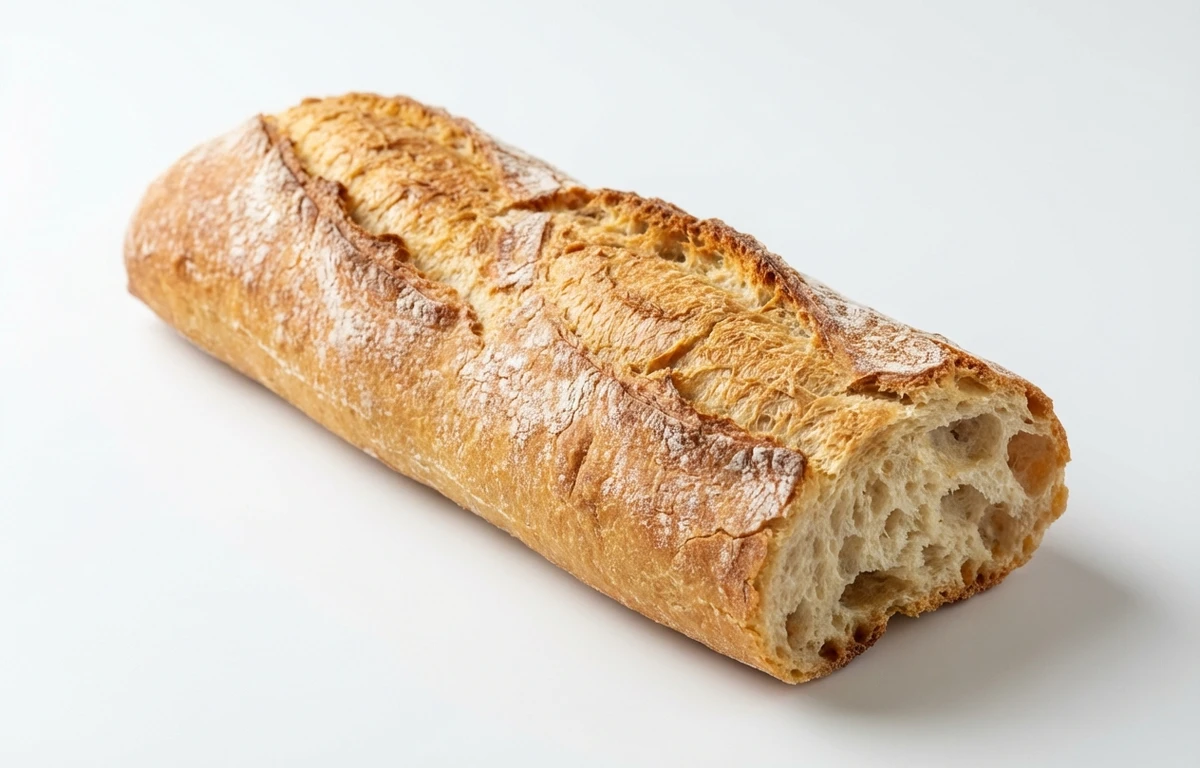
french bread.
VegetarianVeganGluten-freeDairy-freeNut-freePeanut-freeSoy-freeEgg-freeShellfish-freeHoney-freeAlcohol-freeFermented
ALSO KNOWN AS
baguettefrench loafpain françaiswhite french breadFrench breadबगेटfrench baguette
SERVING
CALORIES
289
PROTEIN
9.3g
CARBS
56.4g
FAT
1.8g
FIBER
2.4g
NUTRITION PROFILE · per 100 g
Everything in this ingredient.
MACRONUTRIENTS
Calories289kcal—
Protein9.3g19%
Carbohydrates56.4g21%
Fiber2.4g9%
Sugar1.7g3%
Total fat1.8g2%
Saturated fat0.40g2%
Trans fat0g—
Cholesterol0mg0%
Water30.5g—
MINERALS
Sodium602mg26%
Potassium117mg2%
Calcium52mg4%
Iron3.7mg21%
Magnesium27mg6%
Phosphorus105mg8%
Zinc0.80mg7%
Copper0.15mg17%
Manganese0.50mg22%
Selenium28.5µg52%
VITAMINS
Vitamin A1.0µg0%
Vitamin C0mg0%
Vitamin D0µg0%
Vitamin E0.20mg1%
Vitamin K0.20µg0%
Thiamin (B1)0.50mg42%
Riboflavin (B2)0.30mg23%
Niacin (B3)4.8mg30%
Pantothenic acid (B5)0.40mg8%
Vitamin B60.10mg6%
Folate (B9)165µg41%
Vitamin B120µg0%
%DV based on a 2,000 cal diet. Source: USDA FoodData Central. A dash in the %DV column means there’s no established Daily Value for that nutrient.
MEASUREMENT CONVERSIONS
How much is what.
1 cup45g
1 oz28.4g
1 lb453.6g
1 piece450g
HEALTH BENEFITS
Why eat it.
- ✓Provides quick energy through complex carbohydrates
- ✓Enriched varieties provide essential B-vitamins
- ✓Good source of iron for oxygen transport
- ✓Low in fat and contains zero cholesterol
- ✓Provides selenium which acts as an antioxidant
COOKING TIPS
In the kitchen.
- 1To refresh a stale loaf, sprinkle with water and bake at 350°F (175°C) for 5-10 minutes
- 2Slice on a diagonal to create more surface area for toppings like bruschetta
- 3Use day-old French bread for the best French toast or bread pudding results
STORAGE
Keep it fresh.
- Store at room temperature in a paper bag for 1-2 days to maintain crust crispness
- Avoid refrigerating as it causes the bread to go stale faster
- Freeze in an airtight plastic bag for up to 3 months for long-term storage
FAQ
Frequently asked questions.
How long does French bread stay fresh?
Freshly baked French bread is best consumed within 6-12 hours. It typically lasts 1-2 days at room temperature if kept in a paper bag.
Can French bread be frozen?
Yes, it freezes very well. Wrap it tightly in plastic wrap or foil and place it in a freezer bag. It will stay good for up to 3 months.
Is French bread vegan?
Traditional French bread (baguette) is vegan as it only contains flour, water, yeast, and salt. However, some commercial brands may add milk or honey, so check the label.
What is the best way to pick a good baguette?
Look for a golden-brown, crispy crust. When tapped on the bottom, it should sound hollow, indicating it is well-baked and airy.
What can I use as a substitute for French bread?
Italian bread, sourdough, or a ciabatta loaf are the best substitutes for sandwiches or dipping.
How do I prevent French bread from getting too hard?
Keep it in a paper bag rather than plastic to maintain the crust, but consume it quickly. Once sliced, the interior dries out fast.
Is French bread high in gluten?
Yes, French bread is made from wheat flour and contains significant amounts of gluten, making it unsuitable for those with celiac disease.
Why is French bread often enriched?
Because white flour loses nutrients during processing, many manufacturers add back iron and B-vitamins (thiamin, riboflavin, niacin, and folic acid).
What are common uses for French bread?
It is commonly used for sandwiches, as a side for soups and stews, for making garlic bread, bruschetta, or French toast.
RECIPES
Cook with french bread.
10 recipes · sorted by what’s quick