Nuts Seeds10 recipes
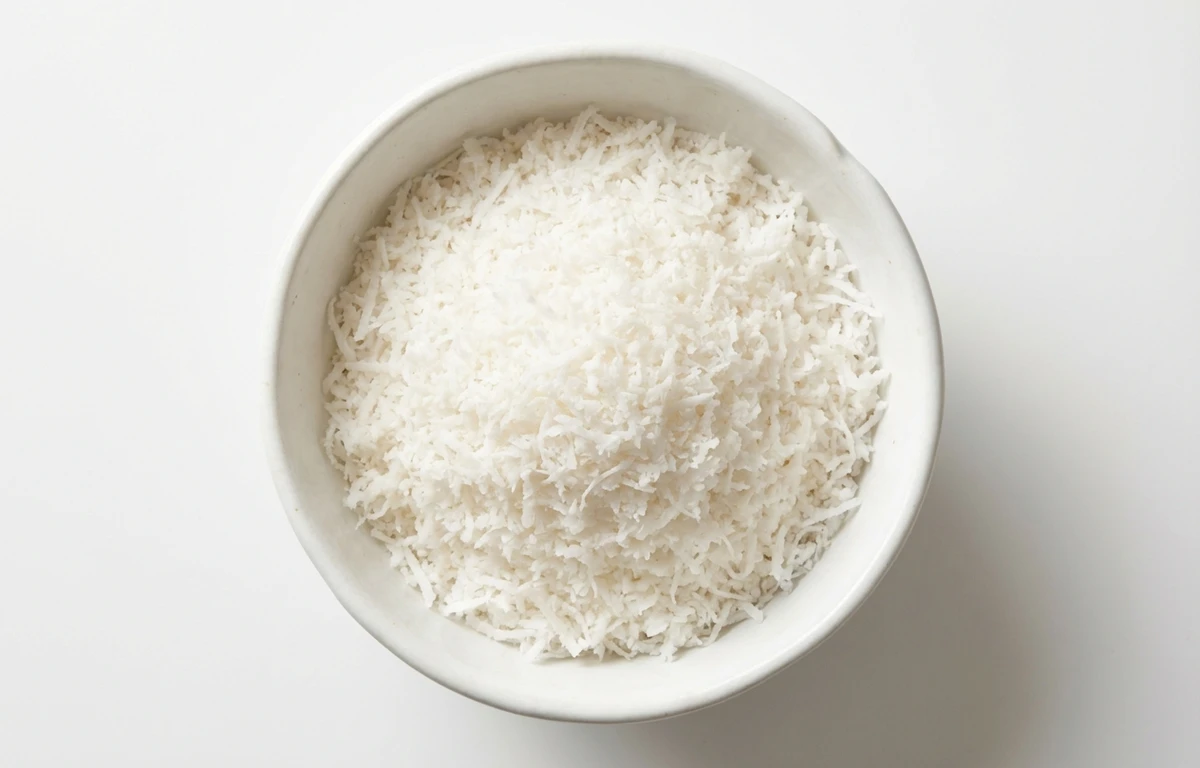
grated coconut.
VegetarianVeganGluten-freeDairy-freeNut-freePeanut-freeSoy-freeEgg-freeShellfish-freeHoney-freeAlcohol-free
ALSO KNOWN AS
fresh shredded coconutfreshly grated coconuttaza kash kiya hua nariyalpacha thenga thuruviyathuhasiru kobbari thuripacha thenga peeragrated fresh coconutshredded fresh coconutnariyal kaddukaskisela nariyalfresh coconut scrapingspacha thengai thuruvallkobbari thuruvascraped coconutfresh grated coconutdried coconut powdershredded dried coconutdried coconut flakessukha nariyal burakopra powdergrated desiccated coconutunrefined dried coconutDried Grated Coconutshredded coconutnariyal ka buradakobbari turumuthenga thuruviyathudesiccated coconutgrated coconut
SERVING
CALORIES
354
PROTEIN
3.3g
CARBS
15.2g
FAT
33.5g
FIBER
9.0g
NUTRITION PROFILE · per 100 g
Everything in this ingredient.
MACRONUTRIENTS
Calories354kcal—
Protein3.3g7%
Carbohydrates15.2g6%
Fiber9.0g32%
Sugar6.2g12%
Total fat33.5g43%
Saturated fat29.7g149%
Trans fat0g—
Cholesterol0mg0%
Water47g—
MINERALS
Sodium20mg1%
Potassium356mg8%
Calcium14mg1%
Iron2.4mg13%
Magnesium32mg8%
Phosphorus113mg9%
Zinc1.1mg10%
Copper0.40mg44%
Manganese1.5mg65%
Selenium10.1µg18%
VITAMINS
Vitamin A0µg0%
Vitamin C3.3mg4%
Vitamin D0µg0%
Vitamin E0.20mg1%
Vitamin K0.20µg0%
Thiamin (B1)0.07mg6%
Riboflavin (B2)0.02mg2%
Niacin (B3)0.50mg3%
Pantothenic acid (B5)0.30mg6%
Vitamin B60.05mg3%
Folate (B9)26µg7%
Vitamin B120µg0%
%DV based on a 2,000 cal diet. Source: USDA FoodData Central. A dash in the %DV column means there’s no established Daily Value for that nutrient.
MEASUREMENT CONVERSIONS
How much is what.
1 cup80g
1 tablespoon6g
1 teaspoon2g
1 oz28.4g
1 lb453.6g
HEALTH BENEFITS
Why eat it.
- ✓Rich in Medium-Chain Triglycerides (MCTs) for quick energy
- ✓High dietary fiber content supports digestive health
- ✓Excellent source of manganese for bone health and metabolism
- ✓Contains antioxidants that protect cells from oxidative damage
- ✓Provides essential minerals like copper and iron for blood health
COOKING TIPS
In the kitchen.
- 1Toast lightly in a dry pan to enhance the nutty flavor and aroma
- 2Add to curries or stews at the end of cooking to maintain texture
- 3Pulse in a blender with warm water to create fresh homemade coconut milk
STORAGE
Keep it fresh.
- Store in an airtight container in the refrigerator for up to 4 days
- Freeze in small portions in freezer-safe bags for up to 6 months
- Keep away from strong-smelling foods as coconut absorbs odors easily
FAQ
Frequently asked questions.
How long does fresh grated coconut last?
Freshly grated coconut lasts about 3-4 days in the refrigerator. For longer storage, it should be frozen.
Can I freeze grated coconut?
Yes, grated coconut freezes very well. Store it in airtight bags or containers; it will stay fresh for up to 6 months.
How can I tell if grated coconut has gone bad?
Spoiled coconut will have a sour or soapy smell, may develop yellow or grey discoloration, or show signs of mold.
What is the best substitute for fresh grated coconut?
Unsweetened desiccated coconut is the best substitute. If using it in a recipe that requires moisture, rehydrate it with a little warm water or coconut milk.
Is grated coconut considered a nut allergen?
Yes, the FDA classifies coconut as a tree nut. While many people with tree nut allergies can tolerate coconut, it is legally required to be labeled as a nut.
How do I get the best texture when grating coconut?
For a traditional fine texture, use a manual coconut scraper. For a faster method, pulse small chunks of fresh coconut meat in a food processor until desired consistency is reached.
Can I use sweetened shredded coconut instead of fresh grated coconut?
It is not recommended for savory dishes like curries or chutneys due to the high sugar content, but it can work in some desserts if you reduce the other sugars in the recipe.
Why is my grated coconut turning yellow?
Yellowing is usually a sign of oxidation or drying out. If it also smells off, it is likely beginning to spoil and should be discarded.
Is grated coconut healthy?
Yes, it is nutrient-dense, providing healthy fats, fiber, and essential minerals like manganese, though it is high in calories and should be consumed in moderation.
RECIPES
Cook with grated coconut.
10 recipes · sorted by what’s quick
.webp)
.webp)
.webp)
.webp)