Condiment10 recipes
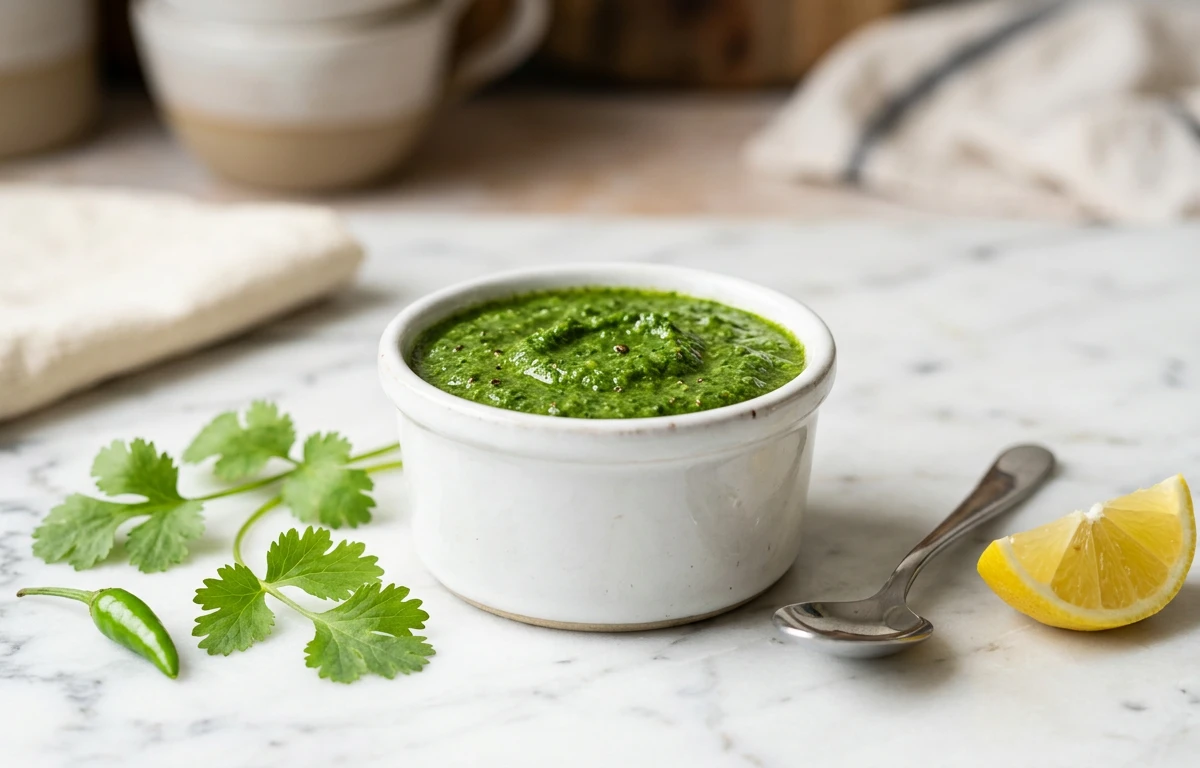
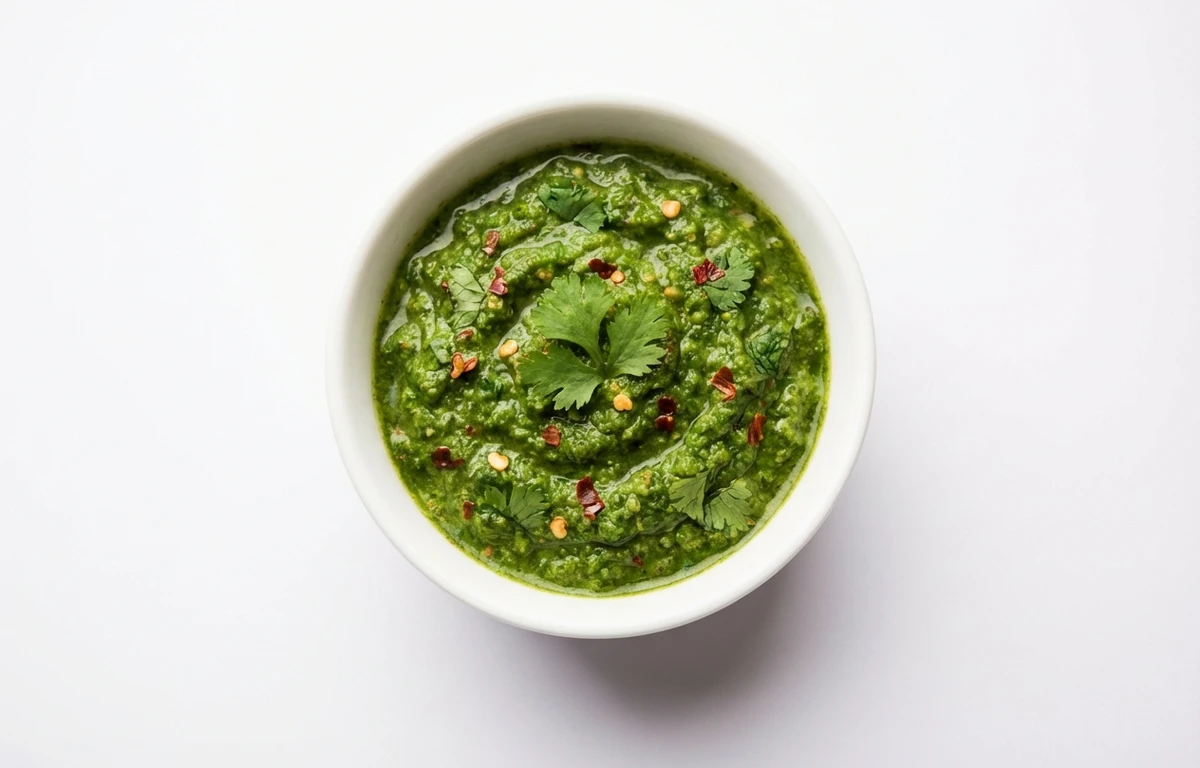
green chutney.
VegetarianVeganGluten-freeDairy-freeNut-freePeanut-freeSoy-freeEgg-freeShellfish-freeHoney-freeAlcohol-free
ALSO KNOWN AS
hari chutneycoriander mint chutneydhaniya pudina chutneycilantro mint chutneyindian green sauce
SERVING
CALORIES
52
PROTEIN
2.1g
CARBS
8.4g
FAT
1.2g
FIBER
3.5g
NUTRITION PROFILE · per 100 g
Everything in this ingredient.
MACRONUTRIENTS
Calories52kcal—
Protein2.1g4%
Carbohydrates8.4g3%
Fiber3.5g13%
Sugar1.8g4%
Total fat1.2g2%
Saturated fat0.20g1%
Trans fat0g—
Cholesterol0mg0%
Water84.5g—
MINERALS
Sodium850mg37%
Potassium320mg7%
Calcium55mg4%
Iron2.4mg13%
Magnesium28mg7%
Phosphorus40mg3%
Zinc0.50mg5%
Copper0.12mg13%
Manganese0.30mg13%
Selenium0.80µg1%
VITAMINS
Vitamin A210µg23%
Vitamin C35mg39%
Vitamin D0µg0%
Vitamin E0.80mg5%
Vitamin K250µg208%
Thiamin (B1)0.06mg5%
Riboflavin (B2)0.08mg6%
Niacin (B3)0.60mg4%
Pantothenic acid (B5)0.30mg6%
Vitamin B60.15mg9%
Folate (B9)62µg16%
Vitamin B120µg0%
%DV based on a 2,000 cal diet. Source: USDA FoodData Central. A dash in the %DV column means there’s no established Daily Value for that nutrient.
MEASUREMENT CONVERSIONS
How much is what.
1 cup250g
1 tablespoon15g
1 teaspoon5g
1 oz28.4g
1 lb453.6g
1 liter1050g
HEALTH BENEFITS
Why eat it.
- ✓Rich in antioxidants from fresh coriander and mint
- ✓Aids digestion due to the presence of ginger and mint
- ✓High in Vitamin C which boosts immunity
- ✓Low-calorie condiment suitable for weight management
- ✓Helps in detoxifying the body with chlorophyll-rich herbs
COOKING TIPS
In the kitchen.
- 1Use ice-cold water while blending to prevent the blades' heat from browning the herbs
- 2Avoid over-blending as it can make the mint leaves taste bitter
- 3Add a small amount of roasted gram (dalia) or peanuts to give the chutney a thicker consistency
STORAGE
Keep it fresh.
- Store in an airtight glass container in the refrigerator for 3-5 days
- Add a teaspoon of lemon juice or vinegar to maintain the bright green color
- Can be frozen in ice cube trays for up to 2 months
FAQ
Frequently asked questions.
How long does green chutney last in the fridge?
Freshly made green chutney typically lasts for 3 to 5 days when stored in an airtight container in the refrigerator.
Why does my green chutney turn dark or brown?
It turns brown due to oxidation. Adding an acid like lemon juice or dry mango powder (amchur) and using cold water during blending helps maintain the green color.
Can I freeze green chutney?
Yes, you can freeze it in ice cube trays. Once frozen, transfer the cubes to a zip-lock bag. They stay fresh for up to 2 months.
What can I use as a substitute for mint in green chutney?
If you don't have mint, you can make a pure coriander chutney or substitute mint with fresh parsley or even a bit of spinach for color.
Is green chutney healthy?
Yes, it is very healthy as it is made from fresh herbs, ginger, and chilies, providing vitamins and minerals with very few calories.
How do I make the chutney thicker?
To thicken the chutney, you can add a tablespoon of roasted peanuts, roasted gram (chana dal), or even a small piece of bread while blending.
What are the common uses for green chutney?
It is commonly used as a dip for snacks like samosas and pakoras, a spread for sandwiches, or a side for grilled meats and kebabs.
How can I reduce the spiciness of the chutney?
You can reduce the heat by removing the seeds from the green chilies before blending or by mixing the finished chutney with a little yogurt or extra lemon juice.
Is green chutney vegan?
Standard green chutney made with herbs, spices, and lemon is vegan. However, some variations use yogurt, so always check the ingredients if buying pre-made.
Does green chutney contain gluten?
Naturally made green chutney is gluten-free. Be cautious with commercial brands that might use thickeners or stabilizers containing gluten.
RECIPES
Cook with green chutney.
10 recipes · sorted by what’s quick