Other10 recipes
hummus.
VegetarianVeganGluten-freeDairy-freeNut-freePeanut-freeSoy-freeEgg-freeShellfish-freeHoney-freeAlcohol-free
ALSO KNOWN AS
houmoushommushumuschickpea dipchickpea spread
SERVING
CALORIES
166
PROTEIN
7.9g
CARBS
14.3g
FAT
9.6g
FIBER
6.0g
NUTRITION PROFILE · per 100 g
Everything in this ingredient.
MACRONUTRIENTS
Calories166kcal—
Protein7.9g16%
Carbohydrates14.3g5%
Fiber6.0g21%
Sugar0.30g1%
Total fat9.6g12%
Saturated fat1.4g7%
Trans fat0g—
Cholesterol0mg0%
Water65g—
MINERALS
Sodium379mg16%
Potassium228mg5%
Calcium38mg3%
Iron2.4mg13%
Magnesium71mg17%
Phosphorus176mg14%
Zinc1.8mg16%
Copper0.50mg56%
Manganese0.80mg35%
Selenium2.6µg5%
VITAMINS
Vitamin A0µg0%
Vitamin C0mg0%
Vitamin D0µg0%
Vitamin E0.70mg5%
Vitamin K11.2µg9%
Thiamin (B1)0.20mg17%
Riboflavin (B2)0.10mg8%
Niacin (B3)0.60mg4%
Pantothenic acid (B5)0.30mg6%
Vitamin B60.20mg12%
Folate (B9)83µg21%
Vitamin B120µg0%
%DV based on a 2,000 cal diet. Source: USDA FoodData Central. A dash in the %DV column means there’s no established Daily Value for that nutrient.
MEASUREMENT CONVERSIONS
How much is what.
1 cup240g
1 tablespoon15g
1 teaspoon5g
1 oz28.4g
1 lb453.6g
1 ml1.1g
1 liter1050g
HEALTH BENEFITS
Why eat it.
- ✓Excellent source of plant-based protein
- ✓High fiber content supports digestive health
- ✓Low glycemic index helps manage blood sugar levels
- ✓Contains heart-healthy monounsaturated fats from tahini and olive oil
- ✓Rich in essential minerals like iron and folate
COOKING TIPS
In the kitchen.
- 1Serve at room temperature to allow the flavors of garlic and lemon to shine
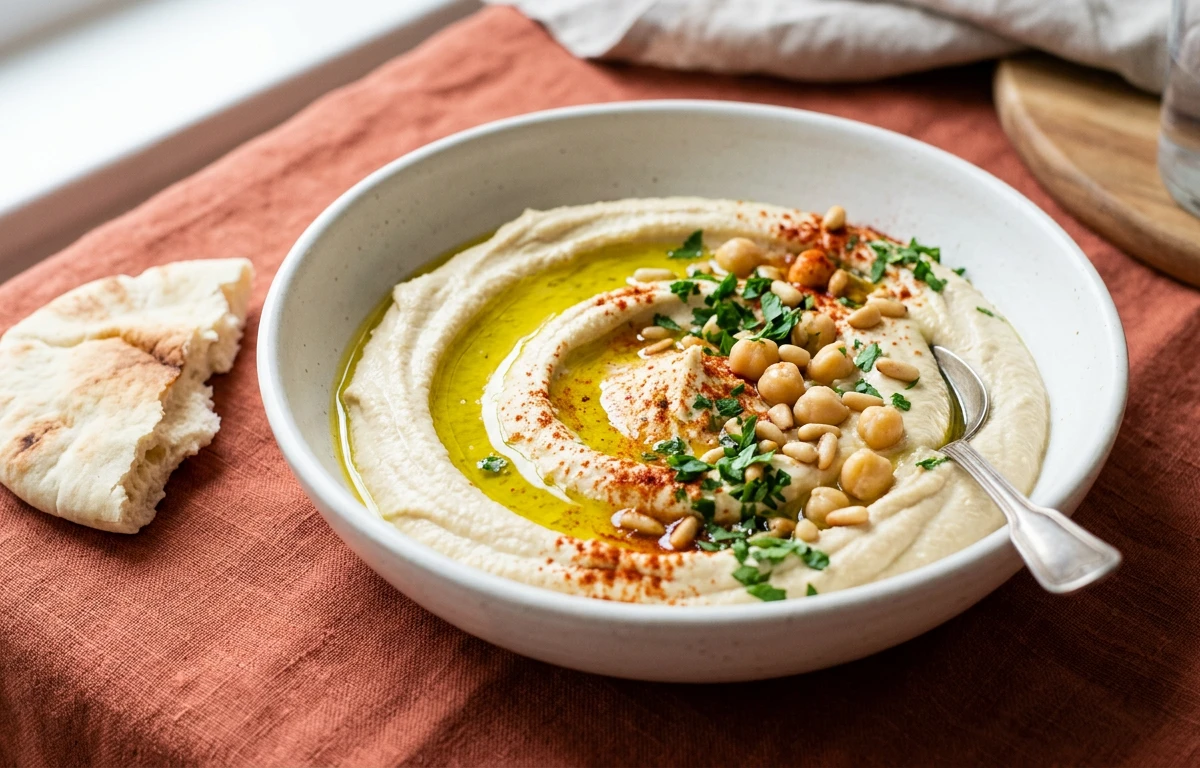
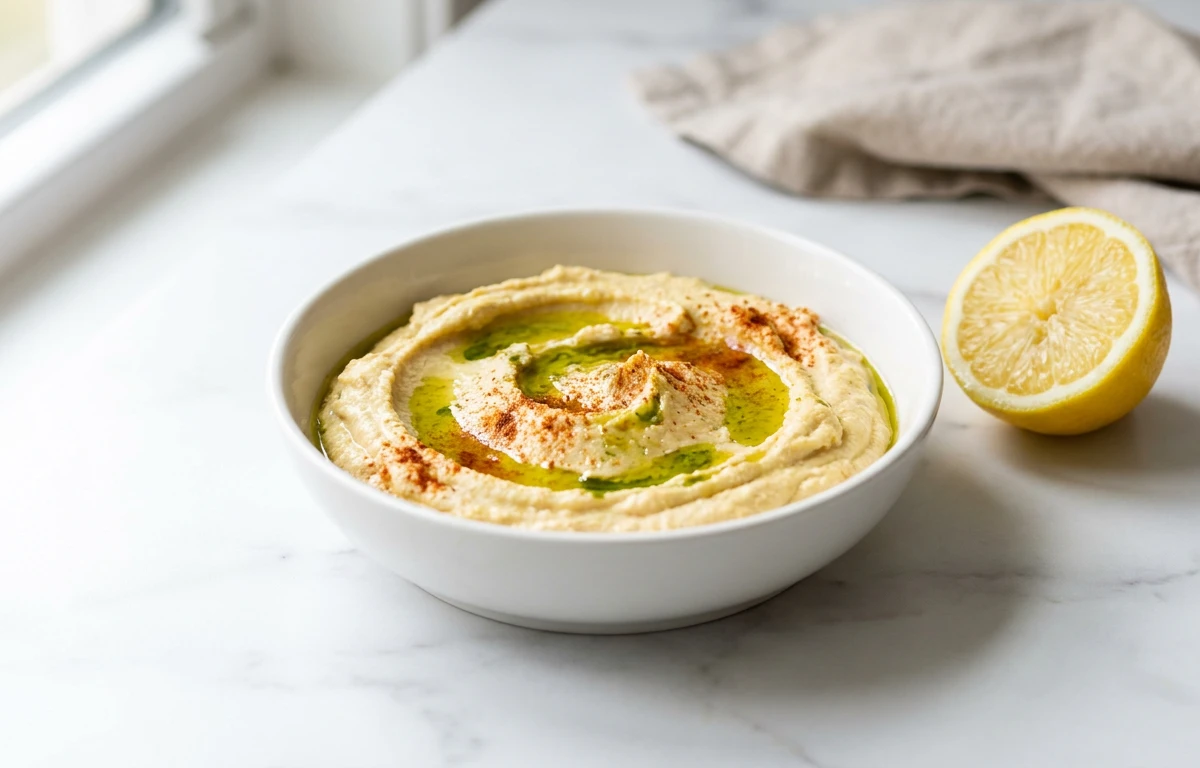
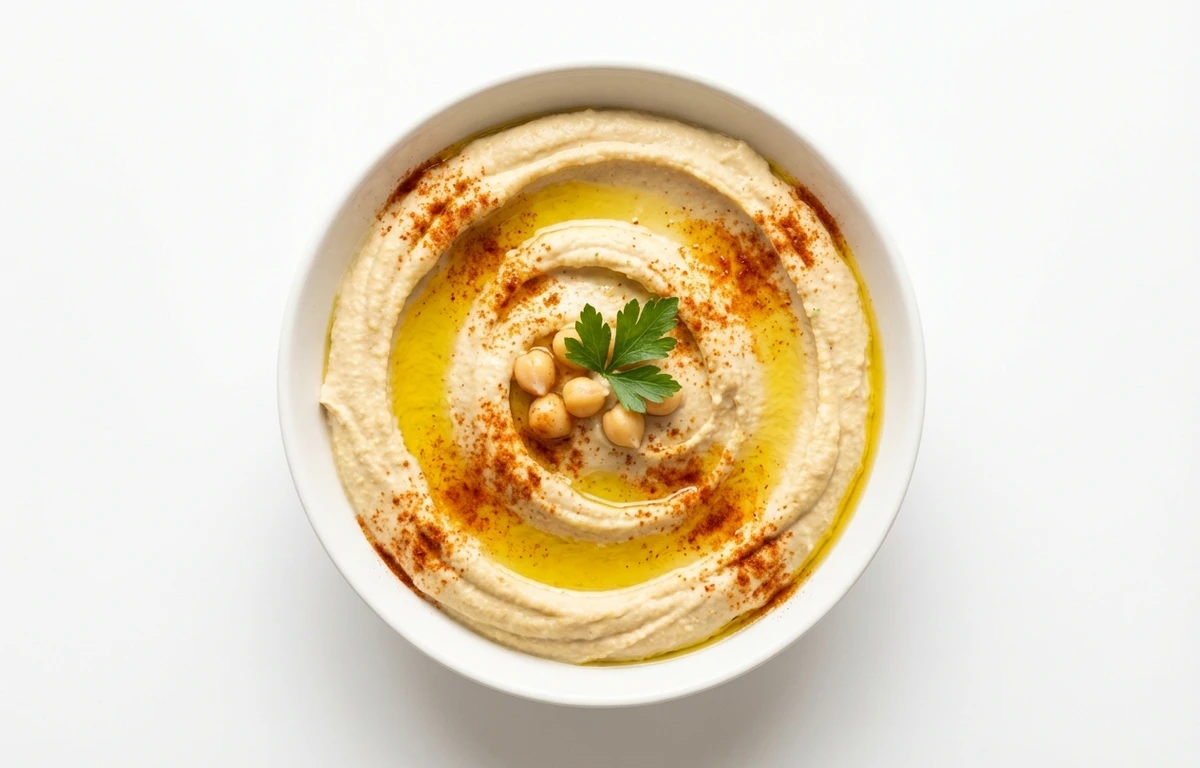
- 2Drizzle with high-quality extra virgin olive oil and a sprinkle of paprika before serving
- 3If the hummus is too thick after refrigeration, stir in a teaspoon of warm water or lemon juice
STORAGE
Keep it fresh.
- Store in an airtight container in the refrigerator for 4 to 7 days
- Can be frozen for up to 4 months, though texture may become slightly grainy
- If store-bought, follow the 'use by' date and consume within 5 days of opening
FAQ
Frequently asked questions.
How long does hummus last in the fridge?
Freshly made hummus typically lasts 3-5 days, while store-bought hummus lasts about 7 days after opening if kept refrigerated.
Can you freeze hummus?
Yes, hummus can be frozen for up to 4 months. Thaw it in the refrigerator and stir well to restore the creamy consistency.
Is hummus gluten-free?
Naturally, hummus is gluten-free as it is made from chickpeas, tahini, and oil. However, always check labels for cross-contamination in processed brands.
What can I use as a substitute for hummus?
Baba ganoush (eggplant dip), white bean dip, or mashed avocado are excellent creamy, healthy alternatives.
Is hummus healthy for weight loss?
Yes, its high fiber and protein content promote satiety, though it is calorie-dense due to the tahini and oil, so portion control is key.
Does hummus contain common allergens?
Hummus contains tahini, which is made from sesame seeds—a major allergen for many people.
How can I tell if hummus has gone bad?
Spoiled hummus will have a sour smell, visible mold, or a significantly darker color than when fresh.
What are the best things to dip in hummus?
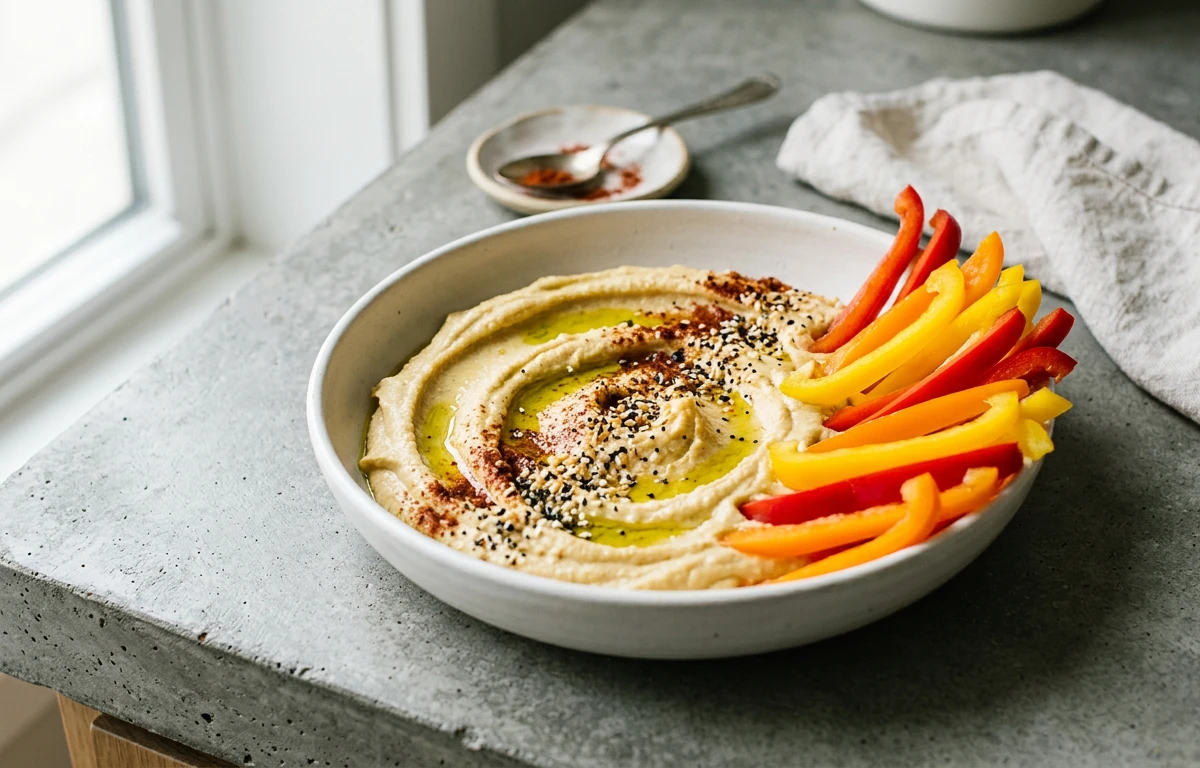
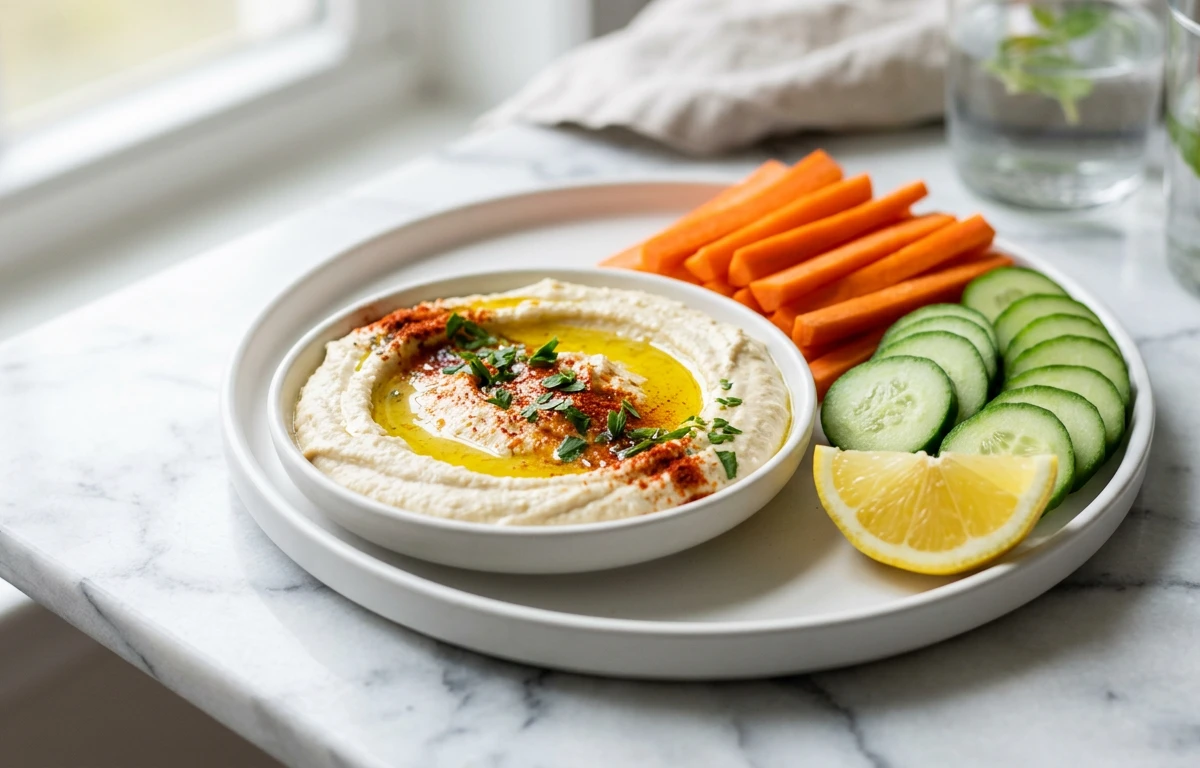
Pita bread, cucumbers, carrots, bell peppers, and celery are the most common and healthy pairings.
Can I make hummus without tahini?
Yes, you can substitute tahini with Greek yogurt, sunflower seed butter, or simply extra olive oil, though the flavor profile will change.
Is hummus considered a complete protein?
When eaten with pita or whole grains, the combination of chickpeas and grains provides all essential amino acids, making it a complete protein source.
RECIPES
Cook with hummus.
10 recipes · sorted by what’s quick