
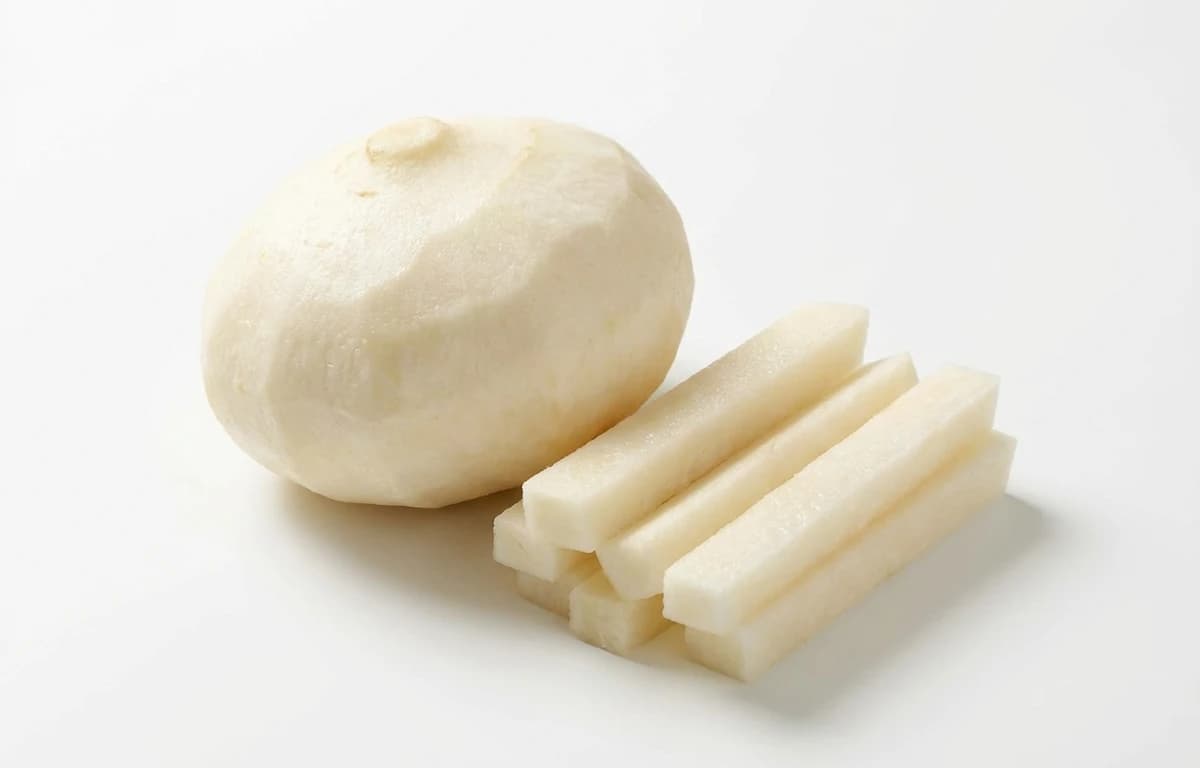
jicama
Also known as: yam bean, Mexican turnip, singkamas, hikama, gicama
Loading...
Also known as: yam bean, Mexican turnip, singkamas, hikama, gicama
Per 100g
Nutrition data source: USDA FoodData Central
Common measurement equivalents in grams
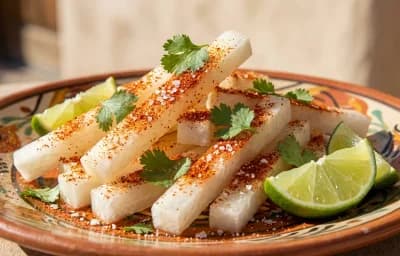
Crisp, refreshing jicama sticks tossed in tangy lime juice, spicy chili powder, and a hint of salt. This classic Mexican street snack, known as 'jicama con chile y limón', is incredibly easy to make and perfect for a healthy, crunchy bite on a warm day.
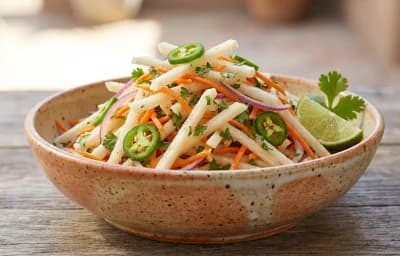
A refreshing and crunchy slaw with a zesty Southwestern twist. Sweet jicama, crisp carrots, and a hint of spice from jalapeño are tossed in a bright lime vinaigrette. The perfect side for tacos or grilled meats.
Yes, jicama is very healthy. It's rich in prebiotic fiber, particularly inulin, which promotes a healthy gut microbiome. It's also an excellent source of Vitamin C, a powerful antioxidant that supports immune function and skin health.
100g of jicama contains approximately 38 calories and 8.82g of carbohydrates. A significant portion of its carbohydrates comes from fiber, making it a relatively low-calorie and moderate-carb vegetable.
Yes, jicama can be beneficial for weight loss. It's low in calories and high in water and fiber, which promotes feelings of fullness and aids digestion. Its natural sweetness can also help satisfy cravings without excess sugar.
While jicama is lower in carbs than many root vegetables, 100g contains about 8.82g of total carbs, with a good portion being fiber. For strict keto diets, it should be consumed in moderation, but it can fit into a low-carb lifestyle.
Yes, jicama is naturally gluten-free, as it is a root vegetable. It is also inherently vegan, as it is a plant-based food with no animal products or by-products.
Jicama is most commonly eaten raw. First, peel the tough outer skin with a vegetable peeler or knife, then cut off the ends. It can be sliced into sticks, diced, or grated for salads, slaws, or as a crunchy snack. While less common, it can also be lightly stir-fried or roasted.
Jicama has a mild, slightly sweet, and nutty flavor. Its texture is notably crisp and juicy, similar to a water chestnut or a firm apple, making it refreshing and versatile for various dishes.
jicama is a versatile ingredient found in cuisines around the world. With 38 calories per 100g and 0.72 grams of protein, it's a nutritious addition to many dishes.
Explore more ingredients in the other category with complete nutrition information.
View all other →Store whole, unpeeled jicama in a cool, dark, dry place, similar to potatoes or onions. It can last for 2-3 weeks. Once cut, wrap the remaining portion tightly in plastic wrap and refrigerate, where it will stay fresh for about 1 week.
Yes, jicama is most commonly and safely eaten raw. Its crisp texture and mild flavor make it an excellent addition to salads, slaws, or simply enjoyed as a crunchy snack with dips.
Yes, it is essential to peel jicama before eating. The outer skin is tough, fibrous, and not palatable. While the flesh is safe, the skin and other parts of the plant (leaves, stems, seeds) contain rotenone, which is toxic.