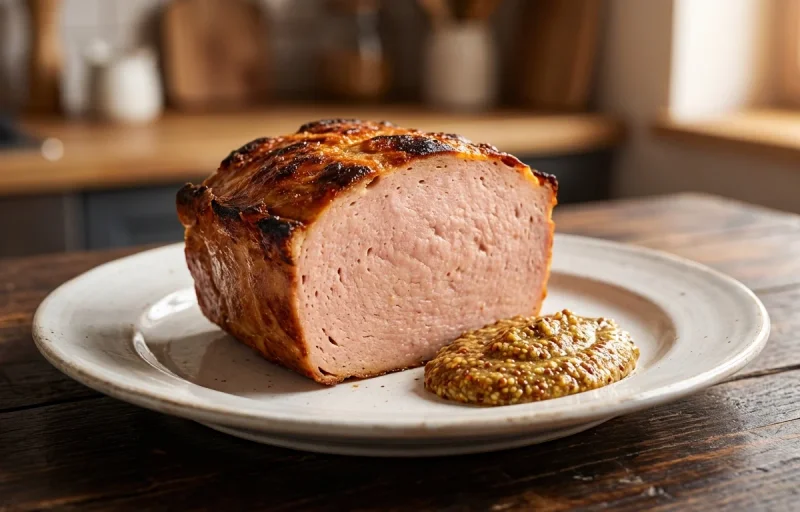
Other1 recipes
leberkäse.
VegetarianVeganGluten-freeDairy-freeNut-freePeanut-freeSoy-freeEgg-freeShellfish-freeHoney-freeAlcohol-freeHalalKosher
ALSO KNOWN AS
FleischkäseGerman meatloaf
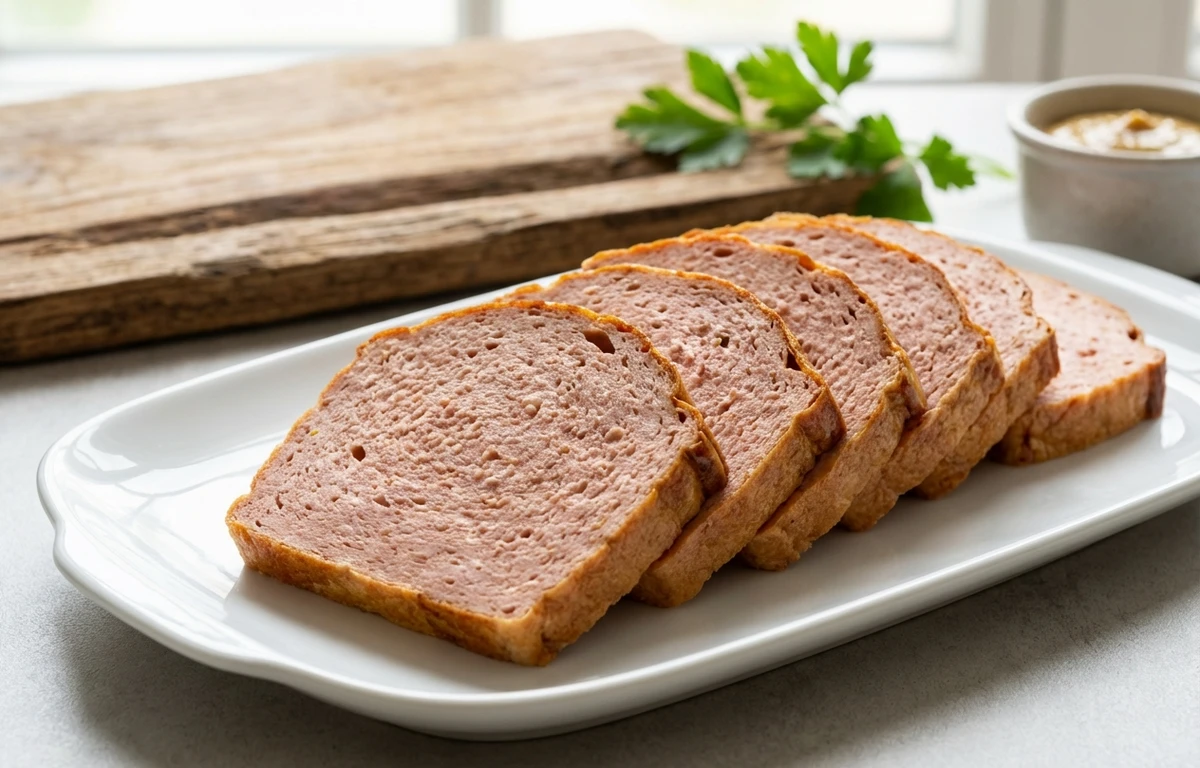
SERVING
CALORIES
298
PROTEIN
12.5g
CARBS
2.1g
FAT
26.3g
FIBER
0g
Per 100 g, it provides 0 µg of vitamin K.
NUTRITION PROFILE · per 100 g
Everything in this ingredient.
MACRONUTRIENTS
Calories298kcal—
Protein12.5g25%
Carbohydrates2.1g1%
Fiber0g0%
Sugar0.80g2%
Total fat26.3g34%
Saturated fat9.7g49%
Cholesterol70mg23%
Water55g—
MINERALS
Sodium980mg43%
Potassium200mg4%
Calcium10mg1%
Iron1.2mg7%
Magnesium12mg3%
Phosphorus150mg12%
Zinc1.5mg14%
Copper0.05mg6%
Manganese0.01mg0%
Selenium10.5µg19%
VITAMINS
Vitamin A0µg0%
Vitamin C0mg0%
Vitamin D0µg0%
Vitamin E0.10mg1%
Vitamin K0µg0%
Thiamin (B1)0.10mg8%
Riboflavin (B2)0.10mg8%
Niacin (B3)3.5mg22%
Pantothenic acid (B5)0.40mg8%
Vitamin B60.10mg6%
Folate (B9)2.0µg1%
Vitamin B120.50µg21%
%DV based on a 2,000 cal diet. Source: USDA FoodData Central. A dash in the %DV column means there’s no established Daily Value for that nutrient.
MEASUREMENT CONVERSIONS
How much is what.
1 oz28.4g
1 lb453.6g
1 piece56g
HEALTH BENEFITS
Why eat it.
- ✓Rich source of complete protein, essential for muscle maintenance and repair.
- ✓Provides significant amounts of Vitamin B12, crucial for nerve function and the formation of red blood cells.
COOKING TIPS
In the kitchen.
- 1For a classic preparation, cut into 1/2-inch (1-2 cm) thick slices and pan-fry in butter or a neutral oil until a golden-brown crust forms on both sides.
- 2Serve a warm slice in a hard roll (Semmel) with sweet Bavarian mustard for a traditional 'Leberkäsesemmel'.
- 3Dice cold, cooked Leberkäse and use it to make a 'Wurstsalat' (sausage salad) with onions, pickles, and a light vinaigrette.
- 4When baking a raw loaf, score the top in a diamond pattern before baking to help the crust become crispy and prevent it from splitting.
STORAGE
Keep it fresh.
- Refrigerate uncooked Leberkäse loaf (Brät) immediately and cook within 1-2 days.
- Store cooked, sliced Leberkäse in an airtight container in the refrigerator for up to 4 days.
- For longer storage, wrap cooked Leberkäse tightly in plastic wrap and foil and freeze for up to 3 months. Thaw in the refrigerator before use.
FAQ
Frequently asked questions.
Is Leberkäse healthy?
Leberkäse is a good source of complete protein, Vitamin B12, iron, zinc, and selenium, supporting muscle health, nerve function, and immunity. However, it is high in calories and fat, particularly saturated fat, so it should be consumed in moderation as part of a balanced diet.
What are the nutritional values of Leberkäse per 100g?
Per 100g, Leberkäse typically contains around 298 calories, 12.5g of protein, 2.1g of carbohydrates, and 26.3g of fat. It also provides essential micronutrients like Vitamin B12, iron, and zinc.
Is Leberkäse gluten-free?
Traditionally, Leberkäse is made from finely ground meat, bacon, and spices, and does not contain gluten-containing ingredients. However, some manufacturers might use fillers or additives that contain gluten, so it's always best to check the ingredient list or packaging for certification if you have a gluten sensitivity.
Is Leberkäse keto-friendly?
With only 2.1g of carbohydrates per 100g, Leberkäse can be considered keto-friendly due to its low carb content. It also provides a good amount of fat and protein, which are key macronutrients for a ketogenic diet.
How is Leberkäse typically eaten or prepared?
Leberkäse is most commonly served warm, often sliced thick and pan-fried until crispy, then placed in a bread roll (Semmel) with mustard. It can also be served cold in thin slices as part of a cold cut platter or with potato salad.
What does Leberkäse taste like?
Leberkäse has a mild, savory, and slightly salty flavor with a smooth, fine texture similar to a very fine pâté or bologna. When pan-fried, it develops a delicious crispy crust and a tender interior.
How should I store Leberkäse?
Fresh Leberkäse should be stored in the refrigerator at 0-4°C (32-39°F) and consumed within 3-5 days of purchase. If it's pre-packaged, follow the 'best by' date. Cooked Leberkäse leftovers should also be refrigerated and eaten within 2-3 days.
What is Leberkäse made of, and does it contain liver?
Leberkäse is traditionally made from finely ground beef, pork, bacon, water, and spices, baked in a loaf pan until it has a crispy brown crust. Despite its name, which translates to 'liver cheese,' most modern Leberkäse varieties, especially in Bavaria, do not contain liver. The name is thought to derive from old German words for 'loaf' (Laib) and 'curd' (Käse, referring to its loaf shape and cheese-like consistency).
RECIPES
Cook with leberkäse.
1 recipes · sorted by what’s quick