Leberkäse
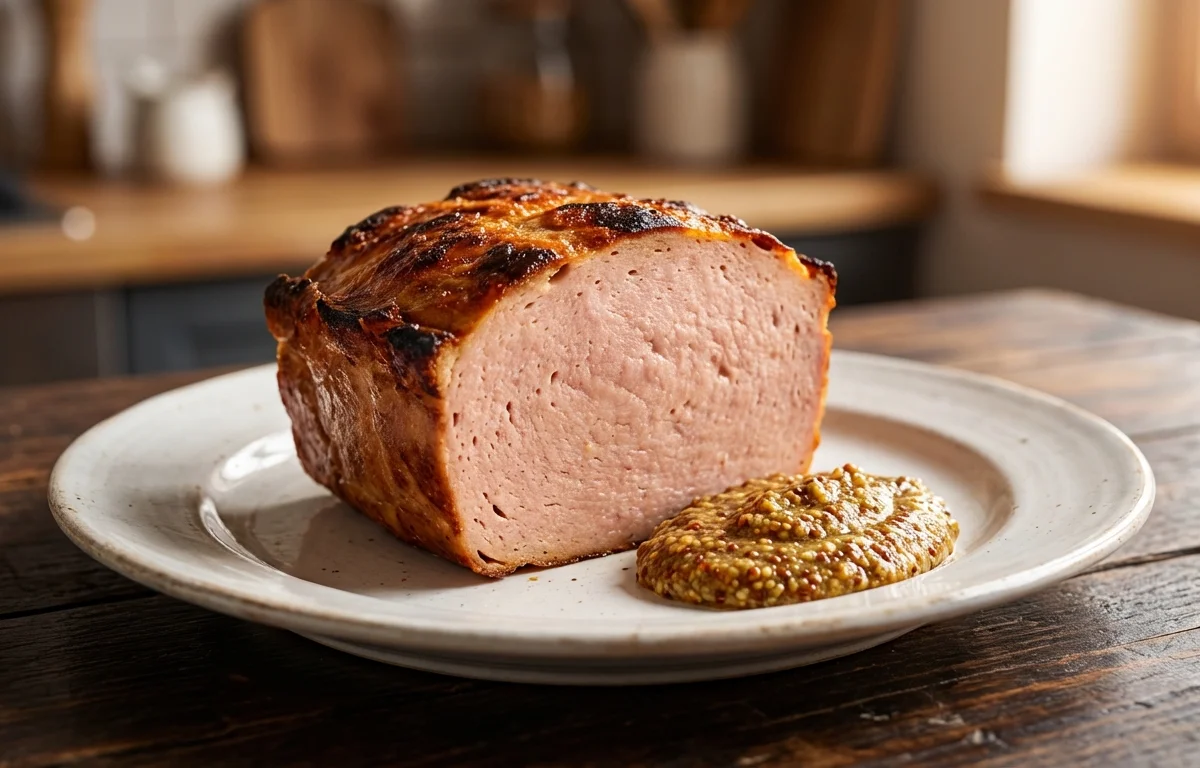
A finely emulsified Bavarian-style meat loaf with a golden, crispy crust and a tender, bologna-like interior. Despite its name (literally 'liver cheese'), this classic contains no liver or cheese. It bakes in a loaf pan and slices beautifully for sandwiches, served with sweet mustard and a soft pretzel.
For 4 servings
- prep · ~30 min
Chill all equipment and meat.
Place the food processor blade, bowl, and all cubed meats in the freezer for 30 minutes. Everything must be very cold to achieve a proper emulsion.
TIPWarm meat creates a grainy, broken texture. Keep everything near freezing. - prep · ~5 min
Preheat the oven and prepare the pan.
Preheat the oven to 350°F (175°C). Line the loaf pan with parchment paper, leaving some overhang for easy lifting.
- saute · ~6 min
Sweat the onion and garlic.
In a small pan over medium heat, sauté the chopped onion until translucent, about 4 minutes. Add the minced garlic and cook for 1 more minute. Let cool completely.
TIPEnsure the onion mixture is fully cooled before adding to the meat, or it will warm the emulsion. - mix · ~4 min
Emulsify the meat mixture.
1.Place the chilled beef and pork into the food processor. Process until a smooth, sticky paste forms.2.Add the chopped bacon and process again until combined.3.With the machine running, slowly pour in the ice water. Blend until the mixture is very smooth and tacky.4.Add the cooled onion mixture, salt, curing salt, white pepper, nutmeg, ginger, and cardamom. Process for 30 seconds more to distribute evenly.TIPThe mixture should resemble a fine mousse. A spoonful held upside down should stick firmly. - bake · ~90 min
Fill the pan and bake.
1.Scoop the emulsified meat mixture into the lined loaf pan, pressing down firmly to remove any air pockets.2.Using a spatula or wet hands, smooth the top of the loaf into a slightly domed shape.3.Create a shallow cross-hatch pattern on the surface with the back of a knife.4.Place the pan in the preheated oven and bake for 90 minutes, or until the internal temperature reaches 160°F (71°C).TIPThe cross-hatching increases the surface area for a crispier crust. - rest · ~15 min
Rest the Leberkäse before slicing.
Remove the pan from the oven and let the meatloaf rest for 15 minutes. Lift it out using the parchment paper and let it cool slightly on a wire rack.
TIPResting is crucial; it allows the internal juices to redistribute, keeping the slices moist. - serve
Slice and serve warm.
Unmold the loaf and cut into thick, finger-width slices. Serve immediately with sweet Bavarian mustard, soft pretzels, or simply on a crusty roll.
What to keep in mind.
7 tips from the recipe — small details that make a real difference to the final dish.
- 1Keep all meat and equipment near freezing (0°C) to ensure a stable emulsion without separating.
- 2Process the meat until it feels sticky and tacky — a spoonful held upside down should not fall off.
- 3Pour the ice water in a slow, steady stream while the processor runs to fully incorporate it into the emulsion.
- 4Use wet hands or a wet spatula to smooth the top of the loaf — this prevents sticking and gives a clean dome.
- 5Let the Leberkäse rest for a full 15 minutes after baking so the juices redistribute and slices stay moist.
- 6For the crispiest crust, score the top with a shallow cross-hatch pattern before baking to maximize surface area.
- 7Slice the Leberkäse thick (finger-width) and serve warm — it loses its tender texture if sliced too thin or cold.
Adapt it for your goals.
Leaner version
Replace half the bacon with lean turkey bacon and reduce pork shoulder to 200g, adding 100g more lean beef. This lowers the fat content while keeping a decent emulsion — best for those watching sat fat.
spicy LeberkäseSpicy Leberkäse
Add 1–2 teaspoons of finely minced jalapeño or a pinch of cayenne pepper along with the spices. Gives a gentle heat that pairs beautifully with the sweet mustard.
herb infusedHerb-infused
Blend in 2 tablespoons of finely chopped fresh parsley and 1 teaspoon dried marjoram with the onion mixture. Adds an aromatic, grassy note common in some regional Bavarian variations.
gluten free optionGluten-free option
Ensure all spice blends are gluten-free (most are) and serve on a gluten-free roll or with gluten-free pretzels. The recipe itself contains no wheat, so it's naturally suitable.
Why this is on our healthy list.
High-Quality Animal Protein
This dish provides a concentrated source of complete protein from beef, pork, and bacon, supporting muscle repair and satiety.
Rich in B Vitamins
Pork and beef are naturally rich in B vitamins like B12, niacin, and B6, which support energy metabolism and nervous system function.
Mineral Boost from Spices
Nutmeg, ginger, and cardamom add trace amounts of manganese, iron, and magnesium while contributing antioxidants and digestive benefits.
Moderate in Carbohydrates
With no added sugars or starches, this recipe is naturally low in carbs, making it suitable for low-carb or keto-friendly meal plans when served without a bun.
Frequently asked questions
The name derives from an old German dialect: 'Leber' may come from 'Laib' (loaf) and 'Käse' refers to its shape resembling a cheese wheel — it's simply a meat loaf.