Other
maultaschen.
VegetarianVeganGluten-freeDairy-freeNut-freePeanut-freeSoy-freeEgg-freeShellfish-freeHoney-freeAlcohol-freeHalalKosher
ALSO KNOWN AS
german ravioliSwabian pockets
SERVING
CALORIES
170
PROTEIN
8.5g
CARBS
18g
FAT
7.1g
FIBER
1.5g
Per 100 g, it provides 10 µg of vitamin K.
NUTRITION PROFILE · per 100 g
Everything in this ingredient.
MACRONUTRIENTS
Calories170kcal—
Protein8.5g17%
Carbohydrates18g7%
Fiber1.5g5%
Sugar0.90g2%
Total fat7.1g9%
Saturated fat2.8g14%
Cholesterol25mg8%
Water64g—
MINERALS
Sodium400mg17%
Potassium180mg4%
Calcium40mg3%
Iron1.2mg7%
Magnesium17mg4%
Phosphorus100mg8%
Zinc0.70mg6%
Copper0.08mg9%
Manganese0.10mg4%
Selenium3.5µg6%
VITAMINS
Vitamin A20µg2%
Vitamin C1.5mg2%
Vitamin D0.10µg1%
Vitamin E0.50mg3%
Vitamin K10µg8%
Thiamin (B1)0.10mg8%
Riboflavin (B2)0.10mg8%
Niacin (B3)1.5mg9%
Pantothenic acid (B5)0.40mg8%
Vitamin B60.10mg6%
Folate (B9)30µg8%
Vitamin B120.30µg13%
%DV based on a 2,000 cal diet. Source: USDA FoodData Central. A dash in the %DV column means there’s no established Daily Value for that nutrient.
MEASUREMENT CONVERSIONS
How much is what.
1 oz28.4g
1 lb453.6g
1 piece95g
HEALTH BENEFITS
Why eat it.
- ✓Good source of complete protein from meat and eggs, essential for muscle repair and growth.
- ✓Provides B vitamins, particularly B12 from meat, which supports nerve function and red blood cell formation.
- ✓Offers a significant source of energy from the carbohydrates in the pasta dough.
COOKING TIPS
In the kitchen.
- 1Simmer gently in salted water or a clear broth for 10-15 minutes until they float to the surface; do not boil vigorously as this can cause them to break.
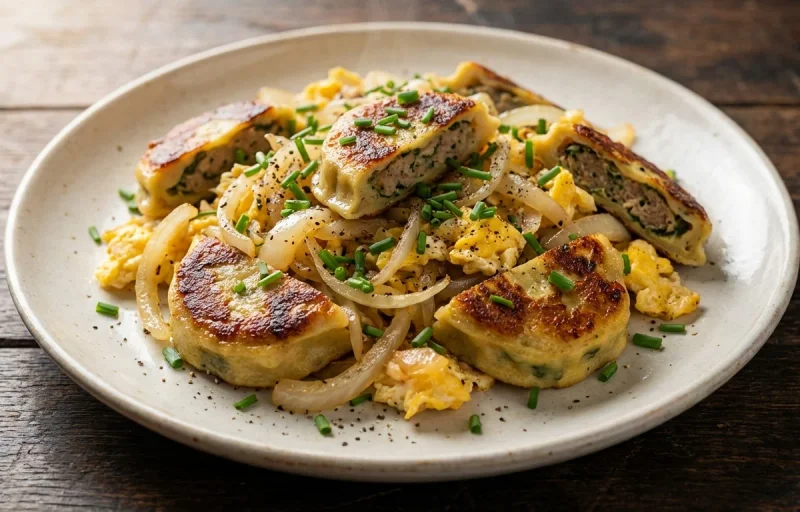
- 2For a classic Swabian preparation ('geschmälzt'), sauté cooked Maultaschen in butter with caramelized onions and serve with a side salad.
- 3Create a hearty meal by slicing cooked Maultaschen and pan-frying them with scrambled eggs ('geröstet').
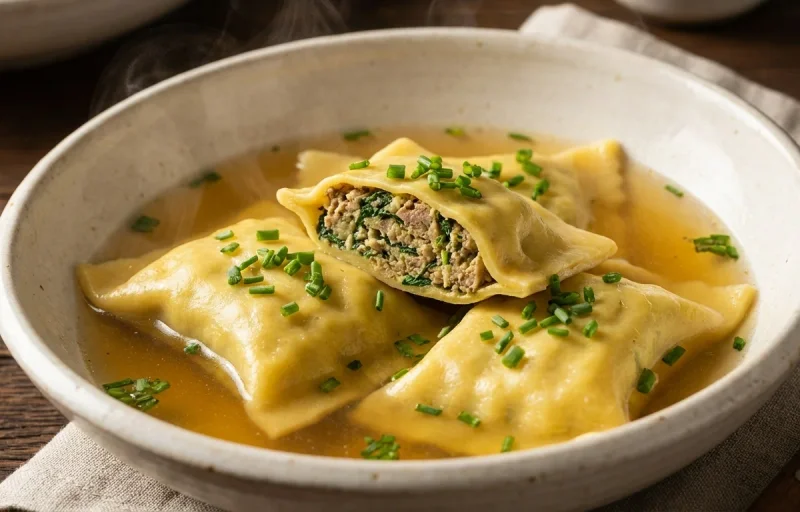
- 4Serve them simply simmered in a clear, flavorful beef or vegetable broth ('in der Brühe') as a comforting soup.
STORAGE
Keep it fresh.
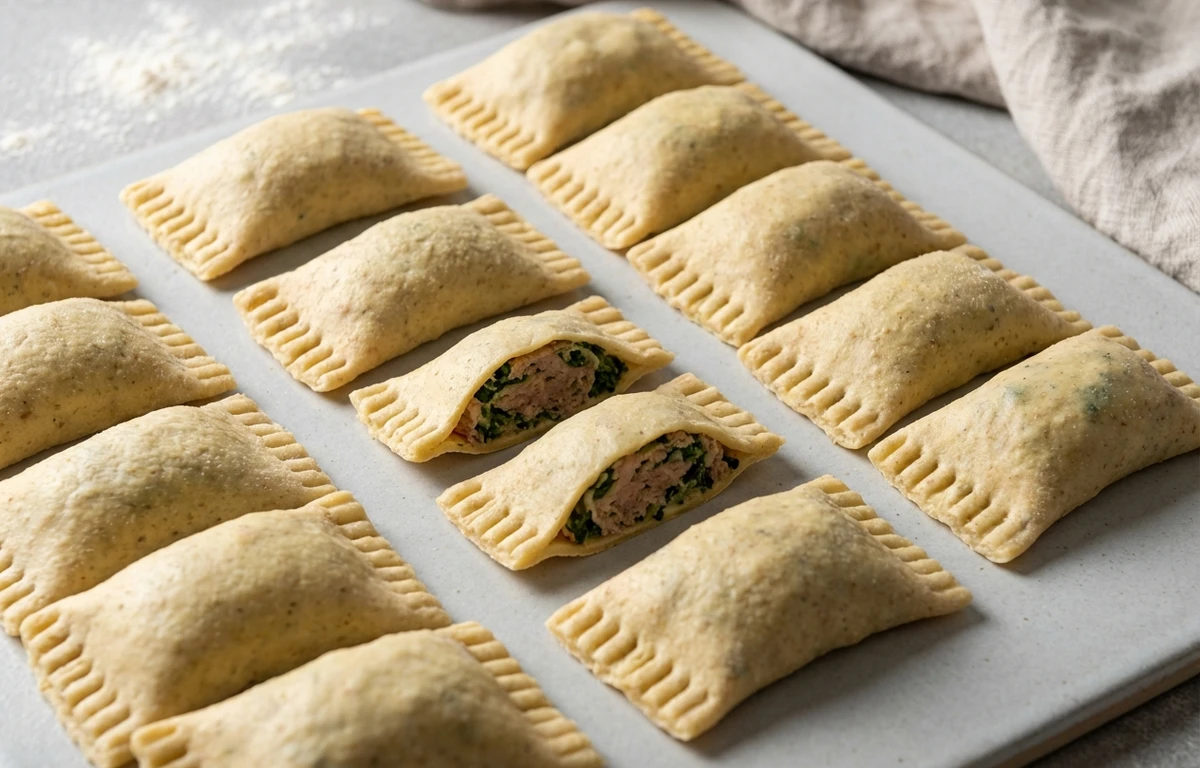
- Store fresh, uncooked Maultaschen in the refrigerator for up to 2-3 days in an airtight container.
- For longer storage, freeze Maultaschen in a single layer on a baking sheet before transferring to a freezer bag. They can be kept frozen for up to 3 months and cooked directly from frozen.
FAQ
Frequently asked questions.
What are the nutritional values of Maultaschen per 100g?
Per 100g, Maultaschen typically contain approximately 170 calories, 8.5g of protein, 18g of carbohydrates, and 7.1g of fat. These values can vary slightly depending on the specific recipe, filling ingredients, and preparation method.
Is Maultaschen vegetarian or vegan?
No, traditional Maultaschen are neither vegetarian nor vegan. They are typically filled with a mixture of ground meat (often beef, pork, or veal), spinach, bread, and eggs, all encased in an egg pasta dough. Vegetarian versions exist, but they are not traditional.
How do you cook Maultaschen?
Maultaschen are very versatile. They can be boiled in broth and served with caramelized onions, pan-fried until crispy, or baked in a gratin with cheese and cream. They are often served simply with a side salad or as a hearty main course.
What does Maultaschen taste like?
Maultaschen have a savory, hearty flavor. The pasta dough is tender, similar to a large ravioli, while the filling is a rich blend of seasoned ground meat, spinach, and herbs. The taste can vary slightly depending on the specific spices and meat used in the filling.
How do you store Maultaschen?
Fresh, uncooked Maultaschen should be stored in the refrigerator and consumed within a few days. Cooked Maultaschen can also be refrigerated for 2-3 days. For longer storage, Maultaschen can be frozen, either raw or cooked, for several months in an airtight container.
How long do Maultaschen last?
Uncooked, fresh Maultaschen typically last 3-4 days in the refrigerator. Packaged, pre-cooked Maultaschen will have an expiration date on the packaging, usually lasting longer. Once cooked, leftovers should be eaten within 2-3 days when properly refrigerated.
RECIPES
Cook with maultaschen.
0 recipes · sorted by what’s quick