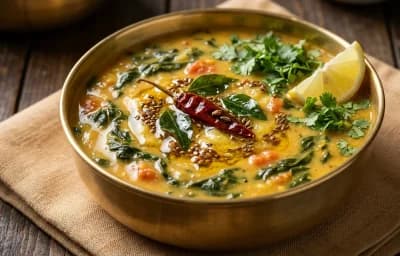
moringa
Also known as: drumstick, sahjan, shevga, murungai, muringakkai, munagakaya, nuggekayi, soanjna, moringa oleifera pods
Loading...
Also known as: drumstick, sahjan, shevga, murungai, muringakkai, munagakaya, nuggekayi, soanjna, moringa oleifera pods
Per 100g
Nutrition data source: USDA FoodData Central
Common measurement equivalents in grams
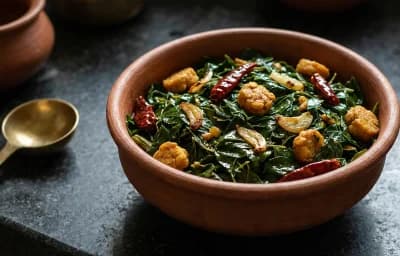
An authentic and nutritious Odia stir-fry featuring tender moringa leaves (Sajana Saga) sautéed with pungent garlic, red chilies, and crunchy sun-dried lentil dumplings (badi). This simple, healthy side dish is a staple in Odia households and comes together in minutes.
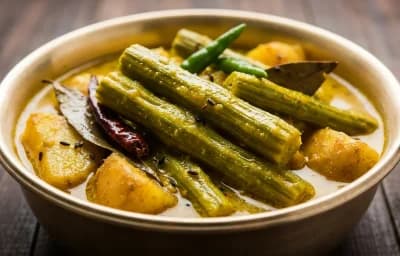
A light, soupy Bengali curry featuring tender moringa drumsticks (a vegetable) and potatoes. This traditional summer dish is subtly spiced with panch phoron and ginger, making it both comforting and refreshing. Perfect with steamed rice for a wholesome meal.
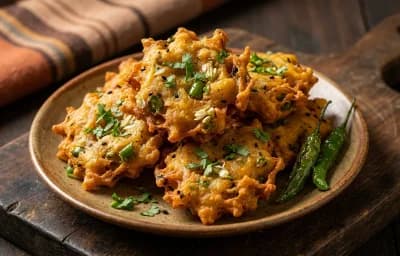
Crispy, golden fritters made from delicate moringa flowers, a beloved Bengali delicacy. These savory bites have a unique, slightly bitter taste and are perfect as a snack with tea or as a crunchy side with dal and rice.
Look for pods that are firm, bright green, and relatively slender. Avoid very thick pods as they tend to be woody and fibrous.
Fresh drumsticks last about 3 to 5 days in the refrigerator if kept in a plastic bag or wrapped in a damp cloth.
The outer skin is very fibrous and usually discarded. You eat the soft inner pulp and the seeds by scraping them out with your teeth.
While the flavor is unique, green beans or okra can be used as a substitute in stews, though the texture and eating method will differ.
Yes, it is low in calories and high in fiber, which can help you feel full longer and support metabolic health.
Wash the pods, trim the ends, lightly scrape the skin, and cut them into 2-3 inch long pieces.
While the leaves can be eaten raw, the pods (drumsticks) are almost always cooked to soften the fibrous exterior and the seeds.
It is a staple in South Indian Sambar, various Thai curries, and Filipino soups like Tinola.
moringa is a versatile ingredient found in cuisines around the world. With 37 calories per 100g and 2.1 grams of protein, it's a nutritious addition to many dishes.
Explore more ingredients in the other category with complete nutrition information.
View all other →