Sajana Saga Bhaja
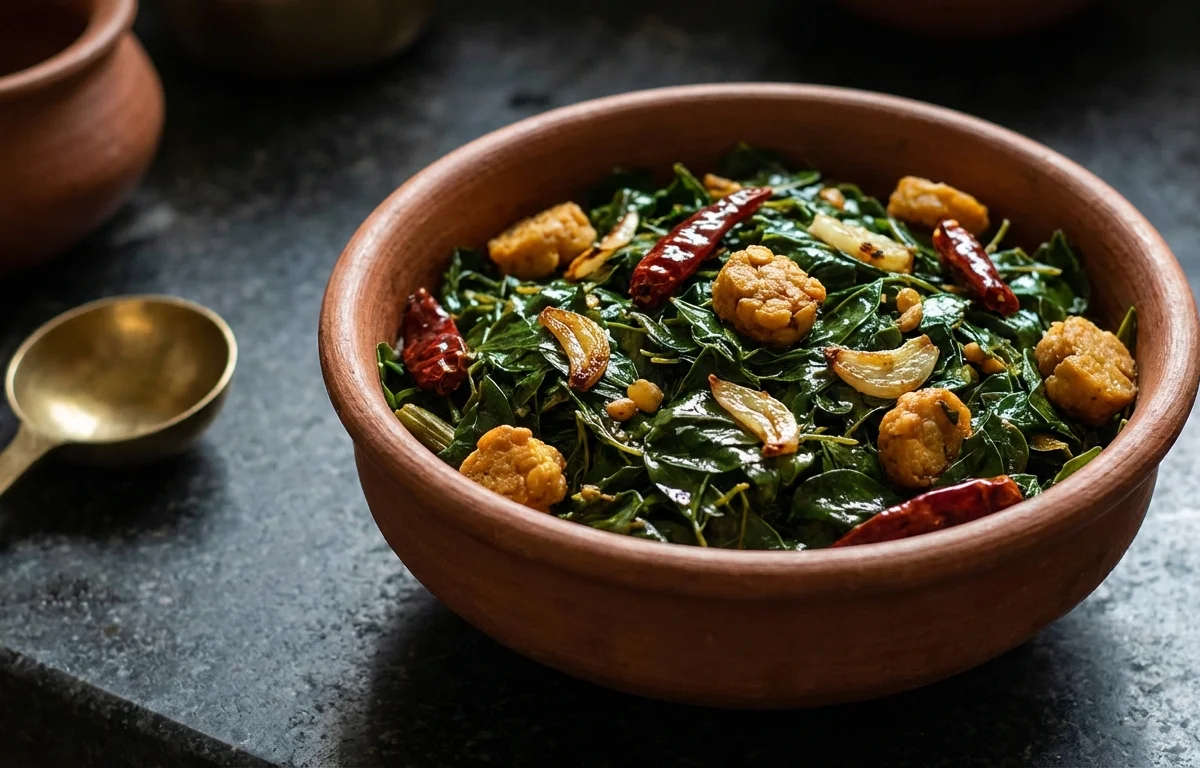
A humble and nutritious stir-fry from Odisha, made with tender moringa leaves, garlic, and a simple tempering of mustard seeds. This earthy, slightly nutty side dish cooks in minutes and pairs beautifully with steamed rice and dal.
For 4 servings
- prep
Clean and prep the drumstick leaves.
1.Pluck tender drumstick leaves from the stems and discard any thick stalks.2.Wash the leaves thoroughly under running water to remove any dirt.3.Roughly chop the leaves and set aside in a colander to drain excess water.TIPDon't skip the wash — moringa leaves often trap fine grit. - temper · ~2 min
Make the tempering.
1.Heat mustard oil in a kadhai or pan over medium heat until it smokes lightly.2.Add mustard seeds and wait until they splutter completely (about 30 seconds).3.Toss in the dried red chili pieces and sliced garlic.4.Sauté until the garlic turns light golden and fragrant (about 1 minute).TIPUse medium heat — high heat burns the garlic before the oil is fully tempered. - other · ~7 min
Stir-fry the drumstick leaves.
1.Add the chopped drumstick leaves to the pan.2.Sprinkle in turmeric powder and salt.3.Toss everything well so the leaves are coated with the tempering.4.Cover and cook on low heat for 4-5 minutes, stirring once midway.5.Uncover and stir-fry for another 2 minutes until the leaves wilt and any excess moisture evaporates.TIPDon't add water — the moisture on the leaves from washing is enough to cook them. - serve
Serve hot with steamed rice and dal.
Transfer to a serving bowl and serve immediately as a side dish with pakhala, steamed rice, or roti.
What to keep in mind.
6 tips from the recipe — small details that make a real difference to the final dish.
- 1Always use tender moringa leaves for the best texture; older leaves can be fibrous and chewy.
- 2Do not skip the smoking step for mustard oil — it mellows the sharpness and adds a nutty depth.
- 3Let the mustard seeds splutter fully before adding chilies and garlic to avoid burning the garlic.
- 4Covering the pan after adding leaves helps them wilt evenly without needing extra water.
- 5For a crunchier texture, remove the lid early and stir-fry until leaves are just dry.
- 6This bhaja tastes best fresh, but leftovers can be refrigerated for up to 2 days and gently reheated.
Adapt it for your goals.
Milder version
Reduce dried red chilies to 1 piece and use a neutral oil like sunflower instead of mustard oil for a less pungent, family-friendly stir-fry.
with coconutWith coconut
Add 2 tablespoons of fresh grated coconut along with the leaves for a subtle sweetness and richer texture.
high proteinHigh-protein
Add 1/4 cup of roasted peanuts or chana dal at the tempering stage for a crunchy, protein-packed twist.
vegan + oil freeVegan + oil-free
Sauté garlic and spices in a few tablespoons of water instead of oil, then add the leaves; skip the mustard seeds for a steamed green side dish.
Why this is on our healthy list.
Rich in Iron and Calcium
Moringa leaves are a well-known plant source of iron and calcium, supporting healthy blood and bones.
Packed with Antioxidants
The combination of turmeric, garlic, and moringa provides natural antioxidants that help fight inflammation.
Low-Calorie, High-Nutrient
This stir-fry is very low in calories yet dense in vitamins A, C, and B-complex, making it a nutrient-rich side dish.
Supports Digestion
Mustard seeds and garlic aid digestion, while moringa leaves are known for their mild laxative effect.
Frequently asked questions
Yes, but thaw and squeeze dry frozen leaves first; dried leaves need rehydrating and won't have the same tender texture.