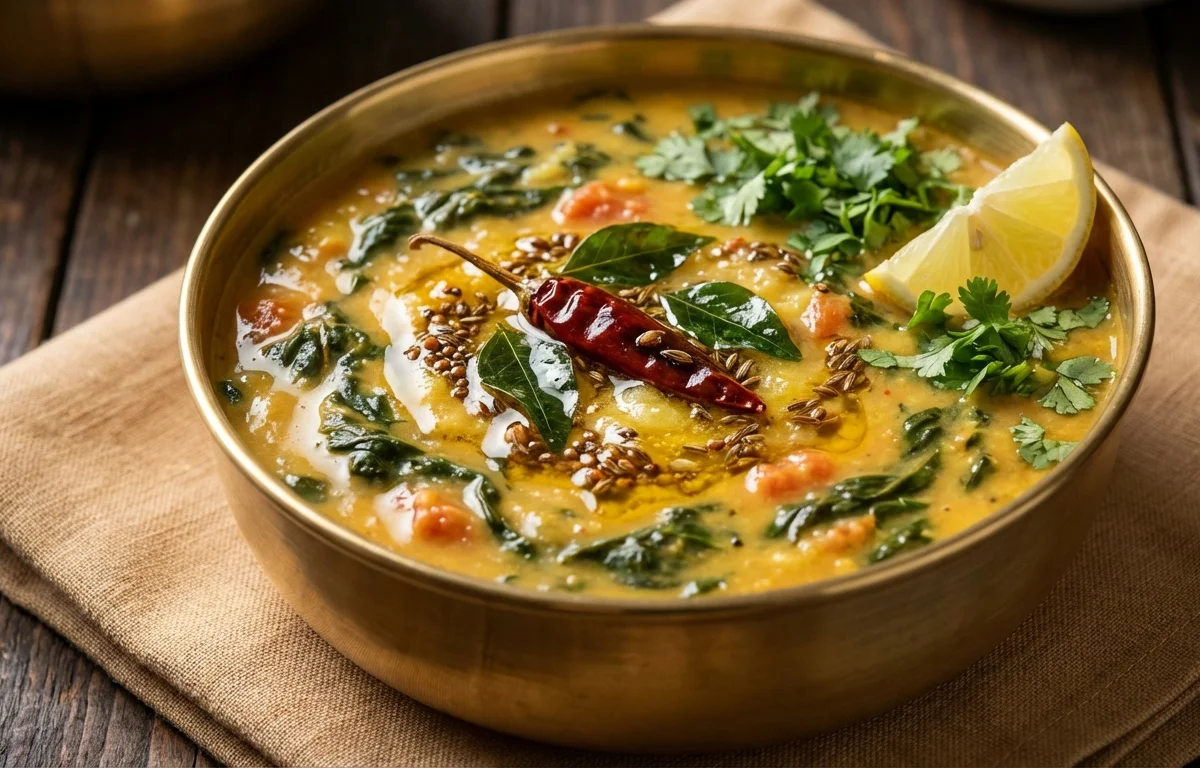
Munga Saag Dal
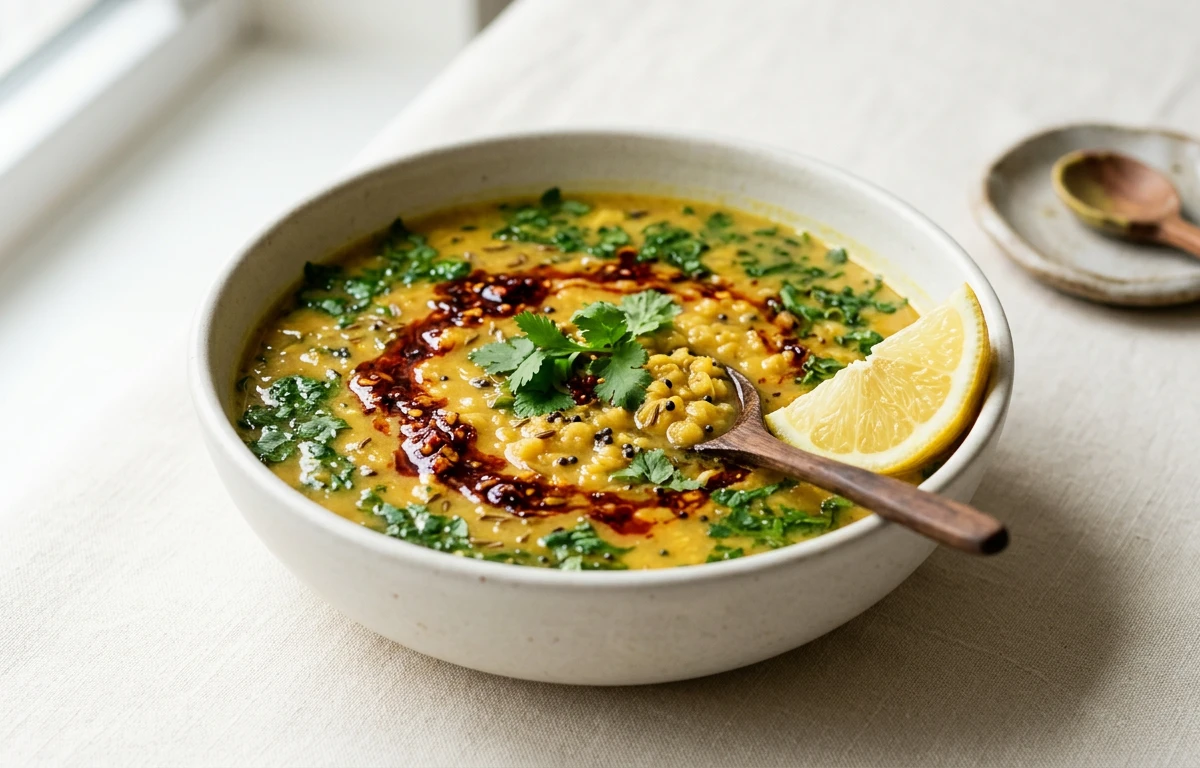
This homestyle dal brings together tender lentils and earthy moringa leaves in a light, comforting curry. Gentle spices, onion, garlic, and tomato keep it simple, making it a lovely everyday dish with rice or roti.
For 4 servings
- prep · ~20 min
Wash the dal and clean the munga saag.
1.Wash the toor dal well and soak it in fresh water for 20 minutes.2.Pluck the moringa leaves from the thicker stems and discard any yellow leaves.3.Wash the moringa leaves in 2 to 3 changes of water and drain well.4.Chop the onion, tomato, garlic, and ginger, and slit the green chili. - pressure cook · ~15 min
Cook the dal until soft.
Add the soaked toor dal, 2.5 cups water, turmeric powder, and 0.25 tsp salt to a pressure cooker. Cook until the dal is very soft, about 3 whistles on medium heat, then let the pressure release naturally.
TIPSoft dal gives the finished dish a smoother texture, so mash it lightly after cooking if needed. - temper · ~2 min
Make the tempering.
1.Heat oil in a pan over medium heat.2.Add mustard seeds and let them splutter.3.Add cumin seeds and cook for a few seconds until fragrant.4.Add chopped garlic, ginger, and green chili.TIPKeep the heat medium so the seeds crackle without burning the garlic. - saute · ~9 min
Cook the onion and tomato.
1.Add the chopped onion and cook until soft and lightly golden, 4 to 5 minutes.2.Add the tomato and cook until it breaks down and turns pulpy, 3 to 4 minutes.3.Add red chili powder and mix well. - saute · ~3 min
Cook the munga saag.
Add the moringa leaves to the pan and cook for 2 to 3 minutes until wilted and reduced in volume. Stir often so the leaves cook evenly.
- simmer · ~7 min
Combine the dal and simmer.
Add the cooked dal, remaining 0.5 cup water, and the remaining 0.25 tsp salt. Mix well and simmer for 6 to 8 minutes so the flavors come together and the dal reaches a light gravy consistency.
TIPAdd a splash more water only if the dal looks too thick; munga saag dal is best slightly loose, not heavy. - garnish
Garnish with coriander leaves.
- serve
Serve hot with rice or roti.
What to keep in mind.
7 tips from the recipe — small details that make a real difference to the final dish.
- 1Remove thicker moringa stems completely; they stay fibrous even after simmering.
- 2Soaking the toor dal helps it cook evenly and turn creamy with fewer lumps.
- 3Let mustard seeds fully splutter before adding cumin, or the tempering will taste raw.
- 4Cook the tomato until pulpy and glossy so it blends smoothly into the dal.
- 5Add moringa leaves only after the onion-tomato base is ready to avoid overcooking them.
- 6Keep the final consistency slightly loose; the dal thickens as it sits.
- 7This dal keeps well for a day in the fridge and often tastes better after resting.
Adapt it for your goals.
Low-oil
Use just 1 teaspoon oil for the tempering and a splash of water while sautéing the onion to keep the dal lighter.
spicierSpicier
Add an extra green chili or a little more red chili powder for a sharper heat that stands up well to the earthy moringa.
garlic heavyGarlic-heavy
Increase the chopped garlic and let some turn lightly golden in the tadka for a deeper, more robust homestyle flavor.
mixed dalMixed-dal
Replace part of the toor dal with moong dal for a softer, lighter texture and a slightly sweeter lentil taste.
Why this is on our healthy list.
Plant Protein from Dal
Toor dal makes this dish filling and nourishing, adding plant-based protein that pairs well with rice or roti.
Leafy Green Goodness
Moringa leaves bring the benefits of leafy greens and add more depth and nourishment than plain dal alone.
Digestive Spice Support
Ginger, garlic, cumin, and mustard seeds add flavor while also making a simple lentil dish feel easier and lighter to eat.
Frequently asked questions
Yes, but it may take longer to pressure-cook and the texture may be slightly less creamy. Soaking helps it soften more evenly.