
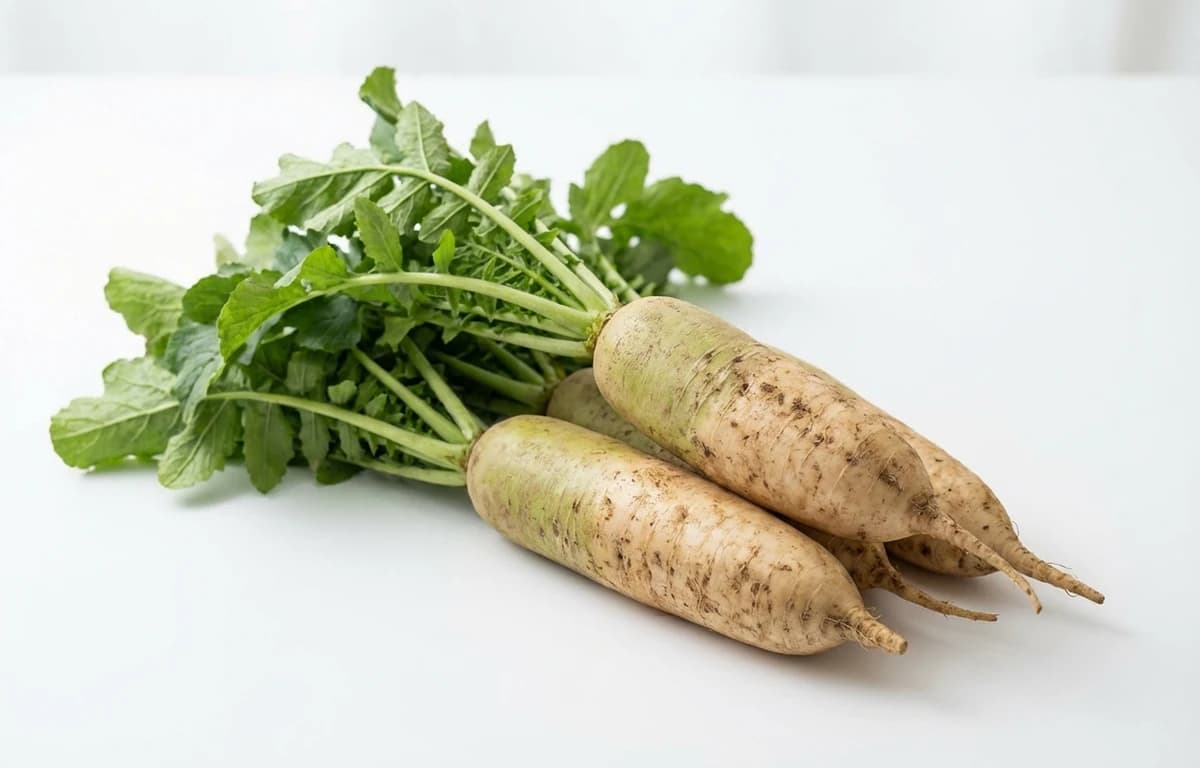
mulo
Also known as:
Loading...
Also known as:
Per 100g
Nutrition data source: USDA FoodData Central

A classic Bengali stir-fry where grated radish is cooked with potatoes and aromatic spices. This traditional dish has a unique sweet and savory flavor, perfect to be served alongside steamed rice and dal for a comforting meal.
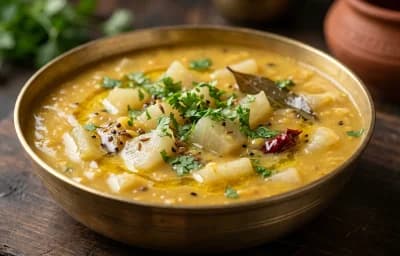
A comforting Bengali winter classic. This simple dal features tender split yellow peas cooked with chunks of radish, seasoned with a fragrant tempering of traditional spices. A perfect wholesome dish to enjoy with steamed rice.
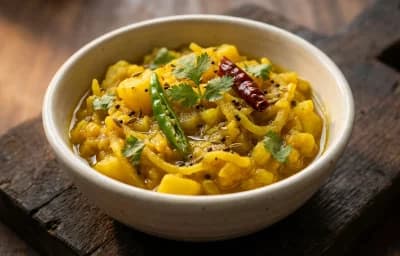
A classic Bengali mish-mash curry made with grated radish, delicately spiced with panch phoron. This semi-dry dish is a delightful way to enjoy winter vegetables, offering a unique blend of pungent, sweet, and savory flavors.
Yes, mulo (radish) is very healthy. It's low in calories and rich in essential nutrients like Vitamin C, antioxidants, and potassium. Its high fiber and water content also support digestive health.
Mulo (radish) is packed with benefits, including being a good source of Vitamin C, which boosts immunity and skin health. It also provides potassium for blood pressure regulation and contains compounds like glucosinolates that are being studied for potential anti-cancer properties. Per 100g, it has only 18 calories, 0.6g protein, 4.1g carbs, and 0.1g fat.
Yes, mulo (radish) can be beneficial for weight loss. It's extremely low in calories and fat, while being high in water and fiber, which helps promote satiety and aids digestion. Incorporating it into meals can add bulk and nutrients without significant caloric intake.
Yes, mulo (radish) is considered keto-friendly. With only 4.1g of carbohydrates per 100g, it's a low-carb vegetable that can be enjoyed in moderation on a ketogenic diet. It adds a crisp texture and peppery flavor to keto meals.
Yes, mulo (radish) is naturally both vegan and gluten-free. As a root vegetable, it contains no animal products or gluten-containing grains, making it suitable for a wide range of dietary preferences and restrictions.
Mulo (radish) can be enjoyed both raw and cooked. Raw, they are often sliced into salads, added to sandwiches, or served as a crisp snack. When cooked, they can be roasted, sautéed, or stir-fried, which mellows their peppery bite and brings out a slightly sweeter, milder flavor.
mulo is a versatile ingredient found in cuisines around the world. With 18 calories per 100g and 0.6 grams of protein, it's a nutritious addition to many dishes.
Explore more ingredients in the vegetable category with complete nutrition information.
View all vegetable →Mulo (radish) typically has a crisp, crunchy texture and a distinct peppery, slightly pungent flavor, especially when eaten raw. The intensity of the peppery taste can vary by variety and freshness. Cooking them tends to soften the flavor, making them milder and sometimes a bit sweet.
To store mulo (radish), first remove the greens (if attached) as they draw moisture from the roots. Store the radishes in a plastic bag or airtight container in the refrigerator's crisper drawer. They can typically last for 1-2 weeks when stored properly.
Yes, the leaves of mulo (radish) are edible and highly nutritious. They have a slightly peppery taste, similar to the root, and can be used in salads, sautéed like spinach, or added to soups and smoothies. Ensure they are fresh and thoroughly washed before consumption.
No, you typically do not need to peel mulo (radish). The skin is thin, edible, and contains many nutrients. A good wash and trim of the root and stem ends are usually sufficient before consumption. Peeling is only necessary if the skin is damaged or you prefer a milder flavor.