
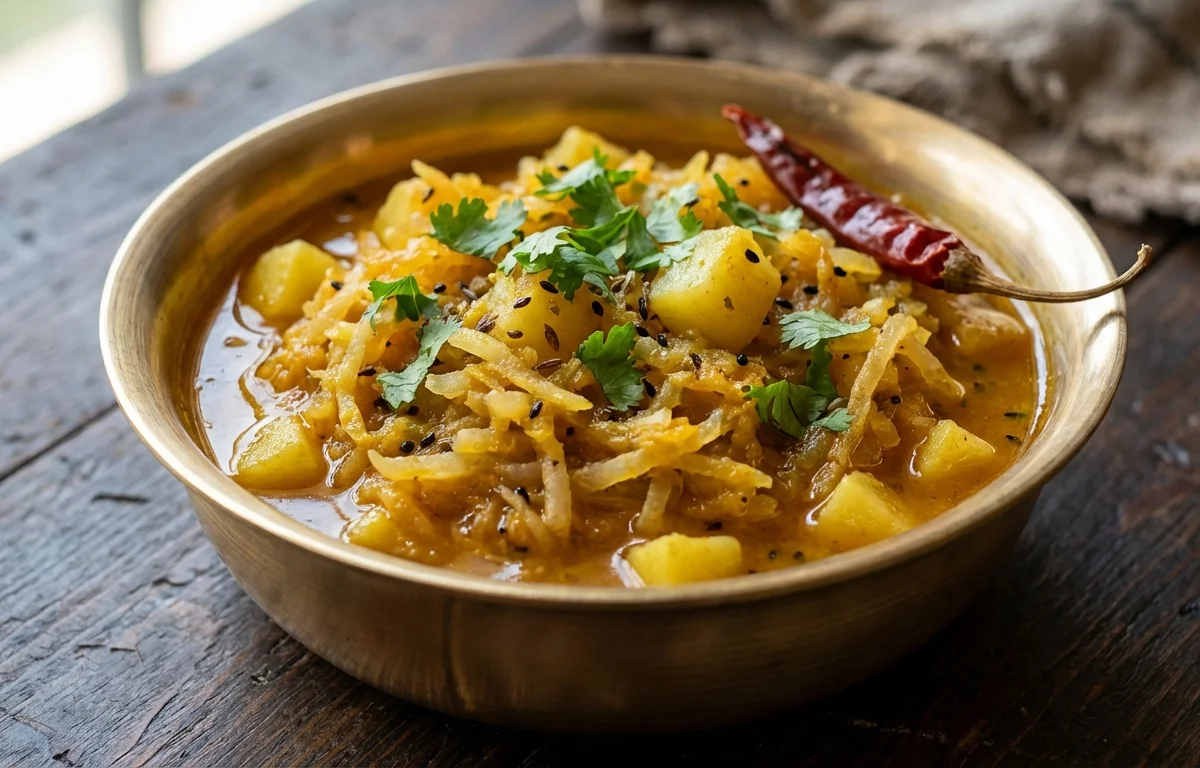
Mulo Ghonto
A comforting Bengali preparation where grated winter radish is slowly cooked with aromatic spices and a handful of fragrant gobindobhog rice. The radish turns sweet as it caramelizes, while a touch of warm ghee at the end elevates this humble yet deeply satisfying vegetarian dish.
For 4 servings
- prep · ~10 min
Prepare the radish and rice.
1.Peel and finely grate the radish. Squeeze out excess water and set aside.2.Soak gobindobhog rice in water for 10 minutes, then drain completely. - temper · ~3 min
Temper the spices.
1.Heat mustard oil in a kadai until it reaches smoking point, then reduce heat to medium.2.Add bay leaves and cumin seeds. Let them crackle for 30 seconds.3.Add slit green chilies and grated ginger. Sauté for 1 minute until fragrant.TIPHeating mustard oil to its smoking point removes the raw pungency and gives a mellow nutty flavor. - saute · ~10 min
Cook the grated radish.
1.Add the grated radish, turmeric powder, red chili powder, and salt.2.Stir well and sauté on medium heat for 8-10 minutes until the radish softens and the raw smell disappears.3.Add sugar, mix, and continue cooking until the mixture starts to dry out and leave the sides of the pan.TIPPatience is key here. Let the radish release all its moisture and cook until it almost caramelizes for a deeper, sweeter flavor. - simmer · ~10 min
Cook the rice with the radish.
1.Add the drained rice to the pan and stir gently to combine.2.Pour in water, bring to a gentle boil, then lower heat to the minimum.3.Cover tightly with a lid and let it steam for 8-10 minutes until the rice is tender and all liquid is absorbed.TIPDo not uncover the lid too often. The steam trapped inside is crucial for cooking the rice to a fluffy texture without making it mushy. - garnish
Finish and serve.
1.Turn off the heat. Drizzle ghee over the cooked ghonto and fluff gently with a fork.2.Garnish with chopped cilantro and serve hot with steamed rice and dal.TIPA generous drizzle of raw ghee at the very end is non-negotiable — it adds the rich aroma that defines this dish.
What to keep in mind.
6 tips from the recipe — small details that make a real difference to the final dish.
- 1Squeeze the grated radish firmly to remove excess water; this prevents the dish from becoming watery and helps it caramelize properly.
- 2Use a heavy-bottomed pan or kadai to ensure even heat distribution and avoid scorching the radish as it cooks down.
- 3Heating mustard oil until it smokes is essential—it tames the pungency and unlocks a subtle nutty flavor unique to Bengali cooking.
- 4Cook the radish on medium heat until the mixture leaves the sides of the pan; that’s your cue that it’s caramelized and ready for rice.
- 5Do not lift the lid during the steaming step—the trapped steam is key to cooking the gobindobhog rice to a fluffy, tender texture.
- 6Mulo Ghonto tastes even better the next day; refrigerate in an airtight container and reheat gently with a splash of water.
Adapt it for your goals.
Vegan
Replace ghee with an extra teaspoon of mustard oil or any neutral vegetable oil for finishing. The dish remains fully vegan while keeping the traditional mustard-oil base.
low oilLow-oil
Reduce mustard oil to 1 tablespoon and skip the ghee finish. The radish will still caramelize, but the dish will be lighter—ideal for those watching their oil intake.
spicySpicy
Add 1-2 extra slit green chilies along with the ginger, and increase red chili powder to ½ teaspoon. This variation is for those who love a fiery kick.
pumpkin seed crunchPumpkin seed crunch
After tempering, add 1 tablespoon of roasted pumpkin seeds along with the ginger for a nutty crunch and a boost of texture in every bite.
Why this is on our healthy list.
Low in Calories
Radish is naturally low in calories and high in water content, making this dish a light yet satisfying option for weight-conscious eaters.
Rich in Digestive Fiber
Both radish and gobindobhog rice provide dietary fiber, which supports healthy digestion and promotes a feeling of fullness.
Anti-Inflammatory Spices
Turmeric and ginger are known for their anti-inflammatory properties, adding a healthful boost to this everyday Bengali preparation.
Good Source of Vitamin C
Radish contributes a fair amount of vitamin C, which supports immune function and skin health.
Frequently asked questions
Yes, substitute with any small-grain aromatic rice like jeera rice or basmati (broken), but reduce cooking time slightly to avoid mushiness.



-curry.webp)
.webp)