
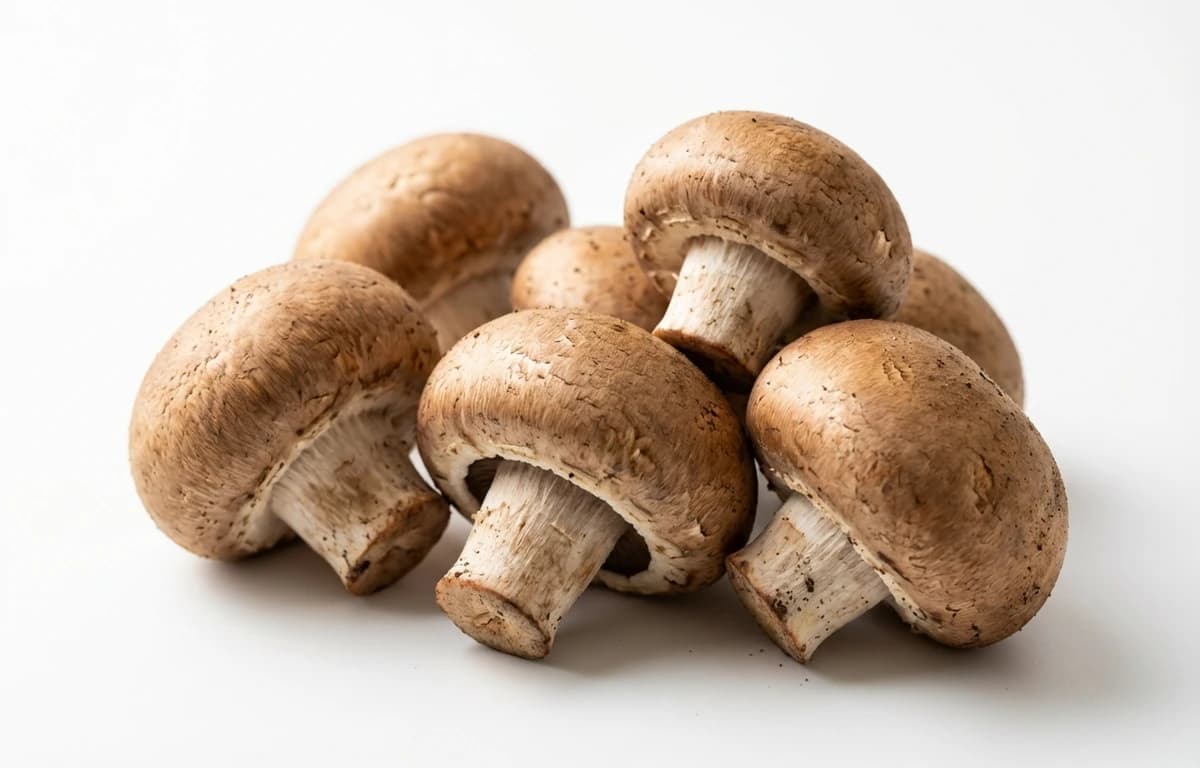
Mushroom
Also known as:
Loading...
Also known as:
Per 100g
Nutrition data source: USDA FoodData Central
Common measurement equivalents in grams
A hearty and wholesome quiche featuring savory turkey bacon, earthy mushrooms, and fresh spinach, all baked into a nutty whole-wheat crust. Perfect for a satisfying brunch or a light dinner.
Hearty, savory vegetarian meatballs made from lentils and mushrooms, baked to perfection and simmered in a classic homemade marinara sauce. A satisfying and healthy twist on an Italian-American favorite.
Tender veggie meatballs made from blanched mushrooms and zucchini, served with pasta in a light, low-sodium tomato sauce. This recipe is carefully designed to be kidney-friendly, balancing flavor while keeping sodium, potassium, and phosphorus in check.
A fluffy, satisfying three-egg omelette packed with fresh spinach, bell peppers, and mushrooms, all held together with melted low-sodium Swiss cheese. A perfect high-protein, low-sodium breakfast ready in minutes.
Hearty vegetarian meatballs made from lentils and mushrooms, simmered in a rich, homemade marinara sauce from fresh tomatoes. A satisfying, protein-packed meal that's surprisingly light and healthy.
Yes, mushrooms are highly nutritious, providing essential B vitamins, selenium, and antioxidants like ergothioneine. They are very low in calories and fat, making them a heart-healthy addition to most diets that supports immune function and energy metabolism.
Absolutely. With only 22 calories and 0.3g of fat per 100g, mushrooms are a high-volume, low-calorie food. Their meaty texture and high water content can help you feel full while significantly reducing your overall calorie intake when used as a meat substitute.
Yes, mushrooms are excellent for the keto diet as they contain only about 3.3g of carbohydrates per 100g. They are a staple in low-carb cooking due to their versatility and ability to add savory depth to dishes without adding sugar.
Yes, mushrooms are naturally vegan and gluten-free. They are a popular choice in plant-based diets because they provide a savory 'umami' flavor and a substantial texture often associated with meat products.
While common varieties like white button mushrooms can be eaten raw in salads, cooking is generally recommended. Cooking breaks down the tough cell walls (chitin), making the nutrients more bioavailable and improving overall digestibility.
Sautéing in a pan over medium-high heat with a small amount of oil or butter is the most common method to achieve a golden-brown texture. Roasting or grilling also works well to concentrate their flavor and prevent them from becoming soggy.
It is best to wipe mushrooms clean with a damp paper towel or a soft brush. If you must wash them, do so quickly under running water just before cooking, as mushrooms absorb water like sponges and can become rubbery if soaked.
Mushroom is a versatile ingredient found in cuisines around the world. With 22 calories per 100g and 3.1 grams of protein, it's a nutritious addition to many dishes.
Explore more ingredients in the fungi category with complete nutrition information.
View all fungi →Store fresh mushrooms in a brown paper bag in the refrigerator. Avoid airtight plastic containers or bags, as these trap moisture and cause the mushrooms to become slimy and spoil much faster.
Fresh mushrooms should be firm and dry to the touch. If they feel slimy, have developed dark soft spots, or have a sour or 'off' odor, they have likely spoiled and should be discarded.
Some mushrooms are a natural source of Vitamin D, especially those that have been exposed to UV light during growth. Like humans, mushrooms can synthesize Vitamin D when exposed to sunlight, making them one of the few non-animal sources of this nutrient.