Other10 recipes
oysters.
VegetarianVeganGluten-freeDairy-freeNut-freePeanut-freeSoy-freeEgg-freeShellfish-freeHoney-freeAlcohol-freeKosher
ALSO KNOWN AS
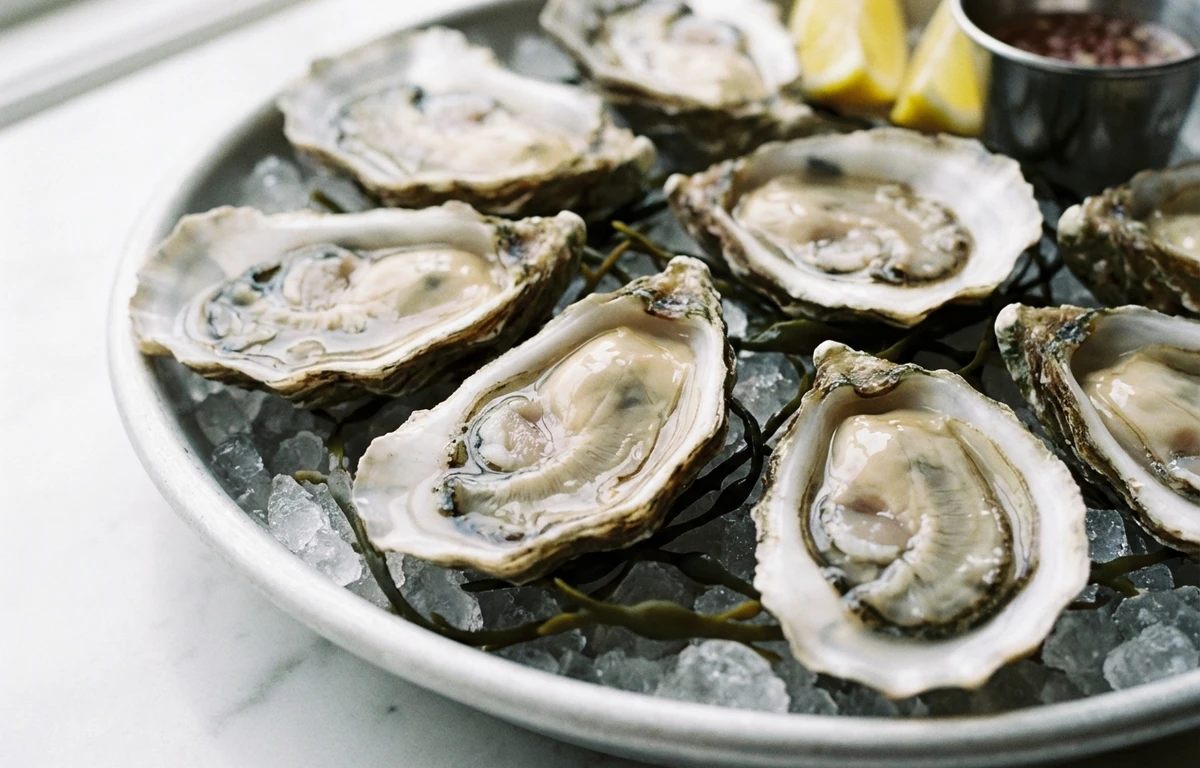
fresh oysterslarge oystersसीपoystersshucked oysters
SERVING
CALORIES
81
PROTEIN
9.5g
CARBS
4.9g
FAT
2.3g
FIBER
0g
This ingredient is flagged as naturally gluten-free. Per 100 g, it provides 0.10 µg of vitamin K.
NUTRITION PROFILE · per 100 g
Everything in this ingredient.
MACRONUTRIENTS
Calories81kcal—
Protein9.5g19%
Carbohydrates4.9g2%
Fiber0g0%
Sugar0g0%
Total fat2.3g3%
Saturated fat0.50g3%
Trans fat0g—
Cholesterol50mg17%
Water82.1g—
MINERALS
Sodium106mg5%
Potassium156mg3%
Calcium8.0mg1%
Iron6.7mg37%
Magnesium12mg3%
Phosphorus135mg11%
Zinc16.6mg151%
Copper1.5mg167%
Manganese0.30mg13%
Selenium63.7µg116%
VITAMINS
Vitamin A81µg9%
Vitamin C3.7mg4%
Vitamin D8.0µg40%
Vitamin E0.80mg5%
Vitamin K0.10µg0%
Thiamin (B1)0.07mg6%
Riboflavin (B2)0.16mg12%
Niacin (B3)1.5mg9%
Pantothenic acid (B5)0.50mg10%
Vitamin B60.05mg3%
Folate (B9)10µg3%
Vitamin B1216µg667%
%DV based on a 2,000 cal diet. Source: USDA FoodData Central. A dash in the %DV column means there’s no established Daily Value for that nutrient.
MEASUREMENT CONVERSIONS
How much is what.
1 cup240g
1 oz28.4g
1 lb453.6g
1 piece20g
HEALTH BENEFITS
Why eat it.
- ✓Excellent source of Vitamin B12 for nerve health and DNA synthesis
- ✓Rich in Omega-3 fatty acids which promote heart and brain health
- ✓Contains high-quality protein with all essential amino acids
COOKING TIPS
In the kitchen.
- 1Discard any oysters with shells that are open and do not close when tapped
- 2Cook oysters until the shells open; discard any that remain closed after cooking
- 3Avoid overcooking as they become rubbery and lose their delicate flavor
STORAGE
Keep it fresh.
- Store live oysters in the refrigerator at 34-40°F (1-4°C) in an open container covered with a damp cloth
- Never store live oysters in an airtight bag or in water, as they will suffocate and die
- Shucked oysters should be kept in their liquor and refrigerated for no more than 2 days
FAQ
Frequently asked questions.
How long do fresh oysters last in the fridge?
Live oysters can last up to 5-7 days if stored properly on ice or under a damp cloth, but are best consumed within 2 days.
Can you freeze oysters?
Yes, shucked oysters can be frozen in their liquor for up to 3 months, though the texture will soften, making them better for stews than raw consumption.
How can I tell if an oyster is bad?
A bad oyster will have a strong, unpleasant 'fishy' or sulfur-like smell, or the shell will be open and won't close when tapped.
What is a good substitute for oysters in recipes?
Clams or mussels are the best substitutes for cooked dishes, while firm white fish can work in some stews.
Do oysters contain a lot of cholesterol?
Oysters contain a moderate amount of cholesterol (about 50mg per 100g), which is lower than many other animal proteins like shrimp or egg yolks.
What is the best way to clean oysters before cooking?
Scrub the shells thoroughly with a stiff brush under cold running water to remove sand, debris, and barnacles.
Are oysters high in mercury?
No, oysters are generally considered low-mercury seafood because they are lower on the food chain.
What are the most common ways to eat oysters?
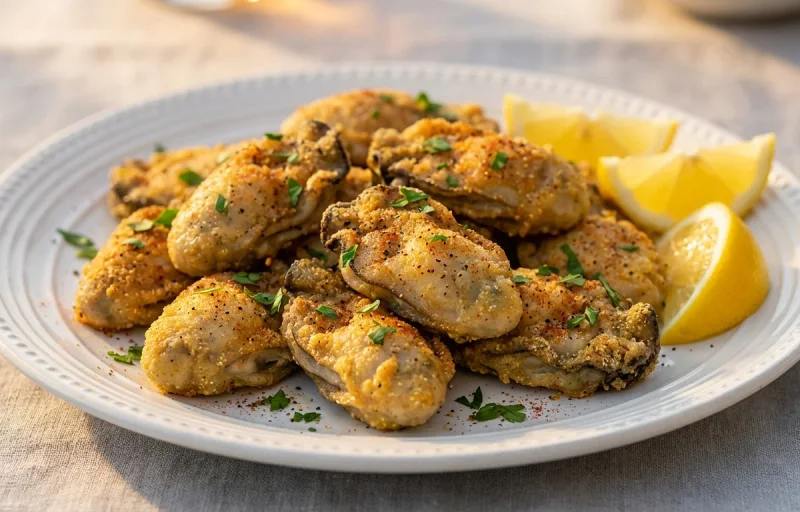
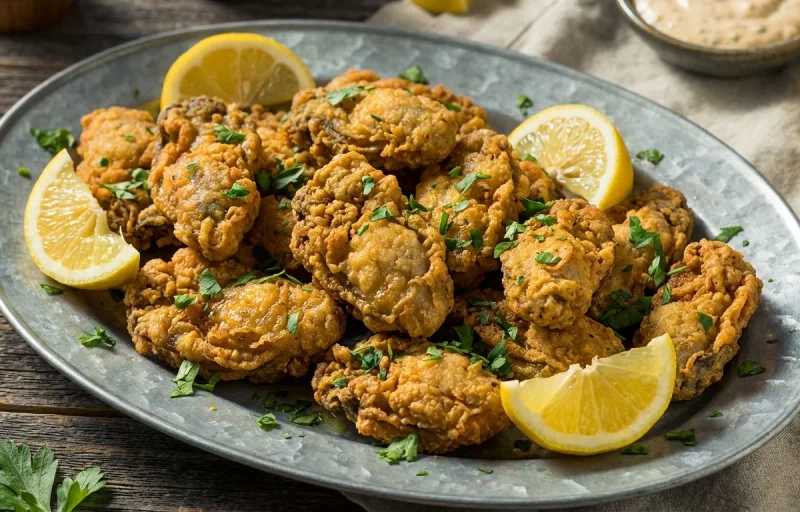
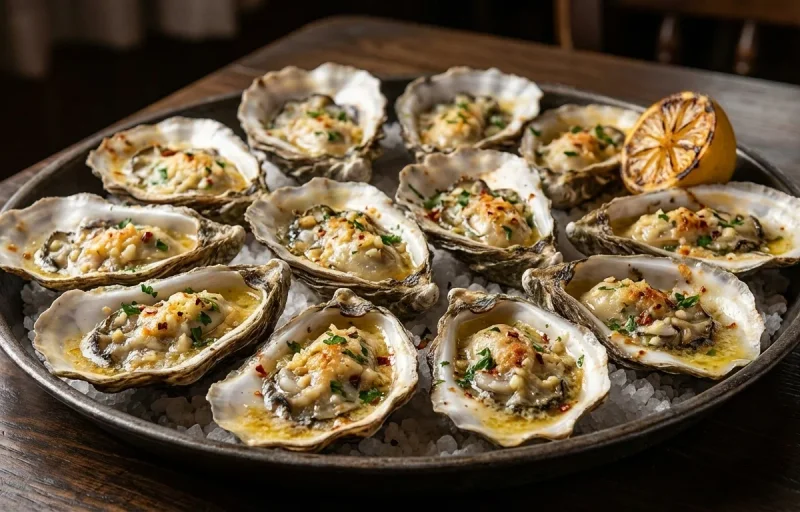
They are commonly served raw on the half-shell, grilled, fried, steamed, or used in stews and chowders.
RECIPES
Cook with oysters.
10 recipes · sorted by what’s quick