Other3 recipes
pastrami.
VegetarianVeganGluten-freeDairy-freeNut-freePeanut-freeSoy-freeEgg-freeShellfish-freeHoney-freeAlcohol-free
ALSO KNOWN AS
pastrami meat
SERVING
CALORIES
147
PROTEIN
21.8g
CARBS
0.36g
FAT
5.8g
FIBER
0g
This ingredient is flagged as naturally gluten-free. Per 100 g, it provides 0.70 µg of vitamin K.
NUTRITION PROFILE · per 100 g
Everything in this ingredient.
MACRONUTRIENTS
Calories147kcal—
Protein21.8g44%
Carbohydrates0.36g0%
Fiber0g0%
Sugar0.10g0%
Total fat5.8g7%
Saturated fat2.7g13%
Cholesterol68mg23%
Water69.5g—
MINERALS
Sodium1078mg47%
Potassium210mg4%
Calcium10mg1%
Iron2.2mg12%
Magnesium17mg4%
Phosphorus175mg14%
Zinc5.0mg45%
Copper0.09mg10%
Manganese0.03mg1%
Selenium17.7µg32%
VITAMINS
Vitamin A2.0µg0%
Vitamin C0.30mg0%
Vitamin D0.10µg1%
Vitamin E0.12mg1%
Vitamin K0.70µg1%
Thiamin (B1)0.05mg4%
Riboflavin (B2)0.16mg12%
Niacin (B3)4.3mg27%
Pantothenic acid (B5)0.27mg5%
Vitamin B60.22mg13%
Folate (B9)6.0µg2%
Vitamin B121.9µg78%
%DV based on a 2,000 cal diet. Source: USDA FoodData Central. A dash in the %DV column means there’s no established Daily Value for that nutrient.
MEASUREMENT CONVERSIONS
How much is what.
1 oz28.4g
1 lb453.6g
HEALTH BENEFITS
Why eat it.
- ✓Rich source of complete protein, essential for muscle repair and growth.
- ✓Provides significant amounts of Vitamin B12, crucial for nerve function and red blood cell formation.
COOKING TIPS
In the kitchen.
- 1For the best flavor and texture, gently steam pastrami slices before serving to warm them through and make them tender and juicy.
- 2Always slice pastrami against the grain to ensure maximum tenderness.
- 3To avoid making it tough, do not overheat or microwave pastrami; gentle heating is sufficient.
- 4Pastrami is famously served hot on rye bread with mustard, but can also be chopped and added to hash, omelets, or salads for a savory flavor.
STORAGE
Keep it fresh.
- Store sliced pastrami in an airtight container or tightly wrapped in the refrigerator and consume within 3-5 days.
- For longer storage, an unsliced chunk of pastrami can be refrigerated for up to a week or frozen for 2-3 months when wrapped tightly.
FAQ
Frequently asked questions.
Is pastrami healthy?
Pastrami is a rich source of complete protein, essential for muscle repair and growth, and provides significant amounts of Vitamin B12, iron, and zinc. However, it is high in sodium due to the curing process and contains saturated fat, so it should be consumed in moderation as part of a balanced diet.
How much protein and calories are in pastrami?
Per 100g, pastrami contains approximately 147 calories and 21.8g of protein. It's a good source of protein, making it a satisfying option, but its calorie content can add up depending on portion size and preparation.
Is pastrami gluten-free?
Generally, plain pastrami is gluten-free as it's made from beef, spices, and curing agents. However, cross-contamination can occur in delis, or some brands might use additives containing gluten, so always check the ingredient label if you have a gluten sensitivity.
Is pastrami keto-friendly?
Yes, pastrami is typically keto-friendly. It is very low in carbohydrates (around 0.36g per 100g) and provides a good amount of protein and fat, aligning well with the macronutrient ratios of a ketogenic diet. Be mindful of the high sodium content.
How do you typically serve or prepare pastrami?
Pastrami is most famously served thinly sliced and piled high on rye bread with mustard, often warmed, in a classic deli sandwich. It can also be added to salads, wraps, or used as a flavorful topping for pizzas and omelets. Gently steaming or pan-frying can enhance its flavor and texture.
What does pastrami taste like?
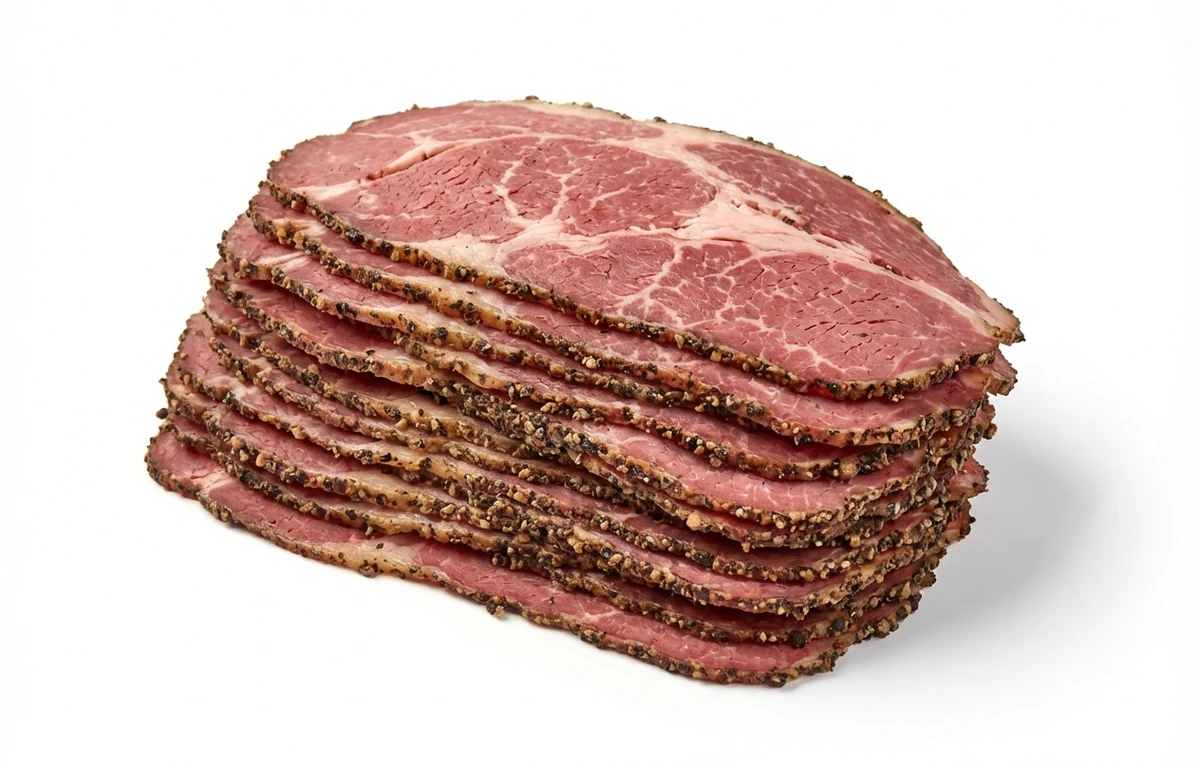
Pastrami has a distinct savory, smoky, and peppery flavor with a hint of sweetness from the curing process. It's known for its tender, slightly fatty texture and a robust spice crust, often featuring black pepper, coriander, and garlic.
How should pastrami be stored, and how long does it last?
Unopened packaged pastrami should be stored in the refrigerator and typically lasts until the 'use by' date printed on the package. Once opened, or if purchased from a deli, pastrami should be tightly wrapped and refrigerated, consumed within 3-5 days for best quality and safety.
Is pastrami high in sodium?
Yes, pastrami is notably high in sodium due to the brining and curing process it undergoes. A typical serving can contribute a significant portion of the daily recommended sodium intake, so individuals monitoring their sodium levels should consume it sparingly.
RECIPES
Cook with pastrami.
3 recipes · sorted by what’s quick