Condiment4 recipes
pizza sauce.
VegetarianVeganGluten-freeDairy-freeNut-freePeanut-freeSoy-freeEgg-freeShellfish-freeHoney-freeAlcohol-free
ALSO KNOWN AS
tomato pizza saucered pizza saucepizza topping saucepizza base sauce
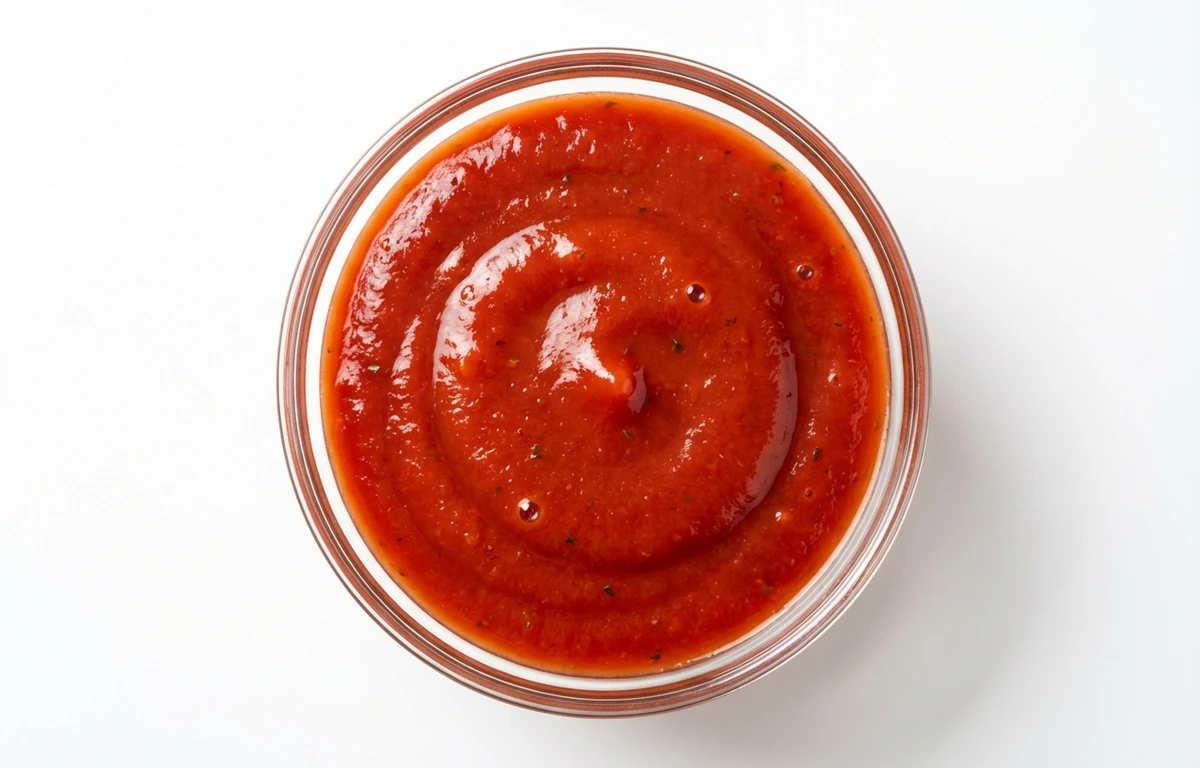
SERVING
CALORIES
64
PROTEIN
1.8g
CARBS
10.2g
FAT
2.1g
FIBER
1.9g
NUTRITION PROFILE · per 100 g
Everything in this ingredient.
MACRONUTRIENTS
Calories64kcal—
Protein1.8g4%
Carbohydrates10.2g4%
Fiber1.9g7%
Sugar6.5g13%
Total fat2.1g3%
Saturated fat0.30g2%
Trans fat0g—
Cholesterol0mg0%
Water84.5g—
MINERALS
Sodium450mg20%
Potassium340mg7%
Calcium18mg1%
Iron1.2mg7%
Magnesium15mg4%
Phosphorus28mg2%
Zinc0.20mg2%
Copper0.10mg11%
Manganese0.10mg4%
Selenium0.40µg1%
VITAMINS
Vitamin A42µg5%
Vitamin C9.2mg10%
Vitamin D0µg0%
Vitamin E1.4mg9%
Vitamin K2.8µg2%
Thiamin (B1)0.05mg4%
Riboflavin (B2)0.04mg3%
Niacin (B3)0.90mg6%
Pantothenic acid (B5)0.20mg4%
Vitamin B60.10mg6%
Folate (B9)10µg3%
Vitamin B120µg0%
%DV based on a 2,000 cal diet. Source: USDA FoodData Central. A dash in the %DV column means there’s no established Daily Value for that nutrient.
MEASUREMENT CONVERSIONS
How much is what.
1 cup252g
1 tablespoon15.8g
1 teaspoon5.2g
1 oz28.4g
1 lb453.6g
1 ml1.1g
1 liter1050g
HEALTH BENEFITS
Why eat it.
- ✓High in lycopene, a powerful antioxidant for heart health
- ✓Good source of Vitamin C to support immune function
- ✓Low in calories compared to cream-based sauces
- ✓Contains potassium which helps regulate blood pressure
- ✓Provides dietary fiber for digestive health
COOKING TIPS
In the kitchen.
- 1Simmer on low heat to thicken the sauce if it is too watery
- 2Add a pinch of sugar or honey to balance the acidity of the tomatoes
- 3Stir in dried herbs like oregano or basil at the end of cooking for better aroma
STORAGE
Keep it fresh.
- Refrigerate in an airtight glass container for up to 5-7 days
- Freeze in ice cube trays for easy portioning for up to 3 months
- Always use a clean, dry spoon to prevent mold growth
FAQ
Frequently asked questions.
How long does pizza sauce last in the refrigerator?
Once opened or prepared, pizza sauce typically lasts 5 to 7 days in the fridge when stored in an airtight container.
Can I freeze pizza sauce?
Yes, pizza sauce freezes very well. You can store it in freezer-safe bags or containers for up to 3 months.
What is the difference between pizza sauce and marinara sauce?
Pizza sauce is usually thicker and smoother, often using tomato paste, whereas marinara is chunkier and more liquid.
How can I thicken watery pizza sauce?
The best way is to simmer it on low heat to evaporate excess moisture, or stir in a small amount of tomato paste.
Is pizza sauce vegan?
Most standard pizza sauces are vegan as they are made from tomatoes, oil, and herbs, but always check labels for cheese or honey.
What can I use as a substitute for pizza sauce?
You can use tomato paste mixed with water and Italian herbs, crushed tomatoes, or even a thick marinara sauce.
Why does my pizza sauce taste bitter?
Bitterness usually comes from the tomato seeds or overcooked garlic; adding a tiny pinch of sugar can neutralize the acidity and bitterness.
Can I use pizza sauce for pasta?
Yes, though it is thicker and more concentrated than typical pasta sauce, it works well when diluted with a little pasta water.
How do I know if pizza sauce has gone bad?
Look for signs of mold, a sour or off smell, or a change in color to a darker, brownish hue.
RECIPES
Cook with pizza sauce.
4 recipes · sorted by what’s quick