
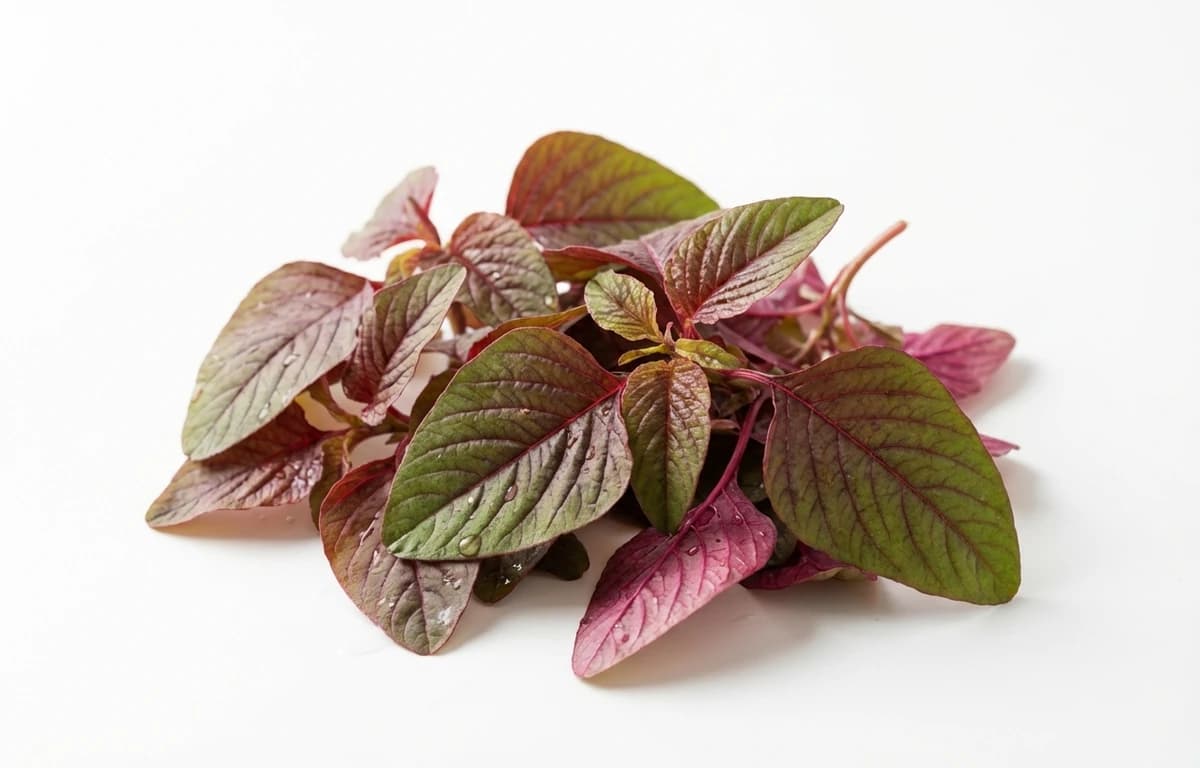
red amaranth
Also known as: red spinach, lal saag, thotakura, cheera, rajgira leaves, tambdi bhaji, amaranthus tricolor, chinese spinach
Loading...
Also known as: red spinach, lal saag, thotakura, cheera, rajgira leaves, tambdi bhaji, amaranthus tricolor, chinese spinach
Per 100g
Nutrition data source: USDA FoodData Central
Common measurement equivalents in grams
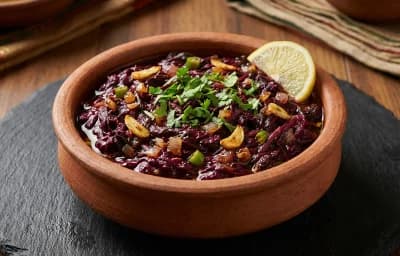
A simple and nutritious North Indian stir-fry made with fresh red amaranth leaves. This quick and easy sabzi, tempered with garlic, chillies, and spices, is a vibrant and healthy dish that pairs perfectly with roti or dal rice.
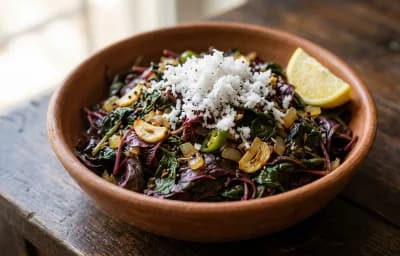
A vibrant and nutritious Maharashtrian stir-fry made with red amaranth leaves (lal math). This simple, homestyle dish is tempered with garlic and mustard seeds, and finished with fresh coconut. Ready in under 30 minutes, it's a perfect healthy side for rotis, bhakri, or dal rice.
When stored properly in the refrigerator, it typically lasts 2 to 3 days. It is highly perishable compared to heartier greens.
Yes, young and tender red amaranth leaves can be eaten raw in salads, though they are more commonly cooked.
Regular green spinach, Swiss chard, or beet greens are the best substitutes due to their similar texture and earthy flavor.
Submerge the leaves in a large bowl of cold water, swish them around to let grit sink to the bottom, then lift out and pat dry.
While often called 'red spinach' in markets, it is botanically different from true spinach, though it is used similarly in cooking.
Yes, the red pigment (anthocyanin) will bleed into liquids, often turning sauces or stir-fries a beautiful pink or purple hue.
Yes, like spinach and beets, amaranth contains oxalates. Those prone to kidney stones should consume it in moderation.
Look for leaves that are vibrant in color, crisp, and free from yellowing, wilting, or dark slimy spots.
Yes, blanch the leaves for 2 minutes, shock in ice water, squeeze out excess moisture, and freeze in airtight bags for up to 6 months.
red amaranth is a versatile ingredient found in cuisines around the world. With 23 calories per 100g and 2.5 grams of protein, it's a nutritious addition to many dishes.
Explore more ingredients in the other category with complete nutrition information.
View all other →Discover 0 recipes featuring red amaranth with step-by-step instructions.
Browse recipes →