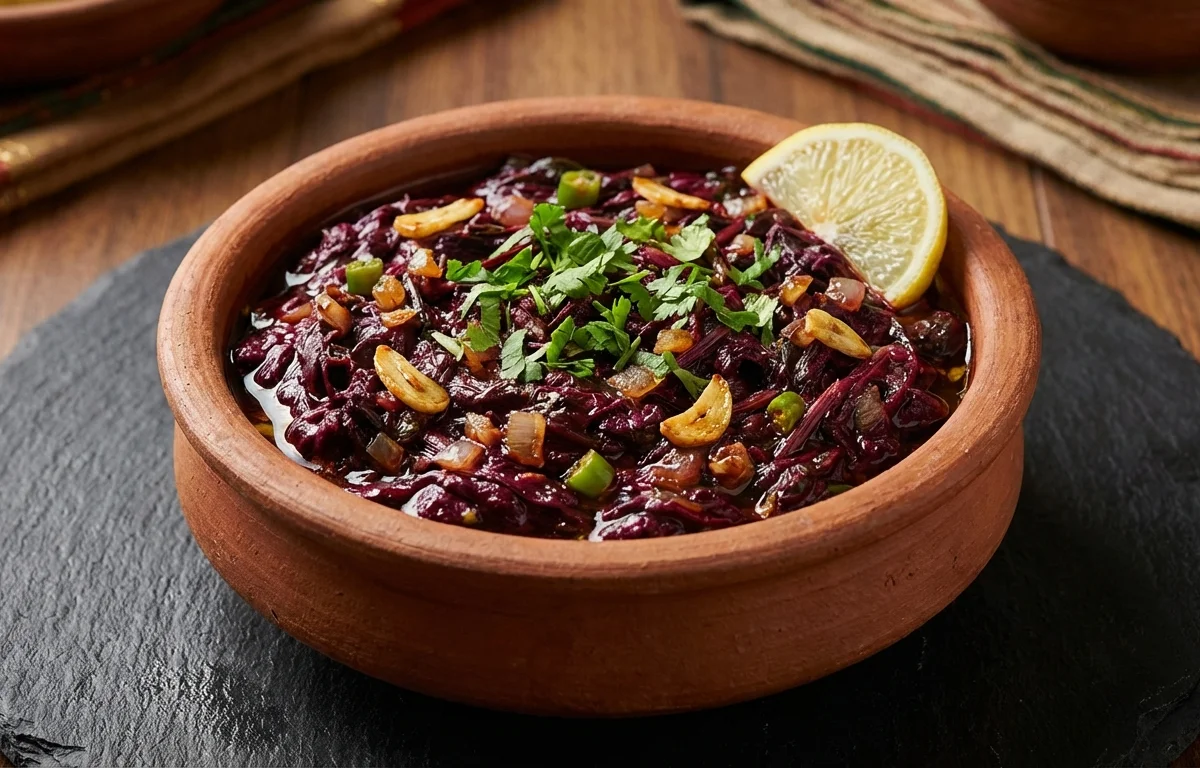
Lal Saag
Earthy red amaranth leaves cooked the simple home-style way with onion, garlic, green chili, and a light tempering. This everyday Indian greens dish turns silky, savory, and just a little spicy, perfect with roti or plain rice.
For 4 servings
- prep · ~7 min
Prepare the lal saag.
1.Pick through the red amaranth leaves and discard any tough or damaged parts.2.Wash the leaves very well in several changes of water to remove all grit.3.Trim thick stems and roughly chop the leaves.TIPAny trapped grit will spoil the texture, so wash the leaves thoroughly. - saute · ~5 min
Cook the onion, garlic, and chili.
1.Heat mustard oil in a kadai over medium heat until it just begins to smoke lightly, then lower the heat.2.Add cumin seeds and let them sizzle for a few seconds.3.Add onion, garlic, and green chili.4.Cook until the onion softens and turns light golden, 4 to 5 minutes. - saute · ~2 min
Add the spices and chopped greens.
1.Add turmeric powder and red chili powder and stir quickly.2.Add the chopped red amaranth leaves and salt.3.Mix well so the leaves are coated with the onion and spice mixture.TIPStir the powdered spices briefly so they do not burn in the hot oil. - simmer · ~8 min
Cook the lal saag until tender.
Cover the pan and cook on low heat until the leaves wilt, release moisture, and turn tender, about 6 to 8 minutes. Uncover and cook a little longer if needed until the mixture is semi-dry and the extra moisture evaporates.
- serve
Serve the lal saag hot.
What to keep in mind.
7 tips from the recipe — small details that make a real difference to the final dish.
- 1Wash the chopped lal saag in several changes of water, then drain well so grit does not settle back onto the leaves.
- 2Let the mustard oil smoke lightly before adding cumin; this mellows its raw sharpness and gives the saag a more authentic flavor.
- 3Do not brown the garlic too much—light golden garlic keeps the dish savory without turning bitter.
- 4Add the spices and greens quickly one after the other so the turmeric and chili powder do not scorch in the hot oil.
- 5Cook uncovered at the end until the saag is semi-dry; this concentrates the earthy flavor and prevents a watery side dish.
- 6If your amaranth has many tender stems, chop them finely and add them first so they soften by the time the leaves are done.
- 7Lal saag keeps well in the fridge for a day or two and often tastes even better after the garlic-chili flavors settle.
Adapt it for your goals.
Low-oil
Use less mustard oil and add a splash of water while softening the onions; good if you want a lighter everyday saag.
garlickyGarlicky
Increase the chopped garlic for a bolder, more rustic flavor that pairs especially well with plain rice.
potatoPotato
Add small diced potatoes after the tempering and cook until tender for a heartier home-style version.
no onionNo-onion
Skip the onion and rely on garlic, cumin, and chili for a simpler fasting-style or pantry-friendly variation.
Why this is on our healthy list.
Leafy Green Goodness
Red amaranth leaves bring the benefits of leafy greens, making this a simple way to include more vegetables in a meal.
Aromatic Digestive Support
Garlic, green chili, and cumin add flavor while also being traditional ingredients often valued in light vegetable dishes.
Light Everyday Side
With mostly greens, aromatics, and a small amount of oil, this dish fits well as a lighter accompaniment to roti or rice.
Frequently asked questions
Amaranth releases a lot of moisture as it cooks. Uncover the pan near the end and cook until the extra liquid evaporates and the saag becomes semi-dry.