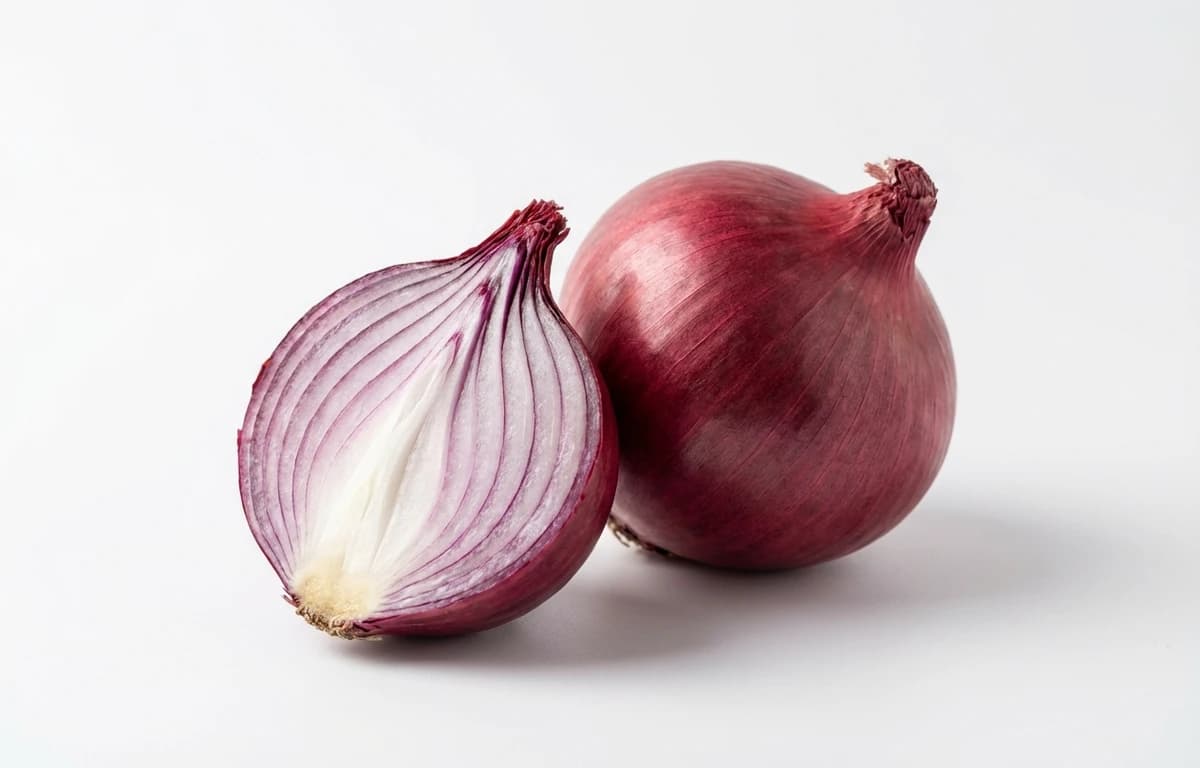
Red Onions
Also known as: purple onions, lal pyaz, erra ulligadda, vengayam, chuvanna ulli, kanda
Loading...
Also known as: purple onions, lal pyaz, erra ulligadda, vengayam, chuvanna ulli, kanda
Per 100g
Nutrition data source: USDA FoodData Central
Common measurement equivalents in grams
A refreshing and simple salad with crisp red onions, juicy tomatoes, and fresh cilantro, tossed in a zesty lemon and black salt dressing. A perfect no-oil side dish ready in minutes.
A crisp, tangy, and incredibly simple onion salad that comes together in minutes. Thinly sliced red onions are tossed in a zesty lemon and cilantro dressing, making it the perfect refreshing side for grilled meats, tacos, or rich curries.
A crisp, refreshing salad with thinly sliced cucumbers and red onions, tossed in a zesty lemon and herb dressing. It's a perfect light side dish ready in minutes.
Crisp, tangy red onions marinated in a zesty lime and cilantro dressing. This vibrant salad is ready in under 20 minutes and adds a refreshing crunch to tacos, burgers, and grilled meats.
Crisp, tangy red onions marinated in fresh lime juice and cilantro. This vibrant, no-cook condiment is ready in under 30 minutes and adds a zesty crunch to tacos, salads, and sandwiches.
Whole red onions can last 2 to 3 months when stored in a cool, dry, and dark place with plenty of airflow.
Yes, you can freeze chopped red onions. While they lose their crunch, they are perfect for use in cooked dishes like soups and stews.
Look for onions that are firm, heavy for their size, and have dry, papery skin. Avoid those with soft spots, moisture, or visible sprouts.
Yellow onions or shallots are the best substitutes. Shallots are closer in mildness, while yellow onions are better for cooking.
Cutting onions breaks cells, releasing enzymes that create a gas called syn-propanethial-S-oxide, which irritates the eyes.
Red onions generally contain higher levels of antioxidants, specifically anthocyanins and quercetin, compared to white onions.
Rub your hands with lemon juice, vinegar, or against a stainless steel object under cold running water.
No, red onions are root vegetables and are excluded from a traditional Jain diet.
Yes, red onions are the preferred variety for raw consumption in salads, sandwiches, and salsas due to their mild flavor and vibrant color.
Red Onions is a versatile ingredient found in cuisines around the world. With 40 calories per 100g and 1.1 grams of protein, it's a nutritious addition to many dishes.
Explore more ingredients in the vegetable category with complete nutrition information.
View all vegetable →