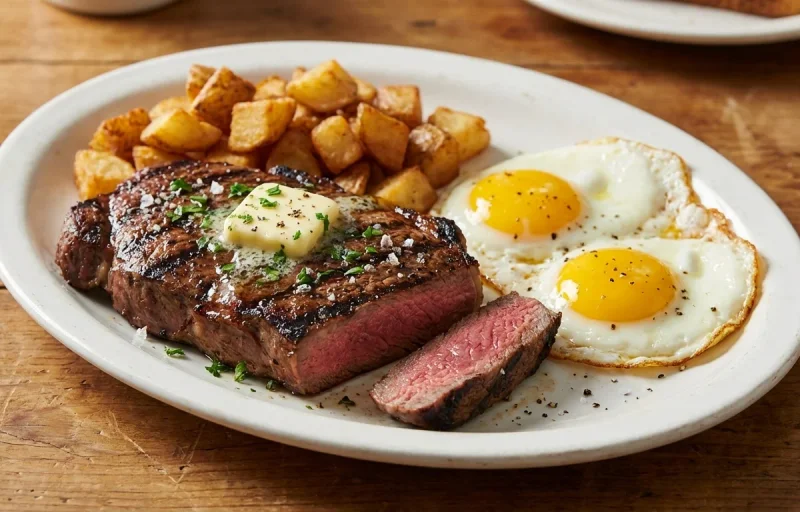
Protein7 recipes
ribeye steak.
VegetarianVeganGluten-freeDairy-freeNut-freePeanut-freeSoy-freeEgg-freeShellfish-freeHoney-freeAlcohol-free
ALSO KNOWN AS
rib eye steakscotch filletentrecôteribeye steakraw ribeye steakrib eyeentrecôtebeauty steakdelmonico steakmarket steakspencer steakraw beef rib eye
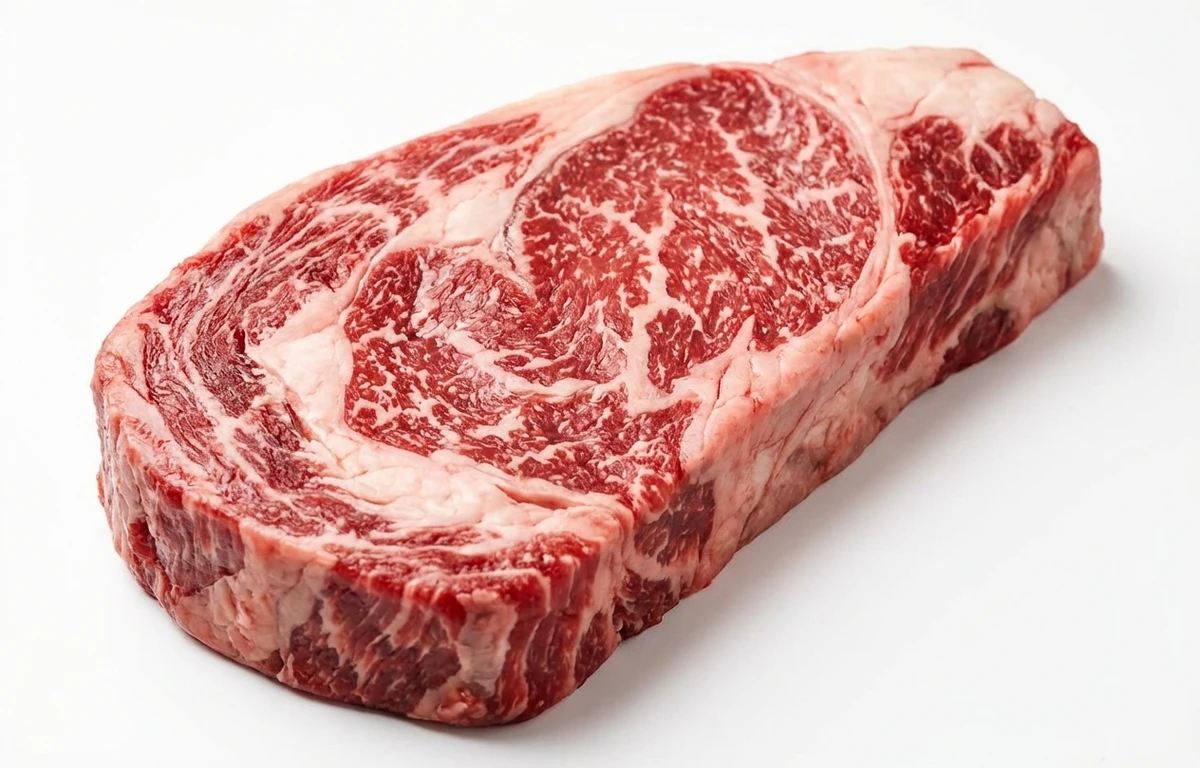
SERVING
CALORIES
291
PROTEIN
19g
CARBS
0g
FAT
24g
FIBER
0g
This ingredient is flagged as naturally gluten-free. Per 100 g, it provides 1.5 µg of vitamin K.
NUTRITION PROFILE · per 100 g
Everything in this ingredient.
MACRONUTRIENTS
Calories291kcal—
Protein19g38%
Carbohydrates0g0%
Fiber0g0%
Sugar0g0%
Total fat24g31%
Saturated fat10.2g51%
Trans fat1.5g—
Cholesterol80mg27%
Water57g—
MINERALS
Sodium54mg2%
Potassium279mg6%
Calcium11mg1%
Iron1.9mg11%
Magnesium21mg5%
Phosphorus172mg14%
Zinc4.5mg41%
Copper0.08mg9%
Manganese0.01mg0%
Selenium22.1µg40%
VITAMINS
Vitamin A0µg0%
Vitamin C0mg0%
Vitamin D0.10µg1%
Vitamin E0.20mg1%
Vitamin K1.5µg1%
Thiamin (B1)0.06mg5%
Riboflavin (B2)0.18mg14%
Niacin (B3)4.8mg30%
Pantothenic acid (B5)0.50mg10%
Vitamin B60.40mg24%
Folate (B9)6.0µg2%
Vitamin B122.6µg108%
%DV based on a 2,000 cal diet. Source: USDA FoodData Central. A dash in the %DV column means there’s no established Daily Value for that nutrient.
MEASUREMENT CONVERSIONS
How much is what.
1 oz28.4g
1 lb453.6g
1 piece283.5g
HEALTH BENEFITS
Why eat it.
- ✓Excellent source of complete protein, essential for muscle repair, growth, and overall body function.
- ✓Provides significant amounts of Vitamin B12, crucial for nerve function and the formation of red blood cells.
COOKING TIPS
In the kitchen.
- 1For a superior crust, pat the steak completely dry with paper towels and season generously with salt and pepper just before cooking.
- 2Allow the steak to rest at room temperature for 30-60 minutes before cooking to ensure it cooks more evenly.
- 3Use a meat thermometer to achieve your desired level of doneness (e.g., 130-135°F or 54-57°C for medium-rare).
- 4After cooking, let the steak rest on a cutting board for 5-10 minutes before slicing to allow the juices to redistribute, ensuring a more tender and flavorful result.
STORAGE
Keep it fresh.
- Store fresh ribeye steak in the coldest part of the refrigerator (at or below 40°F / 4°C) for up to 3-5 days.
- For longer storage, wrap tightly in plastic wrap and heavy-duty foil or a freezer bag and freeze at 0°F (-18°C) for 6 to 12 months for best quality.
FAQ
Frequently asked questions.
Is ribeye steak healthy?
Ribeye steak is a nutrient-dense food providing high-quality protein, Vitamin B12, and bioavailable heme iron. However, it is higher in calories and saturated fat than leaner cuts, so it is best enjoyed in moderation as part of a balanced diet.
Is ribeye steak keto-friendly?
Yes, ribeye steak is an ideal food for the ketogenic diet. It contains zero carbohydrates and a high fat content (24g per 100g), which helps individuals maintain ketosis while providing essential micronutrients like zinc and B vitamins.
Is ribeye steak gluten-free?
In its natural, unprocessed state, ribeye steak is 100% gluten-free. However, if you are buying pre-marinated steaks or using store-bought spice rubs, check the labels for hidden gluten in thickeners or soy-based ingredients.
What is the best way to cook a ribeye steak?
Ribeye is best prepared using high-heat methods like pan-searing in a cast-iron skillet or grilling. The high fat content (marbling) melts during the process, naturally basting the meat and keeping it tender and flavorful.
What does ribeye steak taste like?
Ribeye is known for having a rich, buttery, and intensely beefy flavor. Because it comes from the rib section and features heavy intramuscular fat, it is significantly more flavorful and juicy than leaner cuts like filet mignon.
Can you freeze ribeye steak?
Yes, ribeye steak freezes very well. For best results, vacuum-seal the meat or wrap it tightly in freezer paper and a heavy-duty freezer bag; it will maintain its quality for 6 to 12 months.
How do you know if ribeye steak has gone bad?
Spoiled ribeye will typically have a sour or ammonia-like smell, a slimy or tacky texture, and may develop a distinct grey or greenish tint. If the meat exhibits any of these signs, it should be discarded immediately.
RECIPES
Cook with ribeye steak.
7 recipes · sorted by what’s quick