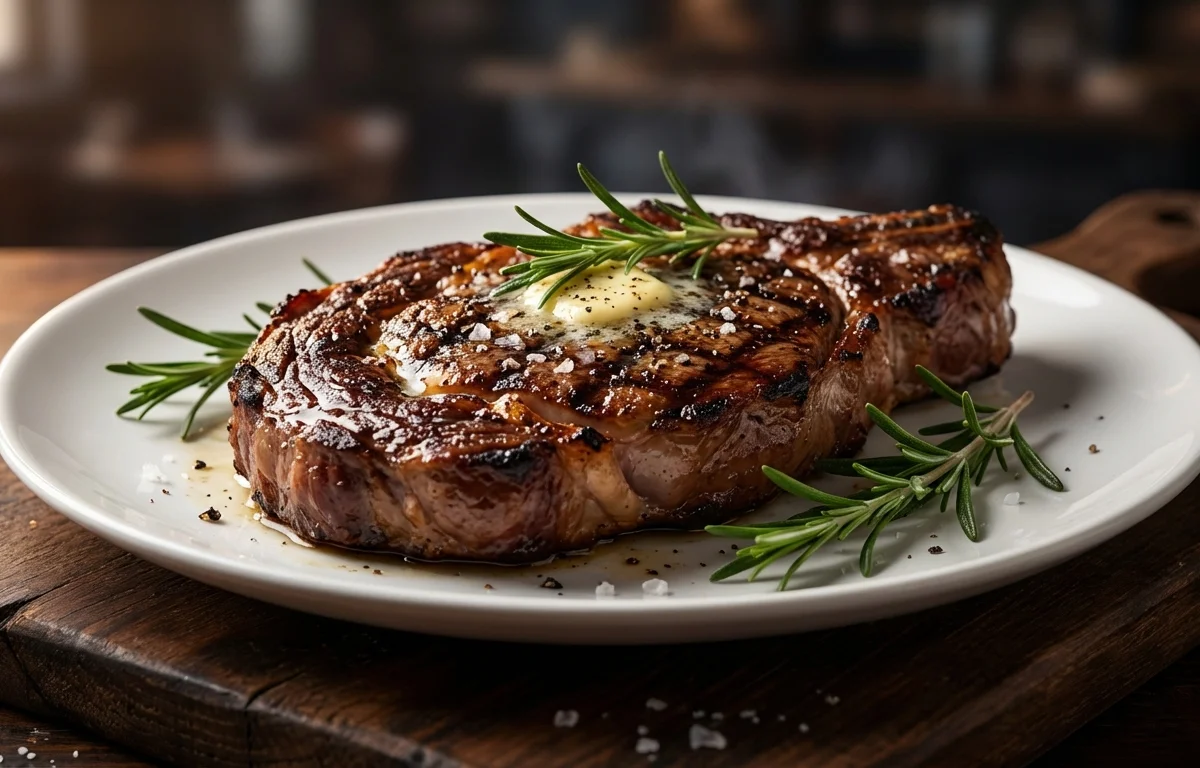
Grilled Ribeye Steak
A beautifully marbled ribeye steak, seasoned simply with salt and pepper, then grilled over high heat to develop a deep, caramelized crust while keeping the inside tender and juicy. This is the quintessential backyard steakhouse classic, ready in under 30 minutes with minimal prep.
For 4 servings
- prep · ~45 min
Bring steaks to room temperature and season.
Take the ribeye steaks out of the refrigerator 30 to 45 minutes before grilling. Pat them completely dry with paper towels. Brush lightly with olive oil, then season generously all over with salt and black pepper, pressing the seasoning into the meat.
TIPDrying the surface is the secret to a deep, dark crust. Any moisture left on the steak will steam instead of sear. - grill · ~10 min
Preheat the grill for two-zone cooking.
Prepare a charcoal or gas grill for two-zone cooking: one side set to high, direct heat and the other side with low or no flame for indirect heat. The hot side should reach about 450°F to 500°F.
TIPA two-zone fire gives you control. Sear over the hot side, then move to the cool side to finish cooking gently without burning the crust. - grill · ~8 min
Sear the steaks over direct high heat.
Place the seasoned steaks directly over the hot side of the grill. Cook for 3 to 4 minutes without moving them, until a deep brown crust develops. Flip and sear the other side for another 3 to 4 minutes.
TIPDon't move the steaks while searing. Let them sit undisturbed to develop that crust. If they stick to the grates, they aren't ready to release yet. - grill · ~8 min
Finish cooking over indirect heat to desired doneness.
Move the steaks to the cooler, indirect-heat side of the grill. Close the lid and cook until the desired internal temperature registers on an instant-read thermometer: 130°F to 135°F for medium-rare or 135°F to 145°F for medium. This takes about 4 to 8 minutes depending on thickness.
TIPPull the steaks about 3°F to 5°F before your target temperature. The internal heat will continue to rise as they rest. - rest · ~10 min
Rest the steaks before slicing.
Transfer the steaks from the grill to a clean cutting board. Tent loosely with aluminum foil and let them rest for at least 7 to 10 minutes. Slice against the grain and serve immediately.
TIPResting is non-negotiable. It lets the juices redistribute through the steak so they don't flood out onto the cutting board on the first slice. - serve
Slice against the grain and serve.
Identify the direction of the muscle fibers running through the steak. Slice across the grain in half-inch thick pieces and arrange on a warm platter. Spoon any collected juices over the top.
What to keep in mind.
7 tips from the recipe — small details that make a real difference to the final dish.
- 1Pat the steak bone-dry before seasoning; any moisture creates steam that prevents a good sear.
- 2For a bone-in ribeye, add 2-3 minutes to the indirect cook time to account for the bone's heat sink effect.
- 3Use an instant-read thermometer, not guessing, to hit your exact doneness; calibrate it in ice water first.
- 4Let the grill grate preheat for a full 10 minutes so it's screaming hot — that's what gives you crosshatch marks.
- 5Brush the steak with oil, not the grill grates, to avoid flare-ups that coat the meat in soot.
- 6Rest the steak on a wire rack set over a baking sheet so the bottom doesn't steam itself soggy.
- 7Slice just before serving; pre-sliced steak loses heat and moisture very quickly.
Adapt it for your goals.
Garlic-herb butter
While the steak rests, top it with a pat of compound butter made from softened butter, minced garlic, chopped parsley, and a squeeze of lemon. It melts into a rich sauce that complements the beefy ribeye without masking the grilled flavor.
peppercorn crustPeppercorn crust
Press 2 tablespoons of coarsely crushed black peppercorns and 1 teaspoon of kosher salt onto each steak before grilling. The peppercorns form a spicy, crunchy crust that pairs with a simple pan sauce or a drizzle of heavy cream.
smoked paprika rubSmoked paprika rub
Add 1 teaspoon smoked paprika and ½ teaspoon garlic powder to the salt and pepper before seasoning. The paprika adds a subtle smoky depth that echoes the charcoal grill and gives the crust a vibrant red hue.
Why this is on our healthy list.
High-Quality Protein
A ribeye steak provides all nine essential amino acids in a single serving, supporting muscle repair and maintenance.
Rich in Iron and Zinc
Red meat like ribeye is a natural source of heme iron (easily absorbed by the body) and zinc, both critical for immune function and energy production.
Contains B Vitamins
Ribeye is particularly high in vitamin B12 (only found in animal products) and niacin (B3), which help convert food into cellular energy and support nerve health.
Frequently asked questions
Yes, use a cast-iron skillet or grill pan over high heat. Sear the steak 3-4 minutes per side, then finish in a 400°F oven for 4-8 minutes, checking internal temp with an instant-read thermometer.