
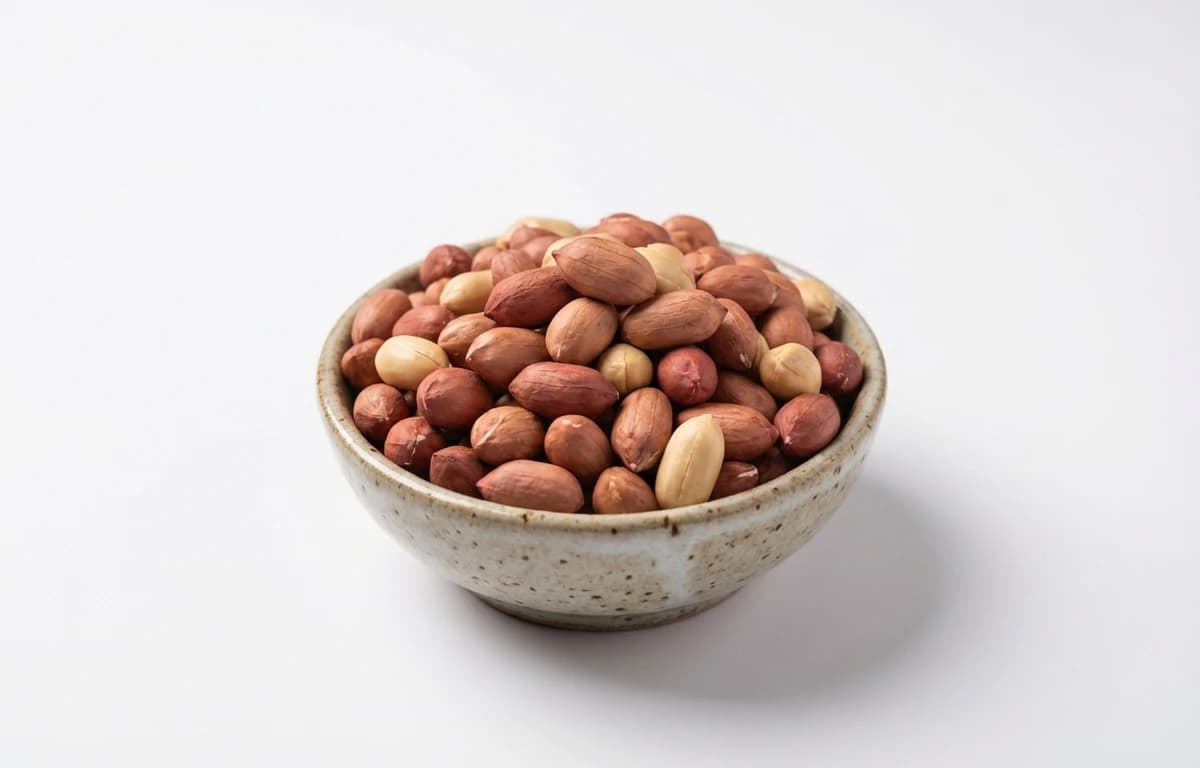
shengdana
Also known as: peanut, groundnut, मूंगफली
Loading...
Also known as: peanut, groundnut, मूंगफली
Per 100g
Nutrition data source: USDA FoodData Central
Common measurement equivalents in grams
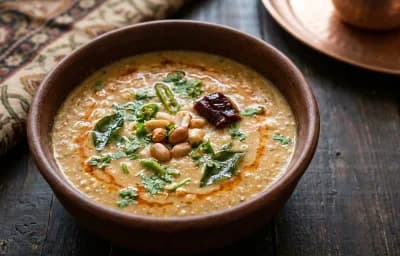
A classic Maharashtrian curry made from roasted peanuts, tangy kokum, and a hint of jaggery. This nutty and flavorful 'amti' is a comforting dish, perfect with steamed rice or bhakri, and often enjoyed during fasting.
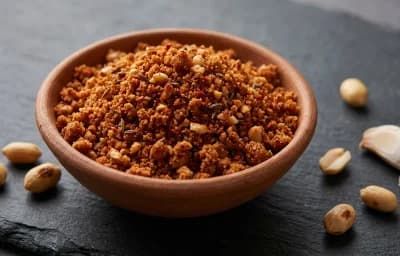
A classic Maharashtrian dry chutney made from roasted peanuts, garlic, and red chilies. This nutty, spicy, and savory powder is a perfect accompaniment to vada pav, thalipeeth, or simply enjoyed with roti and ghee.
Yes, shengdana is highly nutritious, providing heart-healthy monounsaturated and polyunsaturated fats that help lower bad cholesterol. It is also rich in antioxidants like resveratrol and essential minerals such as magnesium and potassium, which support heart and bone health.
Shengdana is an excellent plant-based protein source, containing approximately 25.8g of protein per 100g. This makes it a valuable ingredient for muscle repair and growth, especially for those on vegetarian or vegan diets.
While shengdana is calorie-dense (567 calories per 100g), its high protein and fiber content can promote a feeling of fullness and reduce overall appetite. When consumed in moderation as part of a balanced diet, it can be a helpful snack for weight management.
Yes, shengdana is generally considered keto-friendly because it is high in healthy fats and contains a moderate amount of carbohydrates (16.1g per 100g). However, because the calories add up quickly, it is important to track portions to stay within daily carb limits.
Naturally, shengdana is 100% gluten-free as it is a legume. If you are buying pre-packaged roasted or flavored peanuts, ensure you check the label for any gluten-containing additives or cross-contamination warnings.
To dry roast shengdana, place them in a heavy-bottomed pan over medium heat for 5-10 minutes, stirring constantly until the skins begin to crack and they turn golden. You can also roast them in an oven at 175°C (350°F) for about 15-20 minutes.
Yes, shengdana can be eaten raw, but roasting them enhances their flavor and provides a crunchier texture. Roasting also helps reduce the risk of consuming aflatoxins, which are molds that can occasionally grow on raw legumes in humid environments.
shengdana is a versatile ingredient found in cuisines around the world. With 567 calories per 100g and 25.8 grams of protein, it's a nutritious addition to many dishes.
Explore more ingredients in the legume category with complete nutrition information.
View all legume →Store shengdana in an airtight container in a cool, dry place to prevent them from becoming rancid due to their high fat content. For a longer shelf life of up to six months or more, you can store them in the refrigerator or freezer.
You can tell shengdana has spoiled if it develops a bitter, sour, or chemical-like smell, which indicates the oils have gone rancid. Additionally, if you see any visible mold, dark spots, or if the peanuts have a soft, shriveled texture, they should be discarded.
Shengdana is a great source of biotin, a B-vitamin that is essential for maintaining healthy hair, skin, and nails. The vitamin E and antioxidants present also help protect skin cells from oxidative stress and premature aging.