Shengdana Chutney
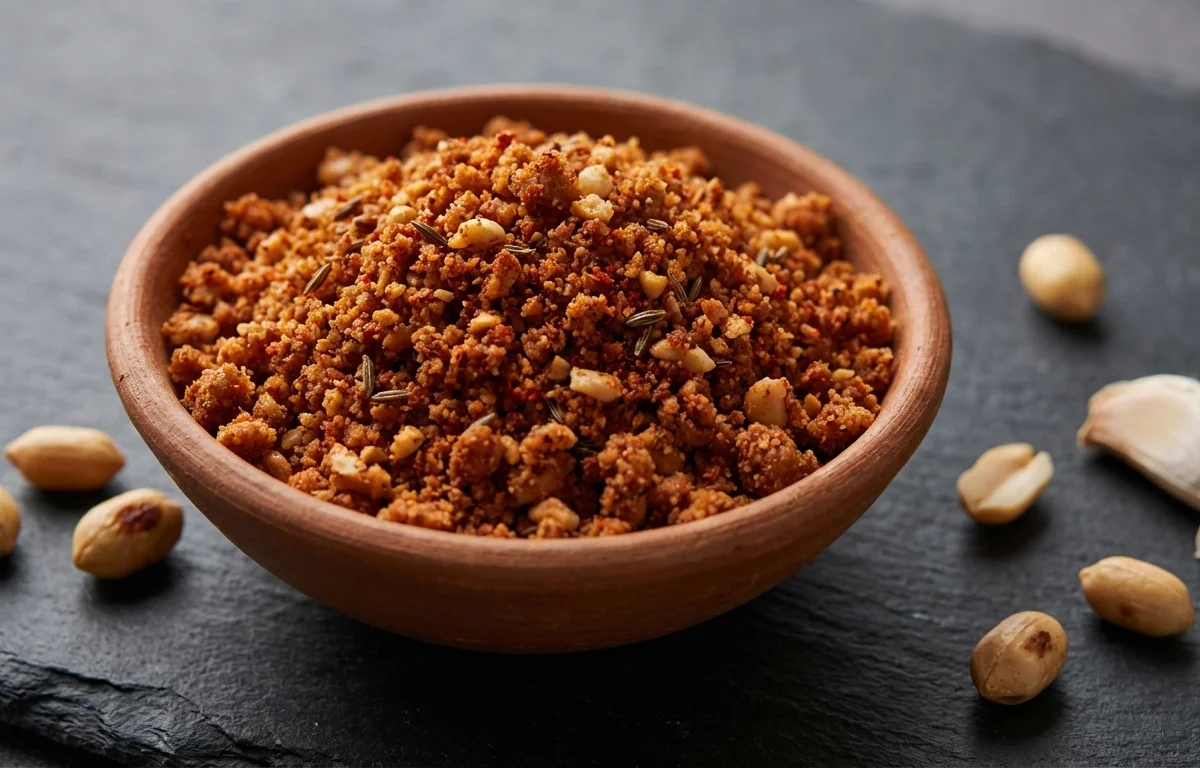
A dry Maharashtrian peanut chutney with nutty depth, gentle heat, and a little garlic. It comes together quickly and adds a big flavor boost to bhakri, idli, dosa, or a simple plate of dal rice.
For 8 servings
- roast · ~5 min
Roast the peanuts and cumin.
1.Heat a heavy pan over low to medium heat.2.Add peanuts and roast, stirring often, until crisp and lightly browned (4-5 min).3.Add cumin seeds for the last 30 seconds and toast until fragrant.4.Transfer to a plate and let everything cool completely.TIPCool the peanuts fully before grinding or the chutney can turn pasty. - prep
Rub off the loose peanut skins.
Once cool, rub the peanuts lightly between your palms and shake off any loose skins. A few skins left behind are fine and add flavor.
- mix · ~1 min
Grind the chutney.
1.Add roasted peanuts, roasted cumin seeds, garlic, red chili powder, and salt to a grinder jar.2.Pulse in short bursts until the mixture turns coarse and sandy.3.Stop before it releases too much oil; the chutney should stay powdery, not buttery.TIPPulse instead of running the grinder continuously for the best dry texture. - serve
Serve the shengdana chutney.
Spoon into a dry jar or bowl and serve with bhakri, roti, idli, dosa, or steamed rice with a little ghee or oil.
What to keep in mind.
6 tips from the recipe — small details that make a real difference to the final dish.
- 1Roast the peanuts on low to medium heat so they crisp evenly without scorching the skins.
- 2Cool the peanuts fully before grinding, or their warmth will release oil and make the chutney clumpy.
- 3Pulse the grinder in short bursts and scrape once in between to keep the texture coarse and sandy.
- 4Add cumin only in the last 30 seconds; it burns fast and turns bitter if toasted too long.
- 5If the garlic cloves are large or very sharp, start with less and adjust after a quick taste.
- 6Store the chutney in a completely dry jar and always use a dry spoon to keep it free-flowing longer.
Adapt it for your goals.
Spicier
Increase the red chili powder or add a dried roasted red chili for a hotter chutney that pairs especially well with bhakri.
no garlicNo-garlic
Skip the garlic for a simpler, satvik-style version with a cleaner peanut and cumin flavor.
sesame boostSesame-boost
Add a spoon of roasted sesame seeds while grinding for extra nuttiness and a slightly richer texture.
jaggery touchJaggery-touch
Add a tiny pinch of jaggery to round out the heat and garlic sharpness if you like a balanced sweet-spicy finish.
Why this is on our healthy list.
Good Fats from Peanuts
Peanuts provide satisfying unsaturated fats that make this dry chutney filling and flavorful in small amounts.
Plant Protein Support
The peanut base adds plant protein, making this condiment more substantial than a typical spice-only accompaniment.
Garlic and Spice Depth
Garlic, cumin, and chili add strong flavor without needing much oil, helping build taste in a simple meal.
Frequently asked questions
The peanuts were likely still warm or the grinder ran too long. Let everything cool completely and pulse briefly to avoid releasing too much oil.



.webp)