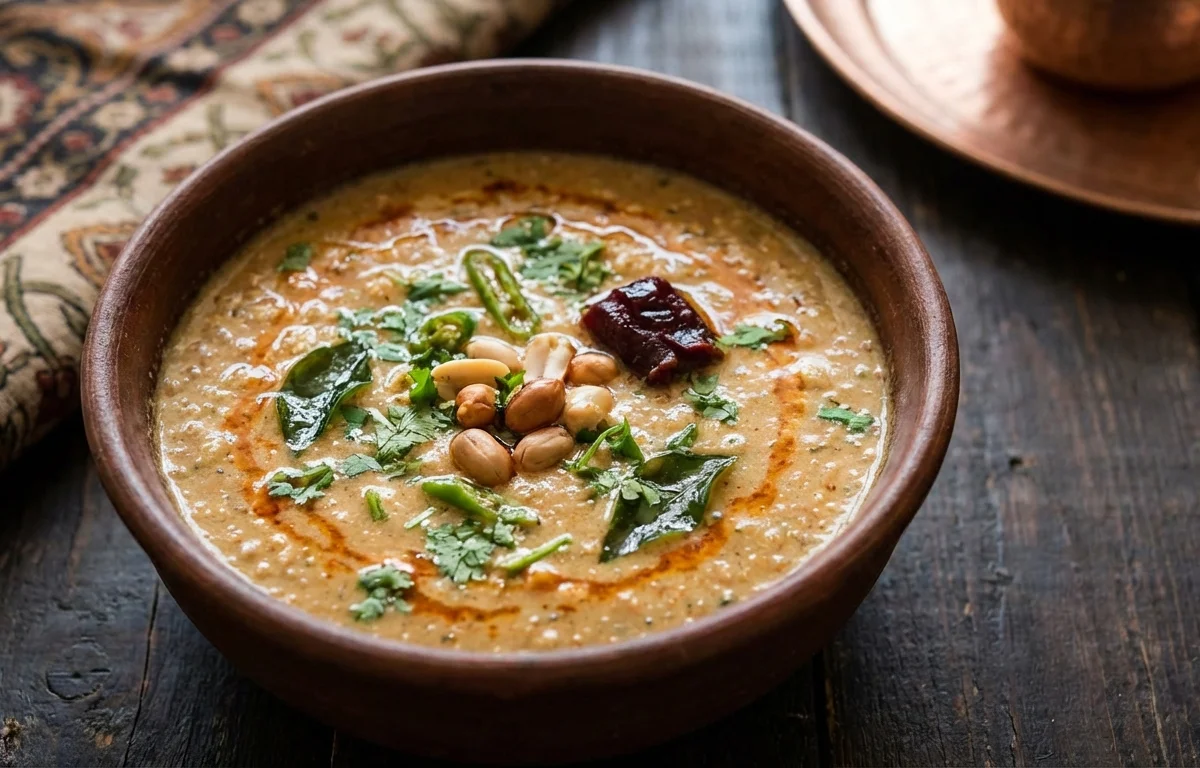
Shengdana Amti
A comforting Maharashtrian peanut curry with a nutty, gently spiced base and a light tang from tamarind or kokum. It comes together with simple pantry ingredients and pairs especially well with steamed rice or bhakri.
For 4 servings
- roast · ~8 min
Roast the peanuts.
Dry roast the peanuts in a pan over medium heat until lightly golden and aromatic, 5 to 6 minutes. Cool slightly, then grind them with 1 cup water to a smooth, pourable paste.
TIPStir often while roasting so the peanuts brown evenly and do not taste bitter. - temper · ~1 min
Make the tempering.
1.Heat oil in a pan over medium heat.2.Add mustard seeds and let them splutter.3.Add cumin seeds, asafoetida, and curry leaves.4.Stir for a few seconds until fragrant. - saute · ~6 min
Cook the onion and aromatics.
1.Add onion and cook until soft and light golden, 4 to 5 minutes.2.Add garlic and green chili.3.Cook for 1 minute until the raw smell fades. - saute · ~1 min
Add the spices.
Add turmeric powder, red chili powder, and godha masala. Mix well and cook for 20 to 30 seconds on low heat so the spices bloom without burning.
TIPLower the heat before adding powdered spices to keep them from scorching. - simmer · ~5 min
Build the amti.
1.Pour in the ground peanut paste.2.Add the remaining 2 cups water and mix until smooth.3.Add tamarind pulp, jaggery, and salt.4.Bring the curry to a gentle simmer, stirring to prevent sticking. - simmer · ~7 min
Simmer until lightly thickened.
Cook the amti for 6 to 8 minutes, stirring now and then, until the raw peanut taste is gone and the curry looks smooth and lightly thickened. Adjust with a splash of water if it becomes too thick.
- garnish
Garnish with coriander leaves.
- serve
Serve the Shengdana Amti hot.
Serve hot with steamed rice, bhakri, or simple varan-bhaat style meals.
What to keep in mind.
7 tips from the recipe — small details that make a real difference to the final dish.
- 1Roast the peanuts only to light golden; dark roasting can make the amti taste bitter.
- 2Grind the peanuts with water until fully smooth, or the curry can feel grainy instead of silky.
- 3Keep the heat low when adding godha masala and chili powder so the spices bloom without scorching.
- 4Stir well after adding the peanut paste, as it settles quickly and can catch at the bottom of the pan.
- 5Simmer until the raw peanut smell disappears; that is the best cue that the amti is ready.
- 6If using kokum instead of tamarind, add it during simmering and remove it before serving if preferred.
- 7This amti thickens as it stands, so loosen leftovers with hot water before reheating.
Adapt it for your goals.
No-onion
Skip the onion for a simpler fasting-style version; the peanut, tamarind, and godha masala still give plenty of body and flavor.
kokumKokum
Use kokum instead of tamarind for a more traditional coastal-style tang and a slightly fruitier sour note.
garlic freeGarlic-free
Omit garlic for a satvik-style variation; increase curry leaves slightly to keep the tempering fragrant.
spicierSpicier
Add an extra green chili or a little more red chili powder if you want a sharper heat against the rich peanut base.
Why this is on our healthy list.
Good Fats and Satiety
Peanuts provide satisfying fats and plant protein, making this curry filling even when served simply with rice or bhakri.
Plant-Based Protein
The peanut base adds protein from a pantry ingredient, which helps make this amti more substantial than a thin broth-style curry.
Spice-Rich Aromatics
Garlic, cumin, curry leaves, turmeric, and chili bring flavor depth while letting the dish stay lively without needing much oil.
Frequently asked questions
Yes, but use plain unsalted roasted peanuts and roast them only briefly if needed. Very dark-roasted peanuts can make the amti taste stronger and slightly bitter.



.webp)