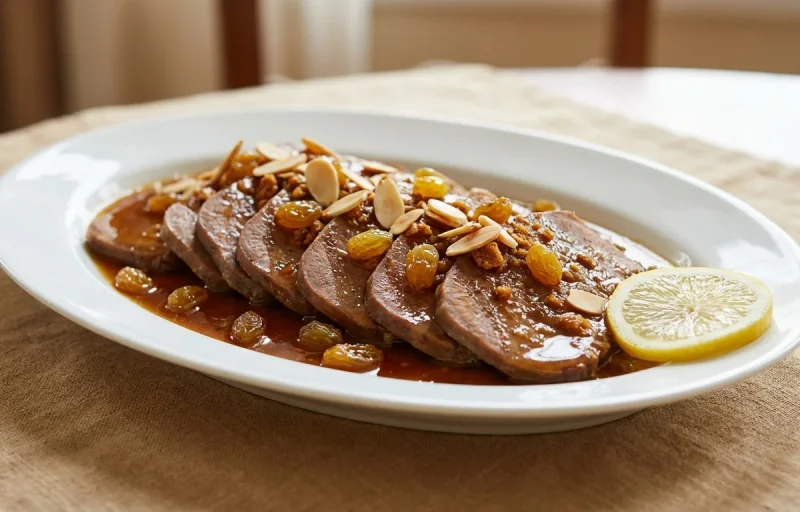
Meat
simmered beef tongue.
VegetarianVeganGluten-freeDairy-freeNut-freePeanut-freeSoy-freeEgg-freeShellfish-freeHoney-free
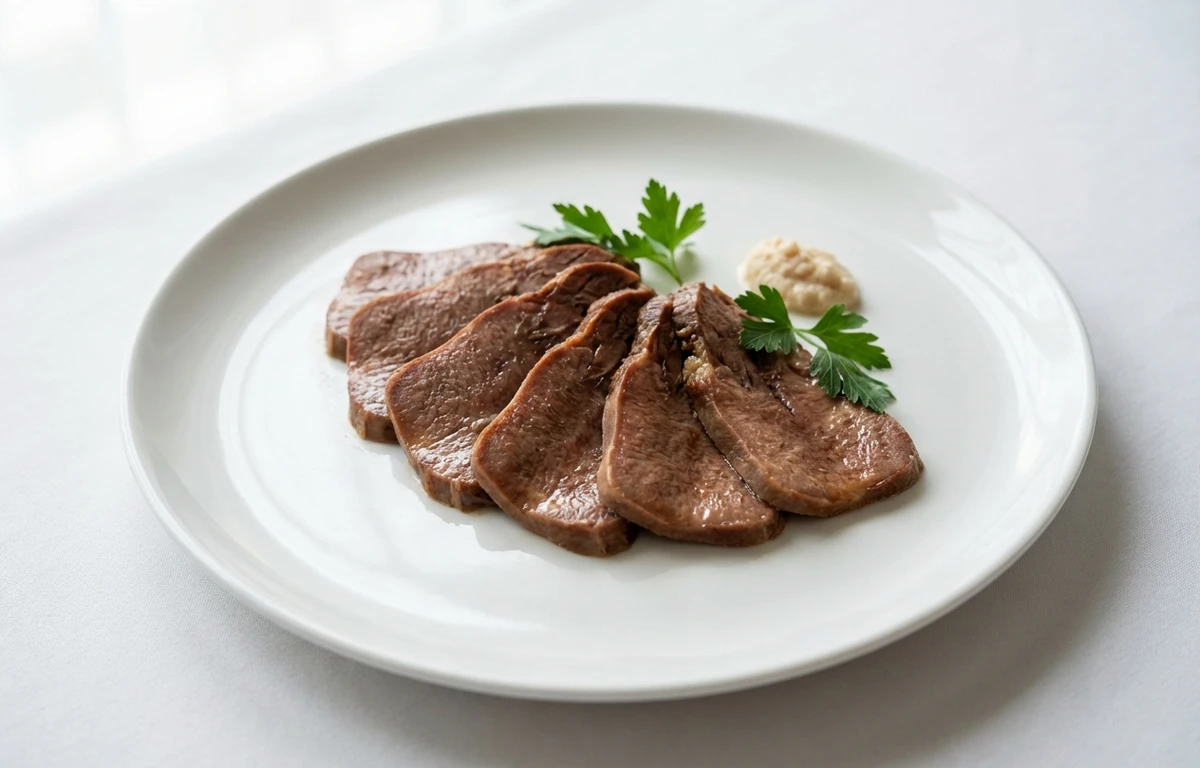
SERVING
CALORIES
284
PROTEIN
19.3g
CARBS
0g
FAT
22.3g
FIBER
0g
This ingredient is flagged as naturally gluten-free. Per 100 g, it provides 1.2 µg of vitamin K.
NUTRITION PROFILE · per 100 g
Everything in this ingredient.
MACRONUTRIENTS
Calories284kcal—
Protein19.3g39%
Carbohydrates0g0%
Fiber0g0%
Sugar0g0%
Total fat22.3g29%
Saturated fat8.1g41%
Trans fat0.84g—
Cholesterol132mg44%
Water57.9g—
MINERALS
Sodium65mg3%
Potassium184mg4%
Calcium5.0mg0%
Iron2.6mg14%
Magnesium15mg4%
Phosphorus145mg12%
Zinc4.1mg37%
Copper0.15mg17%
Manganese0.02mg1%
Selenium13.2µg24%
VITAMINS
Vitamin A0µg0%
Vitamin C1.3mg1%
Vitamin D0.40µg2%
Vitamin E0.30mg2%
Vitamin K1.2µg1%
Thiamin (B1)0.02mg2%
Riboflavin (B2)0.29mg22%
Niacin (B3)3.5mg22%
Pantothenic acid (B5)0.75mg15%
Vitamin B60.16mg9%
Folate (B9)7.0µg2%
Vitamin B123.1µg130%
%DV based on a 2,000 cal diet. Source: USDA FoodData Central. A dash in the %DV column means there’s no established Daily Value for that nutrient.
MEASUREMENT CONVERSIONS
How much is what.
1 cup140g
1 tablespoon8.8g
1 teaspoon2.9g
1 ml0.6g
1 liter583.3g
1 piece100g
HEALTH BENEFITS
Why eat it.
- ✓Rich source of complete protein, essential for muscle repair and growth.
- ✓Contains choline, an important nutrient for brain health and nerve function.
COOKING TIPS
In the kitchen.
- 1After simmering until tender, peel off the thick, tough outer skin while the tongue is still warm, as it is much more difficult to remove when cold.
- 2Chill the cooked and peeled tongue thoroughly before slicing for cleaner, thinner cuts, ideal for tacos (lengua) or sandwiches.
- 3The flavorful simmering liquid can be strained and used as a rich beef broth for soups, stews, or sauces.
- 4Once simmered and sliced, pan-sear the slices in butter or oil until lightly browned and crispy for enhanced flavor and texture.
STORAGE
Keep it fresh.
- Store cooked, cooled beef tongue in an airtight container in the refrigerator for up to 4 days.
- For longer storage, slice or cube the cooked tongue, wrap tightly, and freeze for up to 3 months for best quality.
FAQ
Frequently asked questions.
How much protein is in simmered beef tongue?
A 100g serving of simmered beef tongue contains approximately 19.29g of protein. This makes it an excellent source of complete protein, which is essential for muscle repair, growth, and overall cellular function.
Is simmered beef tongue keto-friendly?
Yes, simmered beef tongue is very keto-friendly as it contains 0g of carbohydrates and is high in fat (22.3g per 100g). It provides the necessary fat-to-protein ratio for those following a ketogenic or low-carb lifestyle.
What does simmered beef tongue taste like?
Simmered beef tongue has a mild, rich beefy flavor similar to a tender pot roast but with a much smoother, melt-in-your-mouth texture. Because it is a muscle that works hard, it becomes incredibly tender and flavorful when slow-cooked.
Do I need to peel beef tongue after simmering?
Yes, the outer skin of the tongue is tough and has a rough texture that is not pleasant to eat. It is best to simmer the tongue until tender, then peel off the outer white layer while it is still warm before slicing.
How long does simmered beef tongue last in the fridge?
Once simmered and cooled, beef tongue can be stored in an airtight container in the refrigerator for 3 to 4 days. Keeping it in a small amount of its cooking liquid can help maintain its moisture and tenderness.
Can you freeze simmered beef tongue?
Yes, simmered beef tongue freezes very well. Wrap the peeled and sliced meat tightly in plastic wrap or place it in a freezer-safe bag; it will maintain its quality for up to 3 months.
Is simmered beef tongue gluten-free?
Naturally, beef tongue is gluten-free. However, if you are simmering it in a prepared broth or adding sauces like soy sauce, you must ensure those specific additives are certified gluten-free.
RECIPES
Cook with simmered beef tongue.
0 recipes · sorted by what’s quick