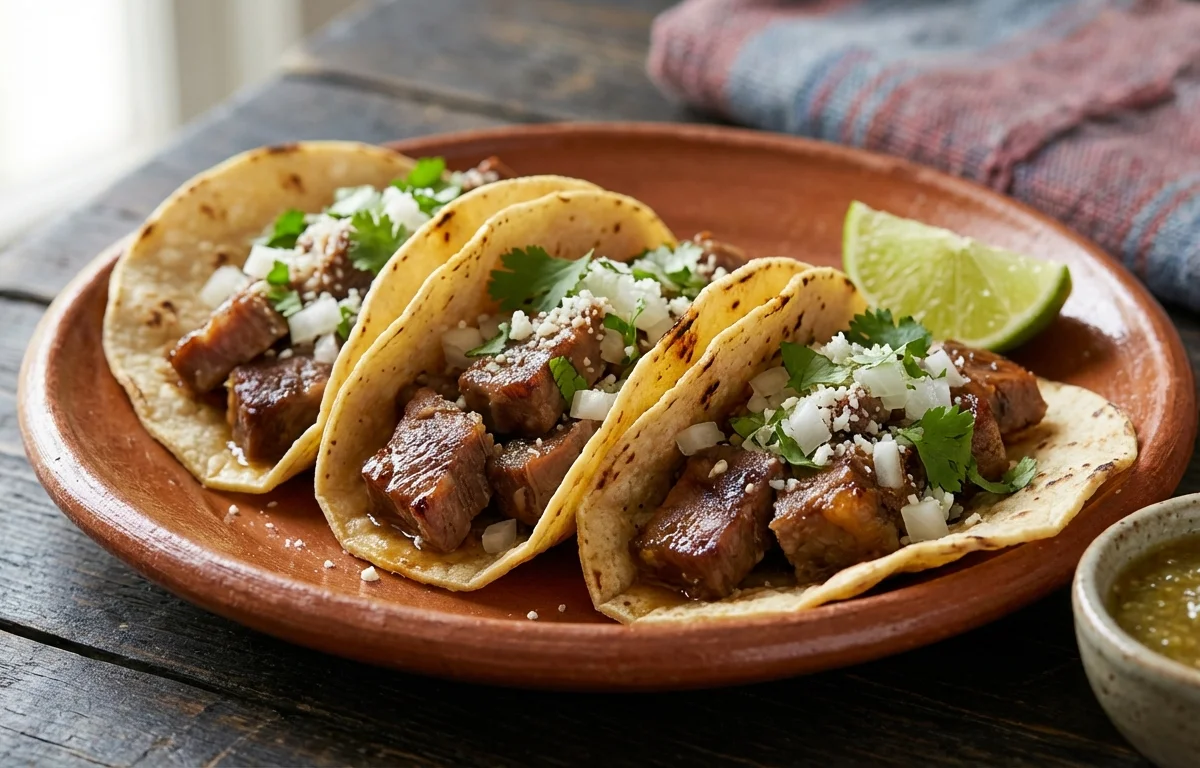
Lengua Tacos
Incredibly tender, melt-in-your-mouth beef tongue slow-cooked with garlic, onion, and bay leaves, then pan-seared to crispy perfection. Served on warm corn tortillas with fresh salsa verde, diced onion, and cilantro for an authentic taqueria experience right at home.
For 4 servings
- prep
Prep the beef tongue.
Rinse the beef tongue under cold water. Place it in a large pot or Dutch oven along with the quartered onion, smashed garlic cloves, bay leaves, and black peppercorns. Add enough water to cover the tongue by about 2 inches.
- boil · ~180 min
Simmer the tongue until fork-tender.
Bring the pot to a boil over high heat. Reduce heat to low, cover, and simmer gently. Skim off any foam that rises to the surface during the first 15 minutes. Cook until a fork easily pierces the thickest part of the tongue, about 2.5 to 3 hours.
TIPKeep the water at a gentle simmer — a rolling boil will make the meat tough. - prep · ~15 min
Peel and cube the tongue.
Remove the tongue from the cooking liquid and let it rest until cool enough to handle. Using a sharp knife, peel off the tough outer skin layer and trim any gristle from the base. Discard the skin, then cut the meat into small ½-inch cubes.
TIPThe skin peels easily while the tongue is still warm — don't let it cool completely. - fry · ~9 min
Crisp the lengua.
Heat oil in a large skillet or griddle over medium-high heat until shimmering. Add the cubed tongue in a single layer and cook for 4 to 5 minutes without stirring. Flip and continue cooking for another 3 to 4 minutes, until the edges are golden brown and crispy. Season with salt and toss.
TIPDon't crowd the pan — work in batches if needed to get that crispy edge. - grill · ~4 min
Warm the tortillas.
Wipe the skillet clean or use a dry griddle over medium heat. Warm each corn tortilla for about 20 seconds per side until pliable and lightly toasted.
- assemble
Assemble the tacos.
1.Place a generous spoonful of crispy lengua onto each warm tortilla.2.Top with diced raw onion and a sprinkle of fresh chopped cilantro.3.Finish with a spoonful of salsa verde.4.Serve immediately with lime wedges on the side.
What to keep in mind.
7 tips from the recipe — small details that make a real difference to the final dish.
- 1Peel the tongue while it's still warm — the skin slides off much easier.
- 2Skim the foam during the first 15 minutes of simmering for a cleaner broth.
- 3Don't rush the simmer — low and slow gives the most tender texture.
- 4For maximum crisp, pat the cubed tongue dry with paper towels before searing.
- 5Make the tongue a day ahead; reheat and crisp just before serving for even better flavor.
- 6Strain and save the cooking liquid — it makes an excellent base for soups or beans.
- 7Use a cast-iron skillet for searing to get a deep, even golden crust.
Adapt it for your goals.
Spicy chipotle
Add 1–2 chopped chipotle peppers in adobo to the skillet when searing the lengua for a smoky, spicy kick that complements the rich meat.
low oilLow-oil
Skip the searing oil and crisp the lengua in a non-stick pan over medium-high heat; the natural fat renders enough to achieve a light crust.
tostada baseTostada base
Swap tortillas for crispy tostada shells and layer with refried beans, lengua, and toppings for a crunchy variation.
burrito bowlBurrito bowl
Serve the crispy lengua over cilantro-lime rice with black beans, corn salsa, avocado, and crema for a loaded burrito bowl.
Why this is on our healthy list.
Rich in Iron
Beef tongue is a good source of heme iron, which supports healthy blood and energy levels.
High in Protein
Each serving provides a substantial amount of protein for muscle maintenance and satiety.
Source of B Vitamins
Beef tongue contains B vitamins like B12 and niacin, essential for nerve function and metabolism.
Low-Carb Friendly
Using corn tortillas and fresh toppings keeps the dish naturally low in carbohydrates.
Frequently asked questions
No, peel it after simmering while warm — the tough outer skin is much easier to remove once the meat is tender.