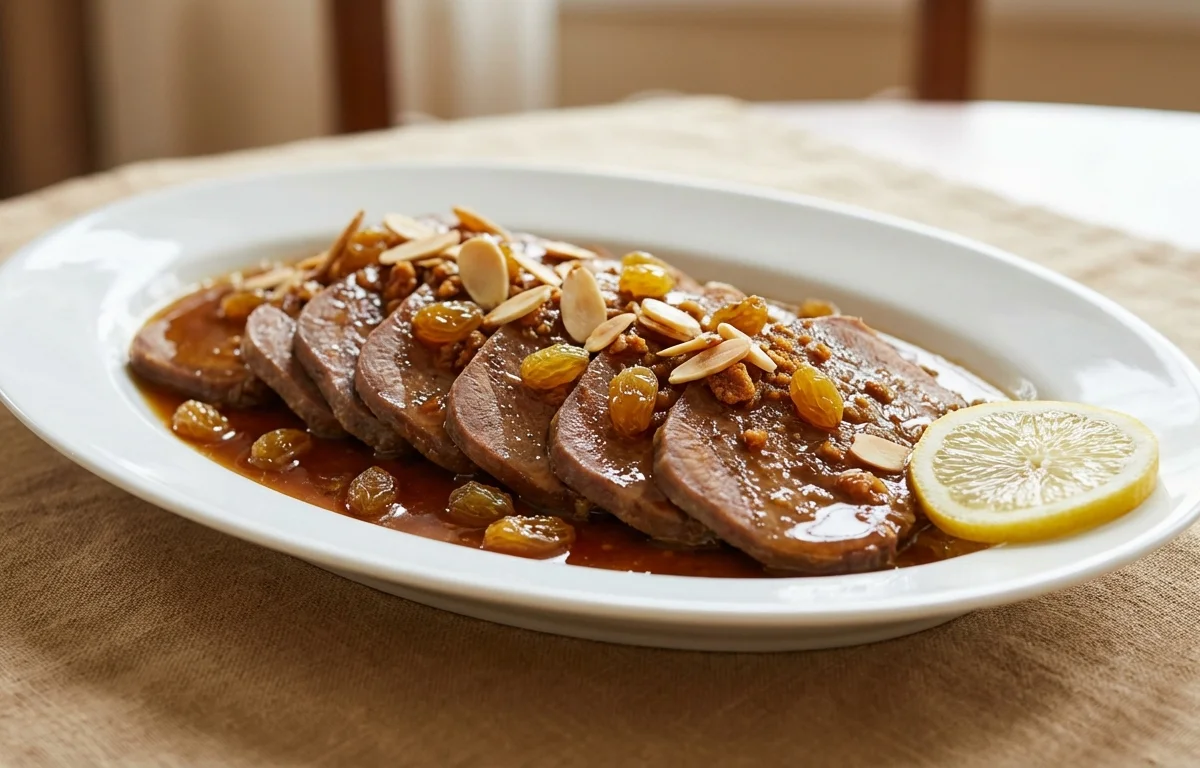
Beef Tongue Polonaise
A classic Polish comfort dish featuring tender, slow-simmered beef tongue, peeled and sliced, then blanketed in a velvety, tangy horseradish cream sauce studded with sautéed mushrooms. Served with boiled potatoes or rye bread, it's an elegant, old-world delicacy that turns a humble cut into a showstopper.
For 4 servings
- prep · ~180 min
Prepare and simmer the beef tongue.
1.Place the beef tongue in a large stockpot and cover with 2.5 liters of cold water.2.Add the halved onion, whole peeled carrots, parsley root, and celery root wedge to the pot.3.Drop in the bay leaves, allspice berries, black peppercorns, and salt.4.Bring to a rolling boil over high heat, then reduce to a gentle simmer.5.Skim off any foam that rises to the surface during the first 30 minutes.6.Cover partially and simmer until the tongue is very tender when pierced with a knife, about 2.5 to 3 hours.TIPKeep the water at a gentle bubble—a hard boil can toughen the meat. - rest · ~10 min
Cool and peel the tongue.
1.Transfer the cooked tongue to a bowl and strain the cooking broth, reserving 1.5 cups.2.Let the tongue cool just enough to handle, about 10 minutes.3.Using a small paring knife, trim away the tough outer skin and remove any small bones or gristle from the base.4.Trim the underside of the tongue if any rough bits remain.5.Slice the peeled tongue across the grain into 1-cm thick medallions.TIPPeel the tongue while it's still warm—the skin slips off much easier than when cold. - saute · ~9 min
Start the creamy mushroom sauce.
1.Melt the butter in a large skillet over medium heat.2.Add the sliced mushrooms and sauté until they release their water and turn golden, about 6 to 8 minutes.3.Sprinkle the flour over the mushrooms and stir constantly for 1 minute to cook out the raw flour taste. - simmer · ~7 min
Build the horseradish cream sauce.
1.Gradually whisk the reserved 1.5 cups of tongue cooking broth into the mushroom mixture.2.Bring to a gentle simmer, stirring often, and cook until the sauce thickens, about 4 to 5 minutes.3.Lower the heat and stir in the heavy cream, prepared horseradish, and lemon juice.4.Season with salt and a pinch of black pepper, then warm through without boiling for 2 minutes.TIPDon't let the sauce boil after adding the cream—it can curdle. Keep it at a gentle simmer. - simmer · ~5 min
Warm the sliced tongue in the sauce.
1.Lay the sliced tongue medallions in the sauce, spooning some over the top to coat.2.Cover and simmer gently for about 5 minutes until the meat is heated through. - garnish
Garnish with fresh parsley and serve hot.
Transfer the sauced tongue to a warmed serving platter or individual plates. Scatter the chopped parsley over the top and serve immediately.
What to keep in mind.
7 tips from the recipe — small details that make a real difference to the final dish.
- 1Simmer the tongue at a gentle bubble, not a hard boil, to keep the meat tender.
- 2Peel the tongue while it's still warm—the outer skin will slip off much more easily.
- 3Always slice the peeled tongue across the grain for the most tender bite.
- 4Reserve and strain the cooking broth—it's the flavorful base for the sauce.
- 5Do not let the sauce boil after adding the cream to prevent curdling.
- 6Taste the sauce before adding extra salt—the broth may already be well-seasoned.
- 7Make the tongue a day ahead; slice and reheat gently in the sauce for deeper flavor.
Adapt it for your goals.
No-Cream Version
Replace heavy cream with an additional 1/2 cup of the cooking broth for a lighter, dairy-free sauce. The sauce will be thinner but still richly flavored.
Herb InfusionHerb Infusion
Add 1 sprig of fresh thyme or a small bay leaf to the sauce while it simmers for an extra layer of savory, herbal complexity.
Spicy KickSpicy Kick
Stir in 1/2 teaspoon of Dijon mustard along with the horseradish for a sharper, piquant edge that complements the beef.
Why this is on our healthy list.
Rich in Collagen
Beef tongue is an excellent source of collagen, which supports joint health and skin elasticity.
High in B Vitamins
This dish provides B12, niacin, and riboflavin from the beef tongue, important for energy metabolism and nervous system function.
Good Source of Iron
Beef tongue contributes heme iron, which is highly absorbable and helps prevent anemia.
Nutrient-Dense Vegetables
The cooking broth includes carrots, parsley root, and celery root, adding fiber, vitamins, and antioxidants.
Frequently asked questions
The tongue is done when a knife or skewer slides into the thickest part with little resistance—typically after 2.5 to 3 hours of gentle simmering.