Vegetable1 recipes
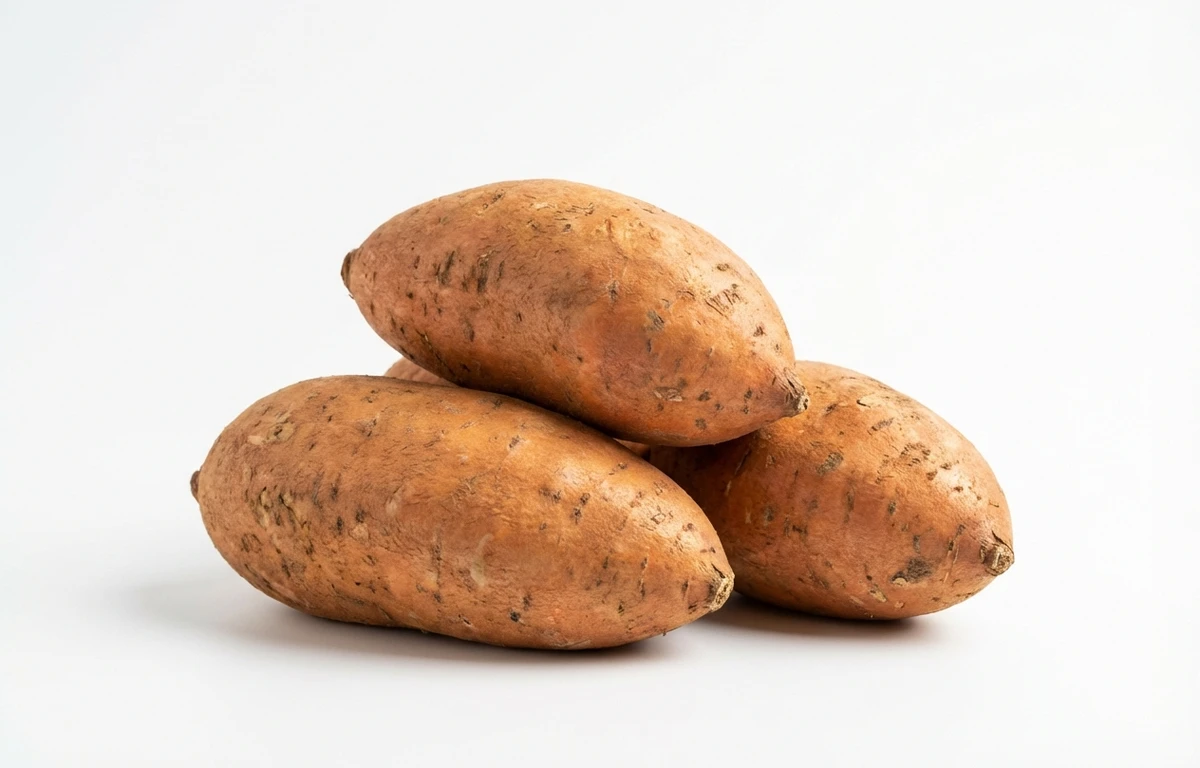
sweet potatoes.
VegetarianVeganGluten-freeDairy-freeNut-freePeanut-freeSoy-freeEgg-freeShellfish-freeHoney-freeAlcohol-free
ALSO KNOWN AS
shakarkandcamotesatsuma-imokumara
SERVING
CALORIES
86
PROTEIN
1.6g
CARBS
20.1g
FAT
0.10g
FIBER
3.0g
This ingredient is flagged as naturally gluten-free. Per 100 g, it provides 1.8 µg of vitamin K.
NUTRITION PROFILE · per 100 g
Everything in this ingredient.
MACRONUTRIENTS
Calories86kcal—
Protein1.6g3%
Carbohydrates20.1g7%
Fiber3.0g11%
Sugar4.2g8%
Total fat0.10g0%
Saturated fat0.02g0%
Trans fat0g—
Cholesterol0mg0%
Water77.3g—
MINERALS
Sodium55mg2%
Potassium337mg7%
Calcium30mg2%
Iron0.60mg3%
Magnesium25mg6%
Phosphorus47mg4%
Zinc0.30mg3%
Copper0.15mg17%
Manganese0.26mg11%
Selenium0.60µg1%
VITAMINS
Vitamin A709µg79%
Vitamin C2.4mg3%
Vitamin D0µg0%
Vitamin E0.26mg2%
Vitamin K1.8µg2%
Thiamin (B1)0.08mg7%
Riboflavin (B2)0.06mg5%
Niacin (B3)0.61mg4%
Pantothenic acid (B5)0.80mg16%
Vitamin B60.21mg12%
Folate (B9)11µg3%
Vitamin B120µg0%
%DV based on a 2,000 cal diet. Source: USDA FoodData Central. A dash in the %DV column means there’s no established Daily Value for that nutrient.
MEASUREMENT CONVERSIONS
How much is what.
1 cup200g
1 oz28.4g
1 lb453.6g
1 piece150g
HEALTH BENEFITS
Why eat it.
- ✓Rich in fiber which promotes a healthy digestive tract
COOKING TIPS
In the kitchen.
- 1Leave the skin on while cooking to preserve maximum fiber and nutrients
- 2Roast at high temperatures (400°F/200°C) to caramelize the natural sugars
- 3Pierce the skin with a fork before baking whole to allow steam to escape
STORAGE
Keep it fresh.
- Store in a cool, dry, dark place with good ventilation
- Do not refrigerate raw sweet potatoes as it changes their flavor and texture
- Keep away from onions, as they release gases that cause sweet potatoes to spoil faster
FAQ
Frequently asked questions.
How long do sweet potatoes last?
Raw sweet potatoes last about 2-3 weeks in a cool, dark pantry. If stored in a very cool (but not refrigerated) cellar, they can last up to a month.
Can you freeze sweet potatoes?
Yes, but they should be cooked (boiled, baked, or mashed) before freezing. Raw sweet potatoes do not freeze well.
What is the difference between a sweet potato and a yam?
In the US, 'yam' is often used as a label for soft, orange-fleshed sweet potatoes. True yams are starchy, dry, and native to Africa and Asia, with bark-like skin.
How do I pick the best sweet potato?
Choose firm potatoes with smooth, taut skin. Avoid those with soft spots, bruises, or sprouts.
What are the best substitutes for sweet potatoes?
Butternut squash, pumpkin, or carrots are the best substitutes for flavor and texture. Regular potatoes can work but lack the sweetness.
Are sweet potato skins edible?
Yes, the skins are completely edible and contain a significant portion of the vegetable's fiber and potassium.
Are sweet potatoes healthier than white potatoes?
Both are nutritious, but sweet potatoes are higher in Vitamin A and fiber, and generally have a lower glycemic index.
RECIPES
Cook with sweet potatoes.
1 recipes · sorted by what’s quick