Protein
swordfish.
VegetarianVeganGluten-freeDairy-freeNut-freePeanut-freeSoy-freeEgg-freeShellfish-freeHoney-freeAlcohol-free
ALSO KNOWN AS
broadbillswordfishraw swordfishcooked dry heat swordfish
SERVING
CALORIES
144
PROTEIN
19.7g
CARBS
0g
FAT
6.7g
FIBER
0g
This ingredient is flagged as naturally gluten-free. Per 100 g, it provides 0 µg of vitamin K.
NUTRITION PROFILE · per 100 g
Everything in this ingredient.
MACRONUTRIENTS
Calories144kcal—
Protein19.7g39%
Carbohydrates0g0%
Fiber0g0%
Sugar0g0%
Total fat6.7g9%
Saturated fat1.6g8%
Trans fat0g—
Cholesterol66mg22%
Water72.5g—
MINERALS
Sodium90mg4%
Potassium418mg9%
Calcium4.0mg0%
Iron0.80mg4%
Magnesium27mg6%
Phosphorus263mg21%
Zinc1.1mg10%
Copper0.05mg6%
Manganese0.01mg0%
Selenium48.1µg87%
VITAMINS
Vitamin A34µg4%
Vitamin C0mg0%
Vitamin D13.9µg70%
Vitamin E0.20mg1%
Vitamin K0µg0%
Thiamin (B1)0.05mg4%
Riboflavin (B2)0.06mg5%
Niacin (B3)9.7mg61%
Pantothenic acid (B5)0.40mg8%
Vitamin B60.50mg29%
Folate (B9)2.0µg1%
Vitamin B121.8µg75%
%DV based on a 2,000 cal diet. Source: USDA FoodData Central. A dash in the %DV column means there’s no established Daily Value for that nutrient.
MEASUREMENT CONVERSIONS
How much is what.
1 oz28.4g
1 lb453.6g
1 piece170.1g
HEALTH BENEFITS
Why eat it.
- ✓Excellent source of high-quality lean protein, essential for muscle building and repair.
COOKING TIPS
In the kitchen.
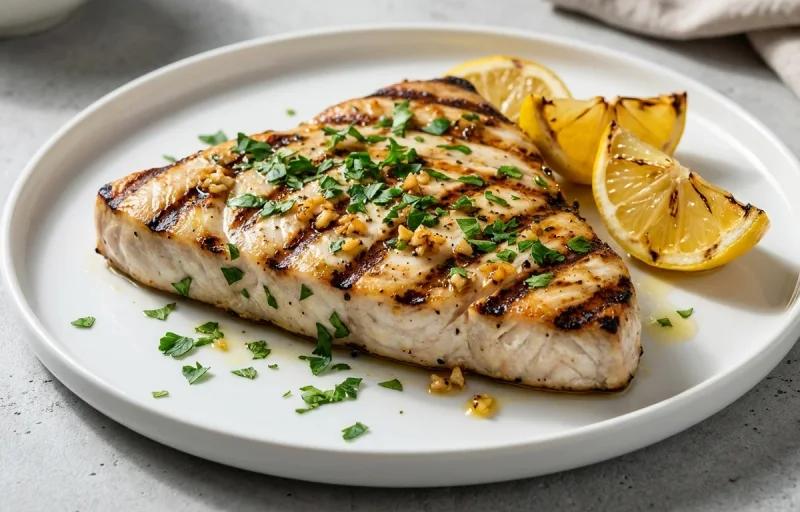
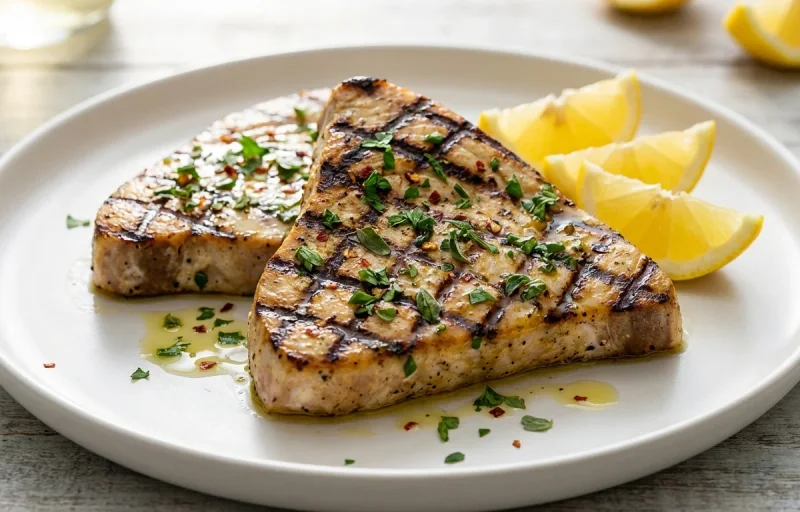
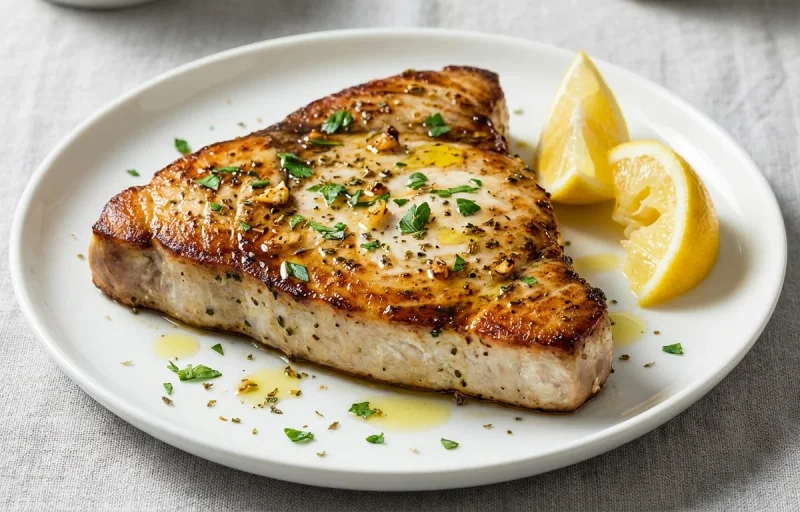
- 1Due to its firm, meaty texture, swordfish is ideal for grilling, broiling, and pan-searing. It holds its shape well.
- 2Avoid overcooking, as its low fat content can cause it to become dry. Cook until just opaque in the center, reaching an internal temperature of 145°F (63°C).
- 3Marinate for 15-30 minutes before cooking to add flavor and moisture. Acidic marinades with lemon juice, olive oil, and herbs work well.
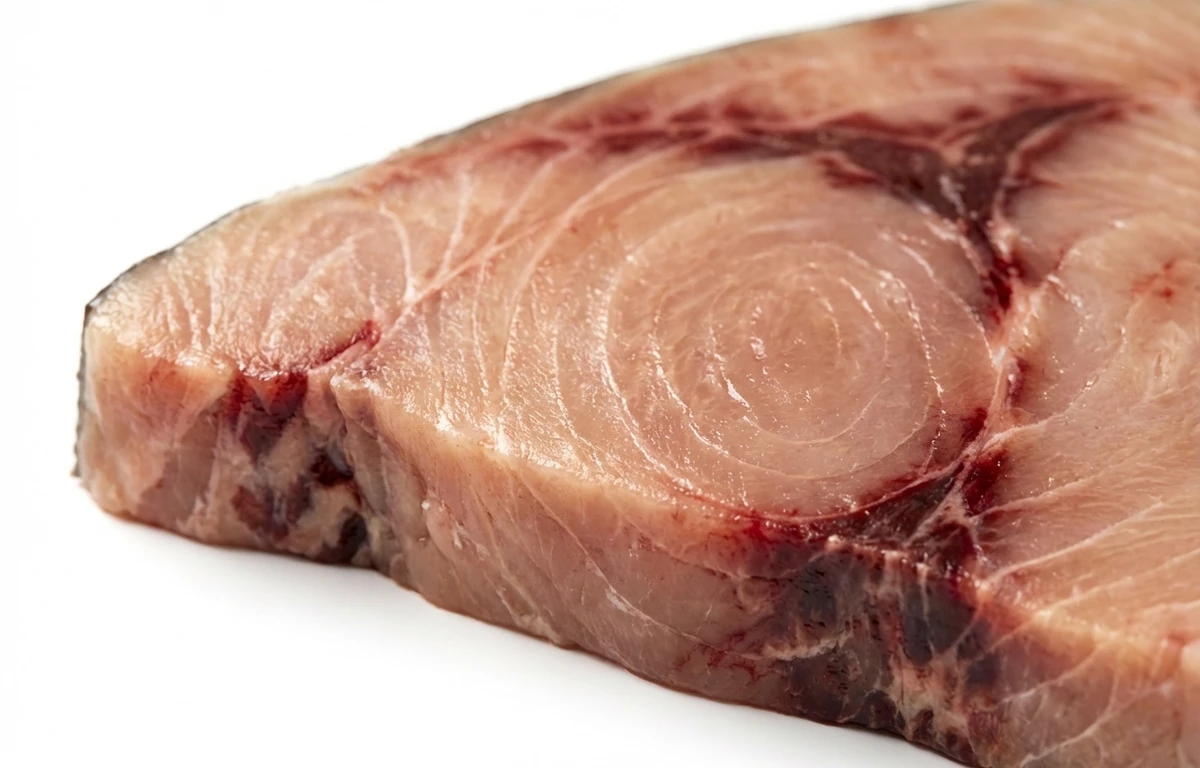
- 4The dark red 'bloodline' can have a strong, fishy flavor. For a milder taste, it can be trimmed off before cooking.
STORAGE
Keep it fresh.
- Store fresh swordfish in the coldest part of your refrigerator (below 40°F or 4°C) and consume within 1-2 days.
- For longer storage, wrap steaks tightly in plastic wrap and freezer paper or a vacuum-sealed bag and freeze at 0°F (-18°C) for up to 3 months.
FAQ
Frequently asked questions.
How much protein and calories are in swordfish?
A 100g serving of swordfish provides approximately 144 calories and 19.7g of protein. With 0g of carbohydrates and 6.7g of fat, it is an efficient source of lean protein for muscle building and repair.
Is swordfish high in mercury?
Yes, swordfish is a large predatory fish and is known to have higher mercury levels than many other types of seafood. The FDA recommends that pregnant women, nursing mothers, and young children avoid swordfish, while other adults should consume it in moderation.
Is swordfish keto-friendly?
Swordfish is very keto-friendly as it contains 0g of carbohydrates. Its combination of high protein and moderate healthy fats (6.7g per 100g) makes it an ideal choice for those following low-carb or ketogenic diets.
Is swordfish gluten-free?
Naturally, swordfish is 100% gluten-free. However, always check the ingredients in marinades, spice rubs, or breading used during preparation, as these can often introduce gluten to the dish.
What does swordfish taste like?
Swordfish has a mild, slightly sweet flavor and a very firm, 'meaty' texture often compared to a beef steak. It lacks the strong 'fishy' taste found in oilier fish, making it a popular choice for those who prefer a more substantial texture.
How do you cook swordfish?
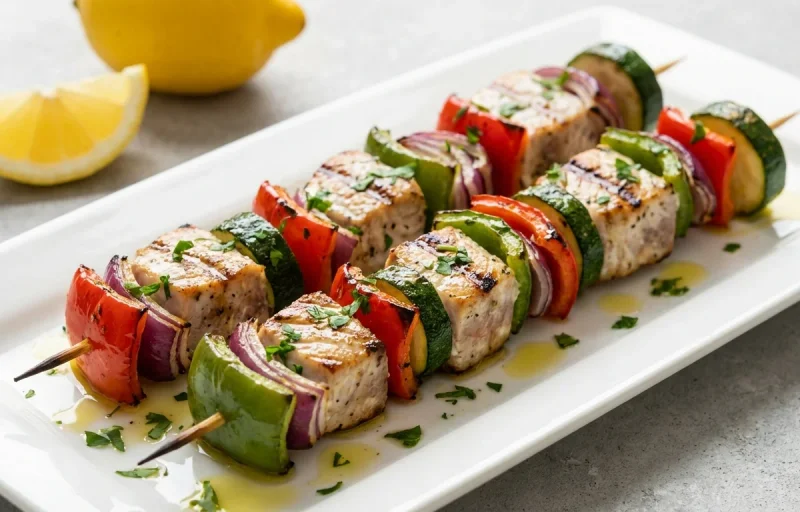
Because of its steak-like consistency, swordfish is best prepared by grilling, pan-searing, or broiling. It holds its shape well on skewers and doesn't flake apart easily, but it can dry out quickly, so it should be cooked just until opaque in the center.
Can I eat swordfish raw?
While swordfish can be served raw in dishes like carpaccio or sashimi, it must be 'sushi-grade' to ensure it has been frozen properly to kill parasites. Most culinary experts recommend cooking it to enjoy its unique firm texture.
How do you store fresh swordfish?
Fresh swordfish should be stored in the coldest part of your refrigerator and consumed within 1 to 2 days. For longer storage, wrap the steaks tightly in plastic wrap and a freezer bag to keep them for up to 3 months.
How do you know if swordfish has gone bad?
Fresh swordfish should have a mild, clean scent and firm, moist flesh. If the fish has a strong ammonia-like odor, a slimy surface texture, or the flesh appears dull and brownish, it has likely spoiled and should be discarded.
RECIPES
Cook with swordfish.
0 recipes · sorted by what’s quick