
Loading...
Also known as: candied papaya bits, candied fruit cubes
Per 100g
Nutrition data source: USDA FoodData Central
Common measurement equivalents in grams

Crisp, buttery, and melt-in-your-mouth biscuits studded with colorful tutti frutti. A classic Indian bakery-style treat that's perfect with a cup of chai and incredibly easy to make at home.

A delightful sweet bun from South Indian bakeries, with a soft, pillowy bread exterior and a rich, chewy filling of coconut, tutti frutti, and nuts. A nostalgic treat that truly makes the heart happy.
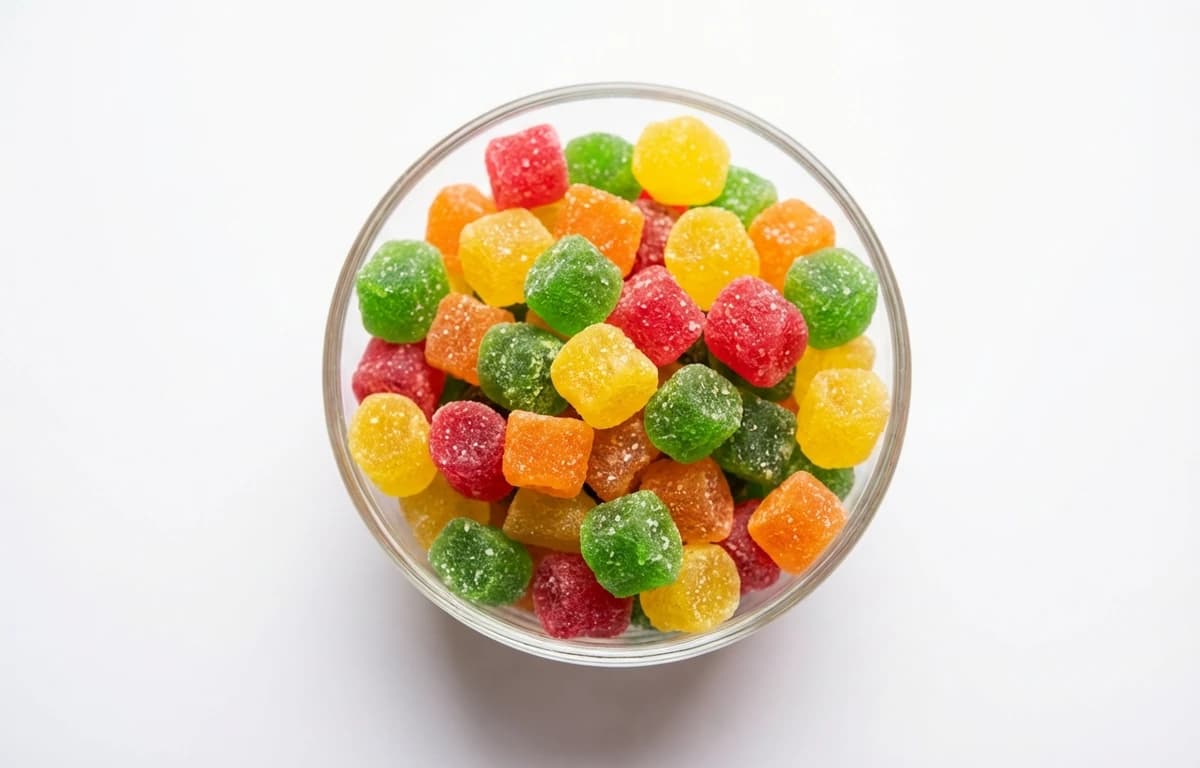
In most regions, especially India and the UK, it is made from candied raw papaya cubes that are dyed in various bright colors.
When stored in an airtight container in a cool place, it can last for 6 to 12 months.
Yes, it is typically made from fruit, sugar, and food coloring, making it suitable for vegans.
The bits are denser than the batter. Coating them in a light dusting of flour before mixing helps them stay suspended.
Yes, it can be frozen in an airtight bag, though it is not strictly necessary due to its high sugar content which acts as a preservative.
Raisins, dried cranberries, chopped dried apricots, or candied ginger are excellent alternatives.
No, it is naturally gluten-free as it is made from fruit and sugar.
Look for bits that are brightly colored, slightly translucent, and not stuck together in a hard mass.
Tutti Frutti is a versatile ingredient found in cuisines around the world. With 310 calories per 100g and 0.3 grams of protein, it's a nutritious addition to many dishes.
Explore more ingredients in the fruit product category with complete nutrition information.
View all fruit product →Discover 3 recipes featuring tutti frutti with step-by-step instructions.
Browse recipes →Explore more ingredients similar to Tutti Frutti.
The most-searched ingredients on CraftMyMeals.