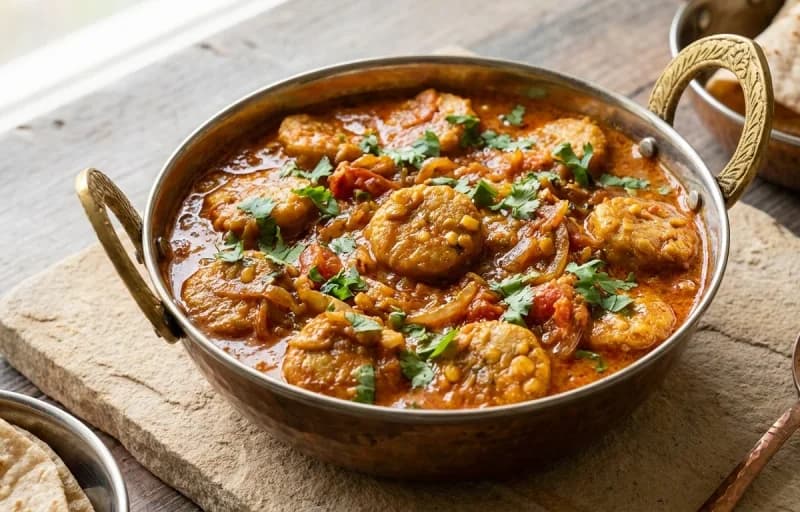
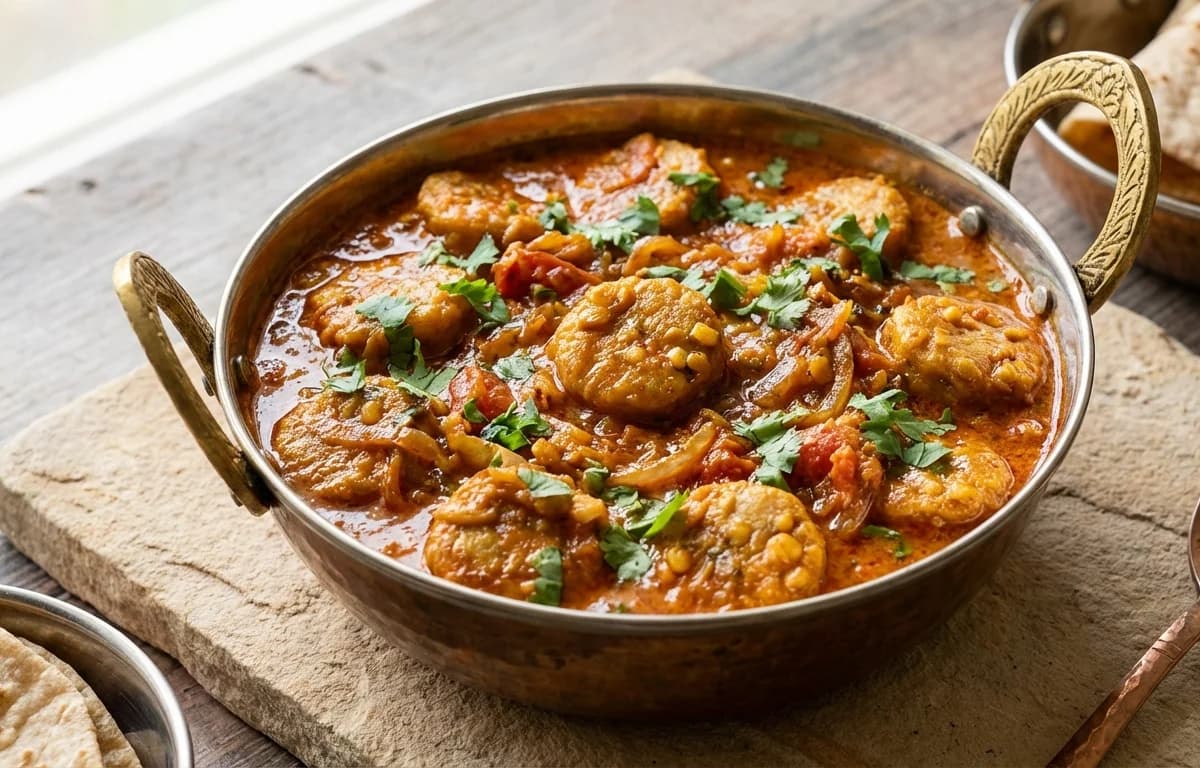
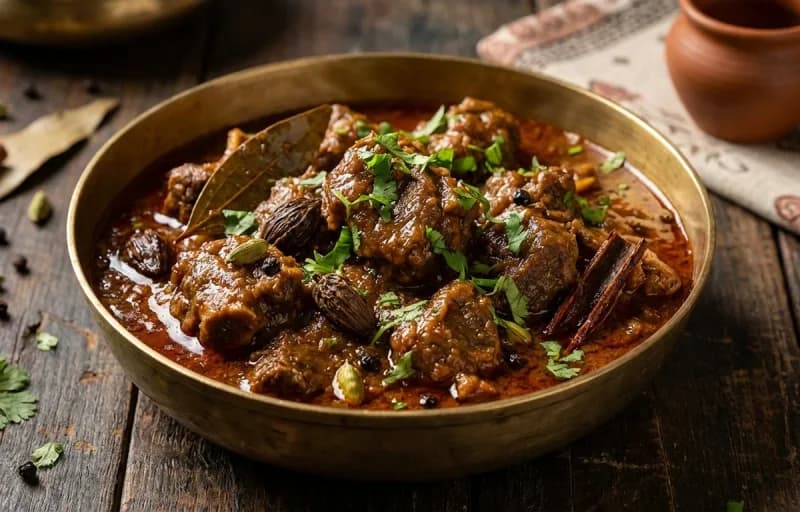
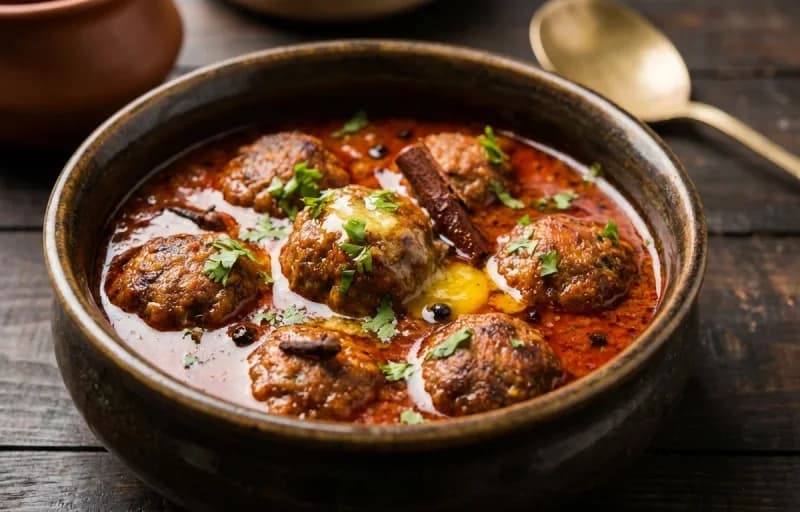
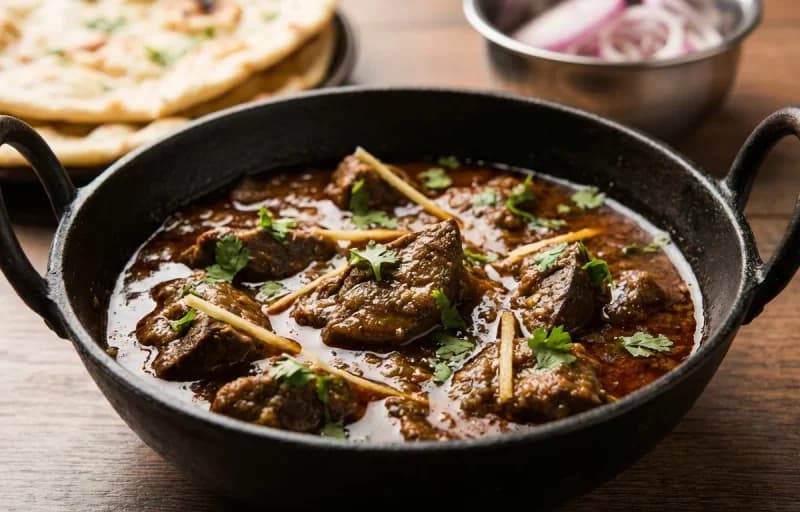
A traditional Rajasthani curry featuring sun-dried lentil dumplings (badi) simmered in a tangy yogurt and tomato gravy. This rustic and flavorful dish is a perfect taste of the desert state's cuisine.
Prep15 min
Cook30 min
Servings4
Serving size: 1 serving
324cal
13gprotein
35gcarbs
16g
Ingredients
1 cup Moong Dal Badi (Sun-dried lentil dumplings)
4 tbsp Ghee (Can be substituted with vegetable oil)
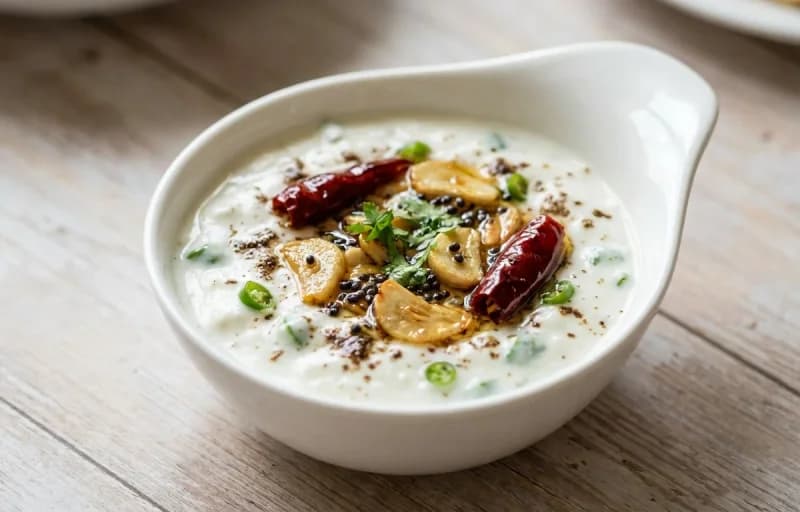
1 cup Curd (Whisked until smooth, preferably at room temperature)
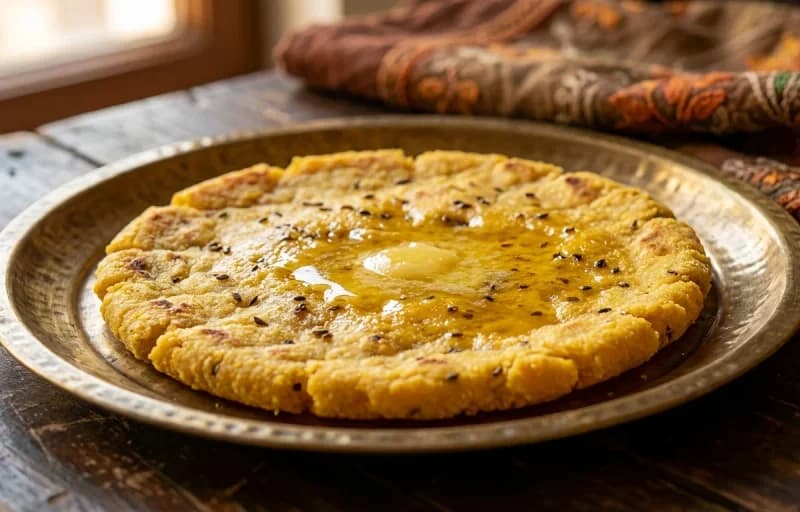
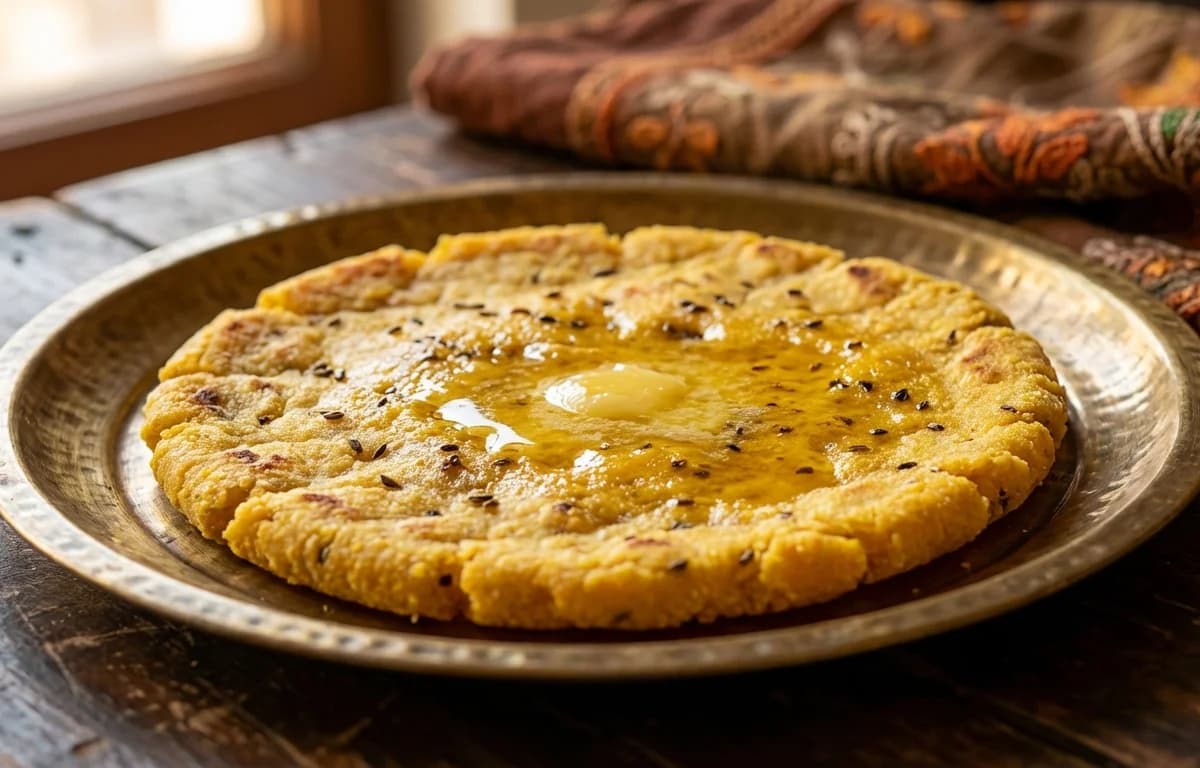
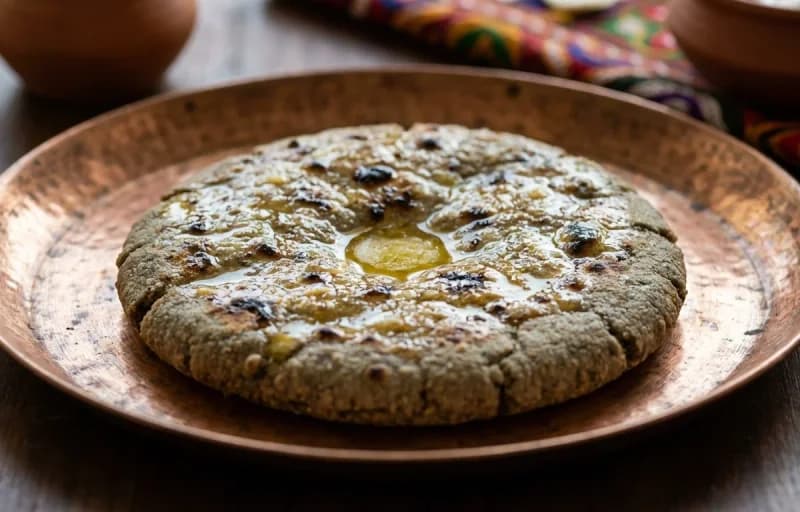
A rustic, gluten-free flatbread from Punjab made with maize flour. Its slightly sweet, earthy flavor and crumbly texture pair perfectly with Sarson ka Saag and a dollop of white butter.
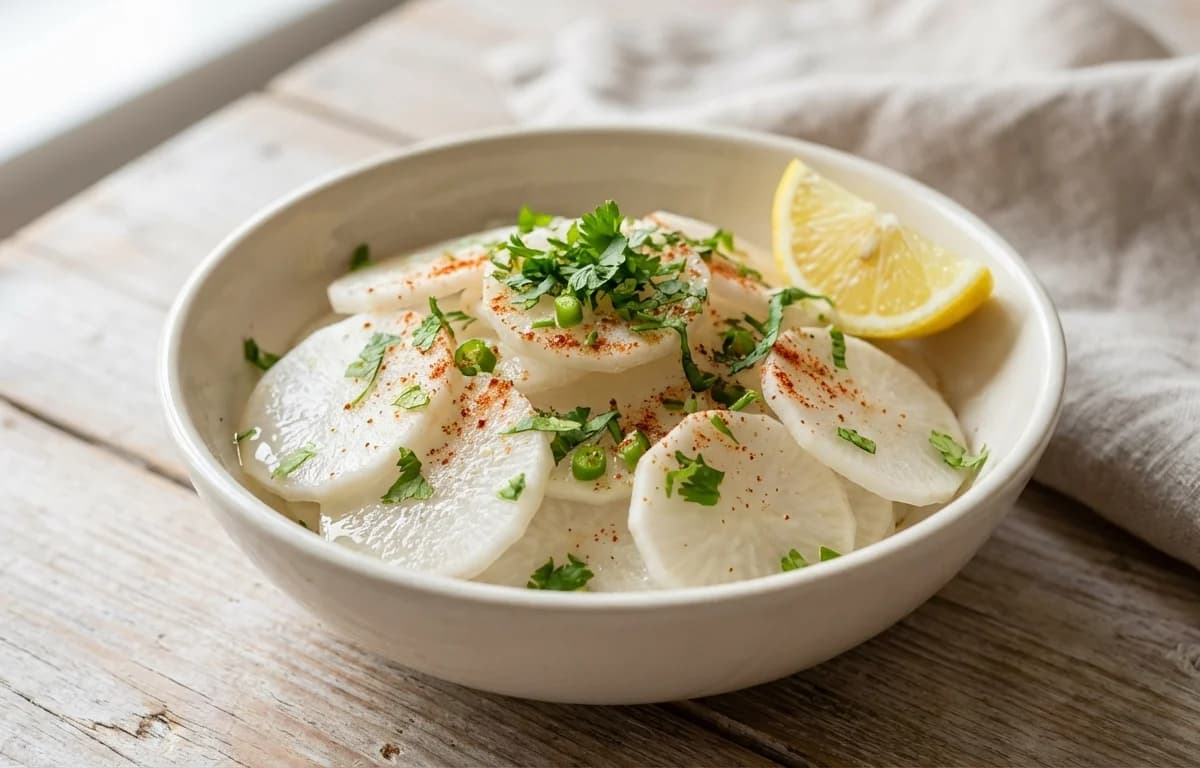
A crisp and refreshing North Indian salad made with grated radish, tangy lemon juice, and a hint of spice. This simple 'mooli ka laccha' is the perfect crunchy side dish to accompany rich curries and dals, ready in just 10 minutes.
About Badi ki Sabzi, Makki ki Roti and Mooli Salad
Protein-packed badi ki sabzi with fiber-rich makki ki roti and refreshing mooli salad – a gut-friendly feast!
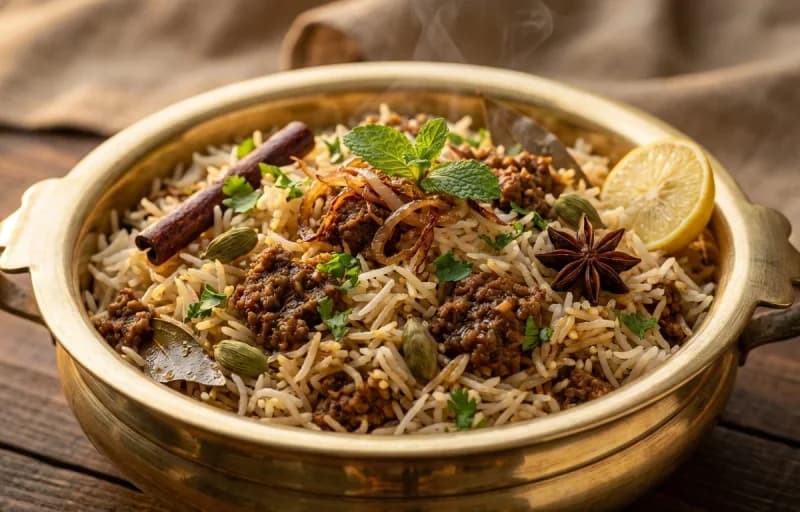
This marwari dish is perfect for lunch. With 800.41 calories and 23g of protein per serving, it's a nutritious choice for your meal plan.
fat
0.25 tsp Asafoetida (Hing)
0.5 tsp Turmeric Powder
1 tsp Red Chili Powder (Adjust to taste)
1.5 tsp Coriander Powder
0.5 tsp Garam Masala
1 tsp Salt (Adjust to taste)
2.5 cup Water (Divided use)
2 tbsp Coriander Leaves (Freshly chopped, for garnish)
Instructions
1
Fry the Badi
Heat 2 tablespoons of ghee in a kadai or heavy-bottomed pan over medium heat.
Add the moong dal badi and fry, stirring continuously for 3-4 minutes until they turn a consistent golden brown and become aromatic.
Remove the fried badi with a slotted spoon and set them aside on a plate.
2
Prepare the Gravy Base
In the same kadai, add the remaining 2 tablespoons of ghee.
Once the ghee is hot, add the cumin seeds. When they begin to splutter, add the asafoetida.
Immediately add the finely chopped onion and sauté for 6-7 minutes until it turns soft and golden brown.
Add the ginger-garlic paste and slit green chilies. Cook for another minute until the raw aroma disappears.
3
Cook the Masala
Add the turmeric powder, red chili powder, and coriander powder. Stir and cook for 30 seconds on low heat.
Pour in the tomato puree and add salt. Mix well.
Cook the masala, stirring occasionally, for 6-8 minutes until it thickens and you see ghee separating from the sides.
4
Prepare and Add the Curd Mixture
While the masala cooks, prepare the curd mixture. In a separate bowl, whisk the curd, besan, and 1/2 cup of water until completely smooth and free of lumps.
Reduce the heat of the kadai to the lowest setting. This is a crucial step.
Slowly pour the curd mixture into the masala, stirring continuously and vigorously with a whisk or spoon to prevent curdling.
Continue to stir and cook on low heat for 2-3 minutes until the gravy comes to a gentle simmer and thickens slightly.
5
Simmer the Sabzi
Add the fried badi to the gravy along with the remaining 2 cups of water. Stir gently to combine.
Increase the heat to medium and bring the curry to a boil.
Once boiling, reduce the heat to low, cover the kadai with a lid, and let it simmer for 10-12 minutes.
The curry is ready when the badi are soft (but not mushy) and have absorbed the flavors of the gravy. The gravy should have a medium consistency.
6
Garnish and Serve
Turn off the heat. Stir in the garam masala.
Garnish with freshly chopped coriander leaves.
Let the sabzi rest for 5 minutes before serving. This allows the flavors to meld together.
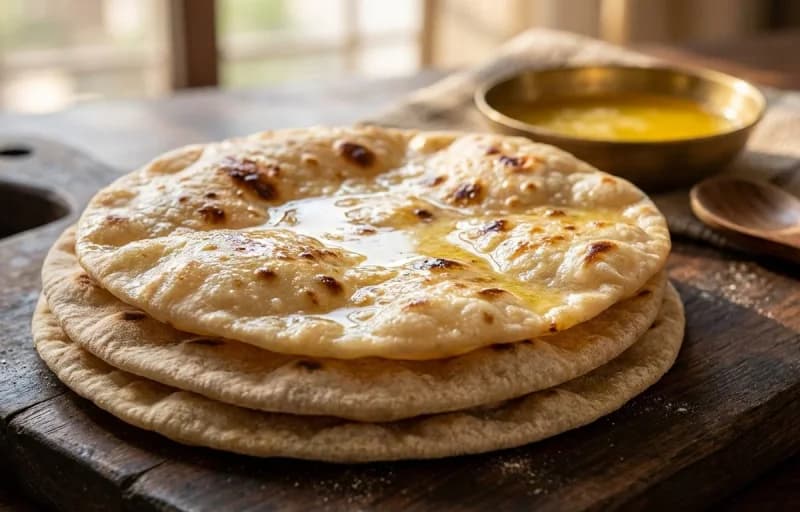
Serve hot with bajra roti, phulka, or steamed rice.
448cal
9gprotein
70gcarbs
15gfat
Ingredients
2 cup Maize Flour (Also known as Makki ka Atta)
1 tsp Carom Seeds (Also known as Ajwain)
0.5 tsp Salt (Adjust to taste)
1 cup Warm Water (Use as needed for kneading)
3 tbsp Ghee (1 tbsp for the dough and 2 tbsp for cooking)
Instructions
1
Prepare the Dough
In a large mixing bowl (parat), combine the maize flour, carom seeds, and salt. Mix well.
Add 1 tablespoon of ghee to the flour and rub it in with your fingertips until it resembles coarse breadcrumbs.
Gradually add warm water, a little at a time, and start gathering the flour to form a dough.
Knead the dough for 5-7 minutes using the heel of your palm, pushing and folding. The dough should be smooth, soft, and pliable with no cracks. Do not make the dough too soft or too stiff.
2
Divide and Shape
Divide the dough into 8 equal-sized portions.
Roll each portion between your palms to form a smooth, crack-free ball. Keep the dough balls covered with a damp cloth to prevent them from drying out.
3
Roll the Roti
Take one dough ball. If the dough feels dry, knead it again for 30 seconds with a few drops of water.
Place the ball on a rolling board or between two sheets of parchment paper/plastic.
Gently flatten it with your fingers and then use a rolling pin to roll it into a 5-6 inch circle, about 1/4 inch thick. Alternatively, use the traditional method of patting the dough between your moist palms to flatten it into a circle.
Don't worry about perfect edges; the rustic, slightly cracked edges are characteristic of this roti.
4
Cook the Roti
Heat a tawa (griddle) over medium-high heat. The tawa should be hot before you place the roti on it.
Carefully lift the rolled roti and place it on the hot tawa.
Cook for about 1-1.5 minutes, or until the top surface changes color slightly and small bubbles appear.
Flip the roti using a spatula. Apply about 1/4 teaspoon of ghee on the semi-cooked side.
Cook the second side for another 1-1.5 minutes until golden-brown spots appear.
Flip again and apply ghee to the other side. Gently press the roti with the spatula to ensure it cooks evenly from the inside.
For a puffed roti, you can carefully place it on a wire rack over a direct flame for a few seconds until it puffs up. This is optional.
5
Serve
Remove the roti from the tawa and place it in a casserole or on a plate.
Repeat the rolling and cooking process for the remaining dough balls.
Serve the Makki ki Roti immediately, topped with a generous dollop of white butter (makhan) or more ghee, alongside Sarson ka Saag and jaggery.