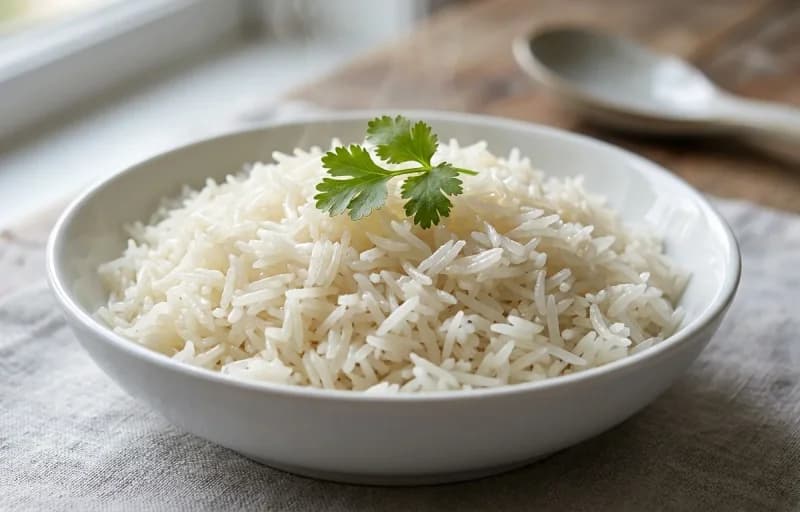
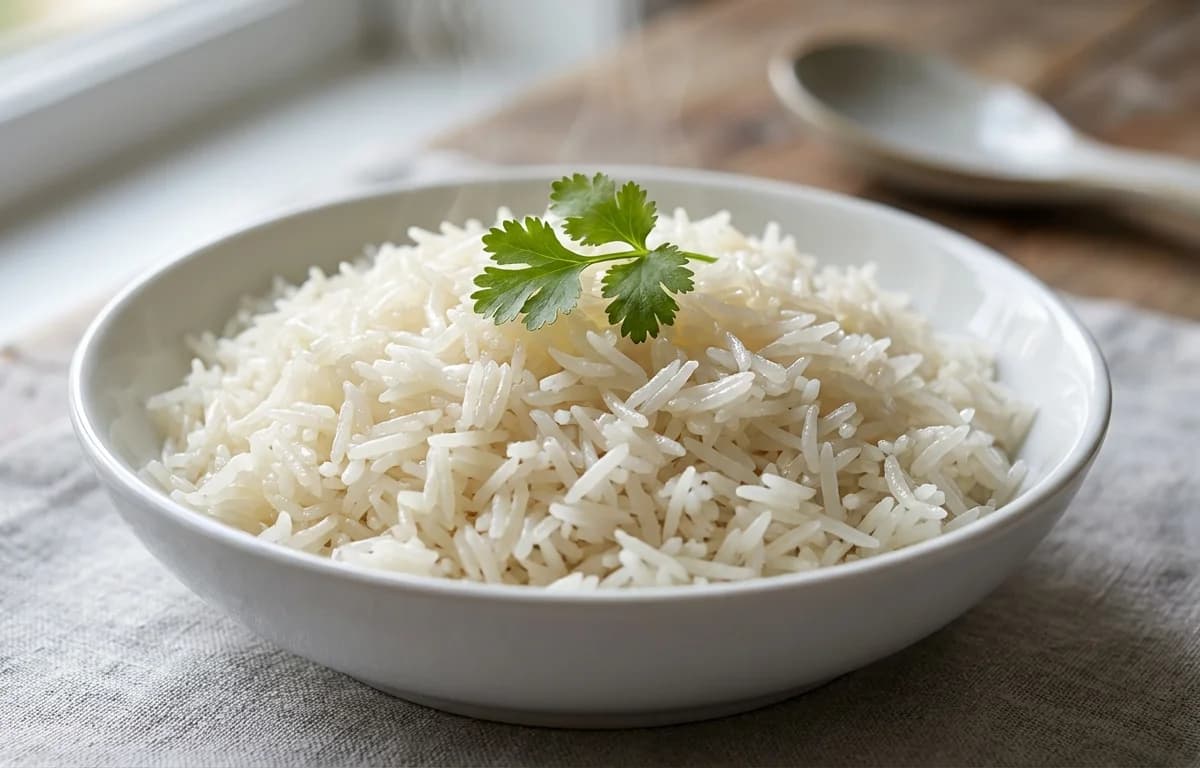
Master the art of cooking perfectly fluffy, separate grains of basmati rice with this foolproof method. An essential foundation for countless Indian meals, this simple recipe yields aromatic, non-sticky rice every time, ready to accompany your favorite curries, dals, and sabzis.
Prep5 min
Cook20 min
Soak30 min
Servings4
Serving size: 1 serving
253cal
5gprotein
55gcarbs
Ingredients
1.5 cup Basmati Rice
2.25 cup Water (For cooking)
0.5 tsp Salt (Optional)
Instructions
1
Place the basmati rice in a fine-mesh sieve and rinse under cold running water. Swirl the rice gently with your fingers until the water runs clear. This removes excess starch and prevents stickiness. For best results, soak the rinsed rice in fresh water for 20-30 minutes, then drain completely.
2
In a medium saucepan with a heavy bottom and a tight-fitting lid, combine the drained rice, 2.25 cups of fresh water, and salt (if using).
3
Bring the water to a rolling boil over medium-high heat. As soon as it boils, give it one gentle stir to prevent the rice from sticking to the bottom.
4
Immediately reduce the heat to the lowest possible setting, cover the saucepan with the lid, and let it simmer for 12-15 minutes. Do not lift the lid during this time, as the steam is crucial for cooking the rice evenly.
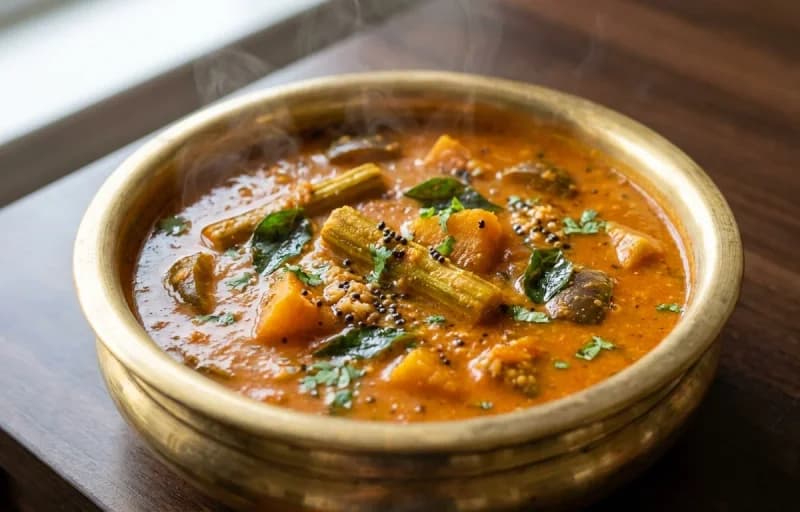
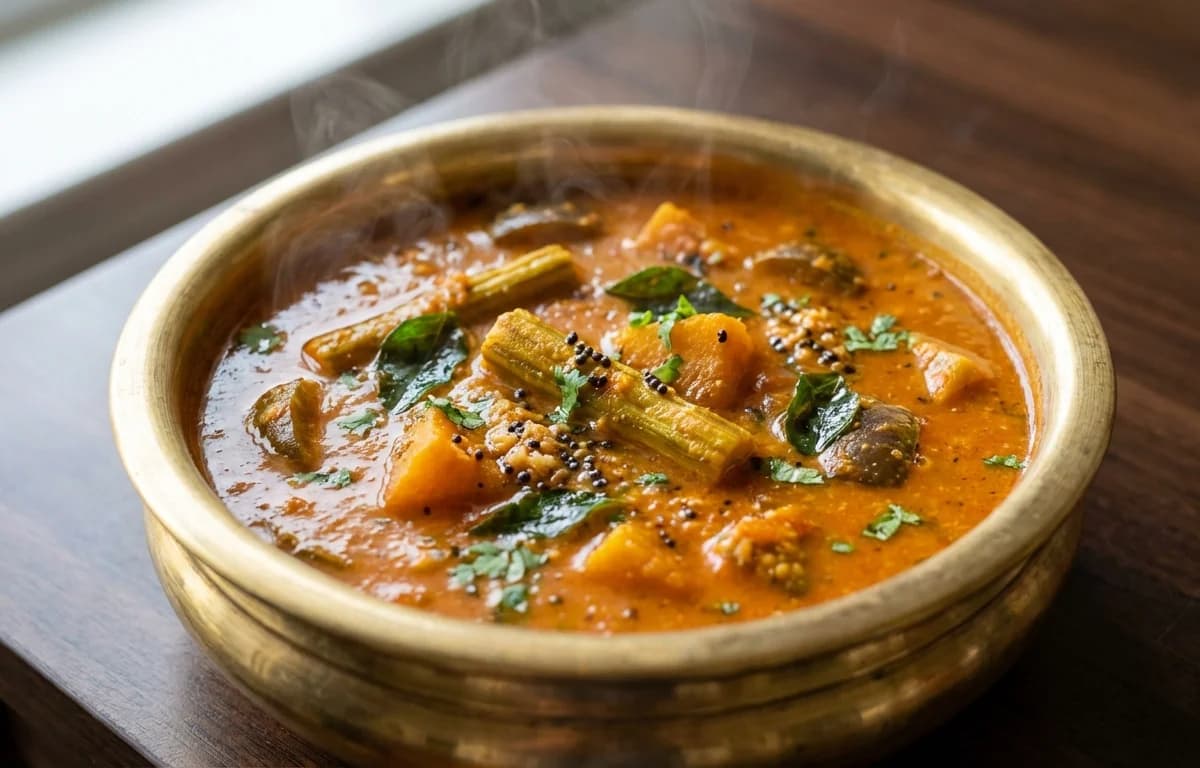
A traditional sambar from the Mangalore region, this dish boasts a unique flavor from a freshly roasted coconut and spice masala. It's a perfect blend of sweet, sour, and spicy notes, making it a delicious accompaniment for rice, idli, or dosa.
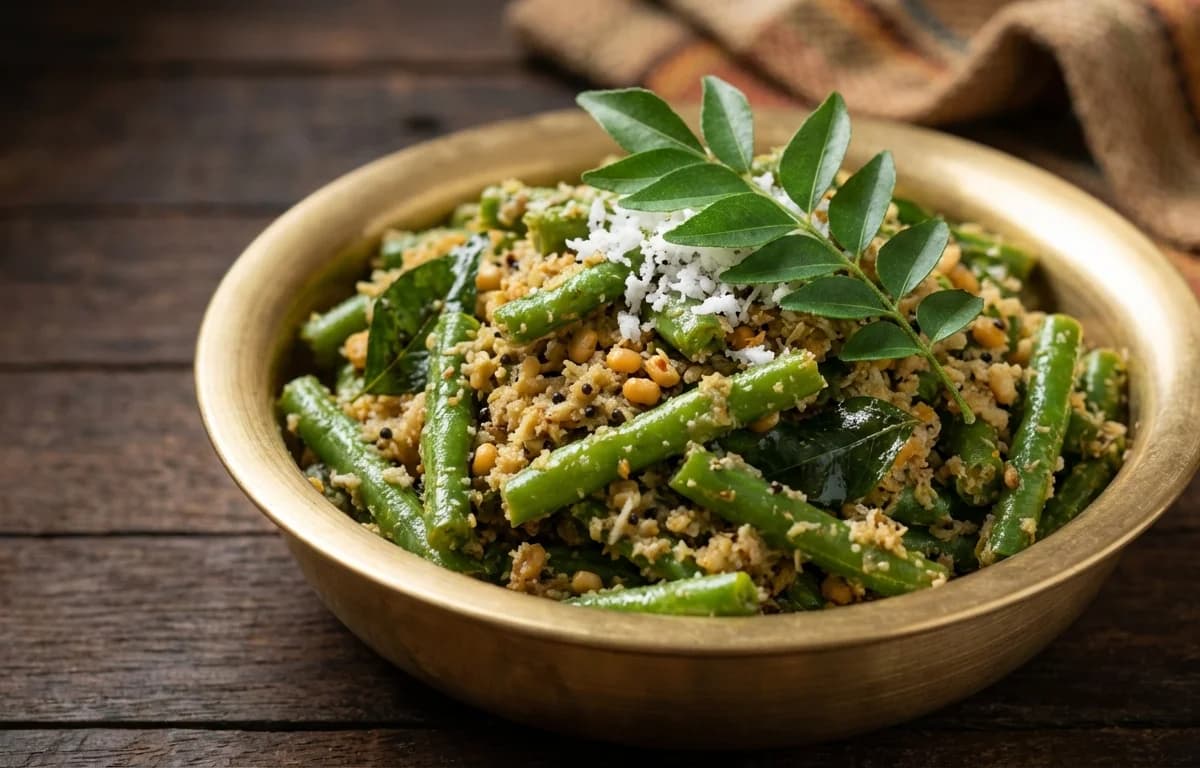
A delicious South Indian dry curry where tender French beans are tossed in a freshly ground coconut and spice masala. This Mangalorean classic is a perfect side dish for rice and sambar, offering a wonderful mix of savory, spicy, and slightly sweet flavors.
About Boiled Rice, Kudla Sambar and French Beans Sukka
Fiber-rich Kudla Sambar with rice & perfectly spiced beans sukka – a protein-packed, comforting delight!
This mangalorean dish is perfect for dinner. With 725.95 calories and 20.169999999999998g of protein per serving, it's a nutritious choice for your meal plan.
0gfat
5
After 12-15 minutes, all the water should be absorbed. Turn off the heat and let the saucepan stand, still covered, for at least 5-10 minutes. This resting period allows the grains to firm up and finish steaming.
6
Uncover the rice and gently fluff the grains with a fork or a spatula to separate them. Serve hot as a perfect accompaniment to any meal.
Servings
4
Serving size: 1 serving
248cal
11gprotein
41gcarbs
6gfat
Ingredients
0.75 cup Toor Dal (rinsed)
0.5 tsp Turmeric Powder
2 cup Water (for cooking dal)
1 tsp Coconut Oil (for roasting masala)
1.5 tbsp Coriander Seeds
1 tsp Cumin Seeds
1 tsp Urad Dal
1 tsp Chana Dal
0.25 tsp Fenugreek Seeds
5 pcs Byadgi Chillies (or other mild dry red chillies)
0.5 cup Fresh Coconut (grated)
1 pc Drumstick (cut into 2-inch pieces)
0.5 cup Yellow Pumpkin (cubed)
0.5 cup Brinjal (cubed)
0.5 cup Mangalorean Cucumber (cubed)
1 inch piece Tamarind
0.5 cup Warm Water (for soaking tamarind)
1 tbsp Jaggery (powdered or grated)
1.5 tsp Salt (or to taste)
1 tsp Mustard Seeds
10 leaves Curry Leaves
0.25 tsp Hing
2 tbsp Coriander Leaves (freshly chopped for garnish)
Instructions
1
Cook the Dal
Wash the toor dal thoroughly. In a pressure cooker, combine the dal, 2 cups of water, and turmeric powder.
Pressure cook on medium heat for 4-5 whistles, or for about 15 minutes, until the dal is completely soft and mushy.
Once the pressure releases naturally, open the cooker and whisk the dal until smooth. Set aside.
2
Roast and Grind the Masala
Heat 1 tsp of coconut oil in a pan over low-medium heat.
Add coriander seeds, cumin seeds, urad dal, chana dal, fenugreek seeds, and Byadgi chillies. Roast, stirring constantly, for 2-3 minutes until the dals turn golden and the spices are aromatic.
Add the grated fresh coconut and continue to roast for another 3-4 minutes until it turns a fragrant golden-brown. Be careful not to burn it.
Turn off the heat and allow the mixture to cool completely.
Transfer the cooled mixture to a grinder. Add about 1/4 cup of water and blend to a very smooth paste.
While the masala cools, soak the tamarind in 1/2 cup of warm water for 10 minutes. Squeeze well to extract all the pulp and discard the solids.
In a large pot, combine the mixed vegetables, 2 cups of water, and a pinch of salt. Bring to a boil.
Cook for 8-10 minutes until the vegetables are tender but still retain their shape. Do not overcook.
4
Combine and Simmer the Sambar
To the pot with cooked vegetables, add the tamarind extract and the jaggery. Boil for 2-3 minutes to cook off the raw tamarind flavor.
Stir in the ground coconut masala paste. Cook for 5 minutes, stirring occasionally, until the masala is fragrant.
Gently pour in the cooked, mashed dal and the remaining salt. Mix everything well.
Add more water if needed to reach your desired consistency. Bring the sambar to a gentle simmer and cook on low heat for 5-7 minutes, allowing all the flavors to meld.
5
Prepare the Tempering (Tadka)
In a small tadka pan, heat 2 tbsp of coconut oil over medium heat.
Once the oil is hot, add the mustard seeds. When they begin to splutter, add the curry leaves and hing.
Sauté for 30 seconds until the curry leaves are crisp and aromatic.
6
Garnish and Serve
Pour the hot tempering over the simmering sambar and stir gently to combine.
Garnish with freshly chopped coriander leaves.
Serve hot with steamed rice, idli, dosa, or vada.
4
Prepare the Tempering and Cook the Masala
Heat coconut oil in a wide pan or kadai over medium heat.
Add the mustard seeds and allow them to splutter.
Add the urad dal and sauté for about a minute until it turns light golden brown.
Add the curry leaves and finely chopped onion. Sauté for 3-4 minutes until the onions become soft and translucent.
Add the ground sukka masala paste to the pan. Cook for 5-7 minutes, stirring frequently, until the raw smell of the masala disappears and it starts to look dry.
5
Combine and Finish the Dish
Add the steamed French beans to the pan along with salt and powdered jaggery (if using).
Gently toss everything together until the beans are well-coated with the masala.
Continue to cook for another 3-4 minutes, allowing the flavors to meld together. The final dish should be dry.
Serve hot as a side dish with rice and sambar or dal.