
Loading...
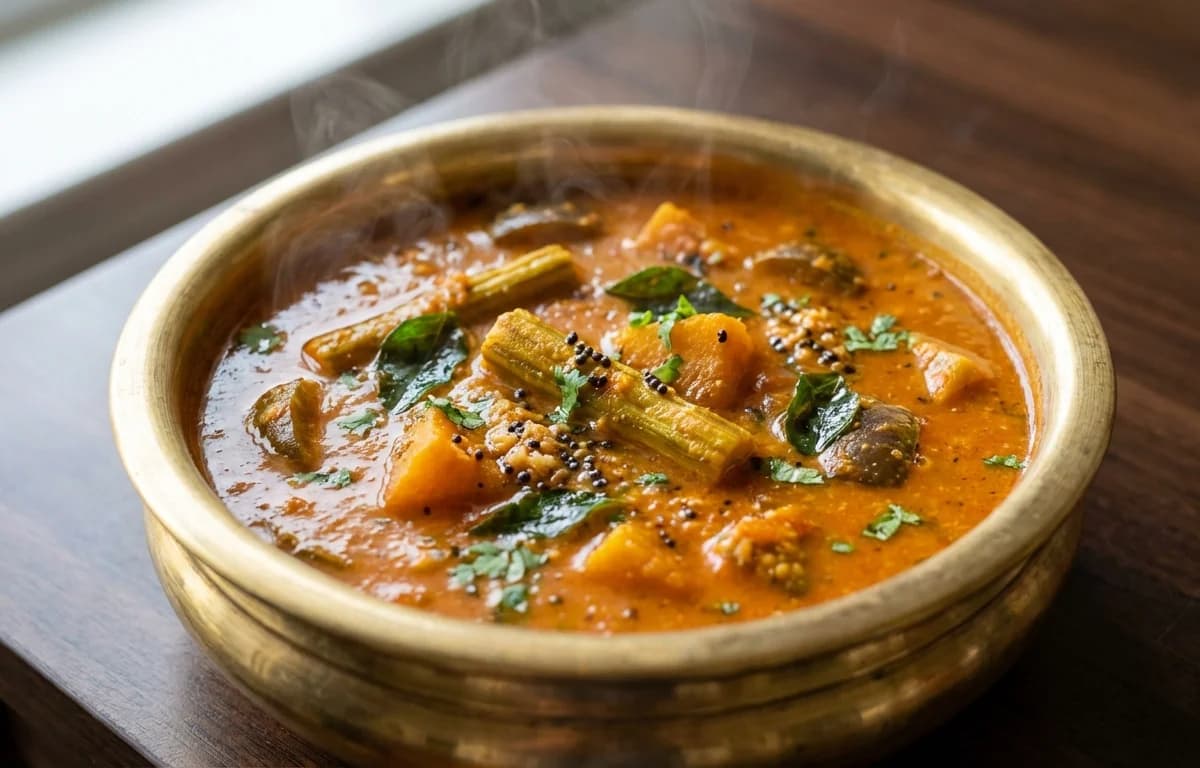
A traditional sambar from the Mangalore region, this dish boasts a unique flavor from a freshly roasted coconut and spice masala. It's a perfect blend of sweet, sour, and spicy notes, making it a delicious accompaniment for rice, idli, or dosa.
For 4 servings
Cook the Dal
Roast and Grind the Masala
Crisp green beans stir-fried with mustard seeds, lentils, and fresh coconut. This simple South Indian side dish, known as poriyal, is light, flavorful, and comes together in just 15 minutes.
A classic Karnataka one-pot meal, reimagined for a low-glycemic diet. This version uses wholesome foxtail millet instead of rice, combined with lentils and vegetables in a fragrant, spicy tamarind broth. It's comfort food that's both hearty and healthy.
A wholesome and savory South Indian pancake made with a low-glycemic blend of millets, brown rice, and mixed lentils. Packed with fiber and protein, this diabetic-friendly adai is a delicious and guilt-free choice for breakfast or dinner.
Crispy, golden crepes made from a fermented rice and lentil batter, filled with a savory spiced potato mixture. A beloved South Indian classic, perfect for a hearty breakfast or light dinner, best served with sambar and coconut chutney.
A traditional sambar from the Mangalore region, this dish boasts a unique flavor from a freshly roasted coconut and spice masala. It's a perfect blend of sweet, sour, and spicy notes, making it a delicious accompaniment for rice, idli, or dosa.
This south_indian recipe takes 55 minutes to prepare and yields 4 servings. At 248.15 calories per serving with 10.6g of protein, it's a moderately challenging recipe perfect for lunch or dinner.
Cook the Vegetables
Combine and Simmer the Sambar
Prepare the Tempering (Tadka)
Garnish and Serve
You can include other vegetables like ash gourd (winter melon), sweet potatoes, carrots, or green beans along with the traditional ones.
For a different flavor profile, you can add one chopped onion and 2-3 cloves of garlic to the roasting spices for the masala paste. Note that the traditional recipe is often made without them.
If short on time, you can use 2-3 tablespoons of a good quality sambar powder instead of roasting and grinding the spices, but still add the roasted coconut paste for the unique Kudla flavor.
Toor dal is an excellent source of plant-based protein and amino acids, which are essential for muscle repair, growth, and overall body function.
The combination of lentils and a variety of vegetables makes this sambar high in dietary fiber, which aids digestion, promotes gut health, and helps in maintaining stable blood sugar levels.
Spices like cumin, coriander, fenugreek, and hing (asafoetida) are known for their digestive properties. They can help reduce bloating and improve overall digestive comfort.
This dish is a powerhouse of vitamins and minerals from the diverse vegetables, including Vitamin C from pumpkin, potassium from drumsticks, and iron from lentils.
Kudla Sambar, from the Mangalore (Kudla) region, is unique due to its masala made from scratch with roasted spices and, most importantly, freshly roasted coconut. This gives it a distinct aroma, a slightly thicker consistency, and a rich, complex flavor that is less tangy than typical Tamil Nadu sambar.
While you can use it in a pinch, the authentic taste of Kudla Sambar comes from the freshly roasted and ground masala. Using store-bought powder will result in a different flavor profile. If you do, we recommend still making a paste of roasted fresh coconut to add to it.
Traditionally, vegetables like Mangalorean cucumber, drumsticks, pumpkin, and brinjal are used. However, you can also use ash gourd, carrots, beans, and potatoes.
Yes, it is a very healthy and balanced dish. It's rich in plant-based protein from lentils, packed with vitamins and fiber from various vegetables, and contains beneficial spices. Using coconut oil provides healthy fats.
One serving (approximately 1 cup or 265g) of Kudla Sambar contains around 280-310 calories, depending on the amount of oil and coconut used. It's a nutritious and moderately caloric dish.
Leftover sambar can be stored in an airtight container in the refrigerator for up to 2-3 days. The flavor often improves overnight. Reheat thoroughly on the stovetop or in the microwave before serving.