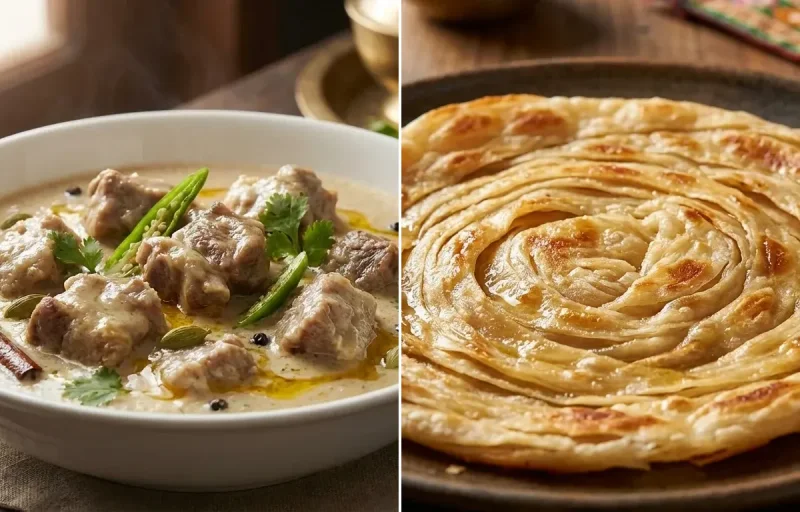
A luxurious Mughlai curry where hard-boiled eggs are coated, fried, and then simmered in a rich, creamy gravy made from cashews, almonds, and aromatic spices. A royal treat for any special meal.
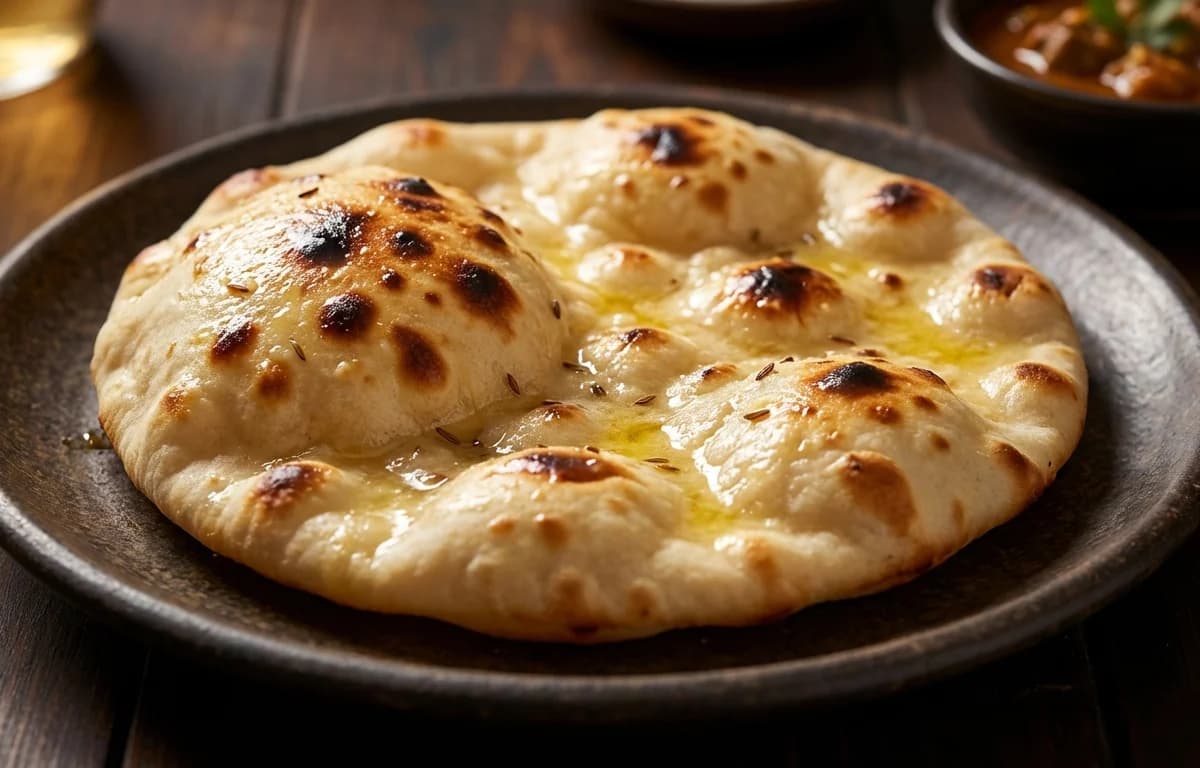
A soft and spongy leavened flatbread from Mughlai cuisine. Made with whole wheat flour and yeast, this roti has a delightful tangy flavor and a pillowy texture, perfect for scooping up rich curries.
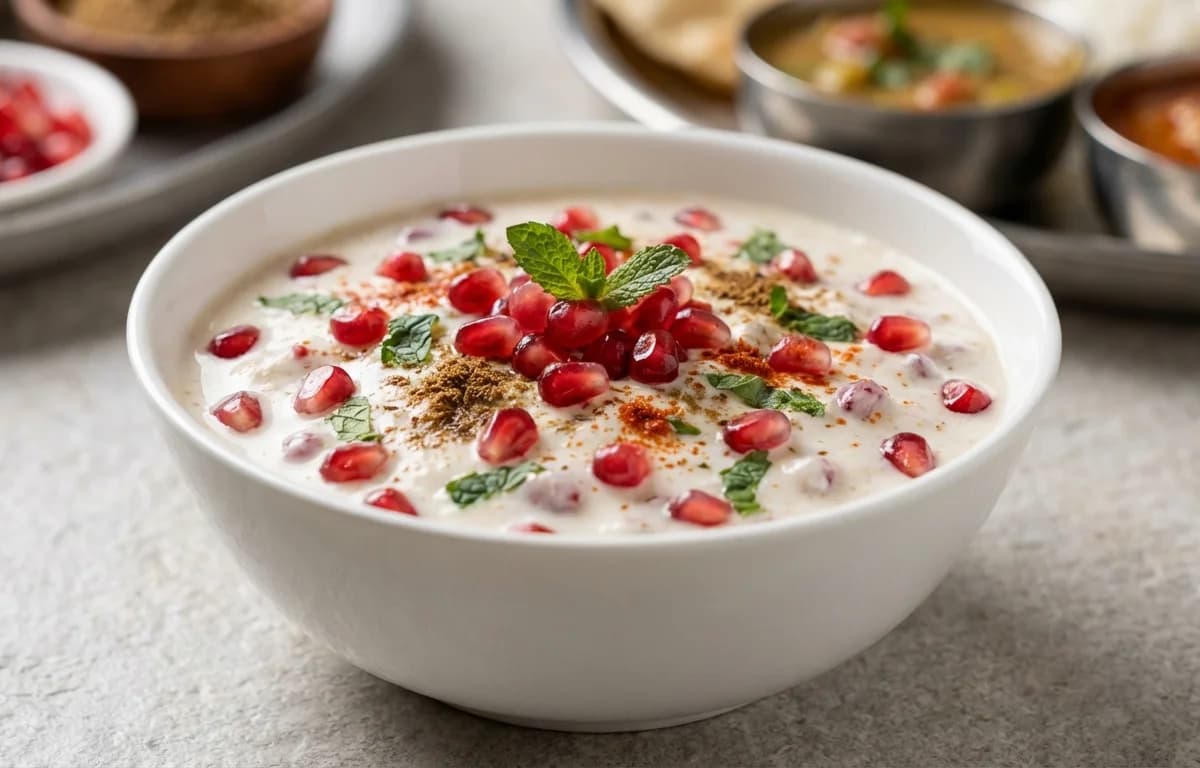
Creamy, cooling yogurt meets the sweet and tangy burst of fresh pomegranate jewels. This simple raita, lightly spiced with roasted cumin, is a refreshing side dish that adds a splash of color and flavor to any Indian meal.
About Egg Pasanda, Khamiri Roti and Pomegranate Raita
Shahi Egg Pasanda, a creamy, aromatic delight with soft Khamiri Roti. Pure comfort food, fit for royalty!

This mughlai dish is perfect for dinner. With 1249.97 calories and 43.5g of protein per serving, it's a nutritious choice for your meal plan.
64gfat
0.75 tsp
Red Chili Powder
(divided)
1.25 tsp Salt (divided, or to taste)
3 tbsp Ghee
1 piece Bay Leaf
1 inch Cinnamon Stick
2 pieces Green Cardamom Pods
2 pieces Cloves
0.5 cup Curd (whisked until smooth)
1 tsp Coriander Powder
0.5 tsp Garam Masala
2 tbsp Fresh Cream
1 tsp Kasuri Methi (dried fenugreek leaves)
1.5 cup Water
2 tbsp Coriander Leaves (chopped, for garnish)
Instructions
1
Prepare Eggs & Pasanda Paste
Place eggs in a saucepan and cover with cold water. Bring to a boil, then cook for 10-12 minutes to hard-boil. Drain, cool in ice water, peel, and slice in half lengthwise. Set aside.
While eggs are boiling, soak cashew nuts, almonds, and poppy seeds in 1/2 cup of hot water for at least 20 minutes.
Drain the soaked nuts and seeds. Transfer them to a blender along with the chopped onion, ginger, garlic, and green chilies.
Blend to a very smooth paste. Add a tablespoon or two of water if needed to facilitate grinding.
2
Coat & Fry the Eggs
In a shallow bowl, combine besan, 0.25 tsp turmeric powder, 0.25 tsp red chili powder, and 0.25 tsp salt.
Gradually add 3-4 tbsp of water, whisking continuously to form a thin, lump-free batter.
Heat 2 tbsp of ghee in a non-stick pan over medium heat. The ghee should be hot but not smoking.
Gently dip each egg half into the batter, ensuring a light, even coating. Carefully place it in the hot ghee.
Shallow fry for 2-3 minutes on each side until the coating is golden brown and crisp. Remove the fried eggs and set them on a plate.
3
Cook the Gravy Base
In the same pan, add the remaining 1 tbsp of ghee. Add the whole spices: bay leaf, cinnamon stick, green cardamom pods, and cloves. Sauté for 30-40 seconds until they release their aroma.
Add the prepared pasanda paste to the pan. Cook on low-medium heat for 8-10 minutes, stirring frequently to prevent sticking. The paste is cooked when it thickens, darkens slightly, and ghee begins to separate at the edges.
Reduce the heat to the lowest setting. Slowly pour in the whisked curd while stirring continuously. This prevents the curd from splitting. Cook for 2-3 minutes until well incorporated.
4
Simmer the Curry
Add the powdered spices: remaining 0.25 tsp turmeric powder, 0.5 tsp red chili powder, coriander powder, and 1 tsp salt. Stir well and cook for 1 minute until fragrant.
Pour in 1.5 cups of water, stir to combine everything, and bring the gravy to a gentle simmer.
Carefully slide the fried egg halves into the simmering gravy.
Cover the pan and let it cook on low heat for 5-7 minutes. This allows the eggs to absorb the rich flavors of the gravy.
5
Finish & Garnish
Uncover the pan. Gently stir in the fresh cream and garam masala.
Crush the kasuri methi between your palms to release its aroma and sprinkle it over the curry. Mix gently.
Simmer for just one more minute, then turn off the heat. Do not overcook after adding cream.
Garnish with freshly chopped coriander leaves. Serve hot with naan, roti, or jeera rice.
4
Serving size: 2 pieces
346cal
9gprotein
46gcarbs
15gfat
Ingredients
2 cup Atta
1 tsp Active Dry Yeast
1 tsp Sugar (To activate the yeast)
0.5 cup Warm Water (Around 105-115°F (40-46°C))
0.5 cup Warm Milk
4 tbsp Ghee (Melted, 2 tbsp for dough and 2 tbsp for brushing)
1 tsp Salt
Instructions
1
Activate the Yeast
In a small bowl, combine the warm water, sugar, and active dry yeast.
Stir gently and let it sit for 5-10 minutes.
The mixture will become frothy and bubbly, indicating the yeast is active and ready to use.
2
Prepare the Dough
In a large mixing bowl or the bowl of a stand mixer, combine the atta and salt.
Create a well in the center and pour in the activated yeast mixture, warm milk, and 2 tablespoons of melted ghee.
Mix until a shaggy dough forms, then transfer to a lightly floured surface.
Knead for 8-10 minutes by hand (or 6-7 minutes with a dough hook) until the dough is soft, smooth, and elastic. It should be pliable and not too sticky.
3
Proof the Dough
Form the dough into a ball and place it in a lightly greased bowl.
Cover the bowl with a damp cloth or plastic wrap.
Let the dough rest in a warm, draft-free place for 90 minutes, or until it has doubled in size.
4
Shape the Rotis
Once proofed, gently punch down the dough to release the air.
Briefly knead for another minute.
Divide the dough into 8 equal portions and roll each portion into a smooth ball.
5
Cook the Rotis
Heat a tawa or cast-iron skillet over medium-high heat.
Take one dough ball, dust it lightly with atta, and roll it into a 6-inch circle, keeping it slightly thicker than a regular chapati.
Place the rolled roti on the hot tawa. Cook for about 30-40 seconds, until small bubbles start to appear on the surface.
Flip the roti and cook the other side for about 1 minute, pressing down gently with a spatula to encourage puffing.
Flip again and cook for another 30 seconds until golden-brown spots appear on both sides.
For a charred, tandoori-like effect, you can carefully lift the roti with tongs and hold it over a low open flame for a few seconds until it puffs up completely.
6
Serve
Remove the cooked roti from the heat and immediately brush it with the remaining melted ghee.
Repeat the process for all the dough balls, stacking the cooked rotis in a casserole dish or wrapped in a kitchen towel to keep them soft and warm.
Serve hot with your favorite curry, dal, or kebab.
0.25 tsp Red Chili Powder (optional, for mild heat and color)
1 tsp Sugar (optional, to balance tartness)
2 tbsp Mint Leaves (freshly chopped)
Instructions
1
Prepare the Yogurt Base
In a medium-sized mixing bowl, add the 2 cups of chilled, thick curd.
Using a wire whisk, beat the curd for 1-2 minutes until it is completely smooth, creamy, and free of any lumps.
2
Season the Raita
To the smooth curd, add 1 tsp roasted cumin powder, 0.5 tsp kala namak, 0.25 tsp salt, 0.25 tsp red chili powder (if using), and 1 tsp sugar (if using).
Whisk again gently until all the spices are evenly incorporated into the yogurt base.
3
Incorporate Pomegranate and Herbs
Reserve about 2 tablespoons of pomegranate arils and 1 teaspoon of chopped mint for garnish.
Gently fold the remaining pomegranate arils and chopped mint leaves into the spiced yogurt using a spatula. Be careful not to crush the pomegranate seeds.
4
Chill and Serve
For best flavor, cover the bowl and chill the raita in the refrigerator for at least 15-20 minutes.
Before serving, transfer the raita to a serving dish. Garnish with the reserved pomegranate arils and chopped mint.
Serve chilled alongside biryani, pulao, kebabs, or any spicy Indian curry.