Khamiri Roti
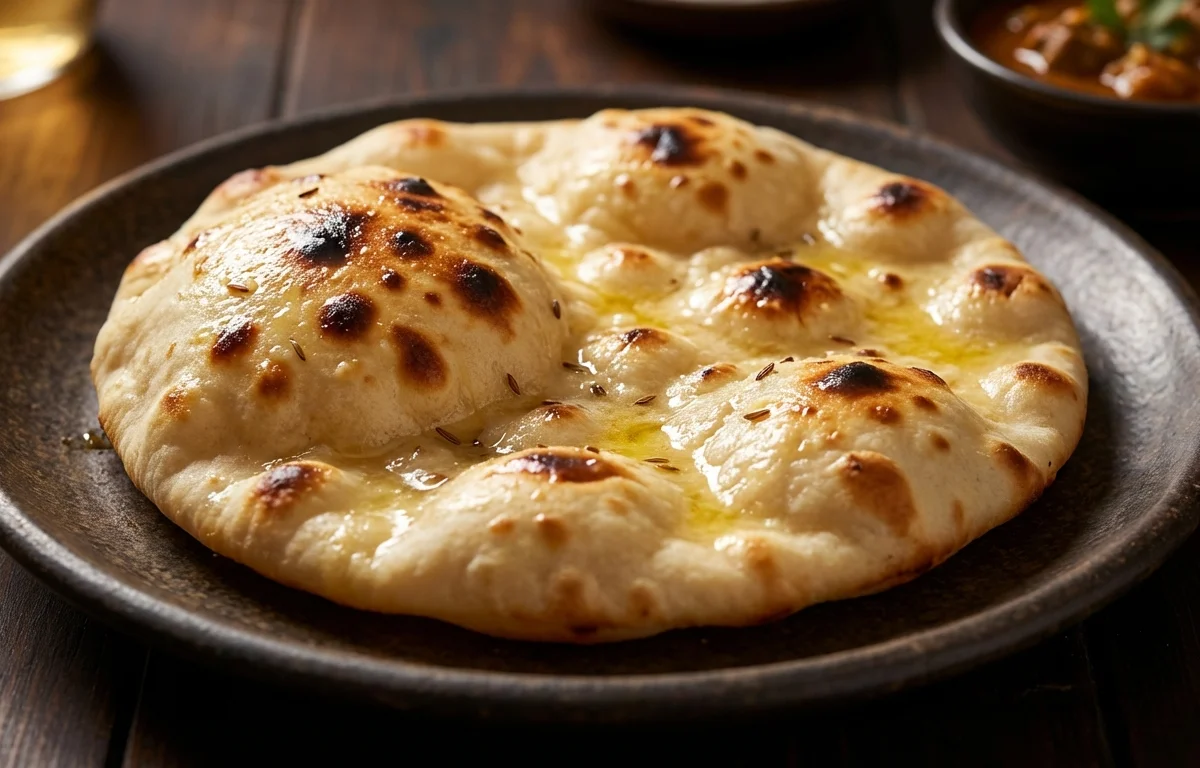
This old Delhi style fermented flatbread has a soft, slightly chewy bite and a gentle tang from yeast. It puffs beautifully on the tawa and pairs especially well with rich Mughlai gravies and kebabs.
For 8 servings
- mix · ~5 min
Mix the yeast base.
1.Add lukewarm water to a large bowl.2.Stir in instant yeast and sugar.3.Mix in yogurt and let it sit until slightly frothy, about 5 minutes.TIPUse water that feels just warm, not hot, so the yeast stays active. - knead · ~8 min
Knead the dough.
1.Add whole wheat flour, all-purpose flour, salt, and oil to the bowl.2.Mix to form a rough dough.3.Knead for 6 to 8 minutes until the dough is soft, smooth, and slightly tacky.TIPA softer dough gives khamiri roti its light, tender texture. - rest · ~120 min
Let the dough rise.
Cover the dough and keep it in a warm spot until doubled and airy. This usually takes about 2 hours, depending on room temperature.
- prep · ~5 min
Divide and shape the dough.
1.Punch the dough down gently.2.Divide it into 8 equal portions.3.Shape each portion into a smooth ball and dust lightly with flour. - rest · ~10 min
Rest the dough balls.
Cover the portions and rest them for 10 minutes so they roll out easily without shrinking back.
- prep · ~7 min
Roll the rotis.
Roll each dough ball into a slightly thick round roti, about 5 to 6 inches wide. Keep the thickness even so the bread puffs well on the pan.
- fry · ~15 min
Cook the khamiri rotis.
1.Heat a tawa over medium-high heat.2.Place one rolled roti on the hot tawa and cook until bubbles appear, about 30 to 40 seconds.3.Flip and cook the other side until light golden spots form.4.Brush lightly with a little ghee and press gently with a cloth or spatula until the roti puffs and cooks through.5.Repeat with the remaining dough.TIPKeep the heat medium-high; low heat makes the rotis dry before they puff. - serve
Serve hot.
Stack the rotis in a cloth-lined container to keep them soft, then serve warm with kebabs or rich curry.
What to keep in mind.
7 tips from the recipe — small details that make a real difference to the final dish.
- 1Let the yeast-yogurt mixture turn slightly frothy before adding flour; that confirms the dough will rise properly.
- 2Keep the dough softer than regular chapati dough; a slightly tacky texture is what gives khamiri roti its tender chew.
- 3If the dough is slow to rise, place it in a switched-off oven with the light on for a warmer proofing spot.
- 4Roll the rotis a little thicker than phulkas and keep the thickness even, or they will not puff uniformly.
- 5Wait for bubbles on the first side before flipping; turning too early prevents the inside from steaming and inflating.
- 6After cooking, stack the rotis in a cloth-lined box so the trapped steam keeps them soft instead of leathery.
- 7You can refrigerate the risen dough overnight for a deeper tang, then bring it back to room temperature before rolling.
Adapt it for your goals.
All-whole-wheat
Skip the all-purpose flour and use only whole wheat for a nuttier, more rustic roti with a slightly denser bite.
low gheeLow-ghee
Cook the rotis dry or with just a trace of oil, then cover well after cooking to keep them soft with less richness.
garlic herbGarlic-herb
Brush the cooked rotis with ghee mixed with crushed garlic and a little coriander for a bolder bread to serve with kebabs.
veganVegan
Replace yogurt with a dairy-free curd and finish with oil instead of ghee to keep the soft fermented texture without dairy.
Why this is on our healthy list.
Whole Grain Goodness
The whole wheat flour adds fiber and a more sustained, hearty quality than a flatbread made only with refined flour.
Fermented Dough Benefits
The yeast-and-yogurt fermentation can improve flavor development and may make the bread feel lighter and easier to digest for some people.
More Satisfying with Yogurt
Yogurt adds a little protein and richness while helping create a soft texture without relying heavily on fat.
Frequently asked questions
Usually the dough was too stiff, the roti was rolled unevenly, or the tawa was not hot enough. A soft dough and medium-high heat are key.