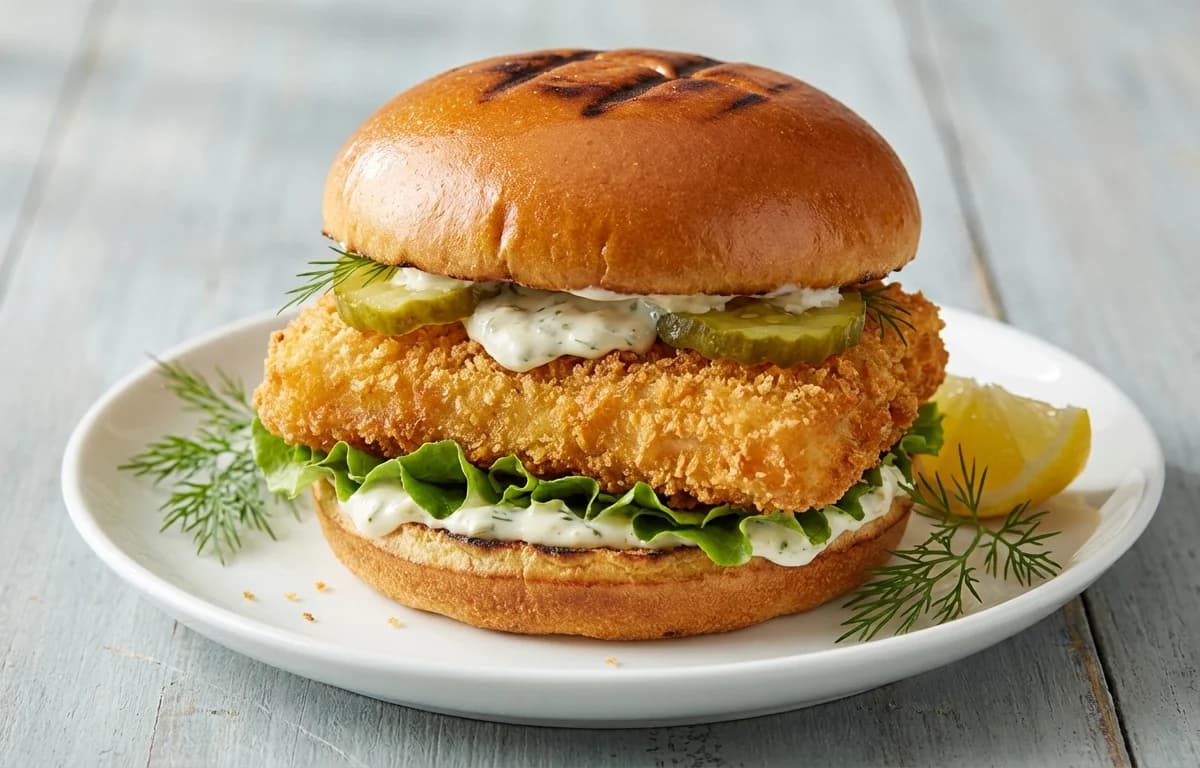
Crispy, golden-fried haddock fillets tucked into a soft bun with creamy tartar sauce and crisp lettuce. This New England classic is the ultimate seafood sandwich, perfect for a quick and satisfying lunch or dinner.
Prep15 min
Cook20 min
Servings4
Serving size: 1 serving
1156cal
48gprotein
69gcarbs
76g
Ingredients
1.5 lb Haddock Fillets (skinless, cut into 4 equal portions)
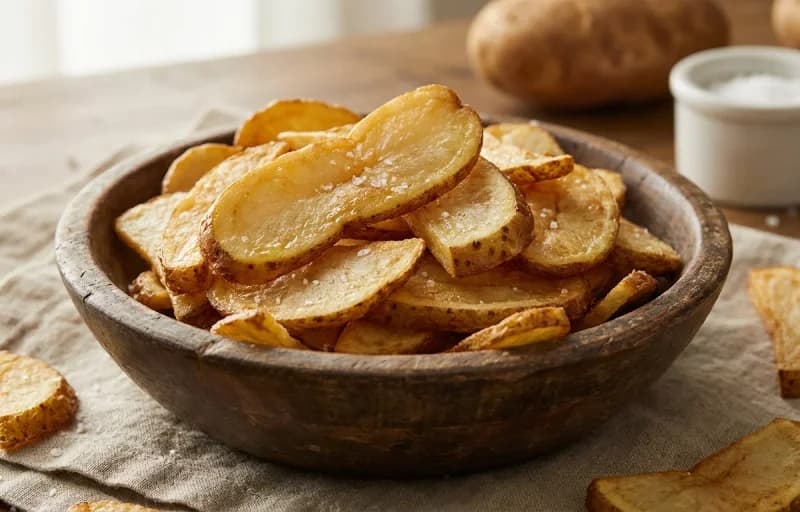
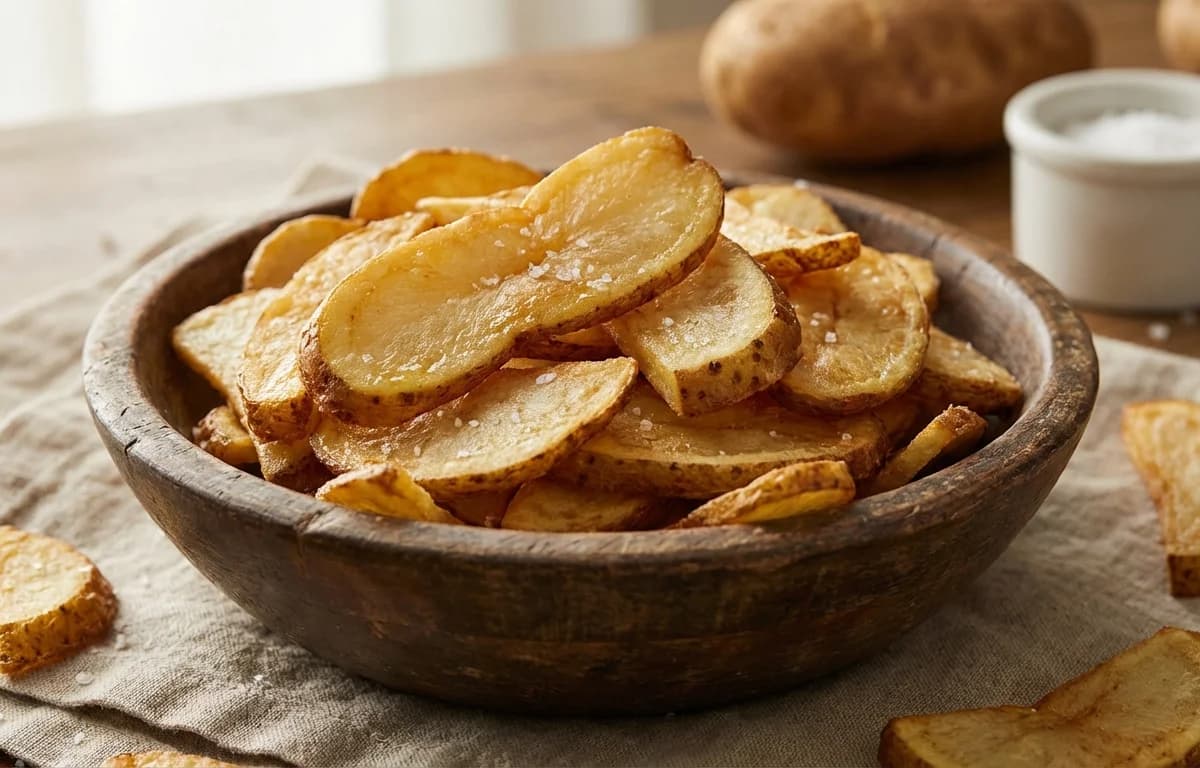
Crispy, golden, and perfectly crunchy homemade potato chips, kettle-cooked just like the famous New England classic. A satisfyingly savory snack that's surprisingly easy to make at home.
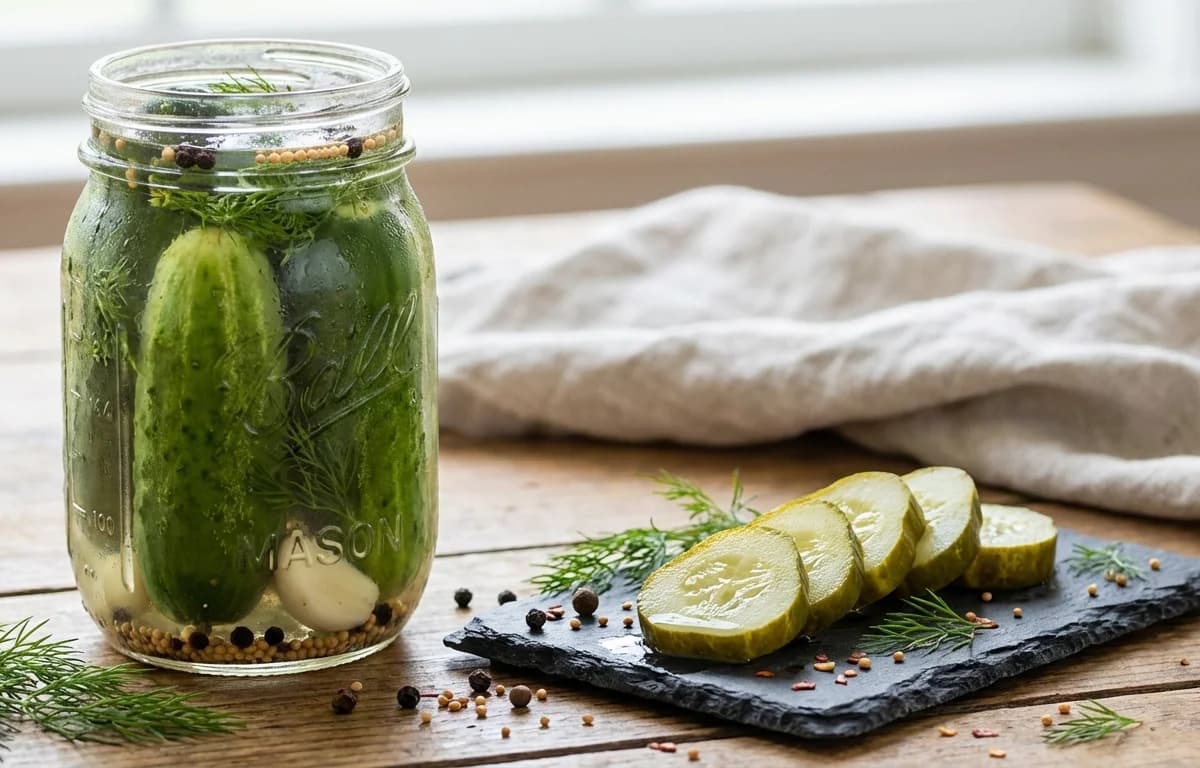
Create exceptionally crisp, tangy, and flavorful homemade dill pickles with this classic canning recipe. Packed with fresh dill and garlic, these pickles are a superior alternative to store-bought versions and the perfect crunchy addition to sandwiches, burgers, or as a standalone snack.
About Fried Haddock Sandwich, Cape Cod Potato Chips and Dill Pickles
Crispy fried haddock sandwich with crunchy chips and tangy pickle. Quick to make, big on flavor!
This new_england dish is perfect for lunch. With 1700.7 calories and 53.269999999999996g of protein per serving, it's a nutritious choice for your meal plan.
fat
0.25 cup Dill Pickles (finely chopped)
1 tbsp Lemon Juice (freshly squeezed)
1 tbsp Fresh Dill (chopped)
4 pcs Lettuce Leaves (e.g., iceberg or butter lettuce)
Instructions
1
Prepare the Tartar Sauce
In a small bowl, combine the mayonnaise, finely chopped dill pickles, fresh lemon juice, and chopped fresh dill.
Stir until well combined.
Cover and refrigerate for at least 30 minutes to allow the flavors to meld together. This can be made ahead of time.
2
Set Up the Breading Station
Arrange three shallow dishes or plates.
In the first dish, whisk together the all-purpose flour, salt, black pepper, and paprika.
In the second dish, beat the eggs until smooth.
In the third dish, place the panko breadcrumbs.
3
Bread the Haddock Fillets
Pat each haddock fillet completely dry with paper towels. This is crucial for a crispy coating.
Working one fillet at a time, dredge it in the seasoned flour, making sure to coat all sides, then shake off any excess.
Next, dip the flour-coated fillet into the beaten eggs, allowing any excess to drip back into the dish.
Finally, press the fillet firmly into the panko breadcrumbs, ensuring it's fully and evenly coated. Place the breaded fillet on a clean plate or wire rack.
4
Fry the Haddock
In a large, heavy-bottomed skillet or Dutch oven, heat about 1-2 inches of vegetable oil over medium-high heat until it reaches 350°F (175°C) on a thermometer.
Carefully place 2 breaded fillets into the hot oil, being sure not to overcrowd the pan.
Fry for 3-4 minutes per side, until the crust is deep golden brown and crispy, and the fish is cooked through (internal temperature of 145°F or 63°C).
Using a fish spatula or slotted spoon, remove the cooked fillets and transfer them to a wire rack to drain. This keeps the bottom crispy. Repeat with the remaining fillets.
5
Assemble the Sandwiches
While the fish is frying, you can lightly toast the brioche buns on a griddle or in a toaster.
To assemble, spread a generous layer of the prepared tartar sauce on the bottom bun.
Place a crisp lettuce leaf over the sauce.
Top with a hot, crispy haddock fillet, and finish with the top bun.
Serve immediately with lemon wedges and extra tartar sauce on the side.
Servings
4
Serving size: 1 serving
521cal
5gprotein
41gcarbs
39gfat
Ingredients
2 lb Russet Potatoes (About 4 medium potatoes)
6 cup Peanut Oil (For deep frying)
1.5 tsp Fine Sea Salt (Or to taste)
Instructions
1
Slice and Soak the Potatoes
Scrub the potatoes thoroughly under running water; do not peel them for the classic rustic look.
Using a mandoline slicer on its thinnest setting (about 1/16-inch or 1.5mm), carefully slice the potatoes into uniform rounds.
Immediately place the slices into a large bowl of cold water to prevent browning and to begin rinsing off the starch.
2
Rinse and Dry
Let the potato slices soak in the cold water for at least 30 minutes, or up to 1 hour. You can add ice to keep the water very cold.
Drain the slices in a colander and rinse them under cold running water until the water runs clear. This removes excess starch, which is crucial for crispiness.
Dry the potato slices completely. Spread them in a single layer on clean kitchen towels or paper towels and pat them dry. A salad spinner can be used to remove most of the water first. This step is critical for safety and to ensure crispy chips.
3
Heat the Frying Oil
Pour the peanut oil into a large, heavy-bottomed pot or Dutch oven to a depth of at least 2-3 inches.
Attach a deep-fry or candy thermometer to the side of the pot. Heat the oil over medium-high heat until it reaches a steady temperature of 325°F (165°C).
4
Fry the Chips in Batches
Carefully add a single layer of potato slices to the hot oil, about 1 to 1.5 cups per batch. Do not overcrowd the pot, as this will lower the oil temperature too much.
Fry for 6-8 minutes, stirring gently and occasionally with a spider strainer or slotted spoon to prevent the chips from sticking together.
The chips are done when they are golden brown and the vigorous bubbling in the oil has subsided significantly.
5
Drain and Season
Using the spider strainer, lift the cooked chips out of the oil, allowing excess oil to drip back into the pot.
Transfer the chips to a wire rack set over a baking sheet to drain and cool. This allows air to circulate and keeps them crispy.
Immediately sprinkle the hot chips with fine sea salt. The heat and residual oil will help the salt adhere.
6
Repeat and Serve
Ensure the oil returns to 325°F (165°C) before adding the next batch of potatoes.
Repeat the frying and seasoning process until all potato slices are cooked.
Allow the chips to cool for at least 5-10 minutes before serving for maximum crunch. Enjoy them fresh!
4 cup water (Use filtered or distilled water for best results)
4 cup white vinegar (Must be 5% acidity for safe canning)
0.5 cup pickling salt (Do not use iodized table salt)
8 large sprigs fresh dill (With flower heads if possible for extra flavor)
12 cloves garlic (Peeled and lightly smashed)
4 tsp black peppercorns
4 tsp mustard seeds (Yellow or brown)
2 tsp red pepper flakes (Optional, for a little heat)
Instructions
1
Sterilize Jars and Lids (15 minutes)
Wash 4 quart-sized canning jars, lids, and rings in hot, soapy water and rinse well.
Place the jars on a rack in a large water bath canner or stockpot. Cover with water by at least 1 inch and bring to a simmer (180°F/82°C). Keep jars hot until ready to use to prevent cracking.
Place lids and rings in a small saucepan of hot water; do not boil. Keep them warm.
2
Prepare the Cucumbers (15 minutes)
Thoroughly wash cucumbers under cold running water, gently scrubbing away any spines or dirt.
Trim 1/16th of an inch from the blossom end of each cucumber. This end contains an enzyme that can cause mushy pickles.
For extra crispness, submerge the trimmed cucumbers in an ice water bath for 30 minutes while you prepare other ingredients.
Cut cucumbers into spears, slices, or leave whole as desired.
3
Pack the Jars (10 minutes)
Carefully remove one hot jar at a time from the canner, pouring the water back into the pot.
In the bottom of each jar, place 2 sprigs of fresh dill, 3 smashed garlic cloves, 1 tsp black peppercorns, 1 tsp mustard seeds, and 1/2 tsp red pepper flakes (if using).
Tightly pack the prepared cucumbers into the jars, leaving a 1/2-inch headspace at the top.
4
Make the Pickling Brine (5 minutes)
In a large non-reactive saucepan (stainless steel or enamel), combine the 4 cups of water, 4 cups of white vinegar, and 1/2 cup of pickling salt.
Bring the mixture to a rolling boil over medium-high heat, stirring until the salt has completely dissolved.
5
Fill and Seal the Jars (5 minutes)
Carefully ladle the hot brine into each packed jar, covering the cucumbers completely while maintaining the 1/2-inch headspace.
Remove air bubbles by sliding a bubble remover tool or a thin wooden skewer around the inside of the jar.
Wipe the jar rims with a clean, damp cloth to ensure a proper seal. Center the lid on the jar and screw on the ring until it is 'fingertip-tight'—just snug, not forced.
6
Process in Water Bath (20 minutes)
Using a jar lifter, carefully place the sealed jars back into the canner. Ensure the water level is at least 1-2 inches above the tops of the jars, adding more boiling water if necessary.
Cover the canner and bring the water to a full rolling boil.
Once boiling, start a timer and process the jars for 10 minutes (for altitudes up to 1,000 ft).
After 10 minutes, turn off the heat, remove the lid, and let the jars stand in the hot water for 5 more minutes to acclimate.
7
Cool, Check Seal, and Store
Remove the jars from the canner and place them upright on a towel-lined countertop, leaving space between them to cool.
Let the jars cool undisturbed for 12-24 hours. Do not tighten the rings. You should hear 'pinging' sounds as the lids seal.
After 24 hours, check the seals. Press the center of each lid; if it does not flex up or down, the jar is sealed. Remove the rings, wipe the jars, label, and date them.
Store sealed jars in a cool, dark place for at least 2 weeks to allow flavors to develop. They are best after 4-6 weeks and will keep for up to 18 months.