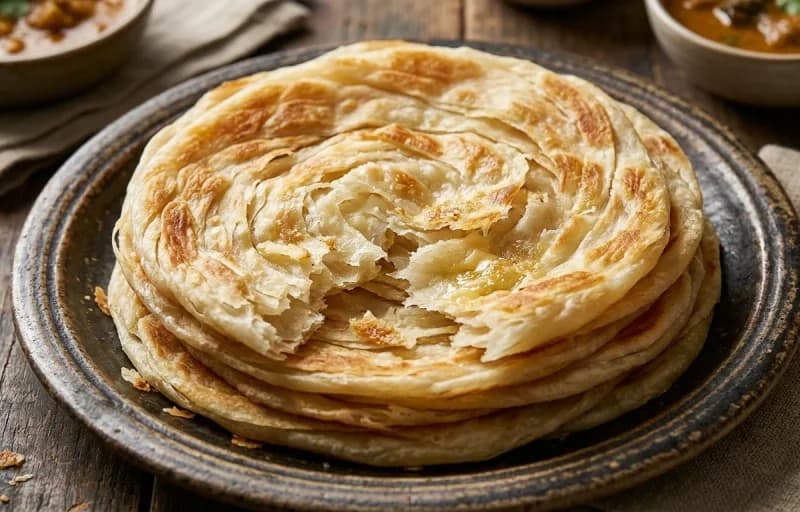
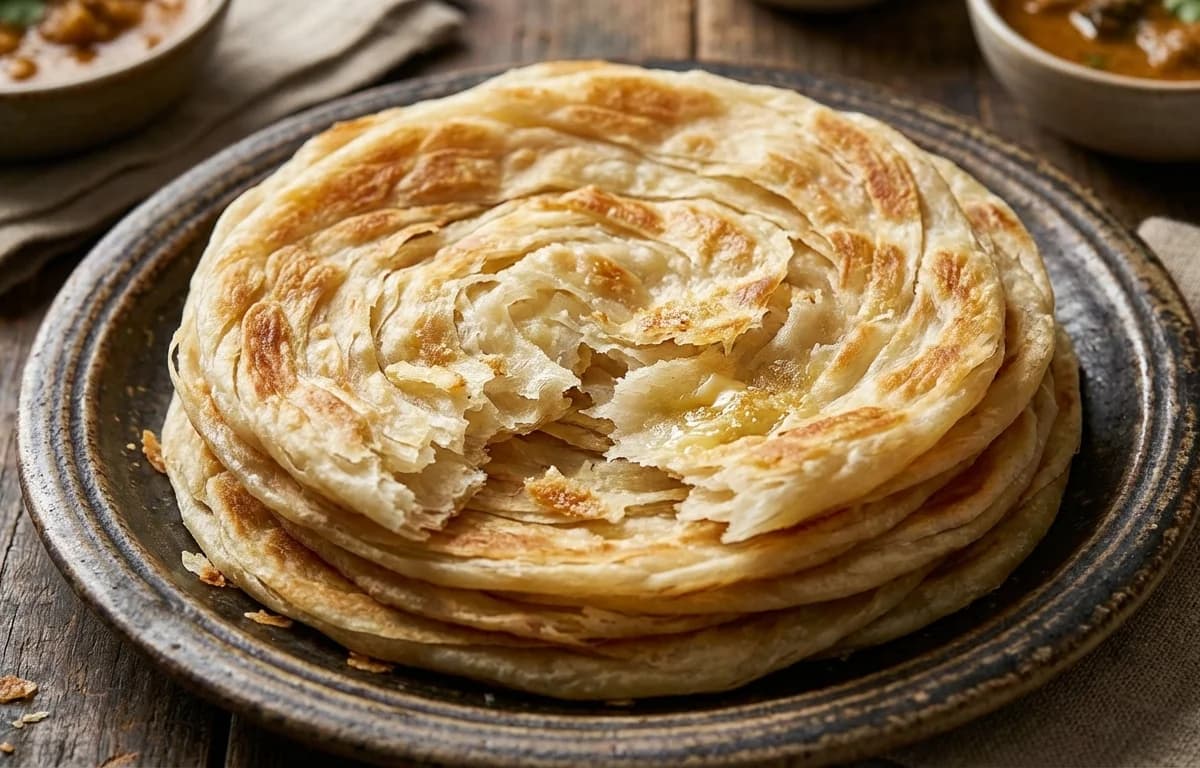
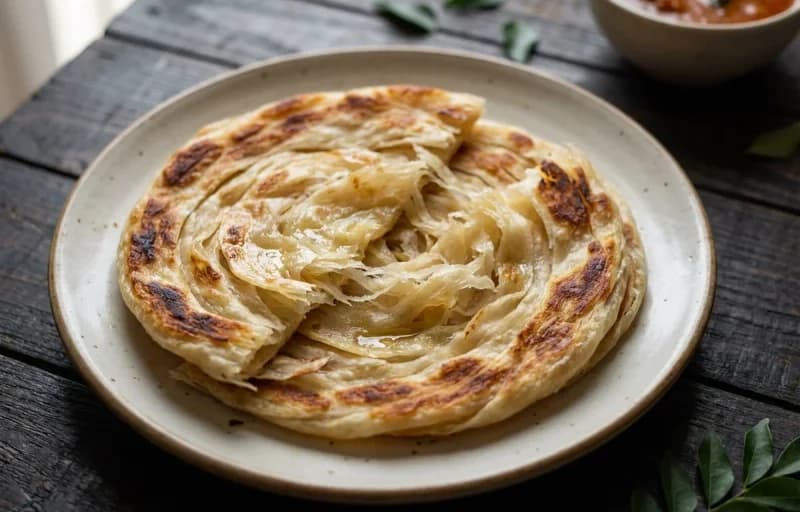
A masterpiece of flaky, layered bread from the Malabar coast of Kerala. This soft, chewy parotta is a beloved street food, perfect for mopping up rich curries. Achieving the signature layers is a rewarding kitchen project that results in an irresistibly delicious flatbread.
Prep45 min
Cook25 min
Soak120 min
Servings4
Serving size: 1 serving
435cal
8gprotein
49gcarbs
Ingredients
2 cup Maida (250g, All-Purpose Flour)
1 piece Egg (Large, at room temperature)
1 tsp Sugar (Helps with browning)
1 tsp Salt (To taste)
6 tbsp Vegetable Oil (Plus extra for greasing)
0.5 cup Water (Lukewarm, approximately 120ml)
Instructions
1
Prepare the Dough
In a large mixing bowl, whisk together the maida, sugar, and salt.
Create a well in the center. Crack the egg into it, then add 2 tablespoons of oil and half of the lukewarm water.
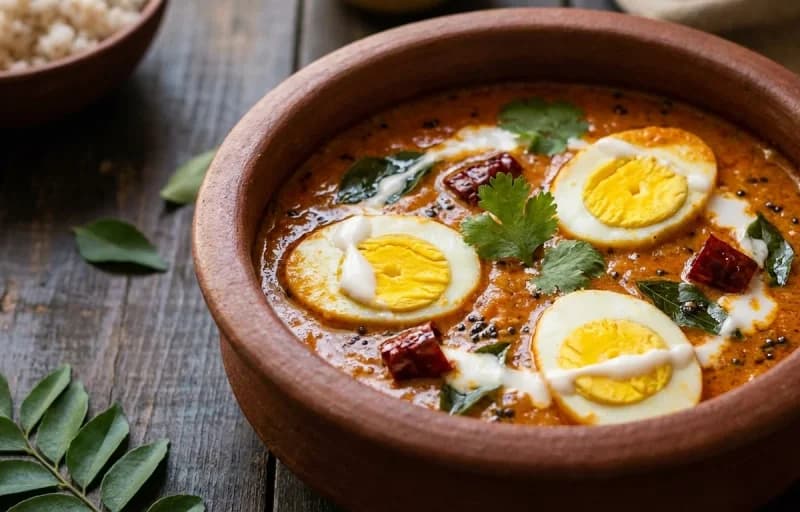
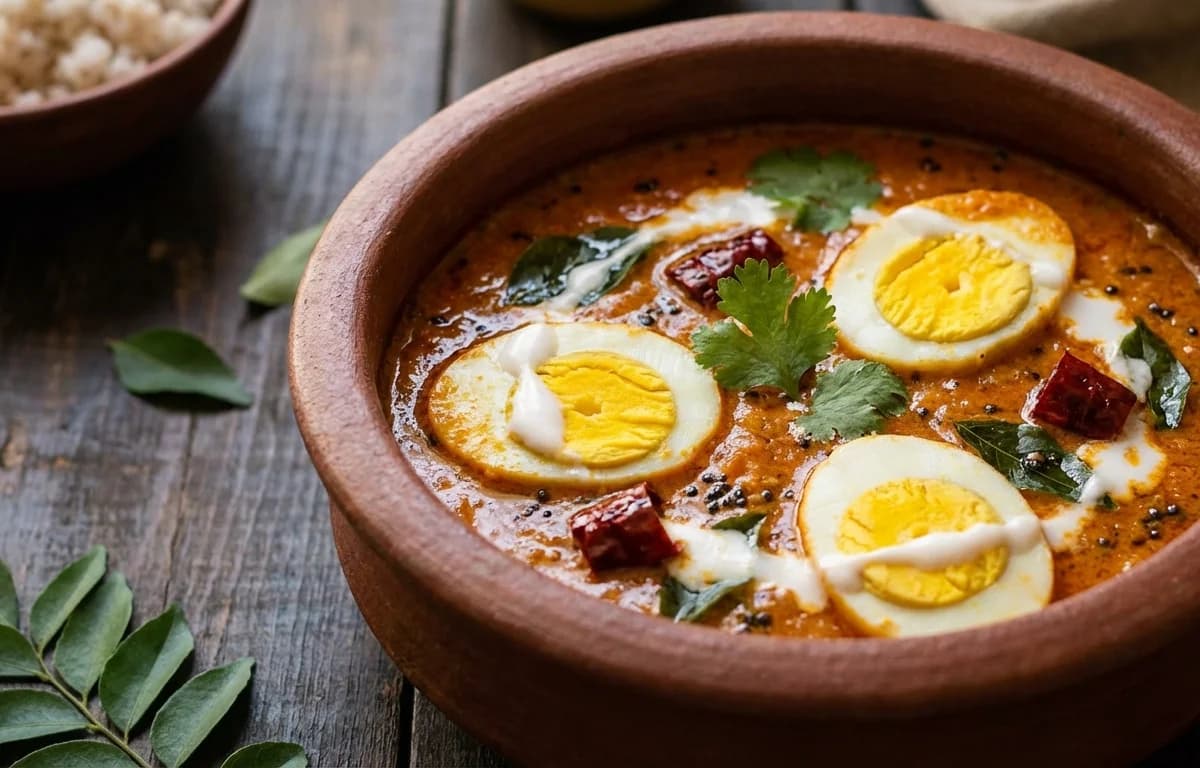
A creamy, aromatic egg curry from the heart of Kerala, made with a rich coconut milk base and fragrant spices. This classic 'Nadan Mutta Curry' is the perfect comforting dish to pair with appam, idiyappam, or steamed rice.
Prep15 min
Cook30 min
Servings4
Serving size: 1 serving(2 boiled eggs in approximately 1 cup of curry.)
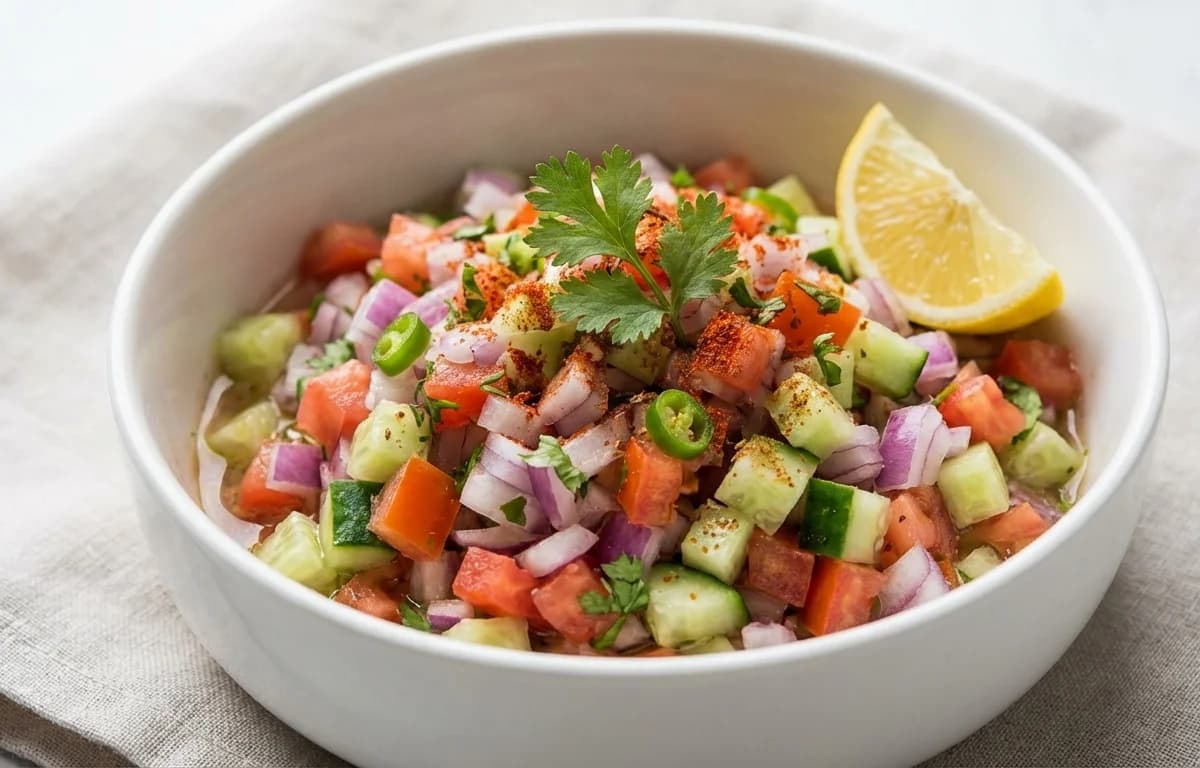
A refreshing and crunchy Indian salad made with chopped onions, tomatoes, and cucumbers. It's seasoned with lemon juice and spices, making it the perfect cooling side dish for spicy curries and biryanis.
About Malabar Parotta, Kerala Egg Curry and Kachumber Salad
Fluffy Malabar Parotta with creamy, perfectly spiced Kerala Egg Curry. Melt-in-mouth & protein-packed!
This south_indian dish is perfect for lunch. With 940.6 calories and 26.090000000000003g of protein per serving, it's a nutritious choice for your meal plan.
23gfat
Begin to mix the flour into the wet ingredients. Gradually add the remaining water as needed to form a very soft, pliable, and slightly sticky dough.
Transfer the dough to a clean, lightly oiled work surface. Knead for 10-12 minutes until it becomes extremely smooth, soft, and elastic. It should stretch easily without tearing.
2
First Rest
Form the kneaded dough into a ball and coat it with 1 teaspoon of oil.
Place it back in the bowl, cover with a damp cloth or plastic wrap, and let it rest in a warm place for a minimum of 2 hours, or up to 4 hours. This long rest is crucial for developing gluten, which makes the dough stretchy.
3
Portion and Second Rest
After resting, gently deflate the dough and divide it into 8 equal portions.
Roll each portion into a smooth ball. Arrange the balls on a tray, coat them generously with oil, cover, and let them rest for another 15-20 minutes.
4
Create the Layers
Generously oil your work surface. Take one dough ball and flatten it with your fingers.
Using a rolling pin or your hands, stretch and roll the dough into a paper-thin, large, translucent circle. The thinner, the better. Don't worry about perfect shapes or minor tears.
Brush the entire surface of the thin sheet with about 1/2 teaspoon of oil.
Starting from one edge, lift and fold the dough to create narrow pleats, like making a paper fan, until you have a long, pleated rope.
Gently hold one end of the rope and tap the other end on the counter to stretch it out further. Then, roll this rope into a tight spiral, tucking the loose end underneath. This spiral coil is what creates the layers.
5
Final Roll and Cook
Let the prepared spirals rest for 5-10 minutes.
Heat a tawa or cast-iron skillet over medium heat.
Take one spiral and gently flatten it with your palm. Lightly roll it into a 5-6 inch circle. Avoid pressing too hard to preserve the layers.
Place the parotta on the hot tawa. Cook for about 1 minute until you see small bubbles.
Flip the parotta. Drizzle about 1/2 teaspoon of oil on top and around the edges. Cook for 1-2 minutes, pressing gently with a spatula, until golden brown spots appear.
Flip again and cook the other side until it's golden and crisp. Repeat for all the parottas.
6
Fluff and Serve
This step is essential for revealing the layers. Once a parotta is cooked, remove it from the tawa.
While it's still hot, place it on a clean surface and use both hands to gently clap or push the edges towards the center. This action will separate and fluff up the layers.
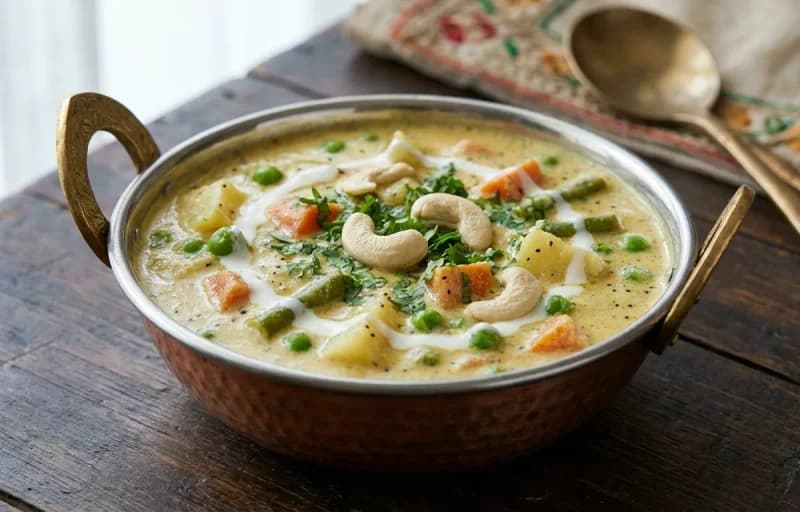
Serve immediately with a rich curry like Chicken Chettinad or Vegetable Korma.
458cal
16gprotein
18gcarbs
37gfat
Ingredients
8 pc Egg (hard-boiled and peeled)
3 tbsp Coconut Oil
1 tsp Mustard Seeds
2 pc Dried Red Chili (broken into halves)
1 sprig Curry Leaves
2 medium Onion (thinly sliced)
2 pc Green Chili (slit lengthwise)
1 tbsp Ginger Garlic Paste
2 medium Tomato (finely chopped)
0.5 tsp Turmeric Powder
1.5 tsp Kashmiri Red Chili Powder (adjust for heat)
2 tsp Coriander Powder
0.5 tsp Black Pepper Powder (freshly ground preferred)
1.5 cup Thin Coconut Milk (second extract)
1 cup Thick Coconut Milk (first extract)
0.75 tsp Garam Masala
1.25 tsp Salt (or to taste)
2 tbsp Coriander Leaves (chopped, for garnish)
Instructions
1
Prepare the eggs: Gently make 2-3 shallow slits on each hard-boiled egg with a knife. This helps them absorb the masala. Set aside.
2
Temper the spices: Heat coconut oil in a wide pan or kadai over medium heat. Add mustard seeds and let them splutter completely. Then, add the dried red chilies and curry leaves, and sauté for 30 seconds until fragrant.
3
Sauté the aromatics: Add the sliced onions to the pan and sauté for 8-10 minutes until they are soft and golden brown. Add the ginger-garlic paste and slit green chilies, and continue to sauté for another 2 minutes until the raw smell disappears.
4
Cook the base: Add the chopped tomatoes and cook for 5-6 minutes, stirring occasionally, until they turn soft and mushy, and oil starts to separate from the masala.
5
Add spice powders: Reduce the heat to low. Add the turmeric powder, Kashmiri red chili powder, coriander powder, and black pepper powder. Stir continuously for 1 minute until aromatic, ensuring they don't burn.
6
Build the gravy: Pour in the thin coconut milk and add salt. Mix well, scraping any browned bits from the bottom of the pan. Bring the mixture to a gentle simmer and let it cook for 3-4 minutes.
7
Simmer with eggs: Gently place the slit boiled eggs into the gravy. Cover the pan and let it simmer on low heat for 5-7 minutes. This allows the eggs to absorb the flavors of the curry.
Finish the curry: Turn the heat to the lowest setting. Pour in the thick coconut milk and sprinkle the garam masala. Stir gently to combine. Heat through for just 1-2 minutes. Do not let the curry boil, as the thick coconut milk may curdle. Turn off the heat.
9
Garnish and rest: Garnish with freshly chopped coriander leaves. Let the curry rest for at least 10 minutes before serving to allow the flavors to meld. Serve hot with appam, idiyappam, or steamed rice.