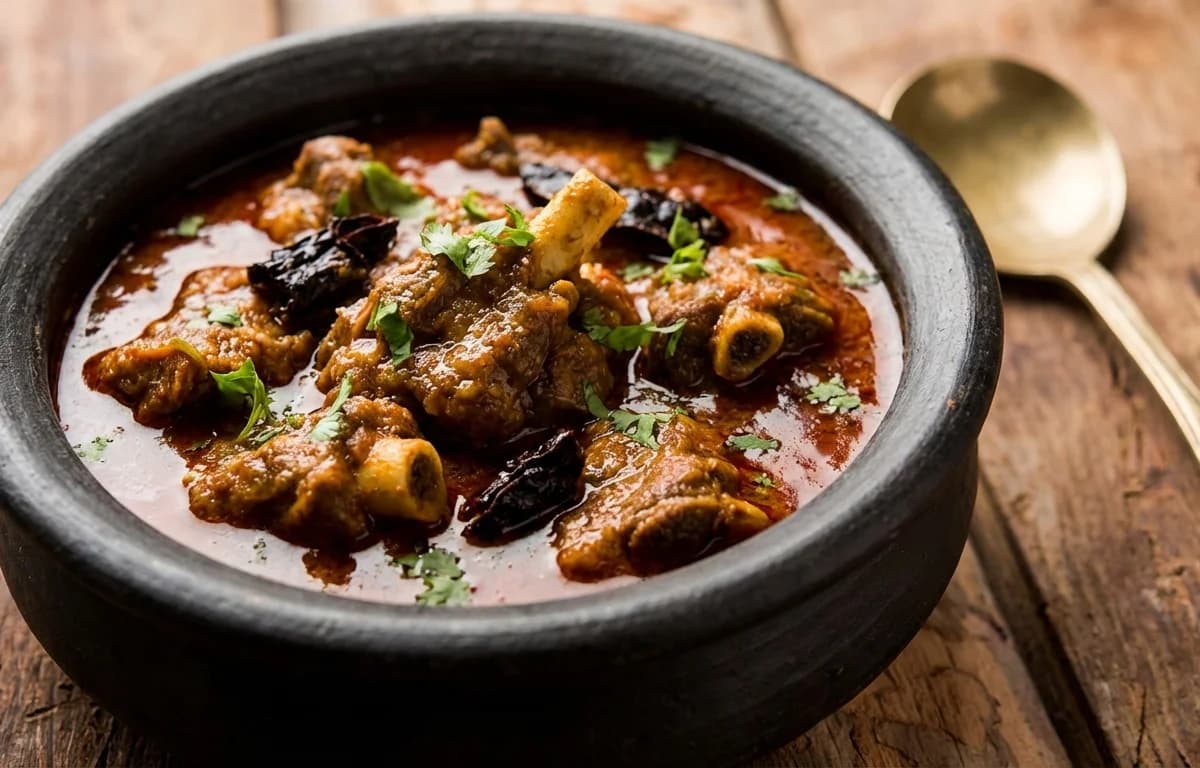
A fiery and aromatic mutton curry from the Konkan coast of Maharashtra. Tender mutton is simmered in a rich, spicy gravy made with toasted coconut and a special blend of Malvani spices. A true coastal delight.
Prep30 min
Cook70 min
Servings4
Serving size: 1 serving
450cal
37gprotein
16gcarbs
27g
Ingredients
500 g Mutton (bone-in, cut into 1.5-inch pieces)
0.75 tsp Turmeric Powder (divided use)
2 tbsp Ginger-Garlic Paste (divided use)
1.5 tsp Salt (or to taste, divided use)
1 large Onion (thinly sliced, for the masala paste)
A soft, spongy, and savory rice pancake from the coastal Konkan region of Maharashtra. Made from a batter of rice and lentils that requires overnight fermentation, this gluten-free delight is thicker than a dosa and pairs perfectly with chutney or fish curry.
A refreshing and tangy pink-hued drink from the Konkan coast. Made with coconut milk and sour kokum, this digestive cooler is the perfect balance to a spicy meal.
Prep15 min
Cook5 min
Soak30 min
Servings4
About Malvani Mutton Curry, Maharashtrian Amboli and Sol Kadhi
Aromatic Malvani mutton with fluffy amboli & tangy solkadhi – a protein-packed, soul-satisfying feast!
This maharashtrian dish is perfect for dinner. With 1072.3 calories and 52.31999999999999g of protein per serving, it's a nutritious choice for your meal plan.
Other Cuisines to Explore
Discover authentic meals from cuisines around the world.
5 pcs Dried Bedgi Chillies (adjust to your spice preference)
2 tbsp Malvani Masala Powder (store-bought or homemade)
4 petals Kokum (soaked in 2 tbsp warm water)
3 cup Hot Water
3 tbsp Coriander Leaves (freshly chopped, for garnish)
Instructions
1
Marinate the Mutton
In a large bowl, combine the mutton pieces with 0.5 tsp turmeric powder, 1 tbsp ginger-garlic paste, and 0.5 tsp salt.
Mix thoroughly to ensure each piece is well-coated. Cover and let it marinate for at least 30 minutes at room temperature, or up to 4 hours in the refrigerator.
2
Prepare the Malvani Masala Paste (Vatap)
Heat a heavy-bottomed pan over medium-low heat. Dry roast the coriander seeds, cumin seeds, black peppercorns, cloves, and cinnamon stick for 1-2 minutes until they become fragrant. Remove from the pan and set aside.
In the same pan, dry roast the dried red chillies for 30-40 seconds until they puff up slightly. Remove and add to the other whole spices.
Add 1 tbsp of oil to the pan. Add the grated dried coconut and roast on low heat, stirring continuously, until it turns a deep golden brown. This is crucial for the authentic flavor. Remove and set aside with the spices.
Add another 1 tbsp of oil to the pan. Sauté the thinly sliced large onion until it is deeply caramelized and dark brown. This may take 10-12 minutes.
Allow all the roasted ingredients to cool down completely. Transfer them to a grinder jar and grind to a fine, smooth paste. Add a few tablespoons of water as needed to facilitate grinding.
3
Sauté Aromatics and Mutton
Heat the remaining 2 tbsp of oil in a pressure cooker over medium heat.
Add the finely chopped medium onion and sauté for 5-7 minutes until it turns soft and golden brown.
Add the remaining 1 tbsp of ginger-garlic paste and cook for another minute until the raw aroma disappears.
Add the marinated mutton pieces to the cooker. Sauté on high heat for 4-5 minutes, searing the mutton on all sides until it's lightly browned.
4
Cook the Curry Base
Reduce the heat to medium-low. Add the Malvani masala powder and the remaining 0.25 tsp of turmeric powder. Stir and cook for 30 seconds.
Add the ground Malvani masala paste (vatap) to the cooker. Mix well and sauté for 5-7 minutes, stirring frequently, until the masala is well-cooked and you see oil separating at the edges.
5
Pressure Cook the Mutton
Pour in 3 cups of hot water, the soaked kokum (along with its water), and the remaining 1 tsp of salt. Stir everything together, scraping the bottom of the cooker.
Secure the lid of the pressure cooker. Cook on high heat until the first whistle. Then, reduce the heat to low and cook for about 25-30 minutes (or 6-7 whistles).
Turn off the heat and allow the pressure to release naturally. This can take 10-15 minutes. Open the lid and check if the mutton is tender. If not, pressure cook for another 1-2 whistles.
6
Finish and Serve
Once the mutton is tender, simmer the curry on low heat without the lid for 5-10 minutes to allow the gravy to thicken to your desired consistency and for the flavors to meld.
Garnish with freshly chopped coriander leaves.
Serve hot with traditional accompaniments like Bhakri (rice flour flatbread), Kombdi Vade, or steamed rice.
480 min
Servings4
Serving size: 1 serving
488cal
14gprotein
80gcarbs
12gfat
Ingredients
1.5 cup Parboiled Rice (Also known as Ukda Chawal)
0.5 cup Urad Dal (Split and skinned black gram lentils)
0.25 cup Chana Dal (Split and skinned Bengal gram)
1 tsp Fenugreek Seeds (Also known as Methi Dana)
0.25 cup Thick Poha (Flattened rice, thick variety)
1 tsp Salt (Adjust to taste)
3 tbsp Vegetable Oil (For cooking the amboli)
3 cup Water (Approximately, for soaking and grinding)
Instructions
1
Soak the Grains and Lentils (6-8 hours)
In a large bowl, combine the parboiled rice, urad dal, chana dal, and fenugreek seeds.
Rinse them under cool running water 3-4 times until the water runs clear.
Add enough fresh water to cover the mixture by at least 2 inches. Cover the bowl and let it soak for 6 to 8 hours.
2
Grind the Batter (15 minutes)
In a separate small bowl, rinse the thick poha once, then soak it in about 1/2 cup of water for 15-20 minutes before you start grinding.
Drain all the water from the soaked rice and dal mixture.
Transfer the drained mixture and the soaked poha (along with its soaking water) to a high-speed blender or wet grinder.
Grind in batches if necessary, adding small amounts of fresh, cold water as needed to facilitate grinding. The final batter should be smooth and have a thick, yet pourable consistency, similar to pancake batter.
3
Ferment the Batter (8-12 hours)
Pour the ground batter into a large, non-reactive container (like stainless steel or glass). Ensure the container is only filled halfway to allow room for the batter to rise.
Cover the container with a lid, but do not seal it tightly. Place it in a warm, draft-free spot to ferment for 8 to 12 hours, or overnight.
The batter is perfectly fermented when it has visibly risen, is light and airy, and has a pleasant, slightly sour aroma.
4
Prepare for Cooking (5 minutes)
Once fermented, add the salt to the batter. Gently stir it in with a light hand. Avoid over-mixing, as this can deflate the air pockets created during fermentation.
Check the consistency. If the batter is too thick, add a tablespoon or two of water to reach a pourable, thick pancake-like consistency.
5
Cook the Amboli (20-25 minutes)
Heat a cast-iron or non-stick tawa (griddle) over medium heat. To check if it's ready, sprinkle a few drops of water; they should sizzle and evaporate immediately.
Lightly grease the tawa with a few drops of oil and wipe with a paper towel for an even coating.
Pour a ladleful of batter (about 1/3 cup) onto the center of the hot tawa. Do not spread it. Allow it to spread naturally into a thick circle, about 5-6 inches in diameter.
You will see small bubbles and holes forming on the surface. Drizzle about 1/2 teaspoon of oil around the edges and on top.
Cover with a lid and cook for 1-2 minutes on medium-low heat, until the top surface appears cooked and set.
Flip the amboli and cook the other side for another minute until it's light golden brown. Do not press down.
Remove from the tawa and repeat the process for the remaining batter, greasing the tawa lightly between each amboli.
6
Serve
Serve the hot, soft, and spongy amboli immediately with coconut chutney, sambar, or a traditional Malvani fish curry (kalvan).
2 tbsp Coriander Leaves (Finely chopped, for garnish)
Instructions
1
Prepare Kokum Extract
In a medium bowl, soak the kokum pieces in 1 cup of warm water for about 15-20 minutes. This will soften them and help release their flavor.
After soaking, use your hands to squeeze the kokum pieces thoroughly in the water to extract all the tangy juice.
Strain this liquid through a fine-mesh sieve into a large mixing bowl. Discard the squeezed kokum pulp.
2
Extract Fresh Coconut Milk
While the kokum is soaking, add the fresh grated coconut, green chilies, ginger, and garlic to a blender.
Pour in 1 cup of water and blend on high for 1-2 minutes until you have a smooth, thick paste.
Line a sieve with a muslin cloth and place it over a bowl. Pour the coconut mixture into the cloth and squeeze tightly to extract the thick, first-press coconut milk. Collect this in the bowl.
Transfer the leftover coconut pulp back to the blender, add the remaining 1 cup of water, and blend again for 30-40 seconds. Strain this through the same muslin cloth to get the thin, second-press coconut milk.
Combine both the thick and thin coconut milk extracts.
Gently pour the freshly extracted coconut milk into the bowl containing the strained kokum extract.
Stir well to combine. You will see the mixture turn into a beautiful, pale pink color.
Add salt to taste and stir until it is completely dissolved.
4
Prepare the Tempering (Tadka)
Heat the coconut oil in a small pan (tadka pan) over medium heat. The oil is ready when a mustard seed sizzles upon contact.
Add the mustard seeds and let them splutter, which should take about 30 seconds.
Add the cumin seeds and hing, and sauté for another 10 seconds.
Finally, add the curry leaves. Be careful as they will crackle. Sauté until they become crisp, about 15-20 seconds.
5
Finish and Serve
Immediately pour the hot tempering over the prepared Sol Kadhi. Stir gently to incorporate the flavors.
Garnish with finely chopped coriander leaves.
For the best taste, chill the Sol Kadhi in the refrigerator for at least 30 minutes before serving. Serve cold as a digestive drink after a meal or as a refreshing accompaniment.