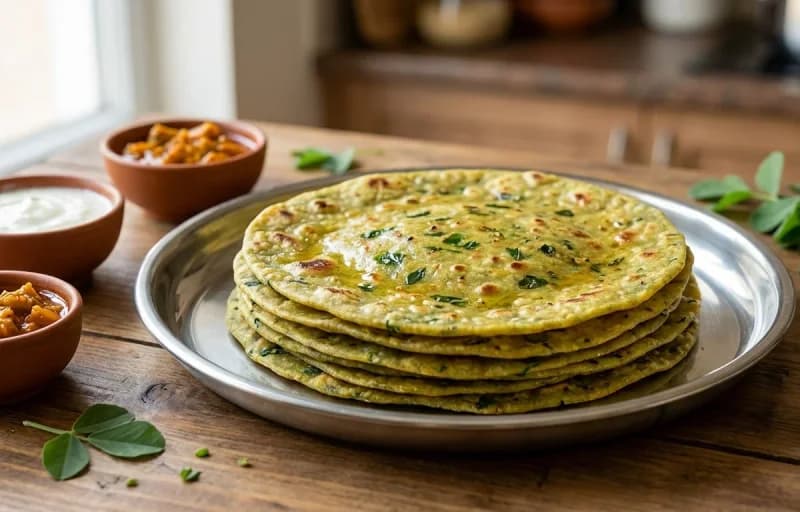
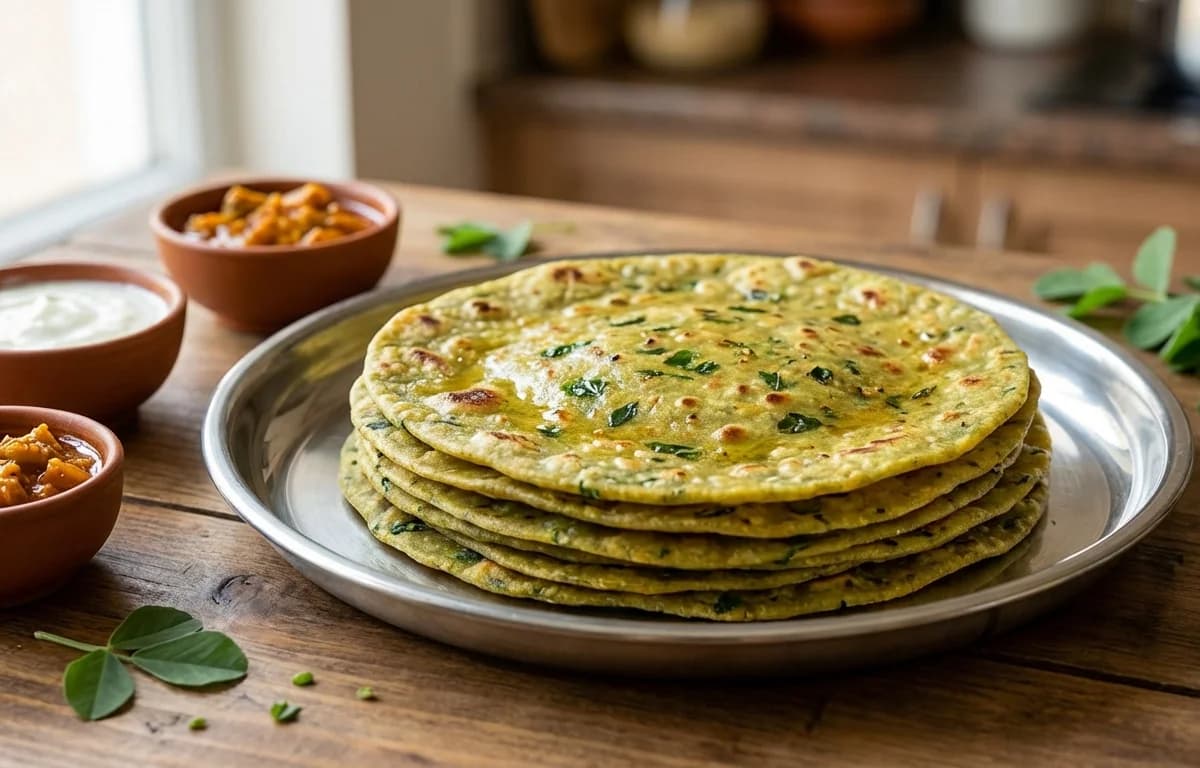
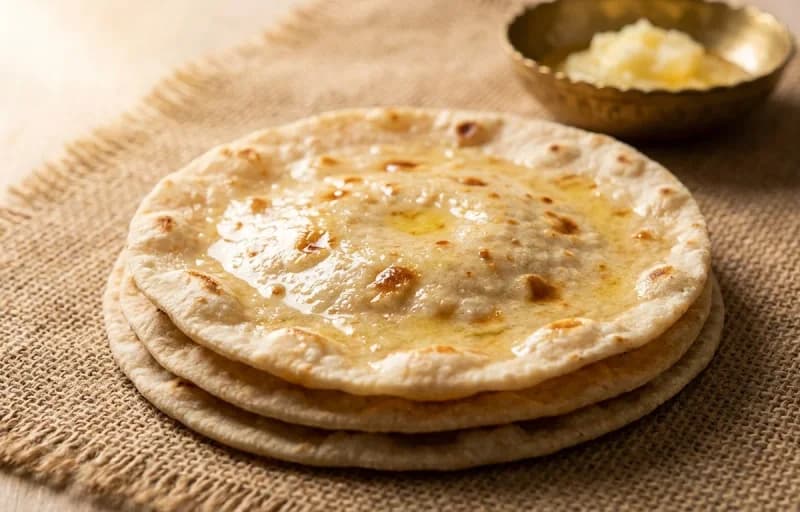
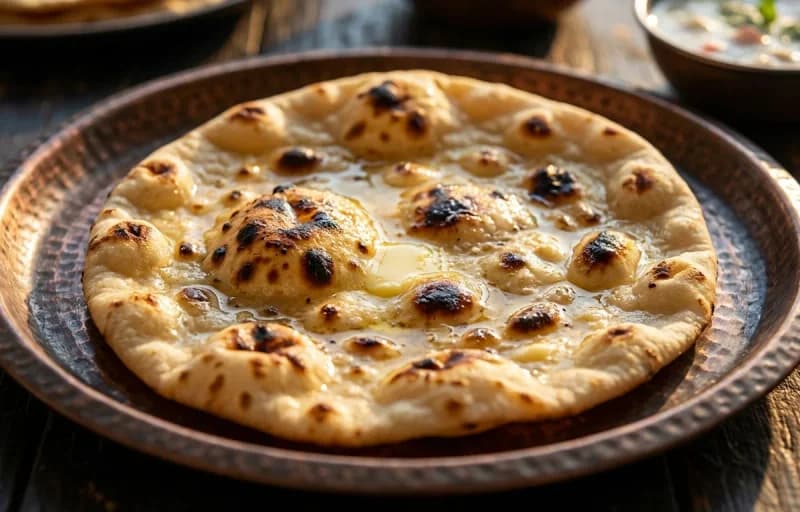
A soft, savory flatbread from Gujarat made with whole wheat flour and fresh fenugreek leaves. Lightly spiced and incredibly versatile, these are perfect for breakfast, lunchboxes, or as a travel snack.
Prep20 min
Cook25 min
Servings4
Serving size: 1 serving
259cal
8gprotein
39gcarbs
9g
Ingredients
1.5 cup Atta (Whole wheat flour)
0.25 cup Besan (Gram flour)
1 cup Fresh Methi Leaves (Tightly packed and finely chopped)
0.25 cup Plain Yogurt (Full-fat, at room temperature)
1 tsp Ginger-Garlic Paste
2 whole Green Chillies (Finely chopped, adjust to taste)
0.5 tsp Turmeric Powder
1 tsp Red Chilli Powder (Use Kashmiri for mild heat and color)
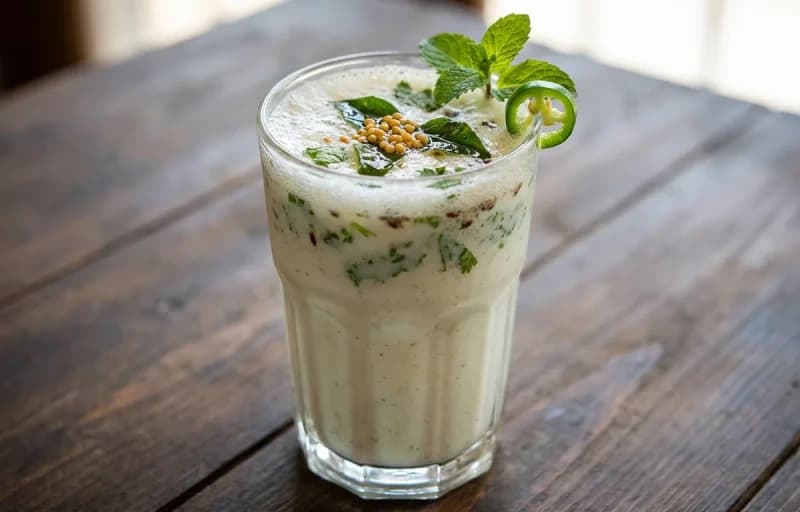
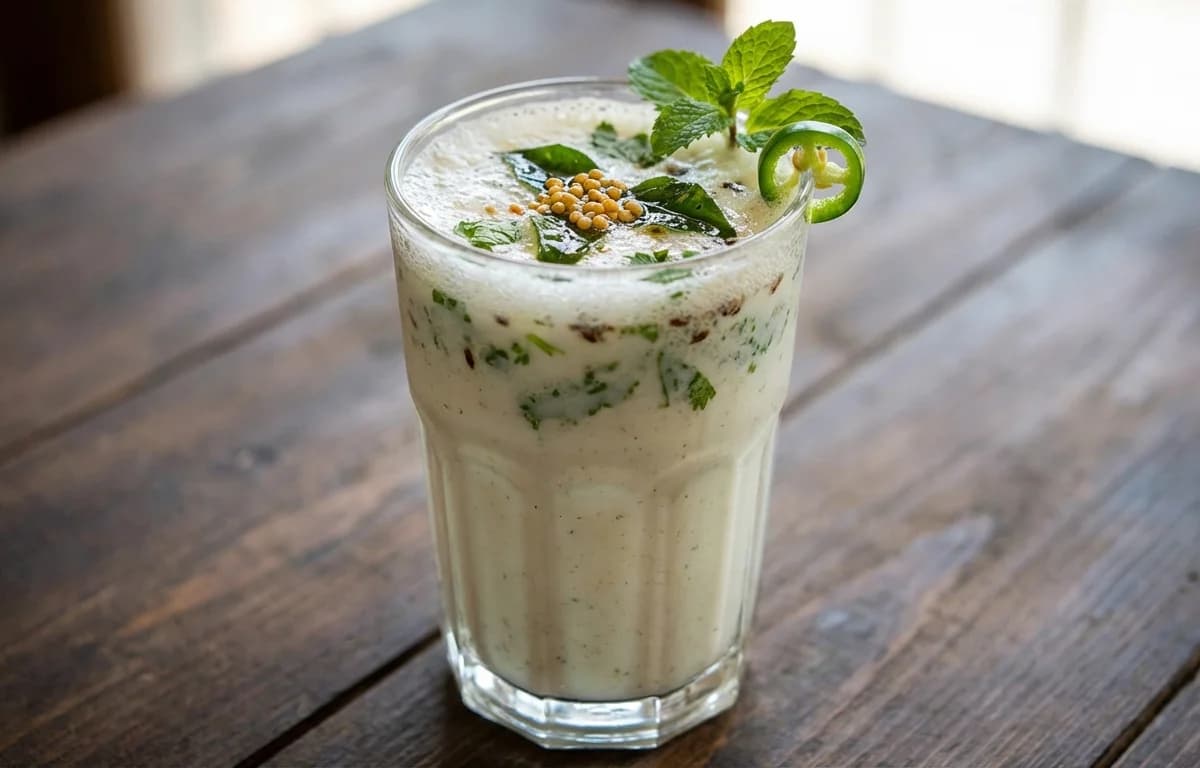
A refreshing and savory yogurt-based drink, spiced with roasted cumin, fresh herbs, and a hint of ginger. This traditional Indian buttermilk is the perfect cooling beverage to aid digestion and beat the summer heat.
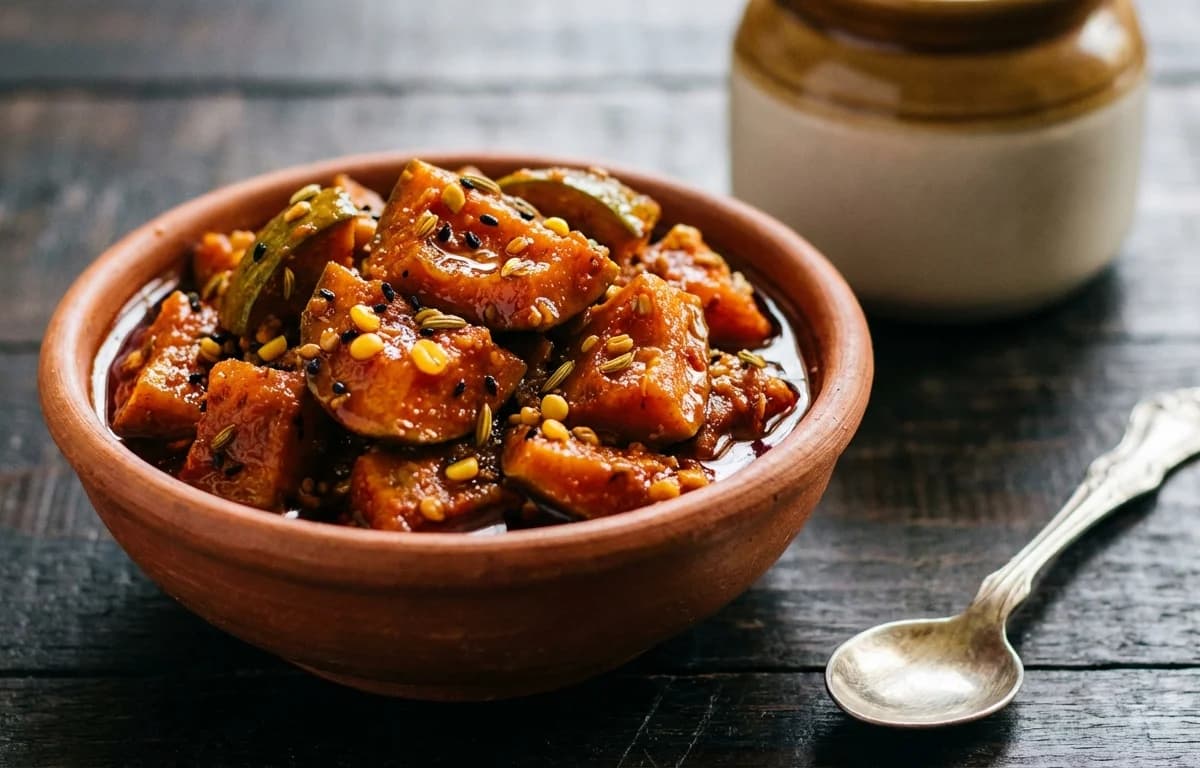
A classic North Indian condiment, 'Aam ka Achar' is made with raw, tangy mangoes, a robust blend of aromatic spices, and pungent mustard oil. This traditional sun-cured pickle is the perfect spicy and sour accompaniment to any meal, from dal-rice to stuffed parathas.
Fiber-rich Thepla with tangy chaas – perfect for busy mornings, a quick to make and energy-giving meal!
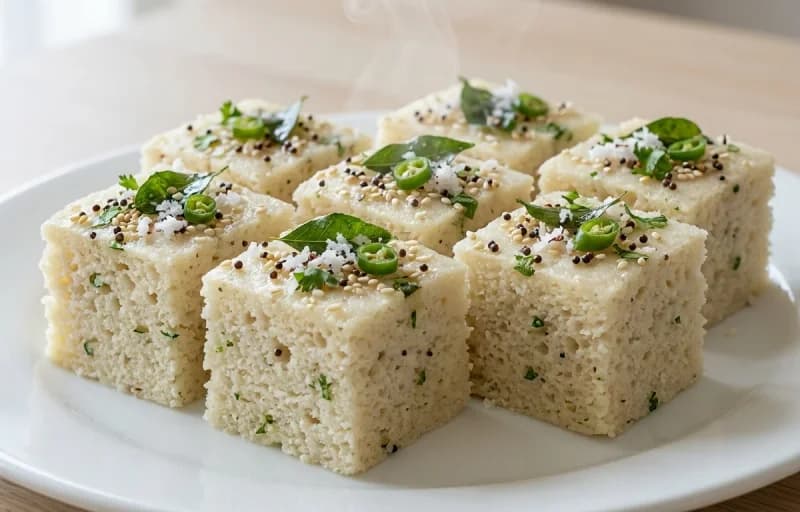
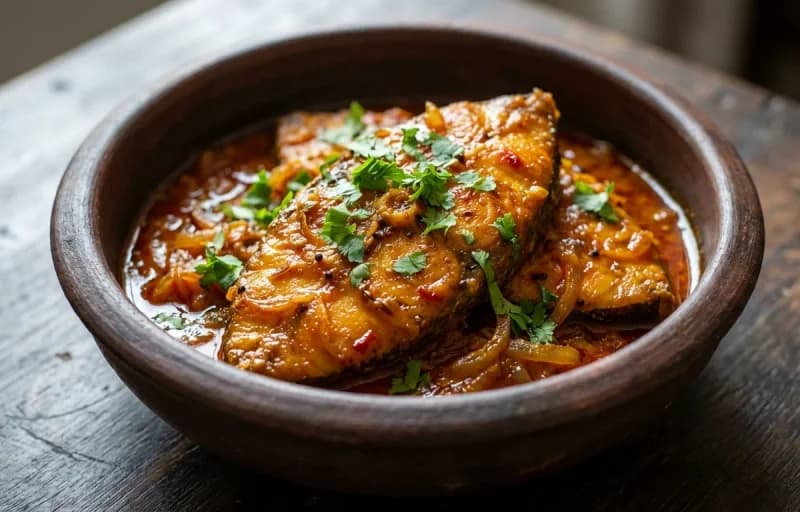
This gujarati dish is perfect for lunch. With 411.76 calories and 12.57g of protein per serving, it's a nutritious choice for your meal plan.
fat
0.25 tsp Asafoetida (Also known as Hing)
0.5 tsp Carom Seeds (Also known as Ajwain)
1 tsp Salt (Adjust to taste)
0.5 tsp Sugar (Optional, to balance bitterness)
2 tbsp Oil (For the dough)
0.25 cup Warm Water (As needed for kneading)
Instructions
1
Prepare the Dough (5 minutes)
In a large mixing bowl, combine atta, besan, turmeric powder, red chilli powder, coriander-cumin powder, asafoetida, carom seeds, salt, and optional sugar. Whisk thoroughly to ensure the spices are evenly distributed.
Add the finely chopped methi leaves, plain yogurt, ginger-garlic paste, green chillies, and 2 tablespoons of oil.
Using your fingertips, rub the wet ingredients into the flour mixture until it resembles coarse breadcrumbs. This step ensures the fat and moisture are well incorporated.
2
Knead and Rest the Dough (30 minutes)
Gradually add warm water, a little at a time, and begin to knead. The methi and yogurt will release moisture, so be cautious not to add too much water at once.
Knead for 6-8 minutes until you have a soft, smooth, and pliable dough. It should be softer than standard roti dough but not sticky.
Coat the dough with a few drops of oil, cover the bowl with a damp cloth or a lid, and let it rest for at least 20-30 minutes. This resting period is crucial for developing gluten and results in softer theplas.
3
Roll the Theplas (10 minutes)
After the dough has rested, knead it again for one minute.
Divide the dough into 12 equal-sized portions and roll each into a smooth ball.
Take one ball, flatten it, and lightly dust it with dry atta. Roll it out into a thin circle, about 6-7 inches in diameter. Theplas are traditionally rolled thinner than parathas for a softer texture.
4
Cook the Theplas (20 minutes)
Heat a tawa (griddle) over medium-high heat. To check if it's ready, sprinkle a few drops of water; they should sizzle and evaporate immediately.
Place a rolled thepla onto the hot tawa. Cook for about 30 seconds, until you see small bubbles forming on the surface.
Flip the thepla. Drizzle about ½ teaspoon of oil on and around its edges.
Cook for another 30-40 seconds, pressing down gently with a spatula to ensure even cooking, until golden-brown spots appear.
Flip it one last time, apply a little more oil if desired, and cook until the first side is also perfectly spotted. Avoid overcooking to keep them soft.
Remove from the tawa and place in a casserole dish or a container lined with a clean kitchen towel. This traps the steam and keeps the theplas soft. Repeat for all remaining dough balls.
5
Serve
Serve Methi Thepla warm or at room temperature with plain yogurt, chunda (sweet mango pickle), athanu (mixed pickle), or a hot cup of masala chai.
73cal
4gprotein
5gcarbs
4gfat
Ingredients
1.5 cup Curd (Plain, full-fat yogurt recommended)
2.5 cup Water (Chilled)
2 tbsp Coriander Leaves (Freshly chopped)
1 tbsp Mint Leaves (Freshly chopped)
0.5 inch Ginger (Peeled and roughly chopped)
1 pc Green Chili (Optional, adjust to taste)
1 tsp Roasted Cumin Powder
0.75 tsp Kala Namak (Also known as black salt)
0.5 tsp Chaat Masala
0.25 tsp Salt (Adjust to taste)
1 tsp Ghee (For optional tempering)
0.5 tsp Mustard Seeds (For optional tempering)
0.25 tsp Hing (Asafoetida, for optional tempering)
5 pc Curry Leaves (For optional tempering)
Instructions
1
Blend the Chaas Base
In a large blender jar, combine the curd, chilled water, chopped coriander leaves, mint leaves, ginger, and green chili (if using).
Add the roasted cumin powder, kala namak, chaat masala, and salt.
Blend on high for 45-60 seconds until the mixture is completely smooth and slightly frothy on top.
2
Prepare the Tempering (Tadka - Optional)
Heat ghee in a small tadka pan over medium heat. The ghee is ready when a mustard seed sizzles upon contact.
Add the mustard seeds and allow them to splutter completely, which takes about 30 seconds.
Turn off the heat and immediately add the hing and curry leaves. Be cautious as the leaves will crackle. Swirl the pan for 10 seconds until the leaves are crisp.
3
Combine and Chill
Pour the hot tempering directly into the blended chaas. You will hear a satisfying sizzle. Stir well to incorporate the aromatic flavors.
For the best taste, cover and refrigerate the chaas for at least 30 minutes. This allows the flavors to meld together beautifully.
1 kg Raw Mangoes (Use a firm, sour, pickling variety like Ramkela or Rajapuri)
2 cup Mustard Oil (To be heated to smoking point and then cooled completely)
0.75 cup Salt (Use non-iodized or sea salt for best results)
5 tbsp Red Chili Powder (Adjust to your spice preference)
2 tbsp Turmeric Powder
4 tbsp Fennel Seeds (Also known as Saunf)
4 tbsp Split Mustard Seeds (Also known as Rai ki Dal)
2 tbsp Fenugreek Seeds (Also known as Methi Dana)
2 tsp Nigella Seeds (Also known as Kalonji)
1 tsp Asafoetida (Also known as Hing)
Instructions
1
Prepare the Mangoes (Day 1)
Wash the raw mangoes thoroughly. Wipe them completely dry with a clean kitchen towel. It is critical that there is no moisture.
Cut the mangoes into 1-inch cubes, discarding the inner stone but keeping the peel on.
Place the mango pieces in a large, dry glass or ceramic bowl. Add 1/2 cup of the salt and all the turmeric powder.
Mix well to coat every piece. Cover the bowl with a cloth or a loose lid and let it sit at room temperature for 24 hours. The mangoes will release a significant amount of water.
2
Dry the Mangoes (Day 2)
After 24 hours, drain all the water released by the mangoes. You can discard this brine.
Spread the mango pieces in a single layer on a clean cloth or a large tray.
Let them dry under a fan or in a shady, well-ventilated area for 4-5 hours until the surface moisture has evaporated. They should feel dry to the touch but not hard.
3
Prepare the Spice Mix and Oil
While the mangoes are drying, gently dry roast the fennel seeds and fenugreek seeds in a pan on low heat for 1-2 minutes until fragrant. Let them cool completely.
Give the chilled chaas a final stir before serving.
Pour into glasses and garnish with a fresh mint sprig or a sprinkle of roasted cumin powder.
Serve immediately as a refreshing drink alongside a meal or on its own.
Grind the roasted seeds along with the split mustard seeds into a coarse powder using a spice grinder or mortar and pestle.
In a large, dry mixing bowl, combine this coarsely ground spice mix, red chili powder, nigella seeds, asafoetida, and the remaining 1/4 cup of salt.
In a separate pan, heat the mustard oil until it reaches its smoking point (you'll see faint white fumes). Turn off the heat and let it cool down completely to room temperature. This step is crucial to mellow the oil's raw pungency.
4
Combine and Bottle the Pickle
Add the dried mango pieces to the bowl containing the spice mix. Toss well until each piece is thoroughly coated.
Pour about 1.5 cups of the completely cooled mustard oil over the mango-spice mixture. Mix everything thoroughly with a clean, dry spoon.
Carefully transfer the pickle into a sterilized, completely dry glass or ceramic jar (a 'barnī'). Pack it down gently to remove air pockets.
5
Mature the Pickle (7-10 Days)
Cover the mouth of the jar with a clean piece of muslin cloth and secure it with a string. This allows moisture to escape while keeping dust out.
Place the jar in direct sunlight for 7 to 10 days. Shake the jar gently or stir with a dry spoon once every day to redistribute the oil and spices.
After 3-4 days, the mango pieces will have softened and settled. Pour the remaining 0.5 cup of cooled mustard oil over the top to create a protective layer that submerges the mangoes.
After the sunning period, the mangoes will have softened and absorbed the flavors. The pickle is now ready. Replace the muslin cloth with an airtight lid and store in a cool, dry place. It can last for over a year.