
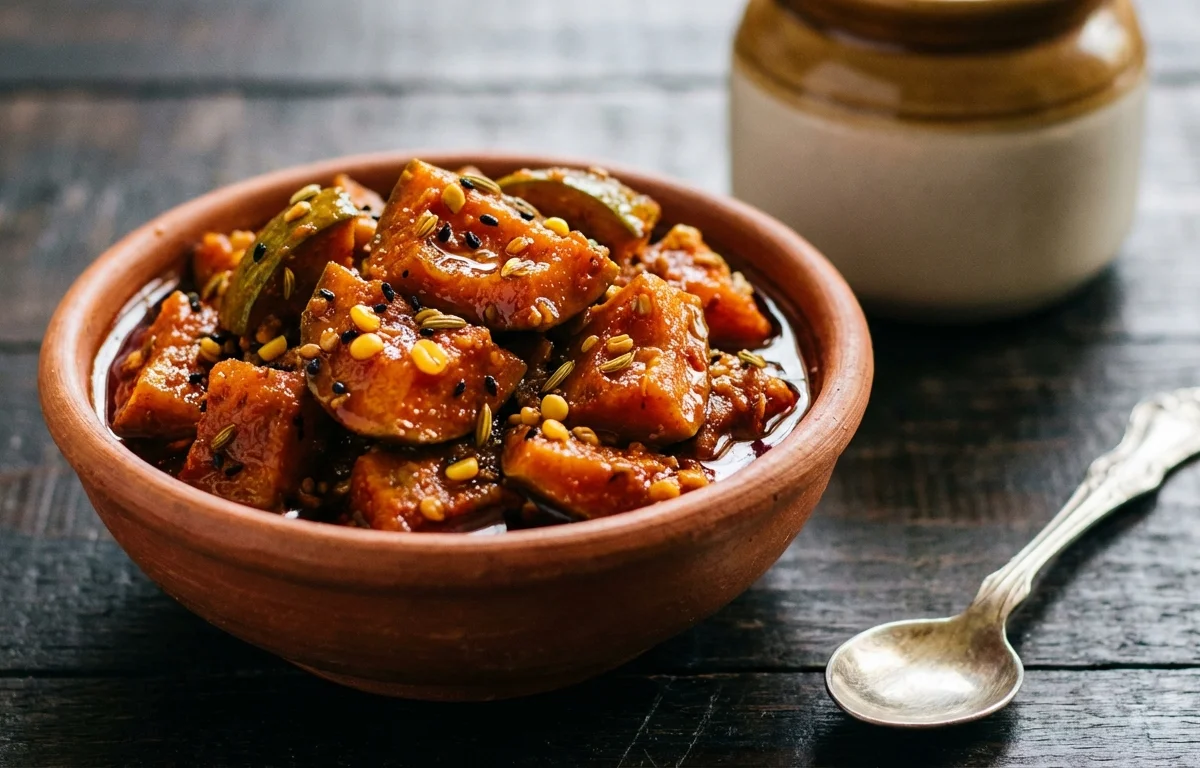
Mango Pickle
Sharp, spicy mango pickle with tender raw mango pieces coated in mustard, chili, and fenugreek. A little goes a long way, making it a bold, tangy side for dal rice, paratha, and curd rice.
For 8 servings
- prep · ~15 min
Dry and cut the mango.
1.Wash the raw mango and dry it very well with a clean cloth.2.Cut away the seed and chop the flesh into small bite-size pieces.3.Spread the pieces on a plate for 10 minutes so there is no surface moisture left. - roast · ~4 min
Roast and crush the spices.
1.Warm the fenugreek seeds in a dry pan on low heat until lightly fragrant, about 1 minute.2.Cool them completely.3.Coarsely grind the fenugreek seeds, mustard seeds, and fennel seeds.TIPKeep the heat low while roasting fenugreek so it stays pleasantly bitter, not burnt. - mix
Coat the mango with salt and spices.
Place the mango pieces in a clean dry bowl. Add salt, red chili powder, turmeric powder, the ground spice mix, and mix well so every piece is evenly coated.
- temper · ~3 min
Heat the mustard oil.
Heat the mustard oil in a small pan until it just begins to smoke lightly. Turn off the heat, add asafoetida, and let the oil cool until warm.
TIPCooling the oil slightly before pouring keeps the spices bright and prevents the mango from softening too quickly. - mix
Mix in the warm oil.
Pour the warm mustard oil over the spiced mango and mix very well. The mango pieces should look glossy and well coated.
- rest · ~1440 min
Rest the pickle for 1 day.
Transfer the pickle to a clean, completely dry glass jar. Cover and leave it at room temperature for 1 day, stirring once or twice if needed.
TIPUse only a dry spoon and dry jar so the pickle keeps well. - serve
Serve in small spoonfuls.
What to keep in mind.
6 tips from the recipe — small details that make a real difference to the final dish.
- 1Choose very firm, sour raw mangoes; softer ones turn mushy after the oil is added.
- 2Dry the mango pieces thoroughly before mixing, or the pickle can spoil faster in the jar.
- 3Grind the mustard, fennel, and fenugreek coarsely, not fine, so the pickle keeps its rustic texture.
- 4Let the smoked mustard oil cool to warm before pouring; very hot oil can dull the chili and soften the mango.
- 5Stir the jar once or twice during the first day so the salt and spices coat all the mango pieces evenly.
- 6Store in a clean glass jar and always use a dry spoon to keep moisture from shortening the pickle's shelf life.
Adapt it for your goals.
Extra-spicy
Increase the red chili powder slightly for a hotter achar that pairs especially well with plain dal-rice and curd rice.
garlicGarlic
Add a few thin slices of dried garlic for a stronger, savory pickle with more depth.
less oilLess-oil
Use slightly less mustard oil for a lighter coating, though the pickle will keep for a shorter time and taste less rounded.
jaggery touchJaggery-touch
Mix in a little jaggery for a sweet-hot version that balances very tart mangoes.
Why this is on our healthy list.
Raw Mango Goodness
Raw mango adds tart fruitiness along with plant compounds that make this condiment more than just a spicy side.
Digestive Spice Support
Fenugreek, fennel, asafoetida, and mustard are traditional Indian pickle spices often used to add aroma and aid digestibility.
Small-Serving Condiment
Because mango pickle is eaten in small spoonfuls, it can add big flavor to simple meals without needing a large portion.
Frequently asked questions
Any surface moisture can make the pickle spoil faster and dilute the spice coating, so completely dry mango is important.


