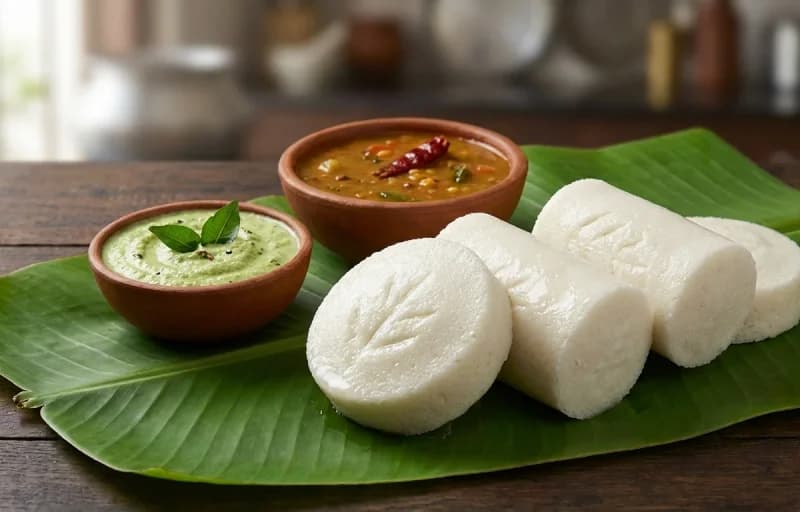
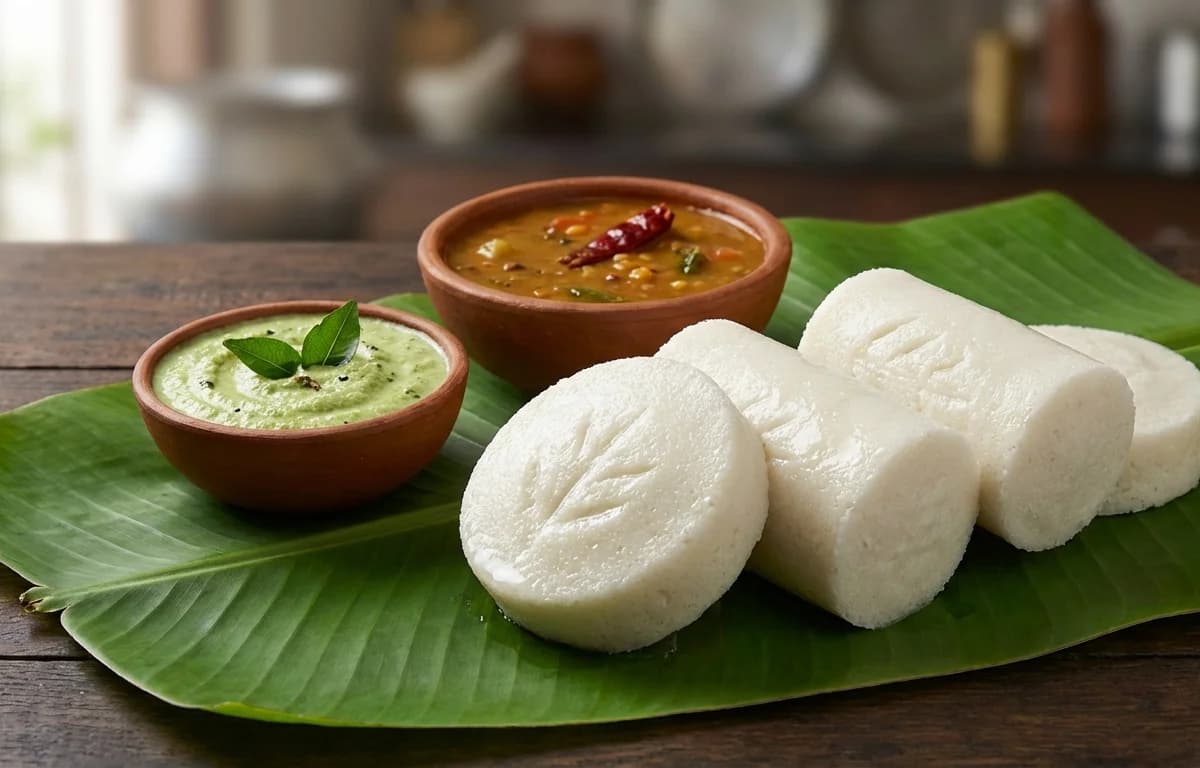
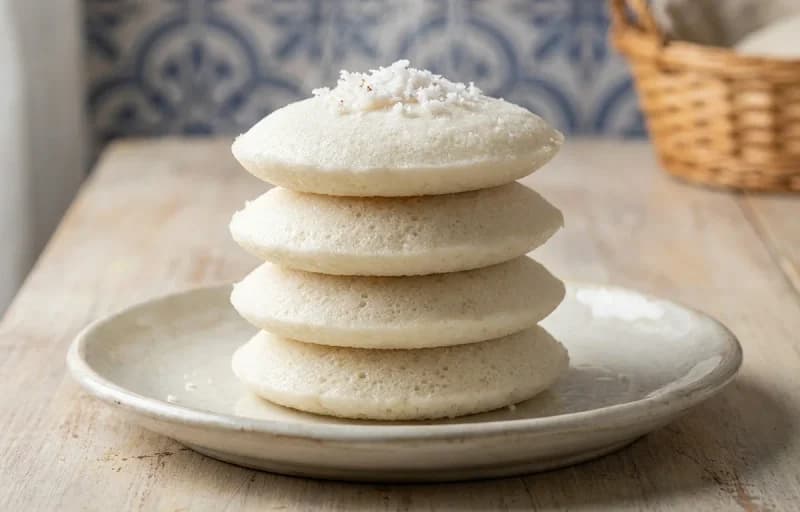
A fragrant and uniquely shaped steamed rice cake from the Udupi-Mangalore region. Cooked in aromatic screw pine leaf moulds, these cylindrical idlis are incredibly soft and delicious with coconut chutney.
Prep20 min
Cook20 min
Soak300 min
Ferment600 min
Servings4
Serving size: 1 serving
473cal
16gprotein
97gcarbs
Ingredients
2 cup Idli Rice (Also known as parboiled rice)
0.75 cup Urad Dal (Whole, skinned urad dal works best)
0.25 cup Poha (Thin variety, also known as flattened rice)
0.5 tsp Fenugreek Seeds (Also known as Methi seeds)
1.5 tsp Salt (Adjust to taste)
2.5 cup Water (For grinding, plus more for soaking)
Instructions
1
Soak Rice and Dal (5-6 hours inactive time)
Rinse the idli rice thoroughly in water 3-4 times, or until the water runs clear. Soak it in a large bowl with enough water to cover by 2 inches.
In a separate bowl, rinse the urad dal and fenugreek seeds. Soak them together in plenty of water.
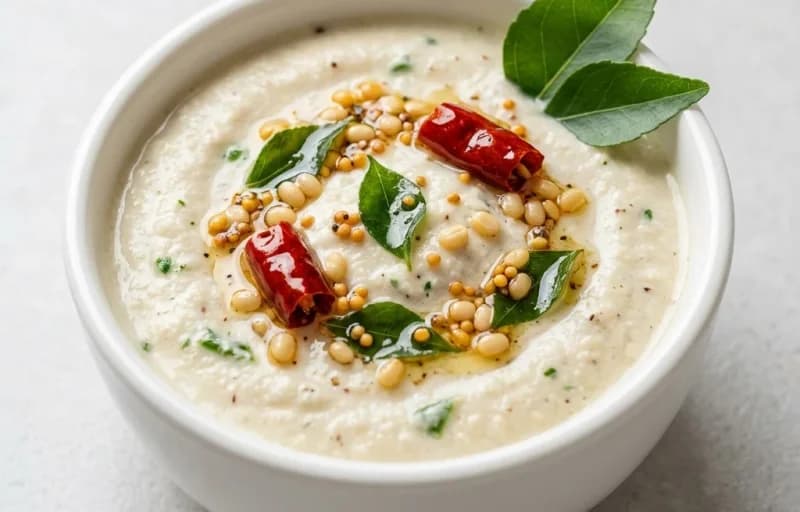
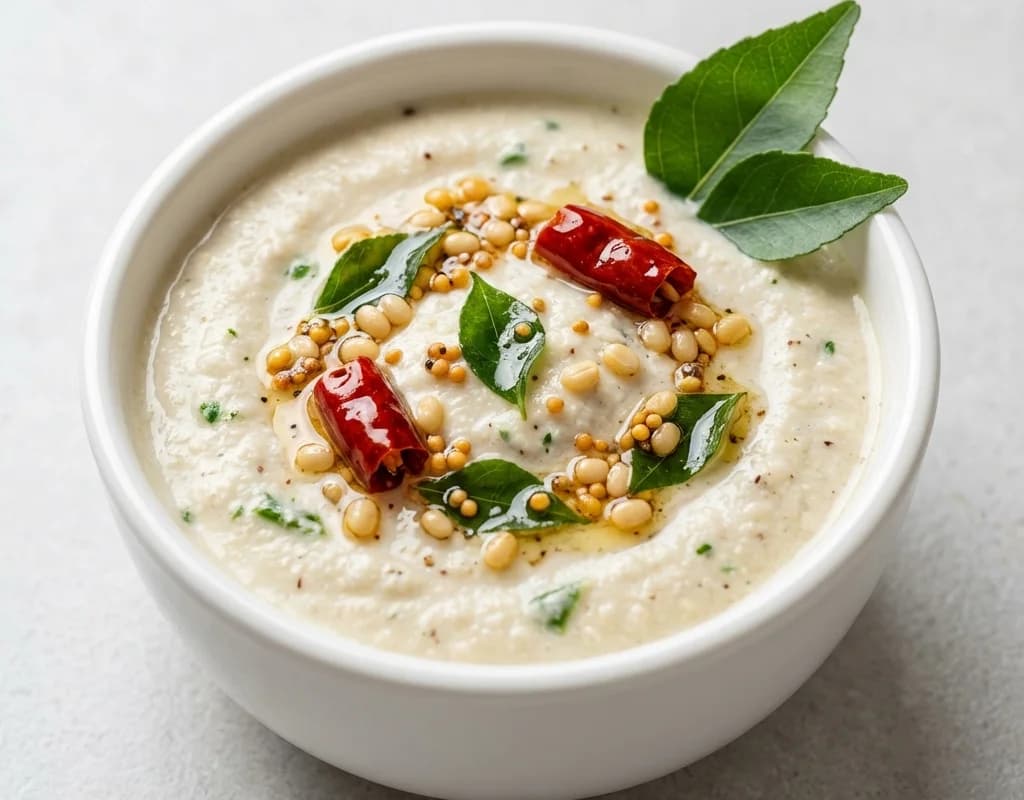
A creamy, savory, and slightly tangy South Indian staple. This fresh coconut chutney is the perfect accompaniment for idli, dosa, vada, and upma. Made with freshly grated coconut and aromatic spices, it's finished with a classic tempering (tadka) that elevates its flavor.
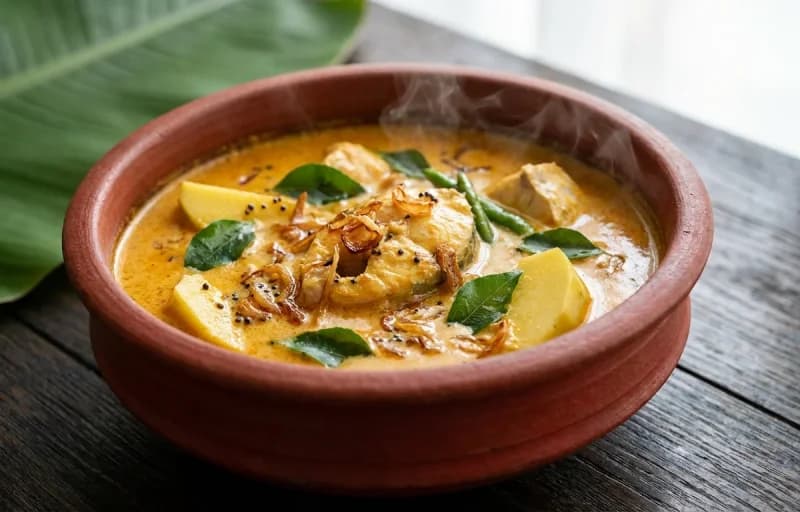
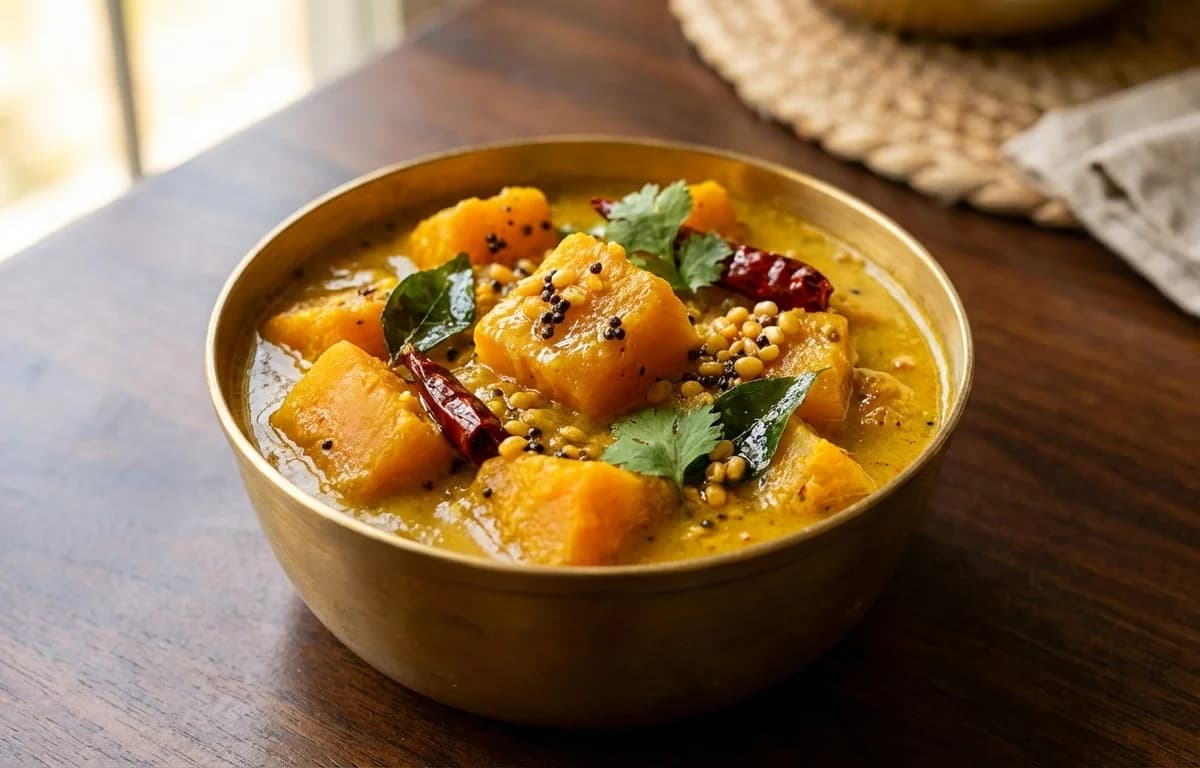
A classic Mangalorean curry featuring tender pumpkin cubes in a fragrant, spicy coconut gravy. The blend of sweetness from pumpkin and jaggery with the tang of tamarind makes this a comforting and unique dish, perfect with steamed rice.
About Moode Idli, Coconut Chutney and Mangalorean Pumpkin Koddel
Gut-friendly Moode Idli with tangy chutney & aromatic Koddel – a quick & tasty dinner!
This mangalorean dish is perfect for dinner. With 896.99 calories and 22.82g of protein per serving, it's a nutritious choice for your meal plan.
1gfat
Let both bowls soak for at least 5 to 6 hours.
2
Grind the Batter (25 minutes)
Just before grinding, soak the poha in a small amount of water for 10-15 minutes until it softens.
Drain the water from the urad dal. Using a wet grinder or a high-speed blender, grind the dal and fenugreek seeds into a very smooth, light, and fluffy batter. Add about 1 cup of cold water gradually while grinding.
Transfer the urad dal batter to a large container, big enough for the batter to double in volume.
Next, drain the rice. Add the rice and the soaked, squeezed poha to the grinder. Grind to a fine, slightly coarse (like fine semolina) texture, adding about 1 to 1.5 cups of water as needed.
Pour the ground rice mixture into the container with the dal batter.
3
Ferment the Batter (8-12 hours inactive time)
Add salt to the combined batter. Using your clean hands, mix the batter thoroughly for 1-2 minutes in a circular motion. This traditional technique helps initiate fermentation.
Cover the container with a lid (do not seal it tightly) and place it in a warm, draft-free spot.
Allow the batter to ferment for 8 to 12 hours, or overnight. The batter should double in volume and have a pleasant, tangy aroma.
4
Prepare and Steam the Moode (20 minutes)
Once fermented, gently stir the batter once or twice. Do not overmix, as this will deflate the air pockets.
Prepare your steamer by adding 1-2 inches of water to the bottom and bringing it to a rolling boil.
Rinse the moode moulds (screw pine leaf moulds). Carefully pour the batter into each mould, filling it only up to 3/4 full to allow space for the idli to rise.
Place the filled moulds upright in the steamer basket or on a steamer plate.
Cover the steamer and steam on medium-high heat for 15-20 minutes.
5
Rest and Serve (10 minutes)
Turn off the heat and let the steamer stand, covered, for 5 minutes. This prevents the idlis from becoming sticky.
Carefully remove the hot moulds from the steamer and let them cool for another 2-3 minutes.
To serve, gently push the cylindrical idli from the bottom of the mould onto a serving plate. The screw pine leaf can be peeled off before eating.
Serve hot with coconut chutney, sambar, or a dollop of fresh butter.
162cal
3gprotein
18gcarbs
10gfat
Ingredients
1 cup Fresh Coconut (Grated and tightly packed. Frozen can be used after thawing.)
2 tbsp Pottukadalai (Also known as roasted chana dal or chutney dal.)
2 pcs Green Chili (Adjust to your spice preference.)
0.5 inch Ginger (Peeled and roughly chopped.)
1 tsp Tamarind Paste (Or a small marble-sized piece of whole tamarind, deseeded.)
0.5 tsp Salt (Adjust to taste.)
0.5 cup Water (Use as needed for grinding to desired consistency.)
2 tsp Coconut Oil (For tempering. Ghee or another neutral oil can be used.)
0.5 tsp Mustard Seeds
1 tsp Urad Dal (Split and skinned black gram lentils.)
2 pcs Dry Red Chili (Broken into halves.)
1 sprig Curry Leaves (About 10-12 leaves.)
1 pinch Asafoetida (Also known as hing. Optional but recommended.)
Instructions
1
Grind the Chutney Base (5 minutes)
In a blender or mixie jar, combine the fresh grated coconut, pottukadalai (roasted chana dal), green chilies, chopped ginger, tamarind paste, and salt.
Add 1/4 cup of water to begin.
Blend in short bursts, scraping down the sides as needed, until you get a thick, smooth paste. Avoid over-blending to prevent the coconut from releasing excess oil.
Add more water, one tablespoon at a time, and blend briefly until you reach your desired consistency. Transfer the chutney to a serving bowl.
2
Prepare the Tempering (Tadka) (5 minutes)
Heat the coconut oil in a small tadka pan over medium heat. Test if the oil is hot enough by dropping in one mustard seed; it should sizzle immediately.
Add the mustard seeds and allow them to splutter completely, which takes about 30 seconds.
Lower the heat, then add the urad dal. Sauté for 30-40 seconds, stirring continuously, until it turns a pale golden brown.
Quickly add the broken dry red chilies, fresh curry leaves, and a pinch of asafoetida. Stir for another 15-20 seconds until the curry leaves become crisp and fragrant. Immediately remove from heat to prevent burning.
1 tbsp Tamarind Paste (Or a lime-sized ball of tamarind soaked in 1/4 cup warm water and strained)
1 tbsp Jaggery (Powdered or grated)
0.5 tsp Turmeric Powder
1.25 tsp Salt (Adjust to taste)
3 tbsp Coconut Oil (Divided use: 1 tsp for roasting spices, 2 tbsp for tempering)
1.5 tbsp Coriander Seeds
1 tsp Cumin Seeds
1.5 tsp Urad Dal (Divided use: 1 tsp for masala, 0.5 tsp for tempering)
6 pieces Dry Red Chilies (Byadgi or Kashmiri recommended for best color and mild heat)
1 cup Fresh Grated Coconut
2.5 cups Water (For cooking and grinding, use as needed)
1 tsp Mustard Seeds
10 leaves Curry Leaves
0.25 tsp Hing (Asafoetida. Use gluten-free certified hing if needed.)
Instructions
1
Cook the Pumpkin
In a medium-sized pot, combine the pumpkin cubes, turmeric powder, salt, and 1.5 cups of water.
Bring the mixture to a boil over medium-high heat, then reduce the heat to a simmer. Cook for 10-12 minutes, or until the pumpkin is fork-tender but still holds its shape.
Gently stir in the tamarind paste and grated jaggery. Allow it to simmer for another 2-3 minutes for the flavors to meld together.
2
Prepare the Masala Paste
While the pumpkin is cooking, heat 1 tsp of coconut oil in a small pan over medium heat.
Add the dry red chilies, coriander seeds, cumin seeds, and 1 tsp of urad dal. Roast, stirring continuously, for 2-3 minutes until the spices are aromatic and the dal turns a light golden brown.
Remove from heat and let the spices cool for a few minutes.
Transfer the roasted spices to a grinder jar along with the fresh grated coconut. Add 1/2 cup of water and grind to a very smooth paste. Add a little more water if necessary to achieve a fine consistency.
3
Combine and Simmer the Curry
Pour the ground coconut masala paste into the pot with the cooked pumpkin.
Pour the hot, sizzling tempering directly over the ground chutney in the bowl.
Gently mix the tempering into the chutney. Do not overmix.
Let the chutney rest for at least 5 minutes to allow the flavors to meld together.
Serve fresh with hot idlis, dosas, vadas, or uttapam.
Rinse the grinder jar with another 1/2 cup of water and add this to the pot to ensure no masala is wasted.
Stir everything gently to combine. Check for salt and adjust if needed.
Bring the curry to a gentle simmer and cook for 5-7 minutes, allowing the raw flavor of the masala to cook out and the gravy to thicken to the desired consistency.
4
Prepare the Tempering (Tadka)
In a small pan (tadka pan), heat the remaining 2 tbsp of coconut oil over medium-high heat.
Once the oil is hot, add the mustard seeds. Wait for them to splutter completely.
Add the remaining 0.5 tsp of urad dal and fry until it turns golden.
Finally, add the curry leaves and hing. Sauté for about 30 seconds until the curry leaves are crisp and fragrant.
5
Finalize and Serve
Immediately pour the hot tempering over the simmering pumpkin koddel.
Stir gently to incorporate the tempering. Turn off the heat and cover the pot for 5 minutes to let the flavors infuse.
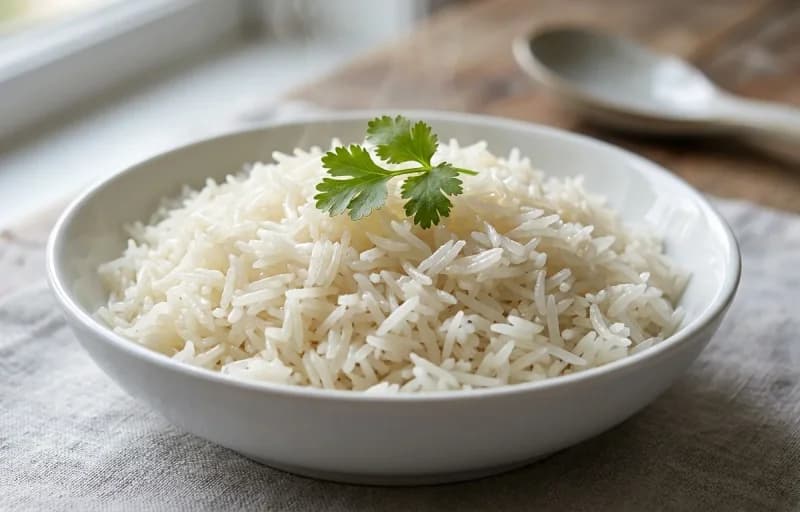
Serve hot with steamed rice (especially Mangalorean boiled rice) or neer dosa.