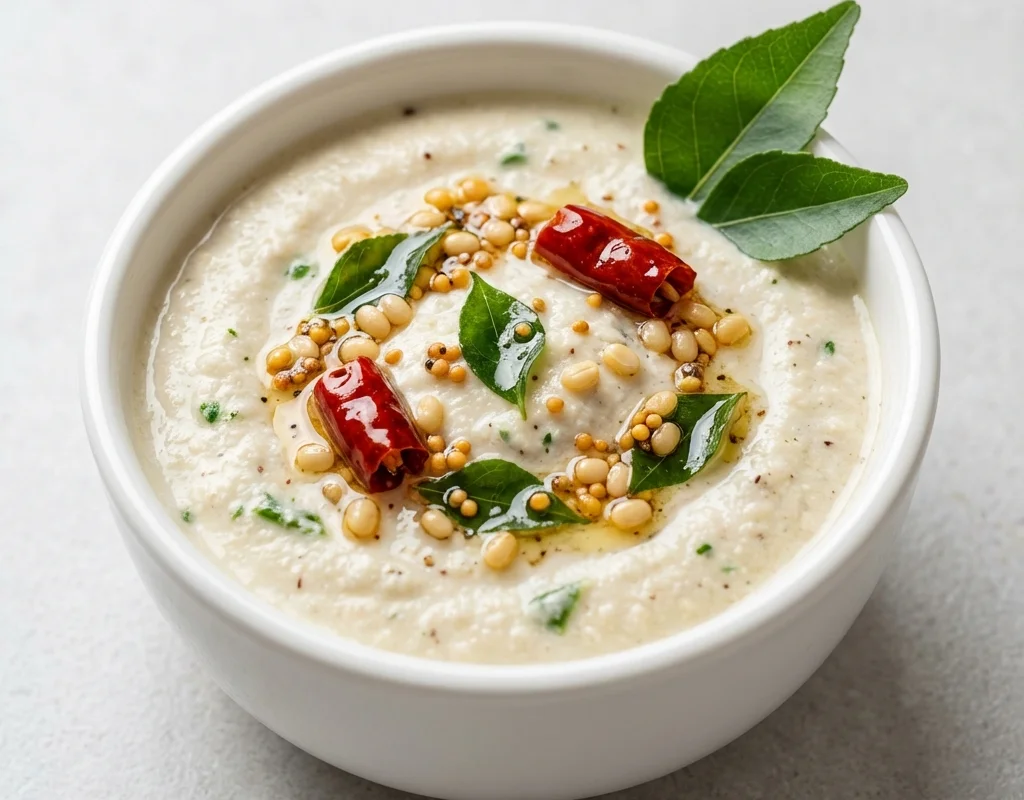
Coconut Chutney
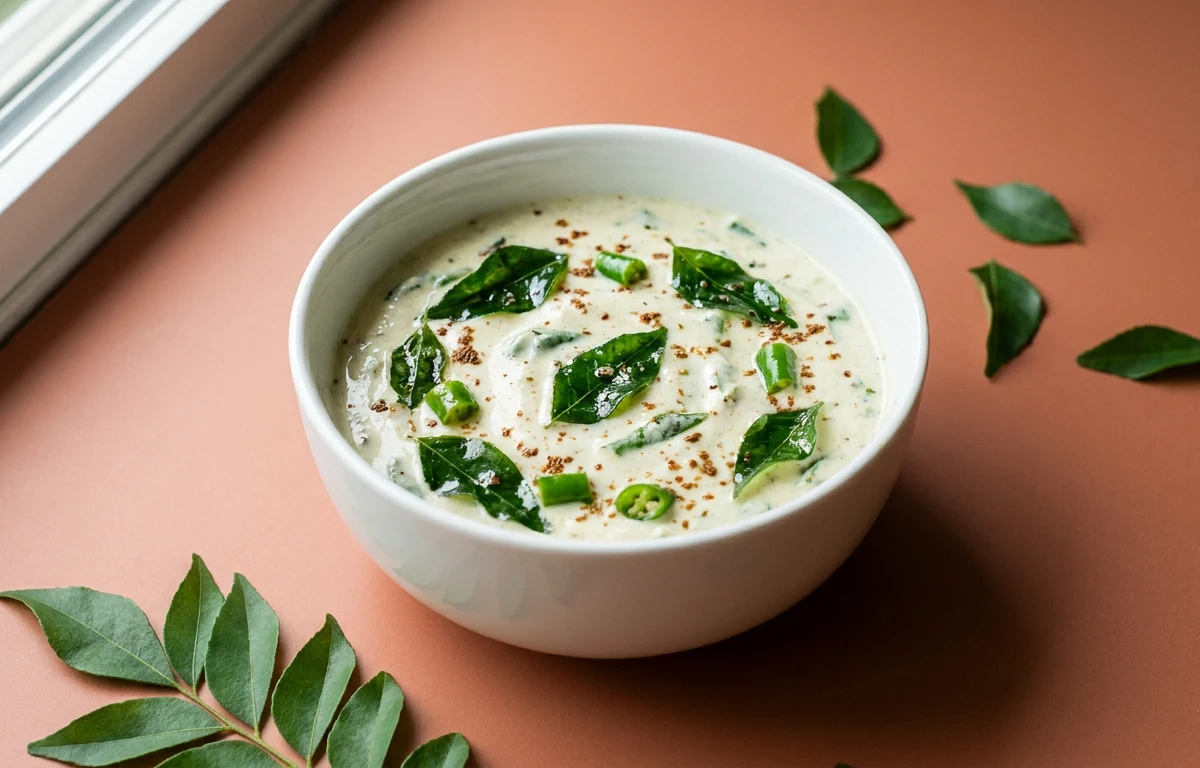
Fresh coconut chutney is creamy, lightly spiced, and bright with ginger and green chili. A quick South Indian favorite, it pairs perfectly with idli, dosa, vada, and upma without feeling too heavy.
For 8 servings
- prep
Prepare the chutney ingredients.
Grate the coconut if needed. Chop the ginger and keep the green chili, roasted chana dal, tamarind paste, salt, and water ready near the blender jar.
- mix · ~2 min
Grind the chutney.
1.Add coconut, roasted chana dal, green chili, ginger, tamarind paste, salt, and water to the blender jar.2.Blend to a smooth chutney, scraping down the sides once or twice.3.Add a little more water only if needed to reach a spoonable consistency.TIPKeep the chutney slightly thick at first; the tempering and resting loosen it a bit. - temper · ~2 min
Make the tempering.
1.Heat oil in a small pan over medium heat.2.Add mustard seeds and let them splutter.3.Add urad dal and cook until lightly golden.4.Add dried red chili and curry leaves, then cook for a few seconds until fragrant.TIPLower the heat before adding curry leaves so they crackle without burning. - assemble
Finish the chutney.
Pour the hot tempering over the ground chutney and mix well so the flavors spread evenly through the bowl.
- serve
Serve with idli, dosa, vada, or upma.
What to keep in mind.
7 tips from the recipe — small details that make a real difference to the final dish.
- 1Start with less water while grinding; coconut chutney thins quickly after tempering.
- 2If using frozen coconut, thaw fully and blend a little longer for a smoother texture.
- 3Let the mustard seeds fully splutter before adding urad dal, or the tempering can taste raw.
- 4Cook the urad dal only until light golden; dark brown will make the chutney taste bitter.
- 5Pour the tempering over the chutney while it is hot so the curry leaf and chili aroma spreads better.
- 6For serving with dosa, keep it slightly looser; for idli or vada, a thicker spoonable chutney works best.
- 7Refrigerate promptly and use the same day or next day, as fresh coconut chutney loses freshness fast.
Adapt it for your goals.
Mint-coriander
Blend in a small handful of mint or coriander for a greener, fresher chutney that pairs especially well with dosa and upma.
garlicGarlic
Add 1 small garlic clove while grinding for a sharper, more robust chutney that stands up well to medu vada.
no tamarindNo-tamarind
Skip the tamarind and use a little yogurt or a few drops of lemon juice for a softer tang and creamier finish.
spicierSpicier
Increase the green chili or add an extra dried red chili in the tempering if you want more heat without changing the texture.
Why this is on our healthy list.
Healthy Fats from Coconut
Fresh coconut adds satisfying richness and natural fats that make the chutney filling in small portions.
Plant-Based Protein Boost
Roasted chana dal and urad dal contribute plant protein and make the chutney more sustaining than plain coconut alone.
Digestive Support Ingredients
Ginger, curry leaves, and tamarind are commonly used in South Indian cooking for both flavor and easy-to-enjoy digestion-friendly meals.
Frequently asked questions
Yes, but the chutney will be thinner and less creamy. You can reduce the water slightly to help keep a better texture.