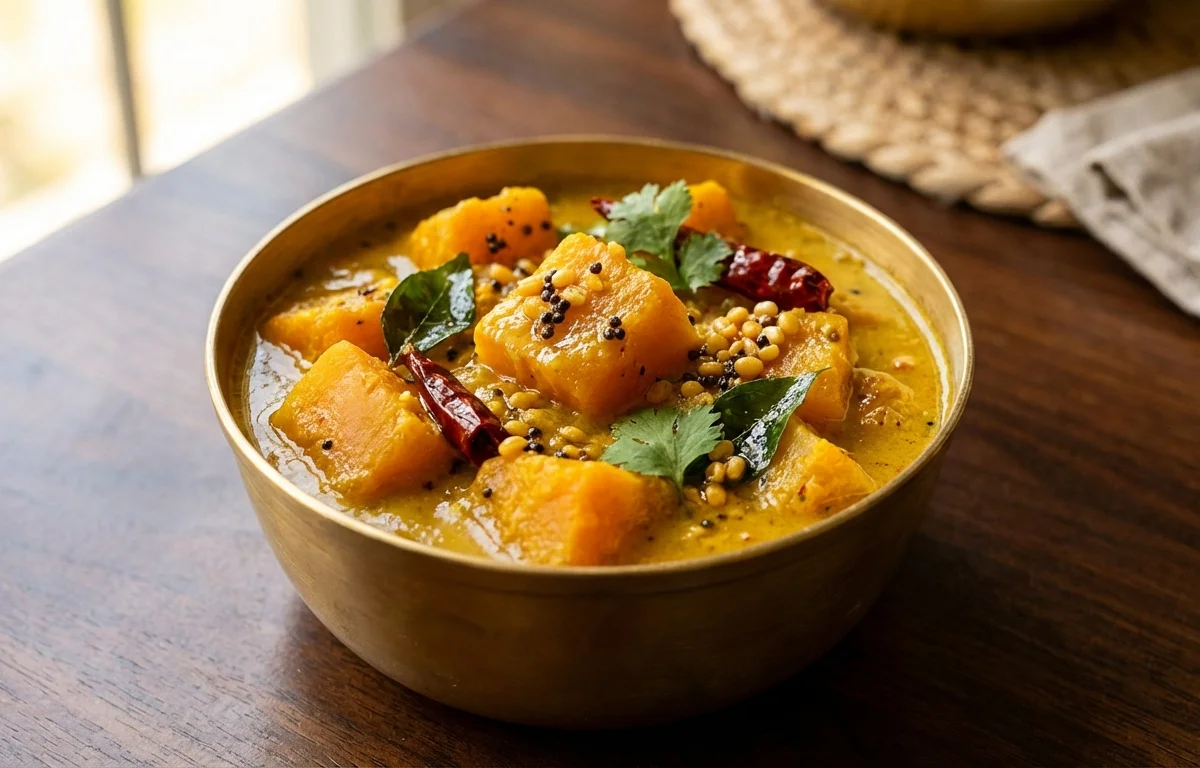
Mangalorean Pumpkin Koddel
A soulful, slightly tangy curry from the Mangalorean Konkani kitchen where soft, sweet pumpkin simmers in a fragrant coconut and roasted spice masala. The koddel is finished with a crackling mustard and red chili tempering that lifts the dish with every spoonful. Best sopped up with hot rice or soft rotis.
For 4 servings
- prep
Peel and cube the pumpkin.
Peel the pumpkin, remove the seeds and stringy bits. Cut the flesh into 1-inch cubes. Rinse and set aside.
TIPChoose a firm, sweet variety like red or yellow pumpkin for the best flavor. - boil · ~10 min
Cook the pumpkin with turmeric and salt.
Place the pumpkin cubes in a heavy-bottomed pan with 1.5 cups water, turmeric powder, and salt. Bring to a boil, then lower the heat and simmer until the pumpkin is fork-tender but not mushy (8-10 minutes).
TIPKeep the pumpkin cubes slightly firm — they will continue cooking in the masala. - roast · ~8 min
Dry-roast the spices and coconut for the masala.
1.Heat a small frying pan over medium-low heat.2.Add coriander seeds, urad dal, and fenugreek seeds. Dry-roast until the dal turns golden and aromatic (2-3 minutes).3.Add the 4 dried red chilies and roast for another 30 seconds until crisp.4.Finally, add the grated coconut and roast, stirring constantly, until it turns light golden brown (3-4 minutes).5.Remove from heat and let the mixture cool completely.TIPRoast the coconut on medium-low heat — high heat will burn the edges while leaving the center raw. - mix · ~2 min
Grind the masala paste.
Transfer the cooled roasted mixture to a mixer grinder. Add tamarind paste, jaggery (if using), and 0.5 cup water. Grind to a smooth, thick paste. The consistency should be like a thick chutney, not too runny.
TIPAdd water little by little — a thick paste gives the koddel its signature body. - simmer · ~7 min
Combine the masala with cooked pumpkin and simmer.
Add the ground masala paste to the pan with the cooked pumpkin. Gently stir to coat the pumpkin pieces without breaking them. Add a splash of water if the gravy is too thick. Bring to a gentle simmer and cook for 5-7 minutes to let the flavors meld. Taste and adjust salt.
TIPStir gently — the masala is thick and can catch at the bottom. - temper · ~2 min
Make the tempering.
1.Heat coconut oil in a small tadka pan over medium heat until shimmering.2.Add mustard seeds and let them pop and crackle completely (30 seconds).3.Add the 2 broken dried red chilies and curry leaves — stand back, they will splutter.4.Switch off the heat and immediately add a pinch of asafoetida to the hot oil.5.Pour the sizzling tempering over the simmering koddel.TIPAsafoetida blooms in residual heat — adding it off the flame preserves its pungent, savory punch. - rest · ~5 min
Cover and rest for 5 minutes before serving.
Turn off the heat, cover the pan, and let the koddel sit for 5 minutes. This allows the tempering to infuse into the curry.
TIPA brief rest deepens the flavor — the curry tastes even better after 15-20 minutes.
What to keep in mind.
7 tips from the recipe — small details that make a real difference to the final dish.
- 1Use a firm, sweet pumpkin variety like red or yellow for the best texture and natural sweetness.
- 2Roast the coconut on medium-low heat and stir constantly to avoid burning; it should turn light golden, not dark.
- 3Grind the masala to a thick, chutney-like paste; too much water will make the koddel runny and dilute the flavors.
- 4Cook the pumpkin until just fork-tender — it will soften further when simmered with the masala.
- 5Add the asafoetida off the flame after the tempering is done to preserve its pungent, savory aroma.
- 6Let the koddel rest covered for 5–10 minutes after tempering so the flavors meld and the curry thickens slightly.
- 7Leftover koddel tastes even better the next day as the spices deepen — store in the fridge for up to 3 days.
Adapt it for your goals.
Low-oil
Skip the tempering entirely; just stir in a pinch of asafoetida and curry leaves at the end for a lighter version without compromising the core flavor.
high proteinHigh-protein
Add a handful of cooked chana dal or tofu cubes along with the masala to boost protein while keeping the dish vegetarian and hearty.
jainJain
Omit the onion and garlic (already absent here), and replace tamarind with a small green mango piece or pomegranate seed powder (anardana) to keep it Jain-compliant.
veganVegan
The recipe is naturally vegan; just ensure jaggery is from a vegan source (some jaggery is processed with bone char filter — use organic or unrefined).
Why this is on our healthy list.
Rich in Beta-Carotene
Pumpkin is packed with beta-carotene, which the body converts to vitamin A — essential for eye health and immune function.
Good Source of Healthy Fats
Fresh coconut and coconut oil provide medium-chain triglycerides (MCTs), which are easily metabolized and support energy levels.
Digestive Friendly
Fenugreek seeds and asafoetida aid digestion, while the gentle spices make this curry easy on the stomach.
Naturally Gluten-Free
This koddel contains no gluten-containing grains, making it a safe choice for those with celiac disease or gluten sensitivity.
Frequently asked questions
Fresh pumpkin is strongly recommended; canned pumpkin is often mushy and lacks the firm texture needed for this curry. Use a firm, sweet variety like red pumpkin or butternut squash.