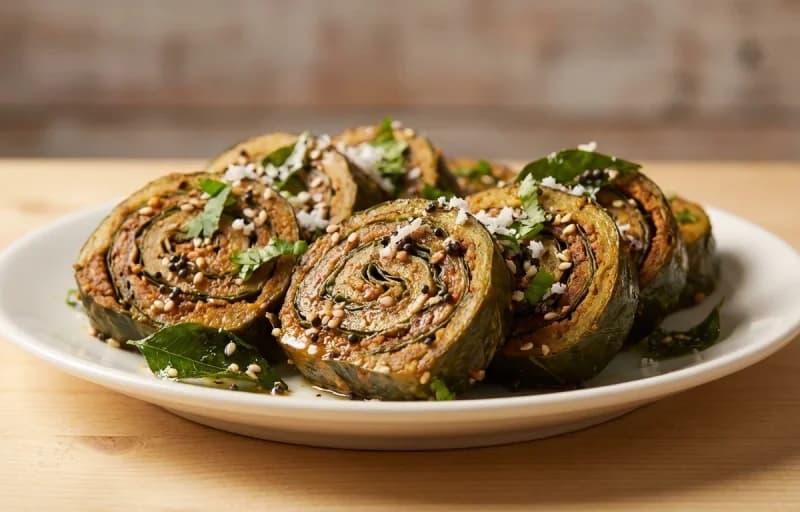
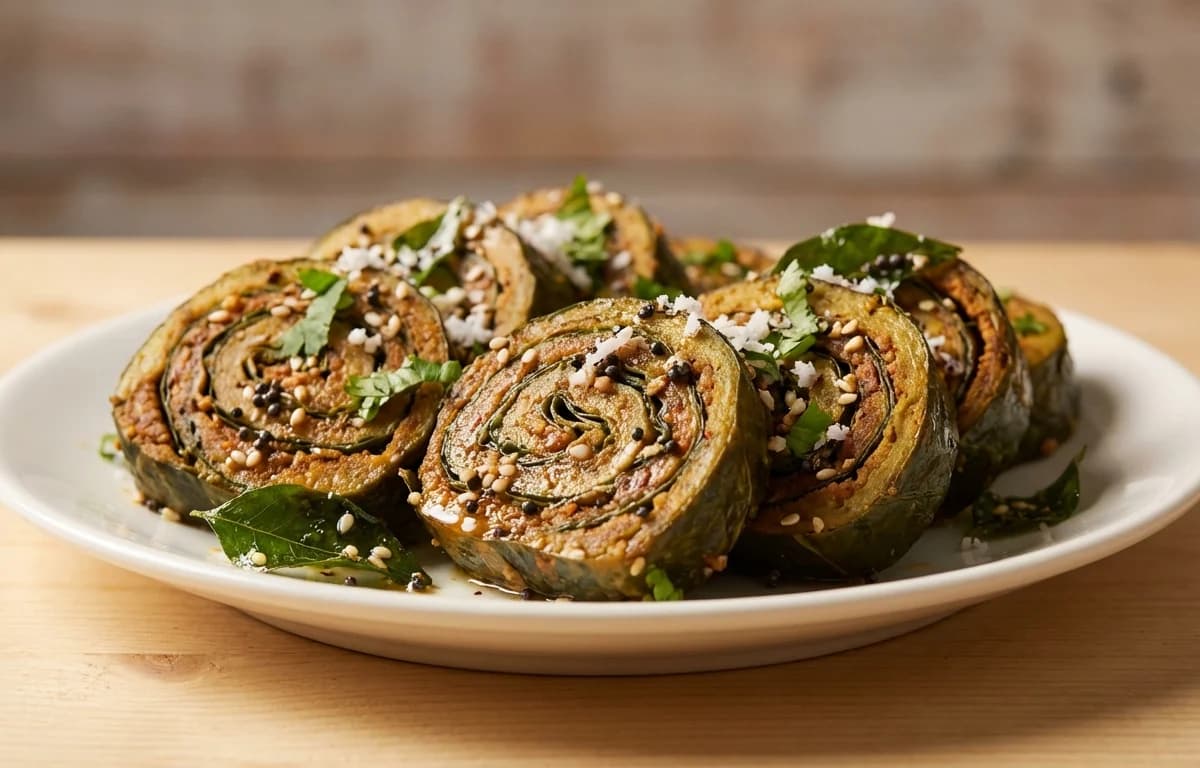
A classic Gujarati snack featuring tender colocasia leaves smeared with a tangy, sweet, and spicy gram flour paste. The rolls are steamed, sliced, and tempered for an irresistible finish.
Prep25 min
Cook30 min
Servings4
Serving size: 1 serving
334cal
14gprotein
45gcarbs
13gfat
Ingredients
10 pieces Colocasia Leaves (medium-sized, also known as Arbi ke Patte)
1.5 cup Besan (Gram flour)
2 tbsp Tamarind Paste
2 tbsp Jaggery (Grated or powdered)
1 inch Ginger (Grated)
2 pcs Green Chili (Finely chopped or made into a paste)
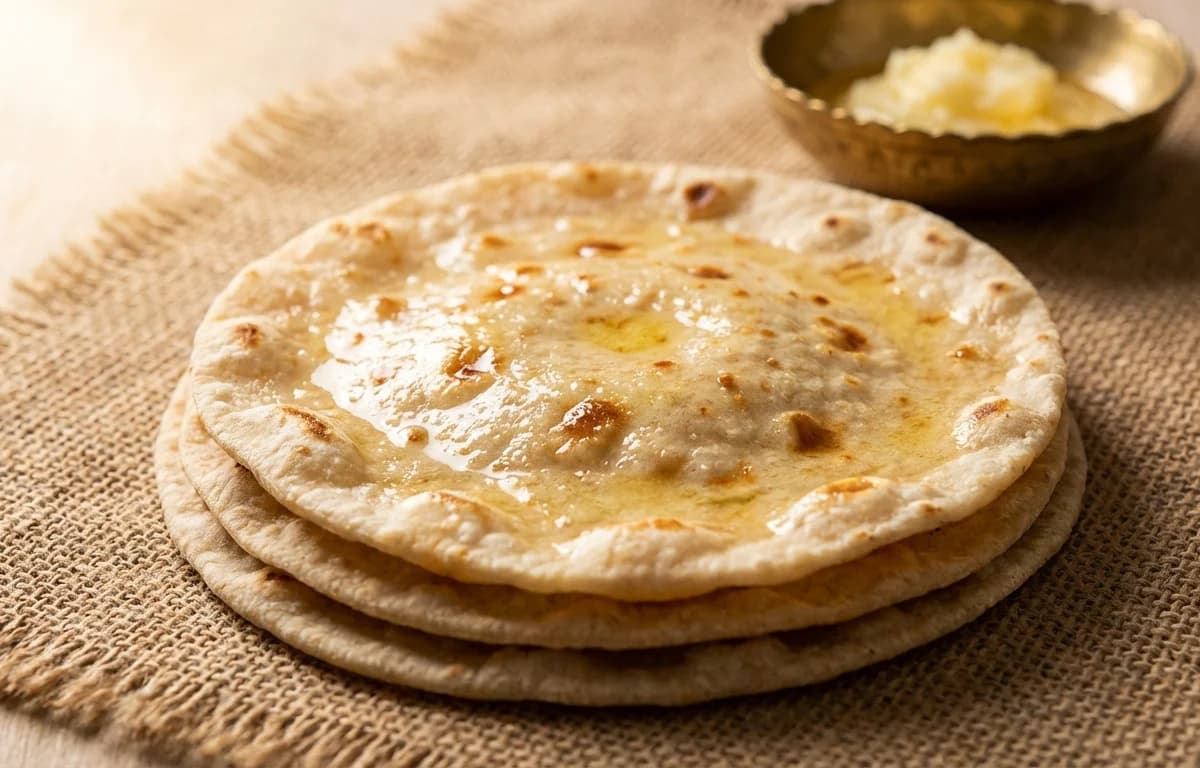
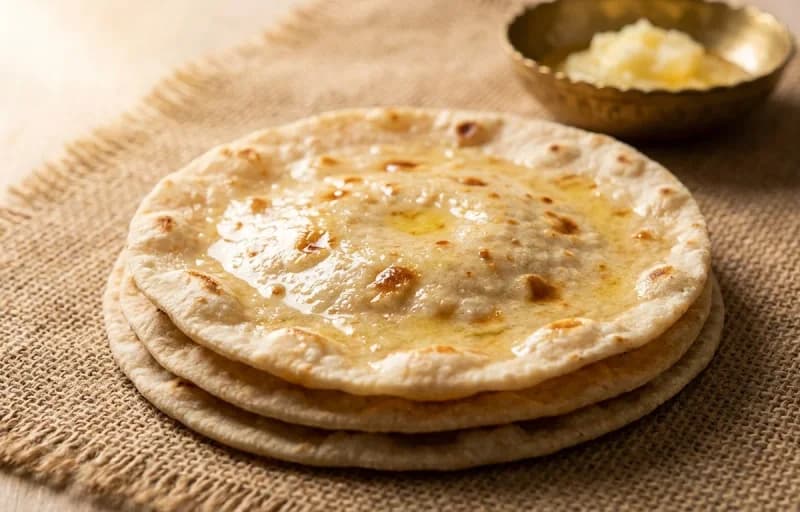
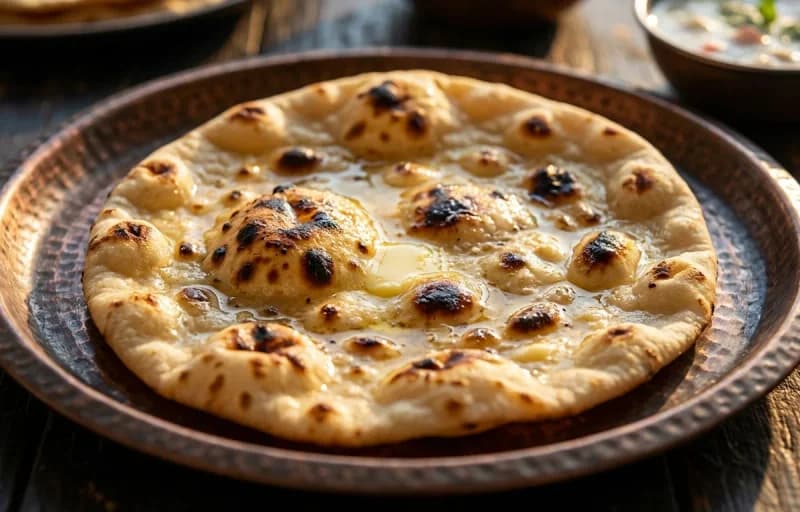
A classic Gujarati flatbread, Rotli (or Phulka) is incredibly soft, thin, and puffs up beautifully. Made with just whole wheat flour, water, and a touch of salt, it's the perfect everyday bread to accompany any sabzi, dal, or curry.
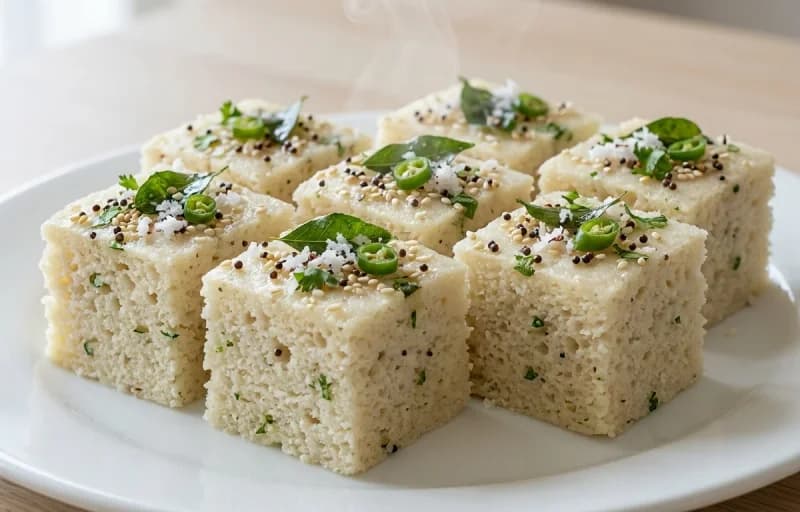
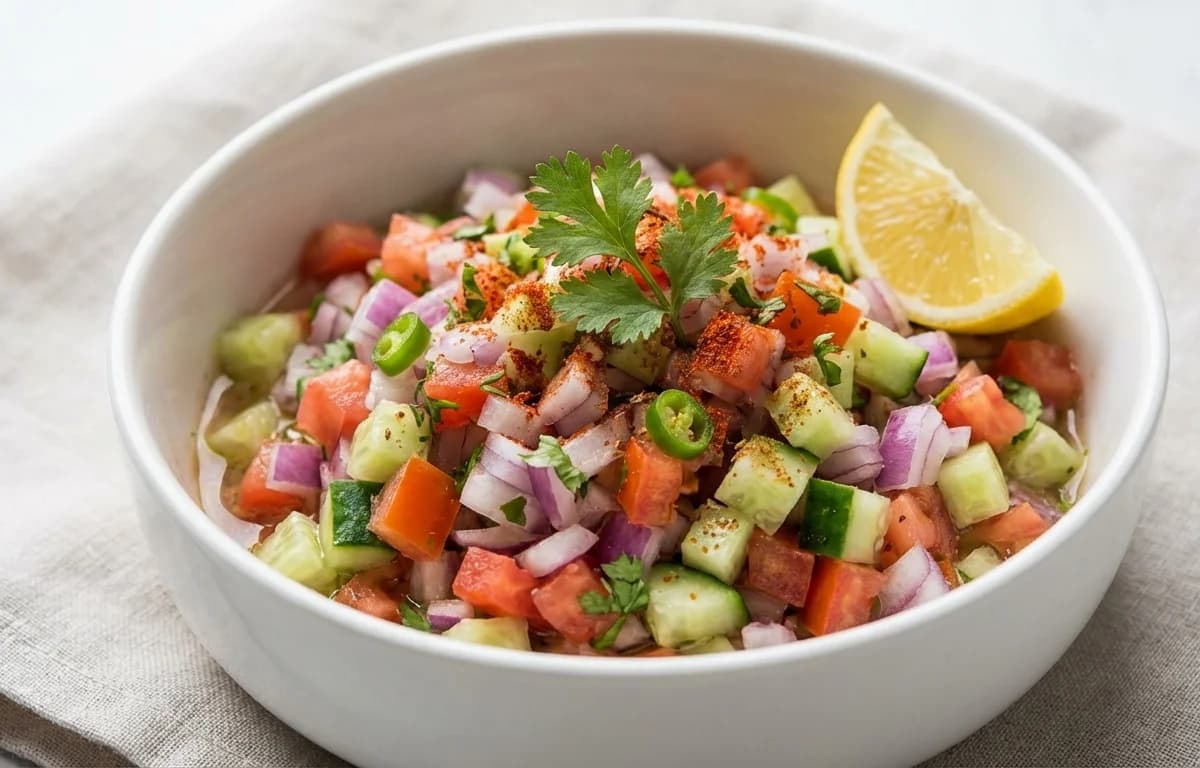
A refreshing and crunchy Indian salad made with chopped onions, tomatoes, and cucumbers. It's seasoned with lemon juice and spices, making it the perfect cooling side dish for spicy curries and biryanis.
Tangy Patra with soft Rotli and fresh Kachumber – a fiber-rich, energy-giving meal, quick to make!
This gujarati dish is perfect for lunch. With 673.58 calories and 23.450000000000003g of protein per serving, it's a high-fiber option for your meal plan.
0.5 tsp Cumin Powder
0.5 tsp Garam Masala
0.5 tsp Hing (Asafoetida, divided)
1.25 tsp Salt (Adjust to taste)
0.75 cup Water (Add as needed to make a thick paste)
2 tbsp Vegetable Oil (For tempering)
1 tsp Mustard Seeds
1 tbsp Sesame Seeds
10 pcs Curry Leaves
2 tbsp Fresh Coconut (Grated, for garnish)
2 tbsp Coriander Leaves (Chopped, for garnish)
Instructions
1
Prepare the Colocasia Leaves
Rinse the colocasia leaves well under running water. Pat them completely dry with a clean kitchen towel.
Place a leaf upside down on a cutting board, with the veins facing up. Using a sharp knife, carefully shave off the thick central vein and any other prominent side veins. This is crucial to prevent throat irritation and makes the leaves flexible for rolling.
2
Make the Besan Paste
In a large mixing bowl, combine besan, tamarind paste, jaggery, grated ginger, chopped green chilies, turmeric powder, red chili powder, coriander powder, cumin powder, garam masala, 0.25 tsp of hing, and salt.
Gradually add water, whisking continuously to form a thick, smooth, and lump-free paste. The consistency should be like that of a thick chutney, easily spreadable but not runny.
3
Assemble the Patra Rolls
Place the largest prepared leaf upside down on your work surface. Spread a thin, even layer of the besan paste over the entire surface using your fingers or a spatula.
Place a slightly smaller leaf on top and repeat the process. Continue stacking and spreading paste for 3-4 leaves, arranging them to form a rough rectangle.
Fold about an inch from both the left and right sides inwards.
Starting from the bottom (stem end), roll the stack of leaves upwards into a tight, compact log.
4
Steam the Rolls
Prepare your steamer by adding water to the bottom pot and bringing it to a boil. Lightly grease the steamer plate or tray.
Carefully place the prepared rolls on the greased plate, ensuring they do not touch each other.
Steam the rolls over medium heat for 20-25 minutes. To check for doneness, insert a toothpick or knife into the center; it should come out clean. The color of the leaves will also darken.
5
Cool and Slice
Once steamed, remove the rolls from the steamer and let them cool down to room temperature completely. This step is essential as slicing them while hot will cause them to crumble.
After they have cooled, use a sharp knife to cut the rolls into 1/2-inch thick slices.
6
Temper and Serve
Heat oil in a wide, non-stick pan over medium heat. Add the mustard seeds and let them crackle.
Add the sesame seeds, curry leaves, and the remaining 0.25 tsp of hing. Sauté for 30 seconds until fragrant.
Gently place the sliced patra into the pan in a single layer. Cook for 2-3 minutes, then carefully flip and cook the other side until lightly golden and crisp.
Garnish with fresh grated coconut and chopped coriander leaves. Serve immediately.
292cal
8gprotein
44gcarbs
11gfat
Ingredients
2 cup Atta (Also known as whole wheat flour)
1 cup Lukewarm Water (Adjust as needed)
0.5 tsp Salt
1 tbsp Oil (Any neutral vegetable oil)
2 tbsp Ghee (Melted, for brushing)
Instructions
1
Prepare the Dough
In a large mixing bowl (parat), combine 2 cups of atta and 1/2 tsp of salt.
Add 1 tbsp of oil and mix it into the flour with your fingertips.
Gradually add lukewarm water, a little at a time, and begin to gather the flour to form a dough.
Knead for 8-10 minutes, pressing and stretching with the heel of your hand, until you have a soft, smooth, and pliable dough. It should be softer than puri dough but not sticky.
2
Rest the Dough
Cover the dough with a damp kitchen towel or a lid.
Let it rest for at least 20-30 minutes. This step is crucial as it allows the gluten to relax, resulting in softer rotlis.
3
Divide and Roll
After resting, knead the dough again for one minute to make it smooth.
Divide the dough into 8 equal-sized portions and roll them into smooth balls.
Take one ball, flatten it slightly, and dip it in the dry atta for dusting.
On a clean, flat surface (patlo/rolling board), roll the ball into a thin, even circle of about 6-7 inches in diameter. Use minimal flour for dusting to avoid making the rotli dry.
4
Cook the Rotli on the Tawa
Heat a tawa (griddle) over medium-high heat. It should be hot enough that a drop of water sizzles and evaporates instantly.
Carefully place the rolled rotli on the hot tawa. Cook for about 15-20 seconds, or until you see small bubbles forming on the surface.
Using tongs, flip the rotli. Cook the other side for about 30-40 seconds, until light brown spots appear.
5
Puff the Rotli on Direct Flame
Using tongs, carefully lift the rotli off the tawa and place it directly on a high gas flame.
The rotli will puff up like a balloon within seconds.
Immediately flip it to cook the other side on the flame for just 2-3 seconds.
Remove from the flame.
6
Finish and Serve
Place the hot, puffed rotli in a casserole or on a plate and immediately brush the top with melted ghee.
Repeat the rolling and cooking process for the remaining dough balls.
Serve hot with your favorite dal, sabzi, or curry.