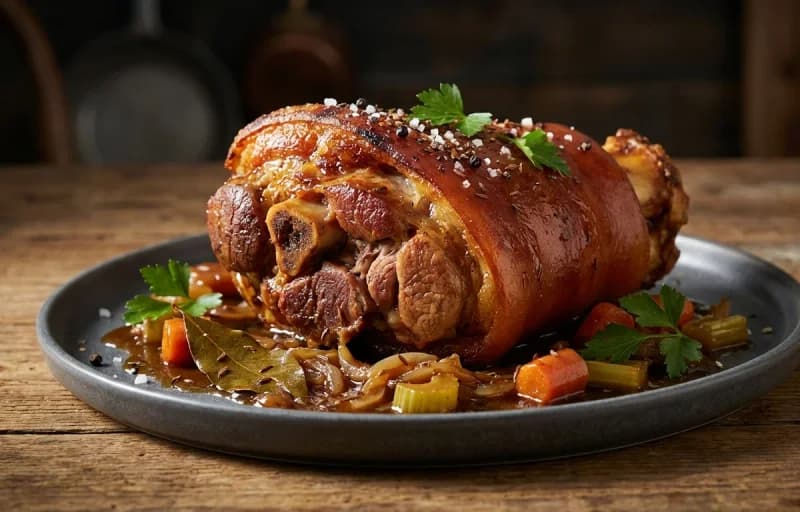
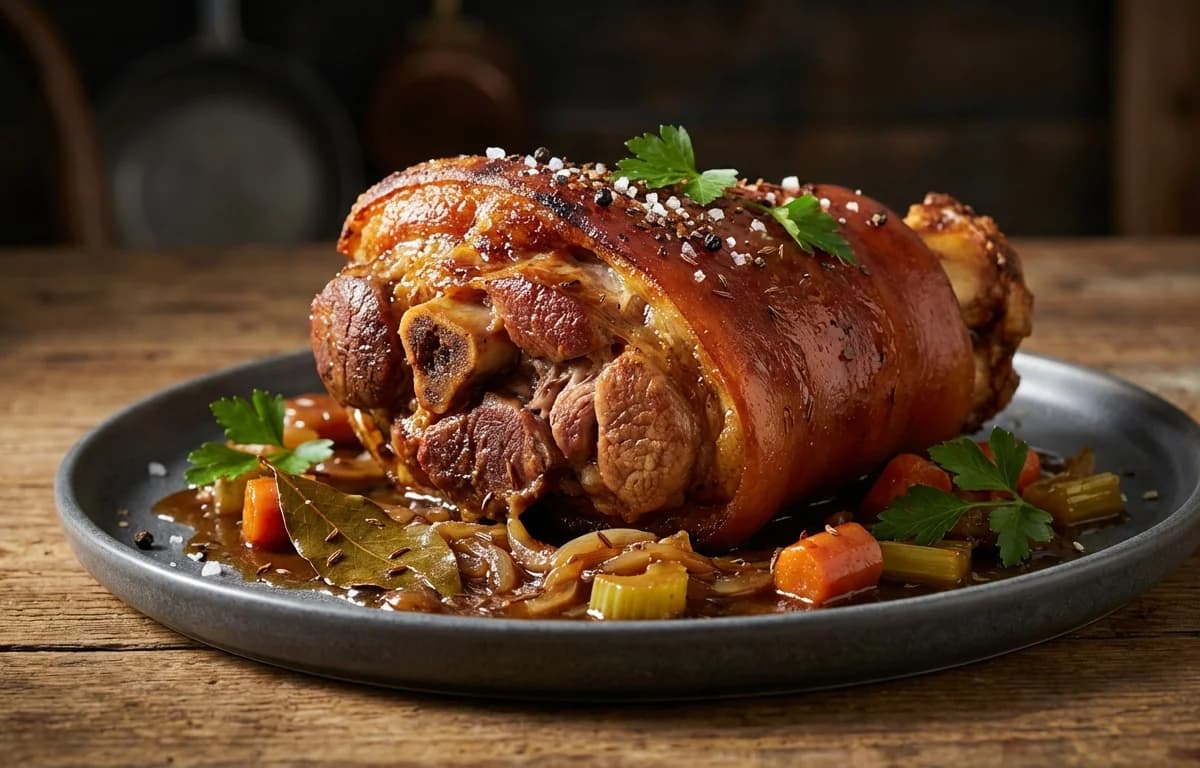
Fall-off-the-bone tender pork hock with an incredibly crispy, crackled skin. This German-American classic is slow-braised with dark beer and aromatics, then roasted to perfection. A hearty and satisfying meal.
Prep15 min
Cook165 min
Servings4
Serving size: 1 serving
5538cal
124gprotein
352gcarbs
110g
Ingredients
4 piece Pork Hock (Fresh, not smoked, about 1-1.2 kg each)
2 piece Onion (Medium, quartered)
2 piece Carrot (Medium, roughly chopped)
2 stalk Celery (Roughly chopped)
1 head Garlic (Cut in half crosswise)
355 ml Dark Beer (Such as a German Bock or Dunkel)
8 cup Water (Or more, as needed to cover the hocks)
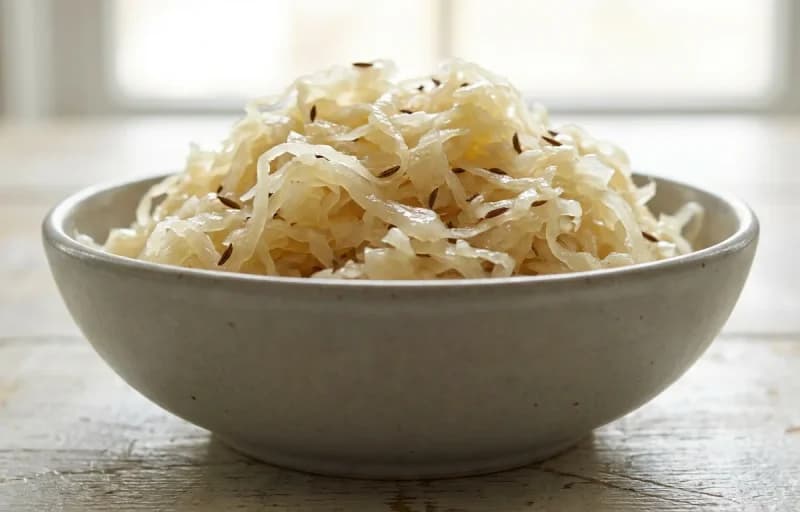
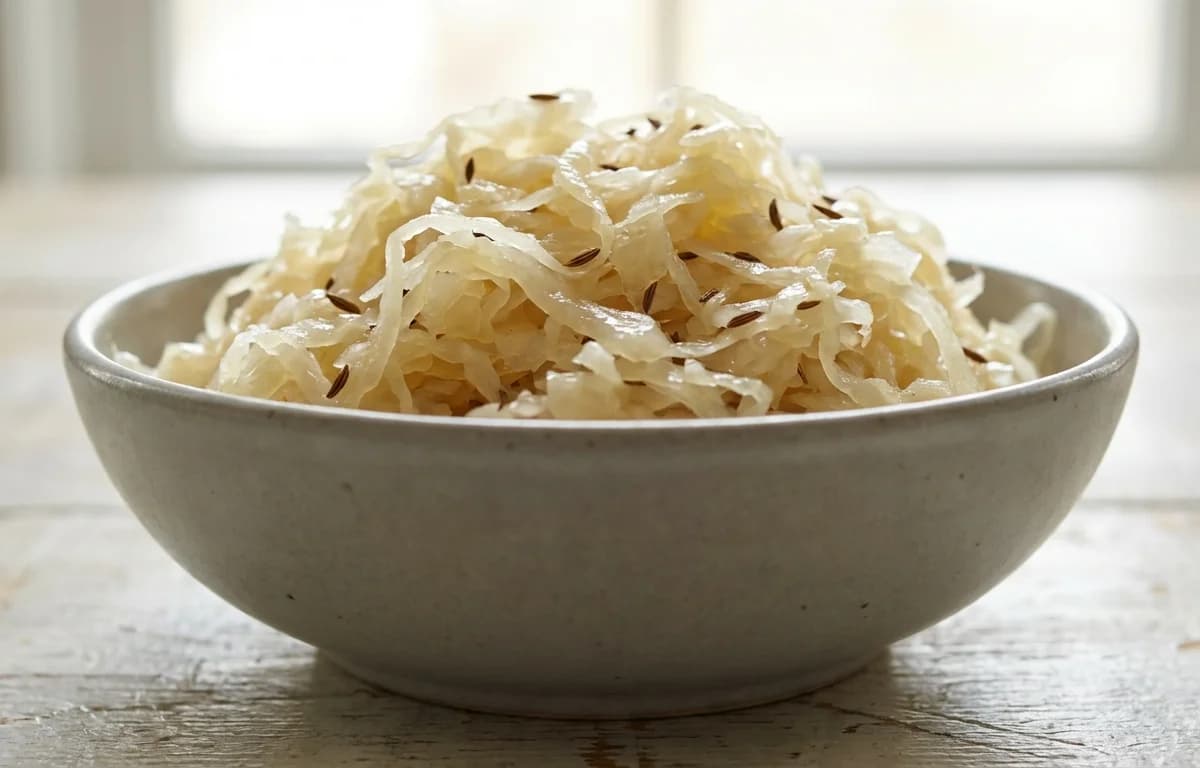
Crisp, tangy, and packed with probiotics, this homemade sauerkraut is surprisingly easy to make with just two ingredients. A classic fermented side dish that adds a zesty punch to sausages, sandwiches, and more.
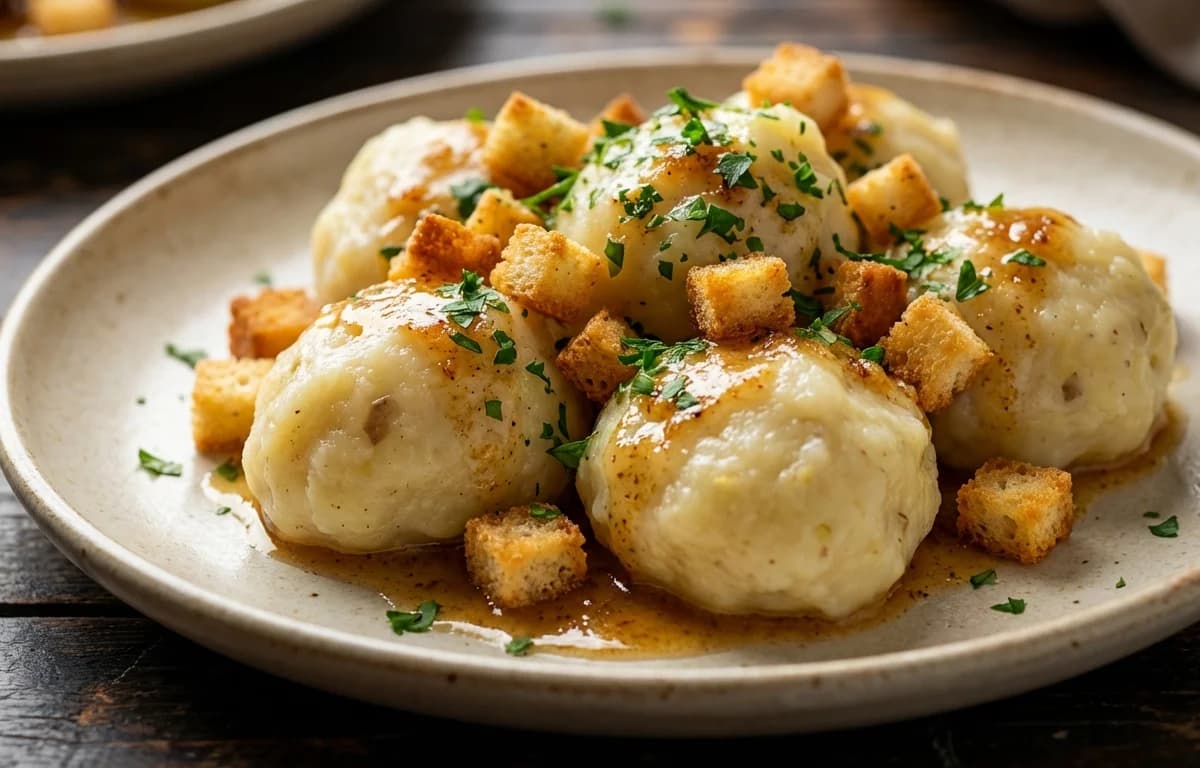
Soft, pillowy potato dumplings made from fluffy riced potatoes, a classic German-American comfort food. Known as Kartoffelklöße, they are the perfect side dish to soak up rich gravies from roasts and stews, and are surprisingly simple to master at home.
A rich, savory gravy with a deep, malty flavor from the beer. Perfect for drizzling over mashed potatoes, roasted meats, or poutine. This simple recipe comes together in under 20 minutes and elevates any comfort food meal.
About Pork Hock, Sauerkraut, Potato Dumplings and Beer Gravy
Crispy Pork Hock, gut-friendly sauerkraut, and potato dumplings – a soul-satisfying, hearty feast!
This german_american dish is perfect for dinner. With 6195.22 calories and 140.01g of protein per serving, it's a nutritious choice for your meal plan.
fat
1 tbsp Caraway Seeds (For the braising liquid)
2 tbsp Salt (For the braising liquid)
2 tbsp Vegetable Oil
1 tbsp Coarse Salt (For rubbing on the skin)
1 tsp Black Pepper (Freshly ground, for the skin)
Instructions
1
Prepare the Pork Hocks
Rinse the pork hocks under cold water and pat them completely dry with paper towels. This is a critical step for crispy skin.
Using a very sharp utility knife or a scalpel, carefully score the skin and fat in a diamond pattern, about 1/2-inch apart. Be careful not to cut down into the meat.
2
Braise the Hocks Until Tender
Place the scored hocks in a large stockpot or Dutch oven.
Add the quartered onion, chopped carrots, celery, halved garlic head, bay leaves, black peppercorns, 1 tbsp of caraway seeds, and 2 tbsp of salt.
Pour in the dark beer and enough cold water to completely submerge the hocks.
Bring the liquid to a boil over high heat, then immediately reduce the heat to maintain a gentle, steady simmer.
Cover the pot and let it simmer for 2 to 2.5 hours. The meat should be very tender and starting to pull away from the bone when done.
3
Dry the Hocks for Roasting
Preheat your oven to 400°F (200°C). Position a rack in the center of the oven.
Carefully remove the tender hocks from the braising liquid and place them on a wire rack set inside a roasting pan.
Pat the skin of each hock completely dry again with paper towels. Let them air dry for about 10-15 minutes for the best results.
Pour about 1 cup of the strained braising liquid into the bottom of the roasting pan. This creates steam and keeps the meat moist while the skin crisps.
4
Season and Roast for Crispy Skin
Rub the 2 tbsp of vegetable oil evenly over the entire surface of the dry skin on each hock.
In a small bowl, mix together the 1 tbsp of coarse salt, 1 tsp of black pepper, and 1 tsp of caraway seeds.
Sprinkle this seasoning mixture all over the oiled skin, rubbing it into the scores.
Place the roasting pan in the preheated oven and roast for 30 to 45 minutes, or until the skin is deeply golden brown, puffed, and crackling-crisp.
5
Rest and Serve
Remove the pork hocks from the oven and let them rest on the rack for at least 10 minutes before serving. This allows the juices to redistribute, ensuring the meat is succulent.
Serve whole with traditional accompaniments like German mustard, sauerkraut, and potato dumplings or roasted potatoes.
16
Serving size: 1 serving
17cal
1gprotein
3gcarbs
0gfat
Ingredients
2.5 lb Green Cabbage (About 1 medium head)
1.5 tbsp Sea Salt (Fine, non-iodized)
1 tbsp Caraway Seeds (Optional, for classic flavor)
Instructions
1
Prepare Cabbage and Jar
Sterilize a 1-quart (or 1-liter) wide-mouth glass jar and its lid by washing with hot, soapy water and rinsing thoroughly. Allow to air dry completely.
Discard the wilted or damaged outer leaves of the cabbage. Peel off one or two clean, large outer leaves and set them aside.
Quarter the cabbage through the core. Cut out the dense core from each quarter.
Thinly slice the cabbage into shreds, about 1/8-inch thick. A mandoline slicer works well for uniform cuts, but a sharp knife is also effective.
2
Salt and Massage
Place the shredded cabbage in a large, non-reactive bowl (stainless steel or glass).
Sprinkle the non-iodized sea salt and optional caraway seeds over the cabbage.
Begin massaging and squeezing the cabbage with clean hands for 5 to 10 minutes. This process breaks down the cabbage's cell walls, causing it to wilt and release its natural juices, which will become the brine.
3
Pack the Jar
Grab handfuls of the wilted cabbage and pack it tightly into the sterilized jar. Use your fist or a wooden tamper to press down firmly after each addition, removing air pockets.
Pour any brine left in the bottom of the bowl into the jar. The brine level should rise above the cabbage.
Ensure the cabbage is fully submerged under the brine by at least 1 inch. This is crucial to prevent mold.
Fold the reserved whole cabbage leaf and place it on top of the shredded cabbage, tucking it down the sides to keep the small pieces from floating.
Place a fermentation weight (or a small, clean glass jar that fits inside the larger one) on top of the whole leaf to keep everything submerged.
4
Ferment
Cover the jar. If using a standard lid, screw it on loosely to allow fermentation gases to escape. If using an airlock lid, follow its instructions.
Place the jar on a plate or in a shallow dish to catch any potential overflow from active fermentation.
Store the jar in a cool, dark place, ideally between 60-70°F (15-21°C), away from direct sunlight.
Check daily for the first few days. Press down on the weight if needed to keep the cabbage submerged. You should see bubbles forming after 2-3 days.
Allow to ferment for 1 to 4 weeks. Taste test after 1 week. The longer it ferments, the tangier it will become. Ferment until it reaches your desired flavor.
5
Store
Once you're happy with the taste, remove the fermentation weight and the top cabbage leaf.
Wipe the rim of the jar clean, screw the lid on tightly, and transfer the sauerkraut to the refrigerator.
Refrigeration will halt the fermentation process. The sauerkraut will keep for at least 6 months in the fridge, with its flavor continuing to mature.
2 tbsp potato starch (Helps create a lighter texture)
2 pcs large eggs (Lightly beaten)
1 tsp salt (For the dough)
0.25 tsp ground nutmeg (Freshly grated is best)
12 pcs bread croutons (Optional, for the center)
3 tbsp unsalted butter (For serving)
2 tbsp fresh parsley (Chopped, for garnish)
Instructions
1
Cook the Potatoes
Scrub the potatoes but leave them unpeeled. Place them in a large pot and cover with cold water by at least an inch.
Bring to a boil and cook for 20-25 minutes, or until tender and easily pierced with a fork.
Drain the potatoes thoroughly and let them sit for a minute to steam dry.
2
Prepare the Potato Base
While the potatoes are still hot, carefully peel off the skins. The skins should come off easily.
Pass the hot potatoes through a potato ricer onto a large baking sheet. If you don't have a ricer, mash them until completely smooth with no lumps.
Spread the riced potatoes in a thin layer on the baking sheet to cool and allow steam to escape for about 15-20 minutes. This drying step is crucial for light, non-gummy dumplings.
3
Form the Dumpling Dough
Transfer the cooled, dry potatoes to a large mixing bowl.
Sprinkle the all-purpose flour, potato starch, 1 tsp of salt, and ground nutmeg over the potatoes.
Add the lightly beaten eggs. Use your hands or a fork to gently combine the ingredients until a soft, pliable dough forms. Do not overmix, as this will make the dumplings tough.
4
Shape the Dumplings
Lightly flour your hands and a clean work surface.
Divide the dough into 12 equal portions. Gently roll each portion into a smooth ball, about 2 inches in diameter.
If using croutons, press one into the center of each ball and pinch the dough to seal it completely. The crouton helps the center cook evenly.
5
Cook the Dumplings
Bring a large pot of water to a boil, then reduce the heat to a gentle simmer. Add the 2 tsp of salt for the boiling water.
Carefully lower the dumplings into the simmering water using a slotted spoon. Do not overcrowd the pot; cook in two batches if necessary.
Simmer for 15-20 minutes. The dumplings will float to the surface when they are nearly done. Allow them to cook for another 2-3 minutes after they float to ensure the center is cooked through.
Remove the cooked dumplings with a slotted spoon and let them drain briefly.
6
Garnish and Serve
While the dumplings are cooking, melt the butter in a small saucepan until it's just starting to brown.
Arrange the hot dumplings on a serving platter.
Drizzle with the melted butter and sprinkle generously with freshly chopped parsley.
Serve immediately with your favorite roast or stew.
Bring the gravy to a gentle simmer. Stir in the Worcestershire sauce, optional fresh thyme, salt, and black pepper.
Reduce the heat to low and let it simmer for 5-8 minutes, stirring occasionally, until it has thickened to your desired consistency.
Taste and adjust seasoning if necessary. For a smoother texture, you can strain the gravy through a fine-mesh sieve before serving.