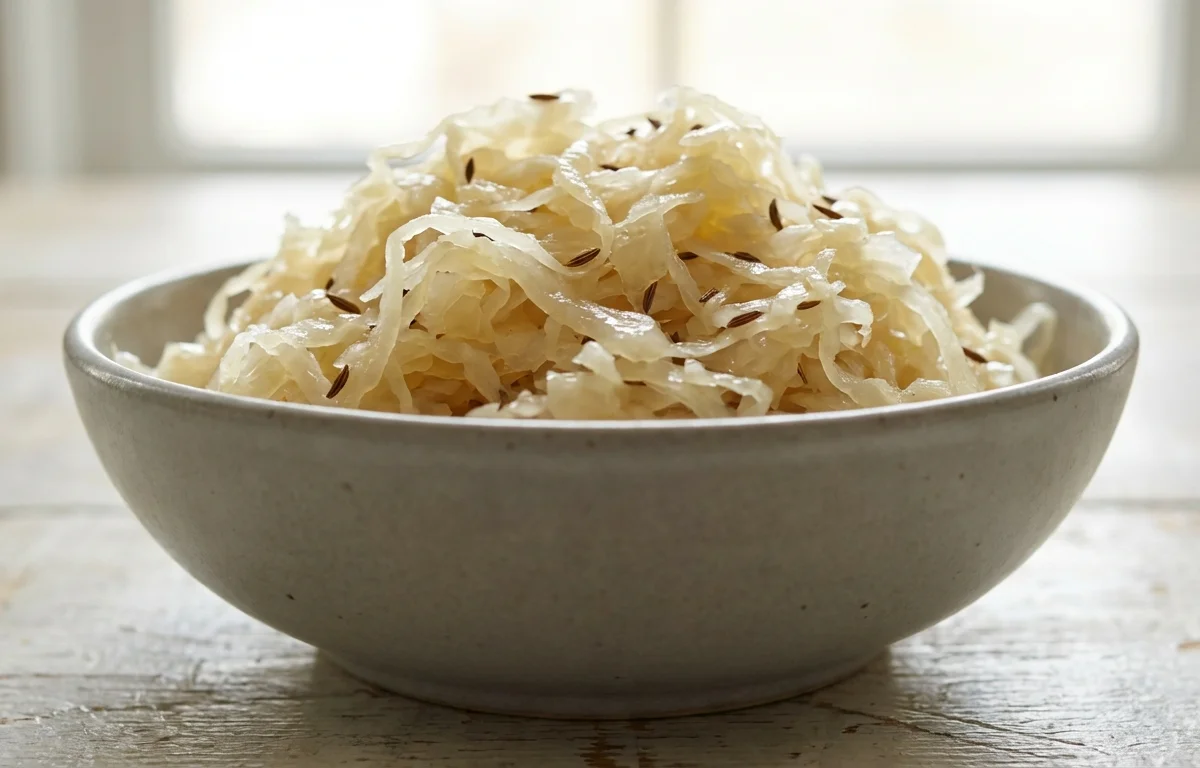
Sauerkraut
Crunchy, tangy fermented cabbage with a clean, bright sourness. This classic German staple needs only two ingredients and a little patience. Perfect alongside sausages, pork chops, or piled onto a Reuben sandwich.
For 16 servings
- prep
Shred the cabbage.
Remove and discard the outer leaves of the cabbage. Cut the cabbage into quarters, cut out the core, then slice the quarters into very thin shreds.
- mix
Massage cabbage with salt.
1.Place the shredded cabbage in a large mixing bowl.2.Sprinkle the salt evenly over the cabbage.3.Using clean hands, firmly massage and squeeze the cabbage for 5 to 10 minutes until it softens and releases plenty of liquid.TIPDon't skip the massage — this draws out the water that will become the brine. - assemble
Pack the jar tightly.
1.Transfer handfuls of cabbage into the sterilized glass jar.2.Press down firmly with your fist or a muddler after each handful to remove air pockets.3.Pour all the liquid from the bowl over the cabbage until it is fully submerged.TIPCabbage exposed to air will mold — every shred must stay under the brine. - assemble
Add a weight and cover.
1.Place a clean fermentation weight on top of the cabbage to keep it pressed below the liquid.2.Cover the jar with cheesecloth and secure it with a rubber band.TIPIf you don't have a weight, fill a small food-grade plastic bag with water and seal it tight. - rest
Ferment at room temperature.
Place the jar in a cool spot away from direct sunlight, around 18–22°C (65–72°F). Let it ferment for 7 to 14 days. Check daily: press the weight down if any cabbage has floated above the brine, and skim off any white scum that forms on the surface.
TIPWarmer rooms speed up fermentation; cooler rooms slow it down. Taste after day 7 to find your preferred sourness. - other
Seal and refrigerate.
Once the sauerkraut tastes tangy and bright to your liking, remove the weight and cheesecloth. Seal the jar with a tight-fitting lid and transfer it to the refrigerator, where it will keep for several months.
What to keep in mind.
6 tips from the recipe — small details that make a real difference to the final dish.
- 1Use a sharp knife or mandoline for uniformly thin shreds — even thickness ensures consistent fermentation.
- 2Weigh your cabbage and use exactly 2% salt by weight for a reliable brine and proper lacto-fermentation.
- 3If your kitchen is warmer than 22°C (72°F), check the sauerkraut daily and move it to a cooler spot to prevent over-fermentation and mushiness.
- 4White scum (kahm yeast) on the surface is harmless; simply skim it off and ensure the cabbage stays submerged.
- 5For long-term storage, keep the sauerkraut refrigerated below 4°C (40°F) — it will continue to ferment slowly, deepening the flavor.
- 6Taste the sauerkraut after 7 days, then every other day — the ideal tang is personal and peaks between days 10–14 at room temperature.
Adapt it for your goals.
Caraway sauerkraut
Add 1 tablespoon of caraway seeds with the salt for a classic German twist. The seeds add an aromatic, slightly peppery note that complements pork and sausages beautifully.
spicy sauerkrautSpicy sauerkraut
Tuck 2–3 dried red chilies and 4 peeled garlic cloves into the jar before packing the cabbage. This infuses the kraut with gentle heat and savory depth over the fermentation period.
apple & juniper sauerkrautApple & juniper sauerkraut
Shred one small tart apple (e.g., Granny Smith) with the cabbage and add 1 teaspoon of crushed juniper berries. The apple adds subtle sweetness, while juniper lends a piney, gin-like aroma traditional in Alsatian choucroute.
Why this is on our healthy list.
Rich in Live Probiotics
Lacto-fermentation produces live lactic acid bacteria that support a healthy gut microbiome, aiding digestion and nutrient absorption.
Fermented for Better Nutrient Absorption
The fermentation process breaks down cabbage's cellulose and can increase the bioavailability of certain vitamins and minerals, including vitamin C and some B vitamins.
High in Fiber
Cabbage is naturally rich in dietary fiber, promoting digestive regularity and a feeling of fullness — and fermentation does not reduce the fiber content.
Low in Calories, High in Flavor
This sauerkraut contains no added sugar, oil, or preservatives, making it a naturally low-calorie, nutrient-dense condiment or side dish.
Frequently asked questions
White, powdery scum is usually 'kahm yeast' — a harmless yeast that can grow on the surface. Mold is fuzzy and green, black, or pink. Skim off kahm yeast; if you see mold, discard the affected layer and ensure all remaining cabbage is submerged.