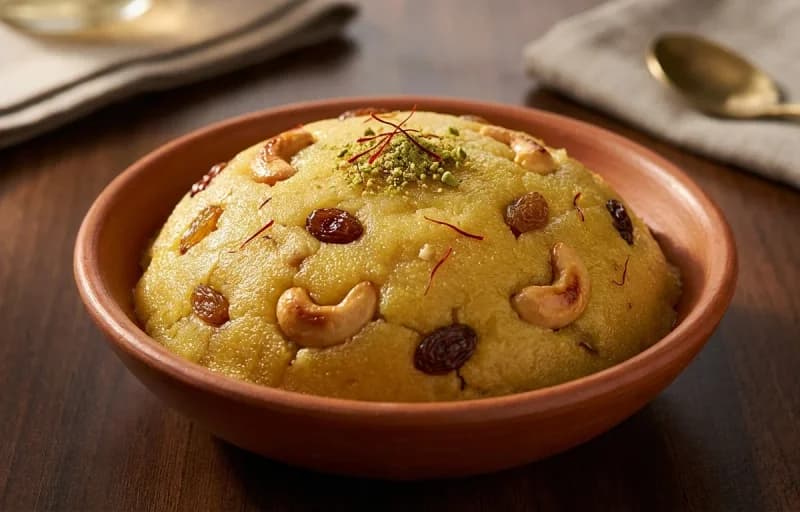
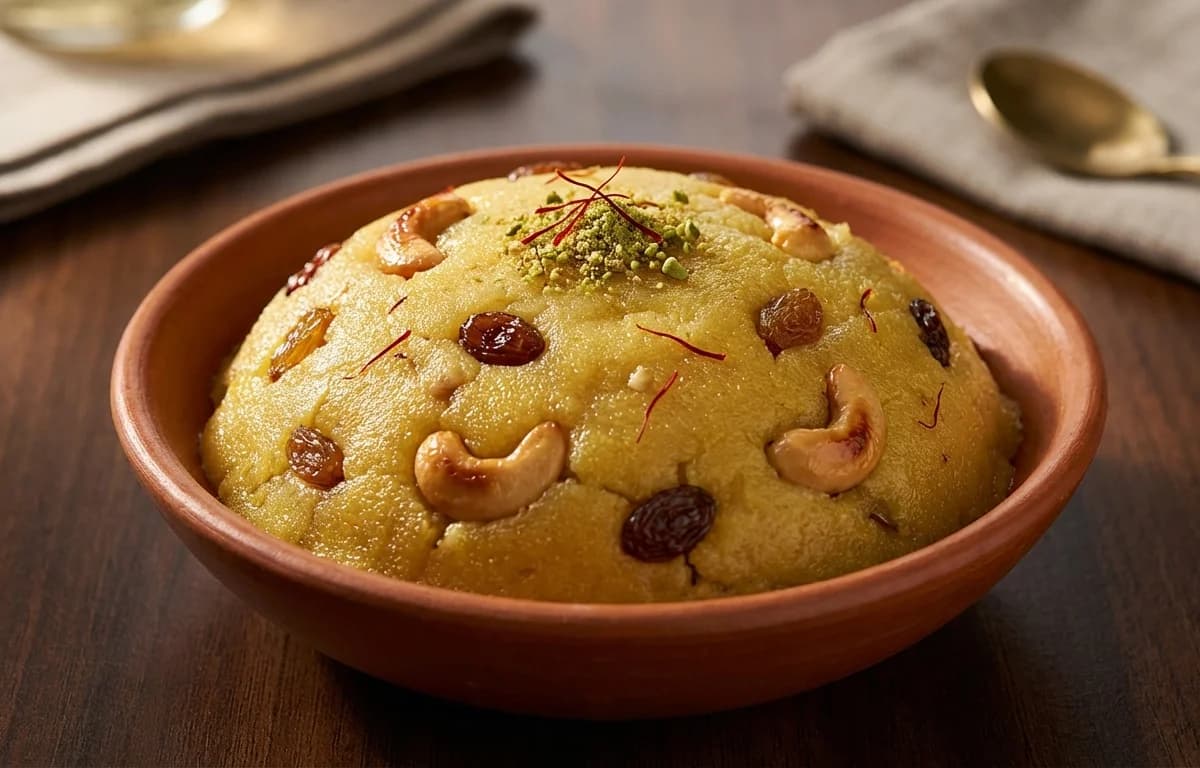
A classic Indian sweet made with roasted semolina, ghee, and sugar, infused with cardamom and studded with nuts. This soft, melt-in-your-mouth dessert is ready in under 20 minutes and perfect for celebrations or a quick treat.
Prep5 min
Cook15 min
Servings4
Serving size: 1 serving
639cal
6gprotein
87gcarbs
30g
Ingredients
1 cup Rava (Fine variety, also known as Sooji)
0.5 cup Ghee
1 cup Sugar (Adjust to your preferred sweetness)
2.5 cup Water (For a richer taste, use 1.5 cups water and 1 cup milk)
10 pcs Cashew Nuts (Halved or broken)
2 tbsp Raisins
0.5 tsp Cardamom Powder (Freshly ground is best)
10 pcs Saffron Strands (Optional, for color and aroma)
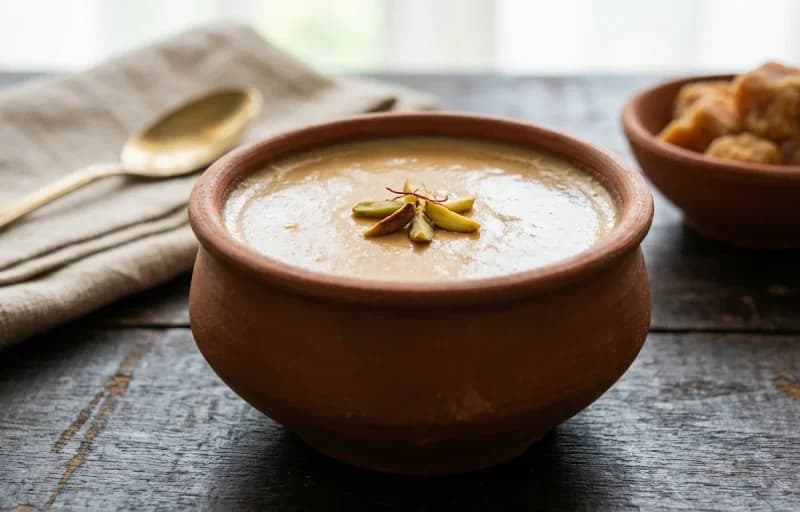
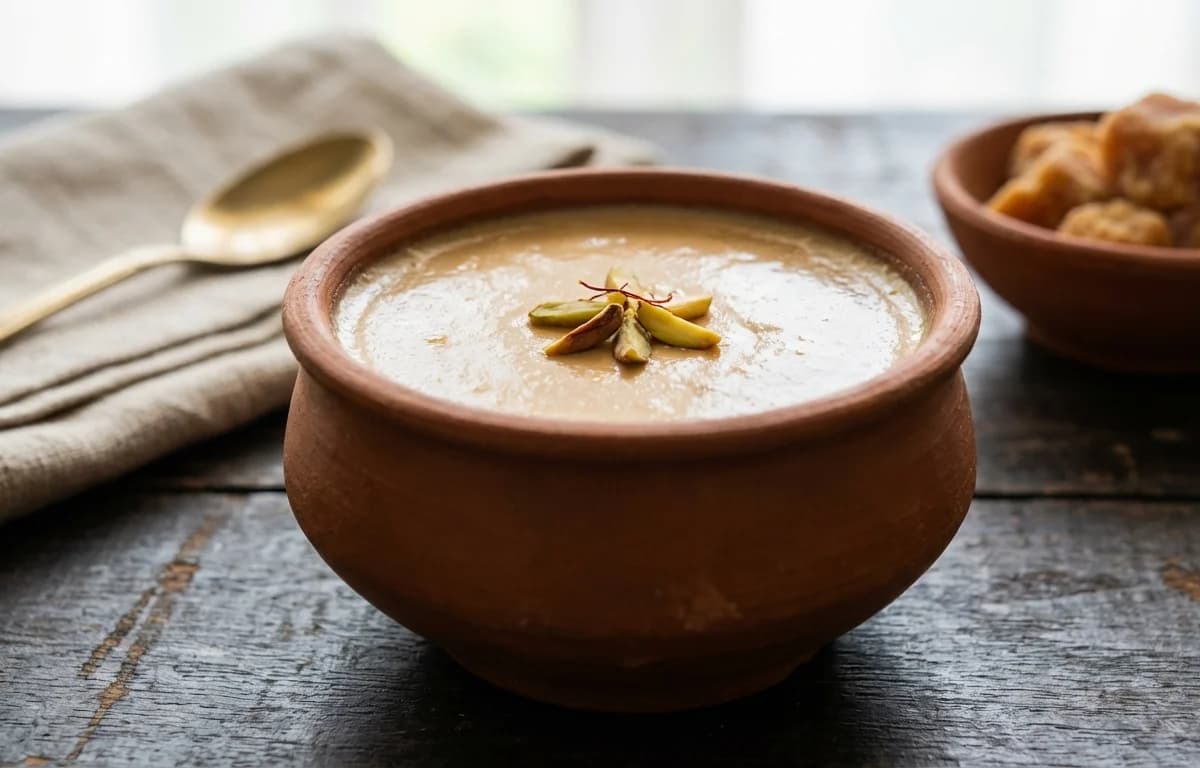
A classic Bengali dessert, this sweet yogurt has a beautiful caramel color and a rich, creamy texture. It's made by reducing milk, sweetening it with caramelized sugar, and allowing it to set naturally. A truly delightful and authentic treat that requires patience but rewards with incredible flavor.
Sweet, ripe plantain slices dipped in a lightly spiced batter and deep-fried to golden perfection. This beloved tea-time snack from Kerala is crispy on the outside and wonderfully soft and sweet on the inside.
Creamy, gut-friendly Mishti Doi with energy-giving Sira and sweet banana. A delightful, quick to make treat!
This assamese dish is perfect for lunch. With 1465.65 calories and 20.49g of protein per serving, it's a nutritious choice for your meal plan.
fat
In a saucepan, combine the water and sugar. Bring the mixture to a rolling boil over medium heat, stirring until the sugar dissolves completely.
Once boiling, add the saffron strands (if using). Reduce the heat to the lowest setting to keep the syrup hot while you proceed with the next step. This is crucial to prevent lumps later.
2
Roast Rava and Nuts
In a separate heavy-bottomed pan (kadai), heat the ghee over medium-low heat. Add the cashew nuts and fry for about 1-2 minutes until they turn light golden.
Add the raisins and fry for another 30 seconds until they plump up. Be careful not to burn them. Remove the fried nuts and raisins with a slotted spoon and set them aside.
In the same ghee, add the rava. Lower the heat to low and roast, stirring continuously, for 7-8 minutes. The rava should become fragrant with a nutty aroma and have a sandy texture. Do not let it brown.
3
Combine and Cook the Sira
With the heat on the lowest setting, carefully and slowly pour the hot sugar-water syrup into the roasted rava. Stir constantly and vigorously to prevent lumps. BE EXTREMELY CAUTIOUS as the mixture will splutter violently.
Once the initial spluttering subsides, continue to stir and cook on low-medium heat. The rava will quickly absorb the liquid and begin to thicken.
Cook for about 4-5 minutes, stirring continuously, until the mixture forms a single soft mass and starts to pull away from the sides of the pan.
4
Finish and Garnish
Turn off the heat. Add the cardamom powder and most of the fried cashews and raisins, reserving a few for garnish.
Stir everything together well. Cover the pan with a lid and let the sira rest for 5 minutes. This allows the rava grains to steam and become perfectly soft and fluffy.
Fluff the sira with a fork, garnish with the remaining nuts and raisins, and serve warm.
Servings4
Serving size: 1 serving
356cal
9gprotein
63gcarbs
9gfat
Ingredients
1 L Full Cream Milk (Must be full cream/whole milk for the best texture.)
1 cup Sugar (Divided into 3/4 cup for caramel and 1/4 cup for the milk.)
2 tbsp Plain Yogurt (Use thick, full-fat yogurt as a starter culture. Hung yogurt is ideal.)
Instructions
1
Reduce the Milk
Pour the full cream milk into a heavy-bottomed, wide pan. Bring it to a boil over medium-high heat.
Once boiling, reduce the heat to medium-low and let it simmer. Stir occasionally, scraping the sides and bottom to prevent scorching.
Continue to simmer for 35-40 minutes, or until the milk has reduced to about half of its original volume (approx. 500 ml).
2
Caramelize Sugar and Combine
While the milk is reducing, place 3/4 cup of sugar in a separate heavy-bottomed saucepan over low heat.
Allow the sugar to melt without stirring. You can gently swirl the pan to ensure even melting. Cook for 5-7 minutes until it turns into a deep, amber-colored liquid caramel.
Very carefully, pour the hot caramel into the reduced milk. The mixture will hiss and bubble vigorously, so pour slowly and stand back. Stir continuously until the caramel is fully dissolved.
Add the remaining 1/4 cup of sugar to the milk and stir until it dissolves completely. Turn off the heat.
3
Cool the Milk and Prepare Culture
Allow the sweetened milk mixture to cool down until it is lukewarm. The ideal temperature is between 110-115°F (43-46°C). It should feel comfortably warm, not hot, to a clean finger.
In a small bowl, whisk the 2 tablespoons of plain yogurt until it is smooth and lump-free. This ensures it mixes evenly into the milk.
4
Inoculate and Set the Yogurt
Add the whisked yogurt culture to the lukewarm milk. Stir gently with a clean spoon for about 30 seconds to distribute the culture evenly.
Pour the mixture into traditional clay pots (matkas) or any ceramic or glass bowls.
Cover the pots with a lid or a piece of aluminum foil.
5
Ferment the Mishti Doi
Place the covered pots in a warm, dark, and draft-free place to set for 8 to 12 hours. An oven with the light on (but turned off) or a warm cupboard are good options.
Do not disturb or move the pots during this time. After 8 hours, check for doneness by gently tilting a pot; the yogurt should be firm and not jiggle like a liquid.
6
Chill and Serve
Once the Mishti Doi has set, transfer the pots to the refrigerator.
Chill for at least 4-6 hours, or preferably overnight. Chilling is crucial as it firms up the texture and deepens the flavor.
Serve the Mishti Doi chilled, directly from the pot.
2 large Ripe Plantains (Use the Nendran variety with blackened skin for authentic sweetness.)
1 cup Maida (Also known as all-purpose flour.)
2 tbsp Rice Flour (This is the key to a crispy coating.)
3 tbsp Sugar (Adjust based on the sweetness of your plantains.)
0.25 tsp Turmeric Powder (Adds the characteristic golden color.)
0.25 tsp Cardamom Powder (For a subtle, sweet aroma.)
0.125 tsp Salt (A small pinch to balance the sweetness.)
0.75 cup Water (Add gradually as needed to achieve the right batter consistency.)
2 cup Coconut Oil (For deep frying; provides an authentic Kerala flavor.)
Instructions
1
Prepare the Plantains
Peel the ripe plantains carefully.
Slice each plantain lengthwise into 3 or 4 even slices, approximately 1/4-inch thick. If the plantains are very long, you can cut them in half crosswise first.
2
Make the Batter
In a medium-sized mixing bowl, combine the maida (all-purpose flour), rice flour, sugar, turmeric powder, cardamom powder, and salt. Whisk the dry ingredients together.
Gradually pour in the water while whisking continuously to create a smooth, lump-free batter.
The batter should be thick enough to coat the back of a spoon, similar to a thick pancake batter. It should not be too runny or too thick.
Let the batter rest for 10-15 minutes. This helps the flavors meld and the flour to hydrate.
3
Fry the Pazham Pori
Heat the coconut oil in a kadai or deep pan over medium-high heat. The oil should be about 350°F (175°C).
To test if the oil is ready, drop a tiny bit of batter into it. If it sizzles and rises to the surface immediately, the oil is at the perfect temperature.