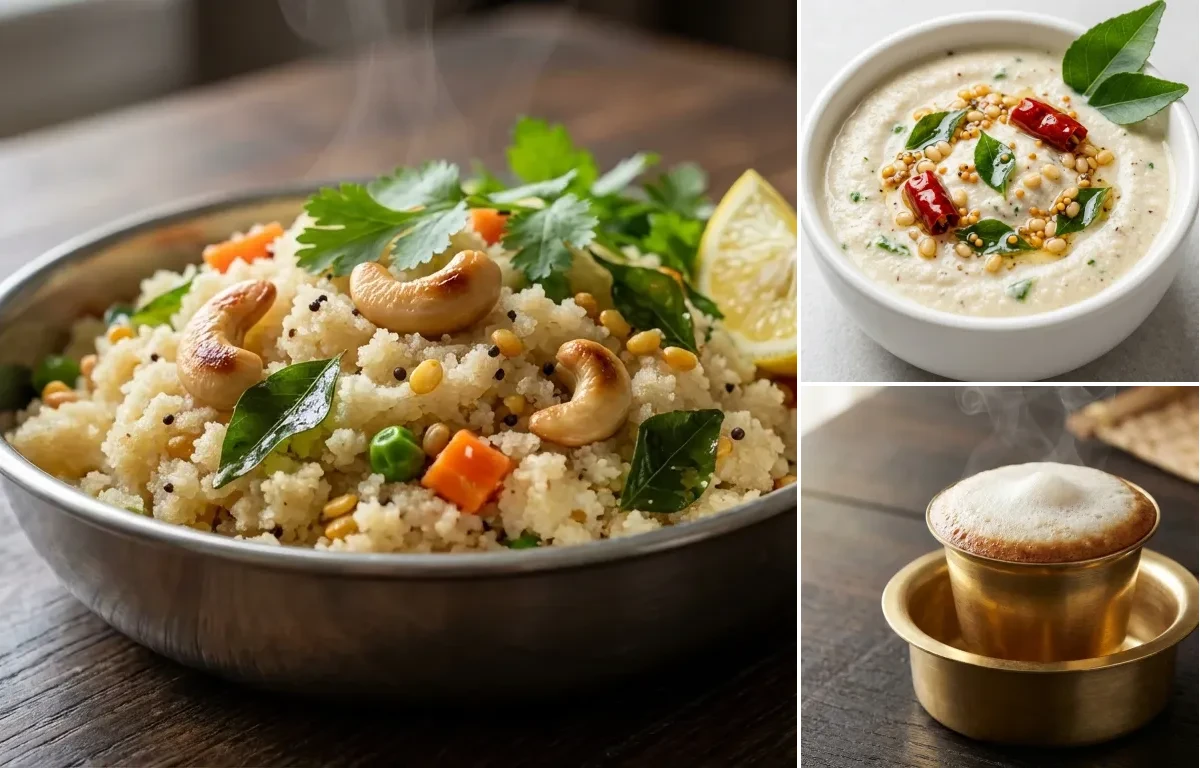
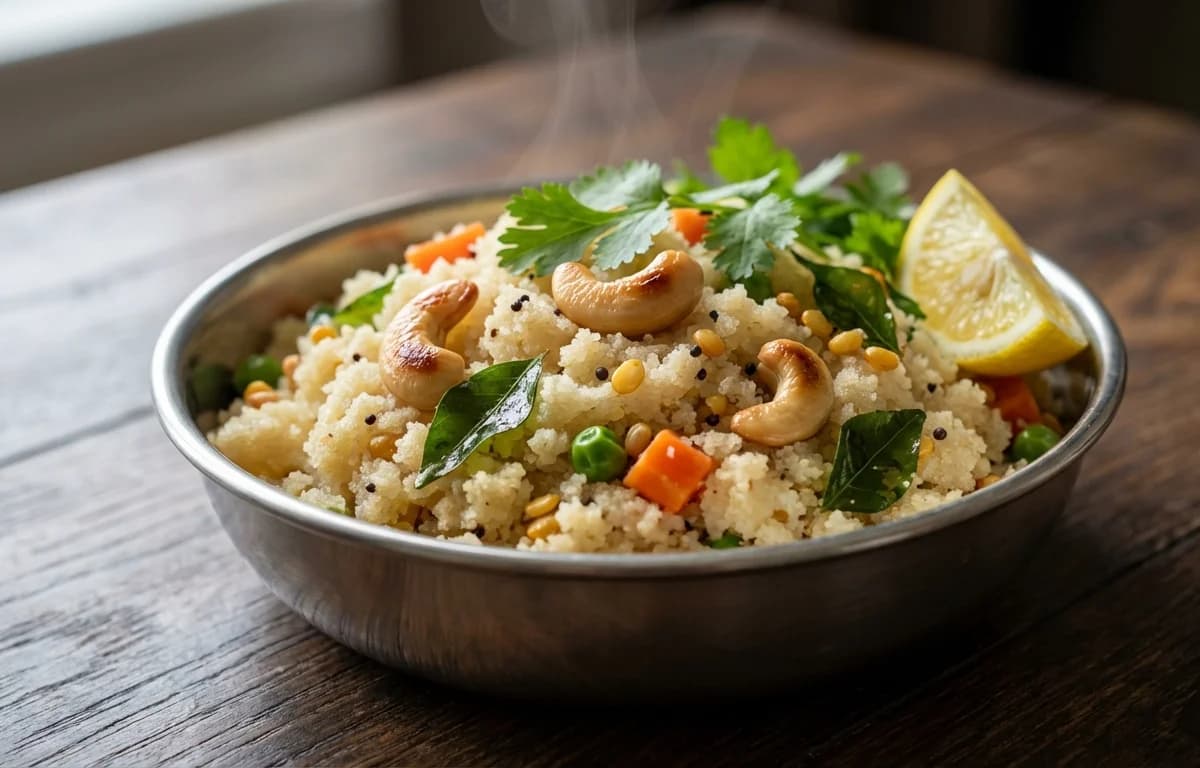
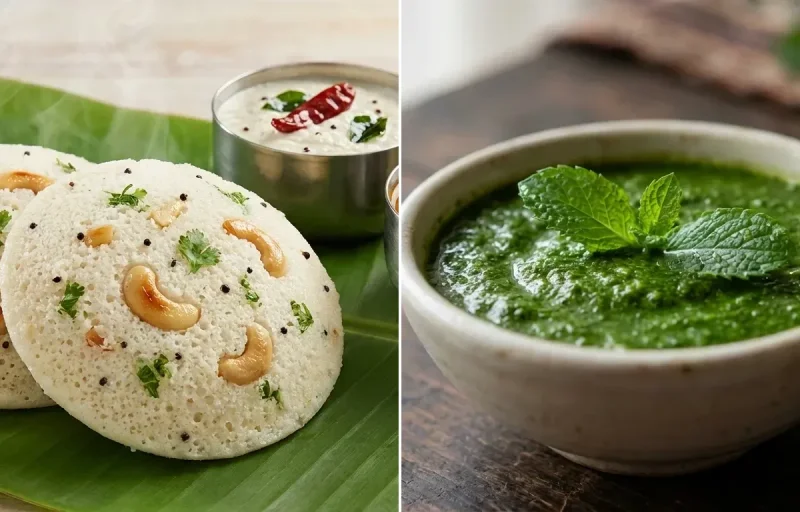
A beloved South Indian breakfast staple, this savory porridge is made from roasted semolina and simple spices. It's light, fluffy, and comes together in under 30 minutes for a wholesome start to your day.
Prep10 min
Cook15 min
Servings4
Serving size: 1 serving
274cal
8gprotein
41gcarbs
9gfat
Ingredients
1 cup Rava (Use coarse semolina (Bombay rava) for the best texture.)
2 tablespoon Ghee (Can be substituted with oil for a vegan version.)
1 teaspoon Mustard Seeds
1 teaspoon Urad Dal (Split and skinned black gram lentils.)
1 teaspoon Chana Dal (Split chickpeas, adds a nice crunch.)
0.25 teaspoon Hing (Also known as Asafoetida.)
10 piece Cashews (Optional, for a richer taste and texture.)
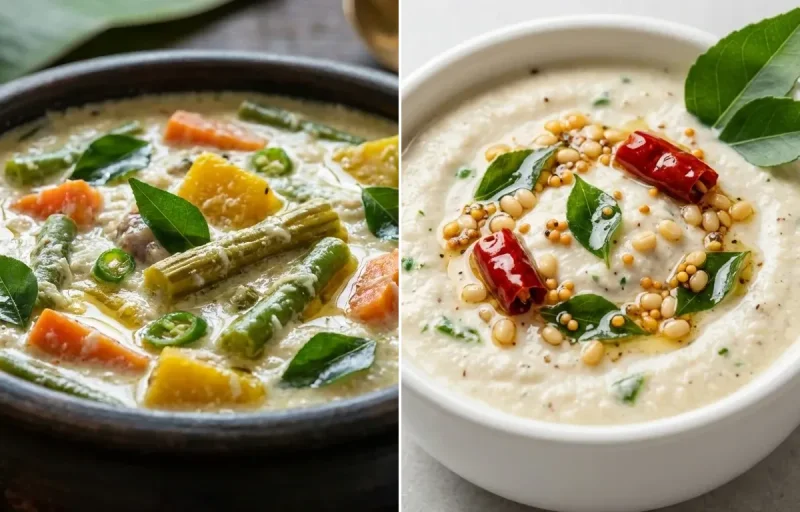
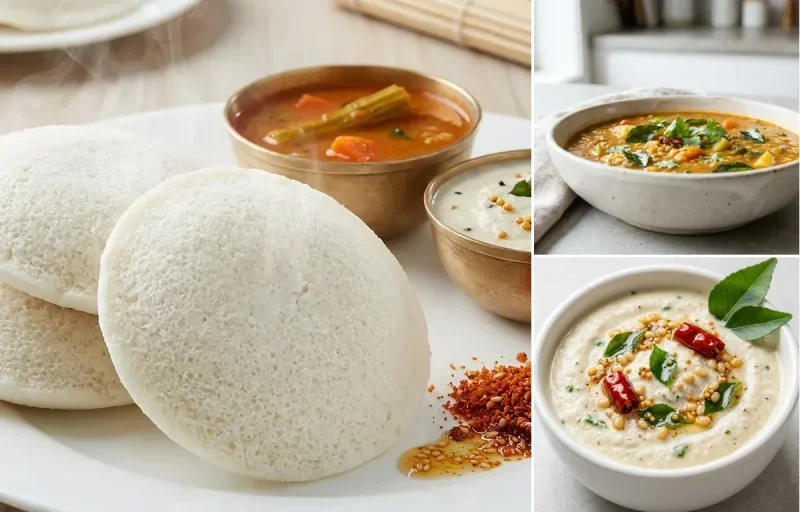
A creamy, savory, and slightly tangy South Indian staple. This fresh coconut chutney is the perfect accompaniment for idli, dosa, vada, and upma. Made with freshly grated coconut and aromatic spices, it's finished with a classic tempering (tadka) that elevates its flavor.
Aromatic and strong, this traditional South Indian filter coffee, or 'kaapi', is a cultural icon. Brewed using a special metal filter, the slow-drip decoction is combined with hot, frothed milk and sweetened to create a rich, invigorating beverage that awakens the senses.
Prep5 min
Cook15 min
Servings4
Serving size: 1 serving
About Rava Upma, Coconut Chutney and Filter Coffee
Aromatic Rava Upma with chutney – quick to make and energy-giving, perfect for busy mornings!
This south_indian dish is perfect for breakfast. With 630.37 calories and 18.93g of protein per serving, it's a nutritious choice for your meal plan.
Other Cuisines to Explore
Discover authentic meals from cuisines around the world.
2 piece Green Chilies (Slit lengthwise. Adjust to your spice preference.)
10 leaf Curry Leaves (About 1 sprig.)
0.5 cup Mixed Vegetables (Optional. Finely chopped carrots, peas, and green beans work well.)
2.5 cup Water (Use hot water for a softer, non-lumpy upma.)
1 teaspoon Salt (Adjust to taste.)
0.5 teaspoon Sugar (Optional, but it helps balance the flavors.)
1 tablespoon Lemon Juice (Freshly squeezed.)
2 tablespoon Coriander Leaves (Freshly chopped, for garnish.)
Instructions
1
In a heavy-bottomed pan or kadai, dry roast the rava on low-medium heat for 5-7 minutes. Stir continuously until it becomes fragrant and the grains look dry and separate. Do not let it brown. Transfer to a plate and set aside.
2
In the same pan, heat the ghee over medium heat. Add the mustard seeds and wait for them to splutter. Then, add the urad dal, chana dal, and cashews (if using). Sauté for about a minute until the dals and cashews turn light golden.
3
Add the hing, curry leaves, slit green chilies, and grated ginger. Sauté for 30 seconds until the curry leaves are crisp and the mixture is aromatic.
4
Add the finely chopped onion and sauté for 2-3 minutes until it turns soft and translucent. If using mixed vegetables, add them now and cook for another 3-4 minutes until they are slightly tender.
5
Pour 2.5 cups of hot water into the pan. Add the salt and sugar, and stir well. Increase the heat and bring the water to a rolling boil.
6
Reduce the heat to low. With one hand, slowly and steadily pour the roasted rava into the boiling water. With the other hand, stir continuously and vigorously to prevent any lumps from forming. The mixture will thicken quickly.
7
Once all the rava is incorporated and has absorbed most of the water, cover the pan with a tight-fitting lid. Let it cook on the lowest possible heat for 3-5 minutes. This steaming step is crucial for making the upma soft and fluffy.
8
Turn off the heat and let the upma rest, covered, for another 5 minutes. Open the lid, add the fresh lemon juice and chopped coriander leaves. Gently fluff the upma with a fork to mix everything. Serve hot.
163cal
3gprotein
18gcarbs
10gfat
Ingredients
1 cup Fresh Coconut (Grated and tightly packed. Frozen can be used after thawing.)
2 tbsp Pottukadalai (Also known as roasted chana dal or chutney dal.)
2 pcs Green Chili (Adjust to your spice preference.)
0.5 inch Ginger (Peeled and roughly chopped.)
1 tsp Tamarind Paste (Or a small marble-sized piece of whole tamarind, deseeded.)
0.5 tsp Salt (Adjust to taste.)
0.5 cup Water (Use as needed for grinding to desired consistency.)
2 tsp Coconut Oil (For tempering. Ghee or another neutral oil can be used.)
0.5 tsp Mustard Seeds
1 tsp Urad Dal (Split and skinned black gram lentils.)
2 pcs Dry Red Chili (Broken into halves.)
1 sprig Curry Leaves (About 10-12 leaves.)
1 pinch Asafoetida (Also known as hing. Optional but recommended.)
Instructions
1
Grind the Chutney Base (5 minutes)
In a blender or mixie jar, combine the fresh grated coconut, pottukadalai (roasted chana dal), green chilies, chopped ginger, tamarind paste, and salt.
Add 1/4 cup of water to begin.
Blend in short bursts, scraping down the sides as needed, until you get a thick, smooth paste. Avoid over-blending to prevent the coconut from releasing excess oil.
Add more water, one tablespoon at a time, and blend briefly until you reach your desired consistency. Transfer the chutney to a serving bowl.
2
Prepare the Tempering (Tadka) (5 minutes)
Heat the coconut oil in a small tadka pan over medium heat. Test if the oil is hot enough by dropping in one mustard seed; it should sizzle immediately.
Add the mustard seeds and allow them to splutter completely, which takes about 30 seconds.
Lower the heat, then add the urad dal. Sauté for 30-40 seconds, stirring continuously, until it turns a pale golden brown.
Quickly add the broken dry red chilies, fresh curry leaves, and a pinch of asafoetida. Stir for another 15-20 seconds until the curry leaves become crisp and fragrant. Immediately remove from heat to prevent burning.
8 tbsp Filter Coffee Powder (A blend with 15-20% chicory is recommended for authentic taste)
250 ml Water (For brewing the decoction)
750 ml Full-Fat Milk (Provides a rich and creamy texture)
6 tsp Sugar (Adjust to personal preference)
Instructions
1
Prepare the Coffee Filter
Assemble the two chambers of the South Indian coffee filter, placing the perforated upper chamber on top of the lower collection chamber.
Add 8 tablespoons of filter coffee powder into the upper chamber, distributing it evenly.
Gently press the powder down using the provided tamper disc. The pressure should be firm but not overly compact.
Place the tamper disc on top of the coffee grounds.
2
Brew the Decoction
Bring 250 ml of water to a full, rolling boil in a kettle or pot.
Carefully and slowly pour the boiling water over the tamper disc, filling the upper chamber.
Cover the filter with its lid and set it aside. Allow the coffee decoction to slowly drip into the lower chamber, which typically takes 10-15 minutes.
3
Heat and Prepare the Milk
While the decoction is brewing, pour 750 ml of milk into a saucepan.
Heat the milk over medium heat until it is steaming hot and just beginning to rise, but do not let it boil over. This should take about 5-7 minutes.
4
Combine, Froth, and Serve
Once the decoction has fully collected, pour about 60 ml (1/4 cup) into each of the 4 serving tumblers.
Add 1.5 teaspoons of sugar to each tumbler, or adjust to your desired sweetness.
Pour the hot milk into each tumbler over the decoction and sugar.
To create the signature froth, pour the coffee back and forth between the tumbler and a 'davara' (a wide steel bowl) from a height of about one foot. This process is called 'pulling'. Repeat 3-4 times until a thick, creamy froth forms on top.