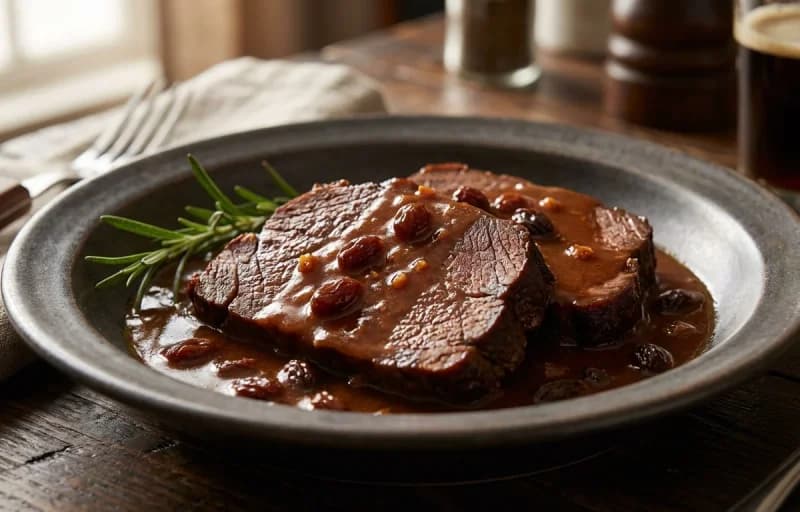
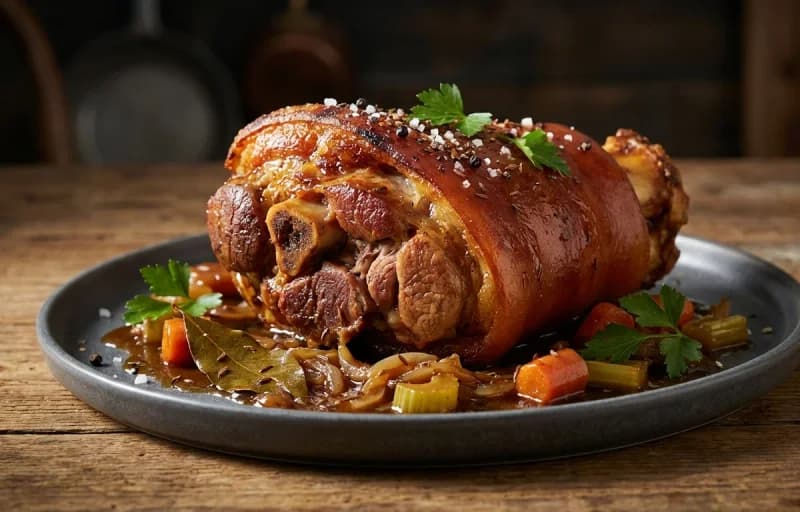
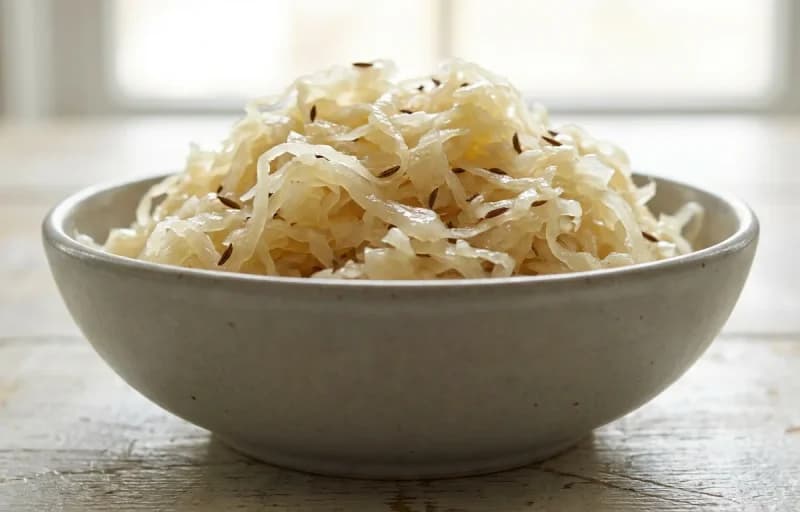
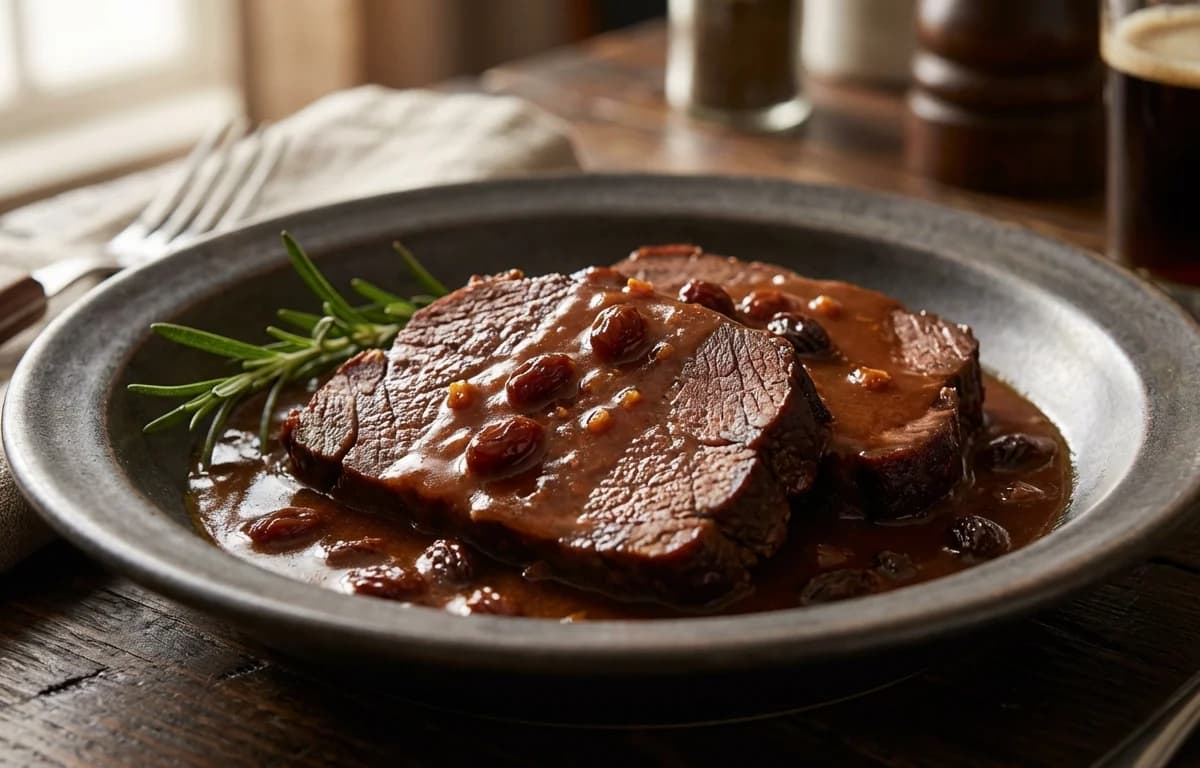
A classic German pot roast, this Sauerbraten features tender beef marinated for days in a tangy vinegar-wine mixture, then slow-cooked to perfection. The rich, sweet-and-sour gravy, thickened with crushed gingersnaps, is what makes this dish truly unforgettable.
Prep30 min
Cook210 min
Soak4320 min
Servings6
Serving size: 1 serving
825cal
53gprotein
21gcarbs
Ingredients
1.6 kg Beef Chuck Roast (Boneless. Rump roast or bottom round also work well.)
A unique sweet and savory German-American gravy that gets its distinctive flavor and thickness from crushed gingersnap cookies. Traditionally served with Sauerbraten, it's also perfect for pouring over pork roasts, beef, or even meatballs for a touch of spiced warmth.
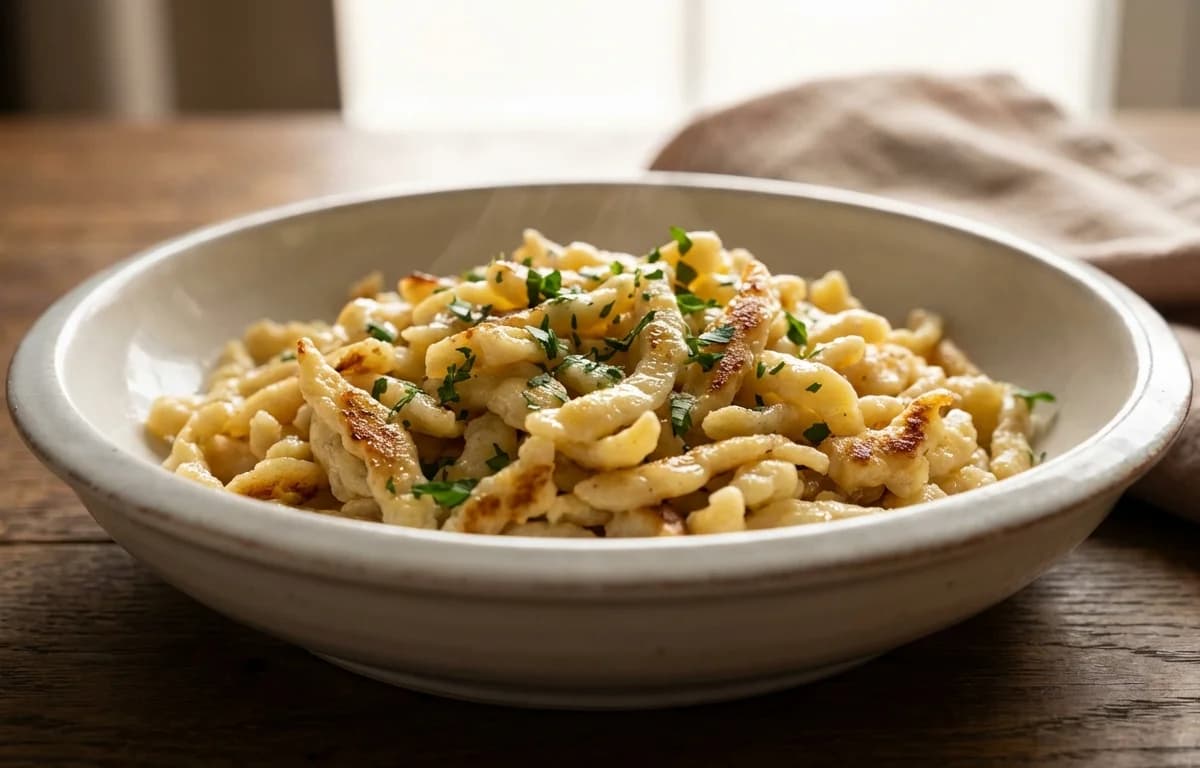
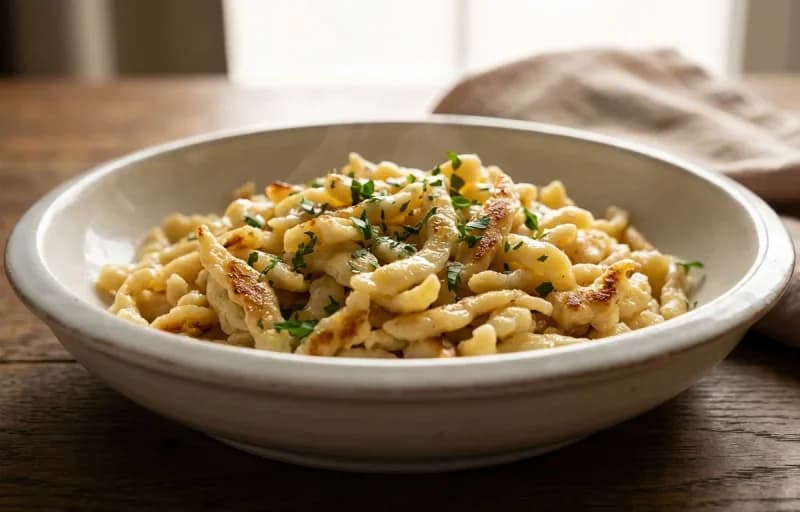
Soft, chewy little egg noodles that are wonderfully comforting and versatile. This classic German-American side dish is perfect for soaking up rich gravies from roasts or stews, and comes together in under 30 minutes.
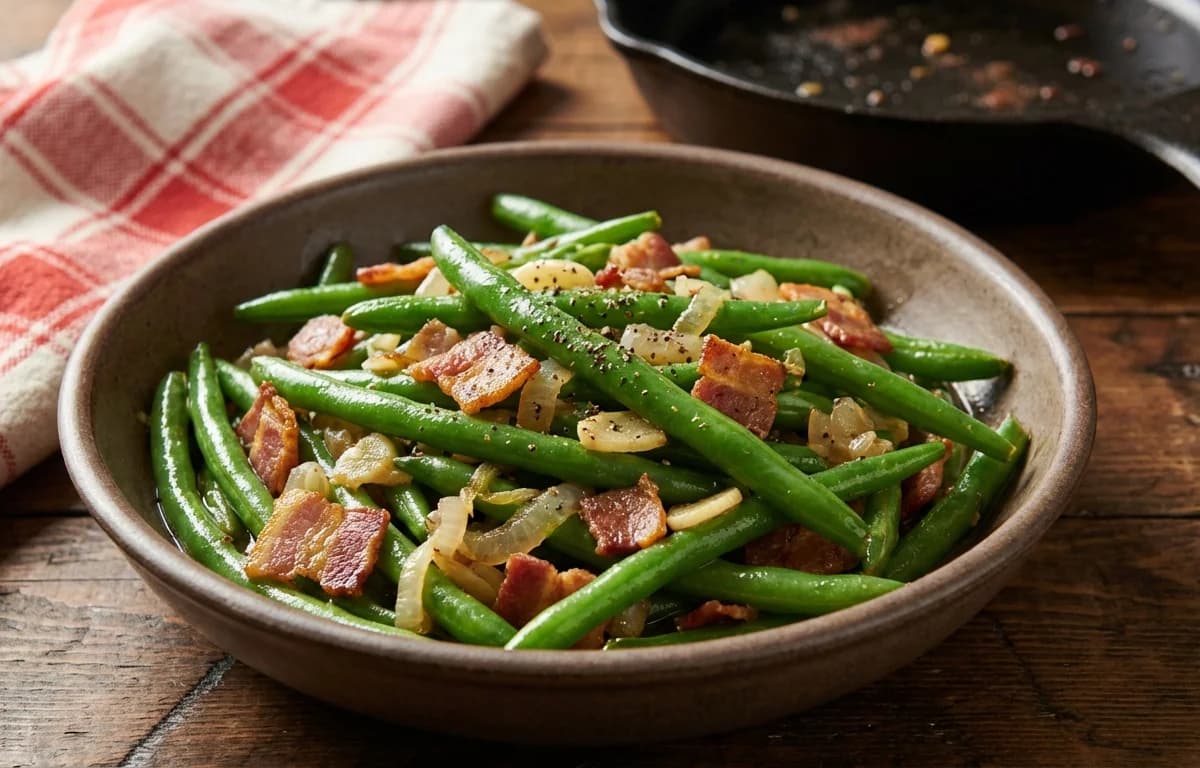
Crisp-tender green beans and savory bacon bits sautéed with onion and garlic. This classic Southern side dish is smoky, delicious, and comes together in one skillet for easy cleanup.
About Sauerbraten, Gingersnap Gravy, Spätzle and Sauteed Green Beans with Bacon
Soul-satisfying slow-cooked meat with aromatic gravy & soft dumplings. Comfort food at its best!
This german_american dish is perfect for dinner. With 1679.29 calories and 76.72g of protein per serving, it's a nutritious choice for your meal plan.
58gfat
1 tsp
Black Peppercorns
1 tsp Mustard Seeds
2.5 tsp Salt (Divided use)
3 tbsp Vegetable Oil
75 g Raisins (Golden or regular)
2 tbsp Brown Sugar (Packed)
0.5 tsp Black Pepper (Freshly ground, for the gravy)
Instructions
1
Prepare the Marinade (3-5 Days Ahead)
In a large non-reactive pot or bowl (glass, ceramic, or stainless steel), combine the red wine vinegar, water, sliced onion, carrot, celery, bay leaves, cloves, juniper berries, peppercorns, mustard seeds, and 1.5 tsp of salt.
Bring the mixture to a boil over medium-high heat. Once boiling, reduce the heat and let it simmer for 10 minutes to infuse the flavors.
Remove from heat and let the marinade cool completely to room temperature. This is crucial to avoid partially cooking the beef.
Place the beef roast in the cooled marinade, ensuring it is fully submerged. Cover the container tightly and refrigerate for 3 to 5 days. Turn the meat once every day to ensure even marination.
2
Sear the Beef
After marinating, remove the beef and pat it completely dry with paper towels; this is key for a good sear. Reserve the marinade.
Strain the marinade through a fine-mesh sieve into a bowl, pressing on the solids to extract all the liquid. Discard the solids.
In a large Dutch oven or heavy-bottomed pot, heat the vegetable oil over medium-high heat until it shimmers.
Carefully place the beef in the hot oil. Sear for 4-5 minutes per side, until a deep, brown crust forms all over. Do not overcrowd the pot. Remove the seared beef and set it aside on a plate.
3
Slow-Cook the Sauerbraten
Reduce the heat to medium. Add the finely chopped onion to the same pot and sauté for 5-7 minutes, until softened and translucent, scraping up any browned bits from the bottom of the pot.
Return the seared beef to the pot. Pour in the strained marinade. The liquid should come about halfway up the sides of the roast.
Bring the liquid to a gentle simmer, then reduce the heat to low. Cover the pot and cook for 3 to 3.5 hours, or until the beef is exceptionally tender and can be easily pierced with a fork.
4
Finish the Gravy
Carefully transfer the cooked roast to a cutting board. Tent it with aluminum foil to keep warm while you prepare the gravy.
Bring the cooking liquid in the pot to a simmer over medium heat.
Gradually whisk in the finely crushed gingersnaps. Continue to whisk constantly for 2-3 minutes as the gravy thickens.
Stir in the raisins and brown sugar. Let the gravy simmer for another 5 minutes to allow the flavors to meld.
Taste the gravy and season with the remaining 1 tsp of salt and 0.5 tsp of freshly ground black pepper, or adjust to your preference.
5
Serve
Slice the rested beef against the grain into thick slices.
Arrange the slices on a platter and pour the hot gravy generously over the top.
Serve immediately with traditional sides like potato dumplings (Kartoffelklöße), spaetzle, or red cabbage.
157cal
2gprotein
19gcarbs
9gfat
Ingredients
2 tbsp unsalted butter (Can be substituted with 2 tbsp of pan drippings from a roast)
1 pcs shallot (Small, finely minced)
2 cup low-sodium beef broth
0.5 cup gingersnap cookies (Finely crushed, from about 8-10 crisp cookies)
2 tbsp raisins (Golden or regular)
1 tbsp red wine vinegar
1 tsp brown sugar (Packed)
2 tbsp full-fat sour cream (At room temperature to prevent curdling)
0.5 tsp salt (Or to taste)
0.25 tsp black pepper (Freshly ground)
Instructions
1
In a medium saucepan, melt the butter over medium heat. Add the finely minced shallot and sauté for 2-3 minutes until it becomes soft and fragrant, but not browned.
2
Pour in the beef broth and bring the mixture to a gentle simmer. Once simmering, whisk in the crushed gingersnap cookies, raisins, red wine vinegar, and brown sugar.
3
Reduce the heat to low and continue to simmer, stirring occasionally to prevent sticking. Cook for 10-12 minutes, or until the cookie crumbs have completely dissolved and the gravy has thickened to a smooth, coating consistency.
4
Remove the saucepan from the heat. Let it cool for a minute. Whisk in the room-temperature sour cream until fully incorporated and the gravy is smooth and creamy. Season with salt and pepper, taste, and adjust if necessary. Serve warm.
0.5 cup Whole Milk (Can substitute with water for a less rich noodle)
1 tsp Salt (For the batter)
0.25 tsp Ground Nutmeg (Freshly grated is best)
3 tbsp Unsalted Butter (For finishing)
2 tbsp Fresh Parsley (Finely chopped, for garnish)
Instructions
1
Prepare the Batter
In a large mixing bowl, whisk together the sifted all-purpose flour, 1 teaspoon of salt, and the ground nutmeg.
Create a well in the center of the dry ingredients. Add the lightly beaten eggs and the whole milk into the well.
Using a wooden spoon or a sturdy spatula, begin mixing from the center outwards, gradually incorporating the flour until a thick, sticky batter forms.
Beat the batter vigorously against the side of the bowl for 3-5 minutes. The batter is ready when it's smooth, elastic, forms bubbles, and slowly drips from the spoon in a thick ribbon. This develops the gluten, which is key to the chewy texture.
Cover the bowl and let the batter rest at room temperature for at least 15 minutes, or up to 30 minutes.
2
Set Up for Cooking
While the batter rests, bring a large pot of water to a rolling boil. Add 1 tablespoon of salt to the water.
Prepare a large bowl with ice water (an ice bath) and set it next to the stove. This will be used to stop the spätzle from overcooking.
3
Cook the Spätzle
Hold a spätzle maker, potato ricer, or a colander with large holes over the boiling water. Work in 2-3 batches to avoid overcrowding the pot.
Pour some of the batter into the hopper of the spätzle maker and slide it back and forth, or use a spatula to press the batter through the holes of the colander.
Boil the spätzle for 2-3 minutes. They are cooked once they float to the surface of the water.
Using a slotted spoon or spider strainer, immediately transfer the cooked spätzle from the boiling water to the ice bath for about 30 seconds to halt the cooking process.
Remove the spätzle from the ice bath and drain thoroughly in a colander. Repeat with the remaining batter.
4
Finish and Serve
In a large skillet, melt the unsalted butter over medium heat until it begins to foam.
Add the well-drained spätzle to the skillet and toss to coat completely in the butter.
Sauté for 2-4 minutes, stirring occasionally, until the spätzle are heated through and lightly golden in spots.
Remove from heat, garnish with freshly chopped parsley, and serve immediately.
6 slices thick-cut bacon (chopped into 1/2-inch pieces)
1 medium yellow onion (finely chopped)
2 cloves garlic (minced)
1 lb fresh green beans (trimmed)
0.25 cup chicken broth (can substitute with water)
0.5 tsp kosher salt (adjust to taste)
0.25 tsp black pepper (freshly ground)
Instructions
1
Cook the bacon until crisp. In a large skillet over medium heat, add the chopped bacon. Cook, stirring occasionally, for 6-8 minutes until the bacon is browned and crispy. Use a slotted spoon to transfer the bacon to a paper towel-lined plate, reserving about 2 tablespoons of bacon fat in the skillet.
2
Sauté the aromatics. Add the chopped yellow onion to the skillet with the bacon fat. Sauté for 4-5 minutes until softened and translucent. Add the minced garlic and cook for another minute until fragrant, being careful not to burn it.
3
Sauté and steam the green beans. Add the trimmed green beans to the skillet. Season with kosher salt and black pepper. Toss to coat in the fat and sauté for 5-7 minutes, stirring occasionally, until they turn bright green and begin to blister.
4
Pour in the chicken broth. Bring the liquid to a simmer, then reduce the heat to medium-low, cover the skillet, and let the beans steam for 3-5 minutes, or until they reach your desired level of crisp-tenderness.
5
Finish and serve. Uncover the skillet and increase the heat to medium-high. Cook for 1-2 minutes, allowing any remaining liquid to evaporate. Return the crispy bacon to the skillet and toss everything together. Serve immediately.